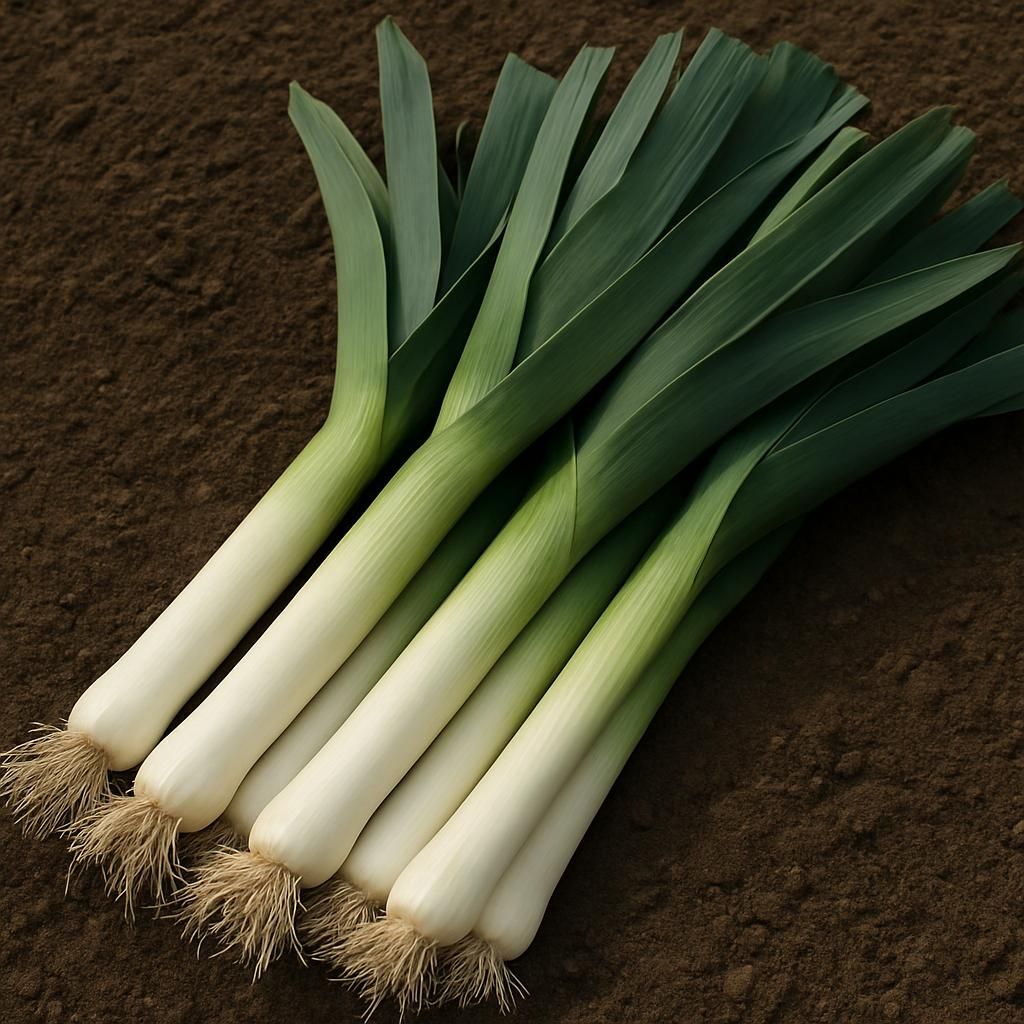
Introduction to leek
Leeks (Allium ampeloprasum) are a versatile cool-season vegetable that belongs to the same botanical family as Onion and Garlic. They are valued by home gardeners and commercial growers alike for their long, white-to-light-green shanks, mild flavor, and exceptional cold hardiness. Unlike bulb onions, leeks form elongated pseudostems that are blanched through soil mounding or other techniques. Their ability to overwinter in many climates and their tolerance of light frosts make them an ideal crop for extending the harvest season into late autumn and early spring.
Leeks have been cultivated for thousands of years and remain a staple in European cuisines, especially in soups, stews, and gratins. Their nutritional profile includes significant amounts of vitamins K and A, manganese, and dietary fiber. Because they are relatively low-maintenance once established, leeks are an excellent choice for both small-scale organic farms and large-scale conventional operations seeking a reliable, high-value crop.
Botanical Profile of leek
Leeks are biennial plants in the Amaryllidaceae family, although they are grown as annuals for their edible stems. The plant produces a cylindrical pseudostem composed of tightly overlapping leaf bases that are blanched to creamy white through exclusion of light. Above ground, the leaves are flat, strap-like, and bluish-green. The root system is fibrous and relatively shallow, making consistent moisture and weed control essential. Under favorable conditions, leeks can reach 30–60 cm in shank length and 3–5 cm in diameter.
When allowed to flower in their second year, leeks produce a tall scape topped with an umbel of small, star-shaped, white-to-pale-purple flowers. Seed production is straightforward, although cross-pollination with other alliums must be prevented if purity is desired. Leeks are generally propagated from seed, though some varieties can be multiplied vegetatively through division of offsets.
Soil, pH, and Climate Requirements for leek (MUST INCLUDE A MARKDOWN TABLE OF IDEAL CONDITIONS)
Leeks thrive in deep, fertile, well-drained soils with high organic matter content. Heavy clay soils should be amended with compost or well-rotted manure to improve structure and drainage. The crop prefers a slightly acidic to neutral pH and consistent moisture throughout the growing season.
| Parameter | Ideal Range | Notes |
|---|---|---|
| Soil Type | Loamy to sandy loam | Deep, friable soil promotes long shanks |
| Soil pH | 6.0–7.0 | Avoid strongly acidic or alkaline conditions |
| Temperature (Day) | 15–24 °C | Optimal growth; tolerates light frost |
| Temperature (Night) | 7–13 °C | Cool nights enhance flavor |
| Frost Tolerance | Down to –7 °C | Mature plants are very cold hardy |
| Sunlight | Full sun (≥6 hours) | Partial shade reduces shank diameter |
| Soil Moisture | Evenly moist, not waterlogged | Consistent water prevents bolting |
Step-by-Step Planting & Propagation
Leeks are almost always started from seed. Begin sowing indoors 8–12 weeks before the last expected spring frost. Use a sterile seed-starting mix and maintain temperatures of 18–21 °C for rapid germination, which usually occurs in 7–14 days. Once seedlings reach 10–15 cm, harden them off for 7–10 days before transplanting.
Transplant seedlings outdoors when they are pencil-thick and soil temperatures have reached at least 7 °C. Dig trenches 15–20 cm deep and set plants 10–15 cm apart in the row. Space rows 30–45 cm apart. As plants grow, gradually fill the trench and mound soil around the stems to encourage blanching. For continuous harvest, sow succession crops every 3–4 weeks until mid-summer.
Care & Maintenance regimes for leek (MUST INCLUDE A MARKDOWN TABLE OF WATER, FERTILIZER, AND PRUNING SCHEDULES)
Leeks require steady moisture and moderate fertility. Over-fertilization with nitrogen can produce overly lush foliage at the expense of shank quality. Weed control is critical during the first six weeks after transplanting; thereafter, the dense leaf canopy suppresses most weeds. Mulching with straw or shredded leaves helps retain moisture and keeps soil cool.
| Growth Stage | Watering Frequency | Fertilizer Application | Pruning / Other Tasks |
|---|---|---|---|
| Transplant–4 weeks | 2–3 times per week | Side-dress with 10-10-10 at 4 weeks | Remove yellow leaves; begin light hilling |
| 4–8 weeks | 1–2 times per week | Apply compost tea or fish emulsion | Hill soil 5–7 cm every 2 weeks |
| 8–12 weeks | Deep soak every 5–7 days | Second nitrogen application | Continue hilling; scout for pests |
| 12 weeks–Harvest | Maintain even moisture | Cease high-nitrogen feeds 4 weeks prior | Final hilling; remove flower stalks |
Pests, Diseases & Organic Management
Common insect pests include Aphids, Thrips, and Cutworms. Onion thrips can cause silvery streaking on leaves, while cutworms sever young seedlings at the soil line. Organic controls include insecticidal soaps, neem oil, and floating row covers. Beneficial insects such as lady beetles and lacewings provide natural suppression of aphids.
Diseases of concern are Downy mildew, Purple blotch, and Fusarium basal rot. Crop rotation with non-allium crops for at least three years reduces soil-borne inoculum. Improve air circulation through proper spacing and avoid overhead irrigation late in the day. Copper-based fungicides and bio-fungicides containing Bacillus subtilis offer effective organic suppression when applied preventively.
Harvesting, Curing & Optimal Storage
Leeks are ready for harvest when shanks reach 2–3 cm in diameter, typically 100–150 days after transplanting. Pull plants carefully to avoid breaking the shank. For overwintering in the garden, mulch heavily with straw once soil begins to freeze. Harvested leeks should be trimmed of roots and outer damaged leaves, then washed and allowed to air-dry.
Store leeks in perforated plastic bags in the refrigerator for up to two weeks. For longer storage, leeks can be blanched and frozen or kept in a root cellar at 0–2 °C and 90–95 % relative humidity for 2–3 months. Do not wash leeks before long-term storage; excess moisture promotes decay.
Companion Planting for leek
Leeks benefit from association with Carrot, Lettuce, and Strawberry. Carrots help deter leek moth while leeks repel carrot fly. Avoid planting near Beans or Peas, as alliums can inhibit nitrogen fixation. Aromatic herbs such as Thyme and Rosemary planted nearby further reduce pest pressure.
For more on strategic crop pairings that enhance small-farm resilience, see Summer Companion Planting: 10 Organic Pairings to Boost Small Farm Resilience.