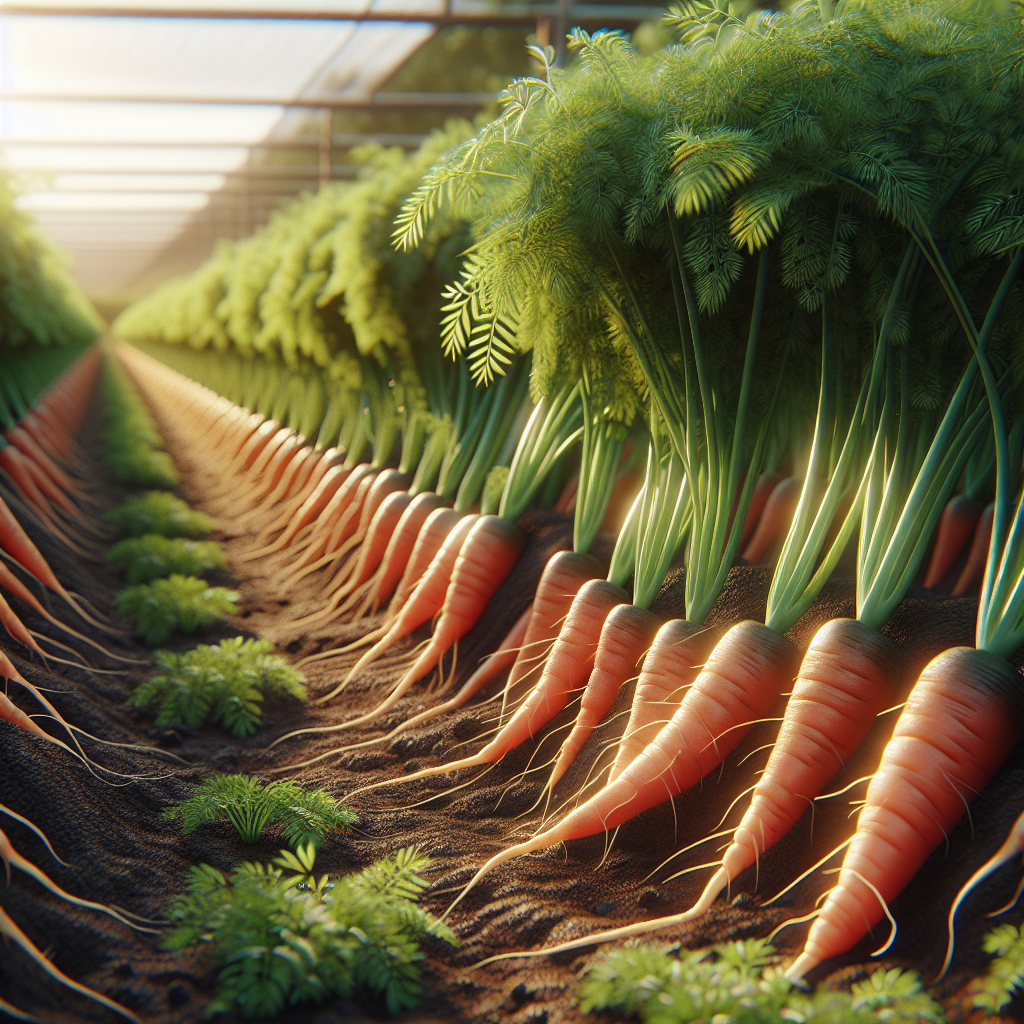
Introduction to Nantes Carrot
Originating from French carrot breeding traditions associated with the Nantes region, this type became famous for combining uniform shape, tenderness, and sweetness in a way that older, coarser field carrots often did not. Rather than the long taper of Imperator carrots or the broader, heavier shoulder of Chantenay types, Nantes forms a nearly cylindrical root with a rounded or slightly blunt tip, usually 14-18 cm long when mature, though exact size varies by strain.
This shape is not just cosmetic. It reflects a variety class adapted to careful, shallow-to-moderate depth root development in fertile, loose soils. Growers value it because the roots tend to be less fibrous, have a smaller core, and remain pleasant for fresh eating even at full size. Nantes carrots are widely used for bunching, fresh market sales, juicing, and premium kitchen use because the flesh is consistently sweet and crisp, especially when grown in cool conditions.
For production planning, this is a cool-season crop with quick juvenile growth and relatively short maturity, often 60-75 days depending on temperature and strain. In many temperate regions, it excels in spring and autumn. In mild winter climates, it can be sown over a long window and even overwintered under protection for exceptional sweetness.
If you are comparing carrot types, see the broader Carrot guide. For field-scale bed preparation and fertility planning, the principles in soil health strategies are especially relevant because Nantes quality depends heavily on soil structure.
Botanical Profile of Nantes Carrot
This cultivar group belongs to the Apiaceae family, the same family as parsley, celery, fennel, dill, and parsnip. Like all cultivated carrots, it is typically grown as an annual for its storage root, although botanically it is a biennial. In its full life cycle, the plant produces a rosette of finely divided leaves in the first year, stores energy in the enlarged taproot, then sends up a flowering stalk in the second year if exposed to sufficient cold for vernalization.
The edible portion is an enlarged taproot composed of outer phloem tissues and an inner xylem core. In high-quality Nantes strains, the core remains relatively small and less lignified than in some processing or field types. This contributes to the desirable eating quality. Root color is usually a bright medium to deep orange, reflecting carotenoid accumulation, especially beta-carotene.
The tops are medium green, finely dissected, and moderately upright. While vigorous foliage is important for root sizing, excessively lush top growth often indicates too much available nitrogen, which can reduce root quality, delay maturity, and increase splitting risk. Nantes types are selected for uniformity, but that genetic potential only expresses fully when emergence is even and plants are correctly thinned.
Flowering is undesirable in root production. Premature bolting may occur if seedlings experience prolonged chilling after germination, especially if sown too early into cold soils. Once bolting begins, root texture deteriorates quickly as the plant reallocates energy toward reproduction. For this reason, early sowings must be timed with local frost and soil temperature patterns rather than calendar habit alone.
Soil, pH, and Climate Requirements for Nantes Carrot
Root quality begins below ground. Nantes carrots need friable, deep, stone-free soil with excellent tilth and good drainage. The ideal texture is sandy loam to fine loam, though they can also perform well in raised beds built from screened topsoil and mature compost. Heavy clay can produce short, forked, or rough roots unless it has been improved over multiple seasons with organic matter and careful bed shaping.
A rooting depth of at least 20-25 cm of loosened soil is recommended, even though the harvested root may be shorter. The extra depth matters because any compacted layer, clod, undecomposed organic fragment, or stone can cause the taproot to fork, twist, or blunt prematurely. Fresh manure is particularly harmful because it stimulates branching and misshapen roots; use only well-finished compost incorporated well before sowing.
Optimal soil pH is 6.0-6.8, with 6.3-6.6 often giving the best balance of nutrient availability and microbial activity. Carrots tolerate slightly wider conditions, but strongly acidic soil can reduce calcium and boron availability, while alkaline soils may limit micronutrients and encourage rough texture. If boron is deficient, roots may develop cracking, internal discoloration, or brittle tissue, so a soil test is strongly advised before intensive production.
Cool growing conditions are ideal. Best root development usually occurs with daytime temperatures around 16-24°C and night temperatures around 7-15°C. When temperatures rise consistently above 27-29°C, roots may become paler, stronger in flavor, and more fibrous. Heat during early development also increases moisture stress and can lead to uneven germination.
Seed germination is best at 10-24°C, though it may be slow below 10°C. Emergence can take 7-10 days in warm, evenly moist soils, but 14-21 days in cooler conditions. During this germination window, the top 1-2 cm of soil must never be allowed to crust or dry out. This is one of the most common failure points in carrot production.
For moisture, aim for consistent soil water in the root zone rather than alternating drought and saturation. A practical target is to keep the upper germination layer evenly damp and the deeper root zone at roughly 60-80% of field capacity once plants are established. In practical terms, the soil should feel cool and slightly moist when squeezed, not powdery and not sticky. Overwatering often causes oxygen stress, slow growth, yellowing foliage, and increased disease pressure. In severe cases, roots become hairy, cracked, or prone to rot. Underwatering usually results in delayed sizing, stronger flavor, woody texture, and radial cracking when water finally returns.
Step-by-Step Planting & Propagation
Propagation is by seed only. Transplanting is not recommended because any disturbance to the taproot at a young stage can deform the final root.
Prepare the bed thoroughly. Remove stones, break clods, and rake to a very fine seedbed. For premium Nantes roots, many growers broadfork or loosen the bed first, then refine the top 5-8 cm to a smooth surface.
Incorporate moderate fertility before planting. Use mature compost at light to moderate rates rather than heavy feeding. Excess nitrogen is a frequent cause of beautiful tops and disappointing roots.
Form shallow drills 0.5-1.25 cm deep. In cool or crust-prone soils, err on the shallower side. If seed is sown too deep, emergence becomes weak and uneven.
Space rows 20-30 cm apart for hand cultivation, or tighter in intensive raised beds if weed control is meticulous. Many market gardeners use bands rather than wide row gaps to maximize bed efficiency.
Sow thinly, but accept that carrot seed is small and often oversown. Mixing seed with dry sand can help distribute it more evenly.
Cover lightly with fine soil, screened compost, vermiculite, or a very light compost blend. The covering layer should conserve moisture without crusting.
Water gently after sowing to avoid washing seed. The goal is to moisten the top few centimeters uniformly.
Keep the surface consistently moist until emergence. In hot or windy weather, this may require light irrigation once or twice daily. Some growers use burlap, shade cloth, or boards over the rows until the first seedlings appear, removing them promptly at emergence.
Thin in stages. First thinning can begin when seedlings are 2-3 cm tall, leaving approximately 2-3 cm between plants for baby carrots or 4-5 cm for full-sized Nantes roots. A second thinning may be needed if stands remain crowded.
Weed early and carefully. Young carrots compete poorly. The first 4-6 weeks after sowing are critical because early weed pressure permanently reduces root size and uniformity.
Succession sow every 2-3 weeks during the cool-season planting window for continuous harvest. In hot summer climates, pause sowing during peak heat and resume when soil temperatures moderate.
Care & Maintenance regimes for Nantes Carrot
Good carrot management is a matter of consistency. Sudden changes in water, fertility, or competition show up directly in the harvested root.
Irrigation should be frequent and shallow during germination, then deeper and less frequent after establishment. Once the plants have true leaves and the root begins expanding, a common target is 20-30 mm of water per week from rain or irrigation, adjusted for soil type and weather. Sandy soils may need smaller, more frequent applications; loams can take fewer, deeper irrigations. If the top growth wilts slightly in midday but recovers by evening, that may simply reflect heat. If leaves remain dull, folded, or blue-green by morning, the crop is under moisture stress.
Avoid feast-and-famine watering. A dry spell followed by heavy irrigation or rain often causes splitting, especially when roots are nearly mature. Splits typically begin from internal growth pressure exceeding the elasticity of the outer tissue. Maintaining even moisture in the final three weeks before harvest is one of the best ways to preserve market quality.
Mulch can be beneficial after seedlings are established, especially in warmer regions. A very light organic mulch between rows helps conserve moisture and reduce crusting, but it should not smother seedlings or create slug habitat around dense stands.
Fertility should remain modest and balanced. Nitrogen should support steady leaf growth early on but not push excessive foliage late. If a soil test indicates low fertility, side-dress lightly when tops are 7-10 cm tall. High potassium can support root quality, while adequate phosphorus assists early establishment. Calcium, magnesium, and trace boron matter for tissue integrity. Overfertilized carrots often have lush tops, delayed maturity, and lower sweetness.
Weed management is essential because carrot seedlings are slow and fine-textured. Flame weeding just before emergence is a professional technique many growers use: irrigate to encourage weed flushes, then lightly flame the bed when carrot seedlings are just below the surface or barely emerging. After that, hand weeding or precision hoeing between rows is safest.
Hilling or slight soil drawing around exposed shoulders may be useful if root tops push above the soil line. Exposure to sun can green the crown through chlorophyll formation, and green tissue may become bitter.
For season extension, row cover can improve establishment, reduce wind desiccation, and exclude some pests, but it must be monitored in warmer weather to prevent overheating. In cool autumn production, low tunnels or fabric covers often improve both root size and sweetness.
Pests, Diseases & Organic Management
The most serious insect pest in many regions is Carrot rust fly. Adults lay eggs near the crown, and larvae tunnel into roots, creating rusty channels and making roots unmarketable. Prevention is more reliable than cure. Use floating row cover immediately after sowing or thinning, seal edges well, and avoid disturbing the cover until harvest or necessary maintenance. Crop rotation and avoiding repeated carrot-family plantings in the same area also reduce pressure.
Aphids may colonize foliage, especially during dry, mild periods. They can weaken plants and occasionally vector disease. Strong plant vigor, good airflow, and beneficial insects usually keep them manageable. If treatment is needed, insecticidal soap can work, but apply in cooler parts of the day and ensure full contact with pests.
Wireworms and Root-knot nematodes may damage roots in some soils. Wireworm injury appears as narrow holes or tunnels. Nematodes cause stunting, forking, and poor root form. Rotation away from susceptible hosts, cover cropping, sanitation, and soil testing are important if these are persistent problems.
Leaf blights, including Alternaria leaf blight and Cercospora leaf spot, can reduce canopy health and indirectly reduce root sizing. Symptoms include dark lesions on leaves and petioles, yellowing, and collapse of older foliage. Good spacing, clean seed, rotation, irrigation that avoids prolonged leaf wetness, and prompt residue removal help reduce spread.
Root rots and Cavity spot are often linked to poorly drained or biologically imbalanced soils. Affected roots may show sunken lesions, pitting, or soft decay. Excessive moisture, compaction, and overmature harvest increase risk. Avoid harvesting from waterlogged ground and never store damaged or diseased roots.
Powdery mildew can appear late in dry seasons, particularly on older plantings. It rarely ruins roots directly, but severe infection weakens tops and can limit final bulking. Maintain airflow and avoid excess late nitrogen.
Organic management works best as an integrated system: rotate out of Apiaceae for at least 2-3 years where possible, keep weeds down, use insect exclusion early, avoid overwatering, remove cull roots after harvest, and maintain biologically active soil. Beneficial companions such as Onion, Garlic, and Lettuce can also support diversified beds and confuse some pest movement patterns, though they are not a substitute for exclusion and rotation.
Harvesting, Curing & Optimal Storage
Nantes carrots can be harvested as baby roots or taken to full size. Most reach prime eating quality when roots are cylindrical, richly colored, and have filled out to their expected diameter without becoming oversized. Check size by gently scraping the soil from one or two sample plants rather than pulling whole sections too early.
For bunching carrots, harvest younger with fresh tops intact. For storage, allow roots to reach mature size but avoid leaving them in hot, wet, or overmature conditions too long, as texture declines and cracking risk increases.
Loosen soil before pulling if the bed is firm. Pulling directly from compact ground can snap roots and create wounds that shorten storage life. Harvest when soil is slightly moist, not waterlogged. Muddy harvest conditions lead to staining, abrasion, and more disease entry.
After harvest, remove tops promptly, trimming to about 1-2 cm above the crown if storing. Leaving full tops attached increases moisture loss because the foliage continues to transpire, drawing water from the root. Do not wash if long-term storage conditions are less than ideal; if washing, dry surface moisture thoroughly before packing.
Unlike onions or garlic, carrots are not truly cured by drying. They are instead cooled rapidly and stored at high humidity. Ideal storage is 0-1°C with 95-98% relative humidity. Under these conditions, sound roots can keep for 4-6 months, sometimes longer depending on cultivar strain and harvest condition. If humidity is too low, roots become limp and rubbery. If temperature is too high, respiration increases and sweetness declines. If free moisture persists on poorly ventilated roots, rot risk rises.
For small-scale storage, perforated plastic bags, damp sand, or clean crates in a cold room work well. Sort carefully before storage and exclude split, forked, insect-damaged, or bruised roots. One rotting root can spread decay in tightly packed containers.
Flavor often improves after light frosts in the field because sugars concentrate, but hard freezing in the soil can damage cell structure. In cold regions, protected overwintering under deep mulch or low tunnels can produce exceptionally sweet roots, provided rodents are controlled and drainage remains good.
Companion Planting for Nantes Carrot
The best companions are those that either help with pest disruption, use space efficiently, or mature on a complementary schedule.
Onion is one of the strongest classic partners because its strong sulfurous aroma may help disrupt host-finding by carrot pests, especially in mixed plantings. It also occupies a different rooting and canopy niche, allowing efficient interplanting.
Garlic serves a similar role and is especially useful on bed edges or in alternating rows where pest confusion is the goal. It should not be planted so densely that it shades young carrot seedlings.
Lettuce is valuable in intensive beds because it grows quickly and shallowly, providing a living mulch effect without major root competition if spacing is managed. The lettuce is usually harvested before the carrot crop reaches full size, making it an efficient relay companion.
Other good companions can include chives, scallions, and some herbs from outside the Apiaceae family. Avoid crowding with aggressive, tall, or heavy-feeding crops that reduce light or make precise weeding difficult. Also avoid repeated close association with other Apiaceae crops, since they can share pests and diseases.
In practical production, companion planting should support—not complicate—carrot bed management. The best companion system still preserves easy thinning, even irrigation, access for weeding, and sufficient airflow.