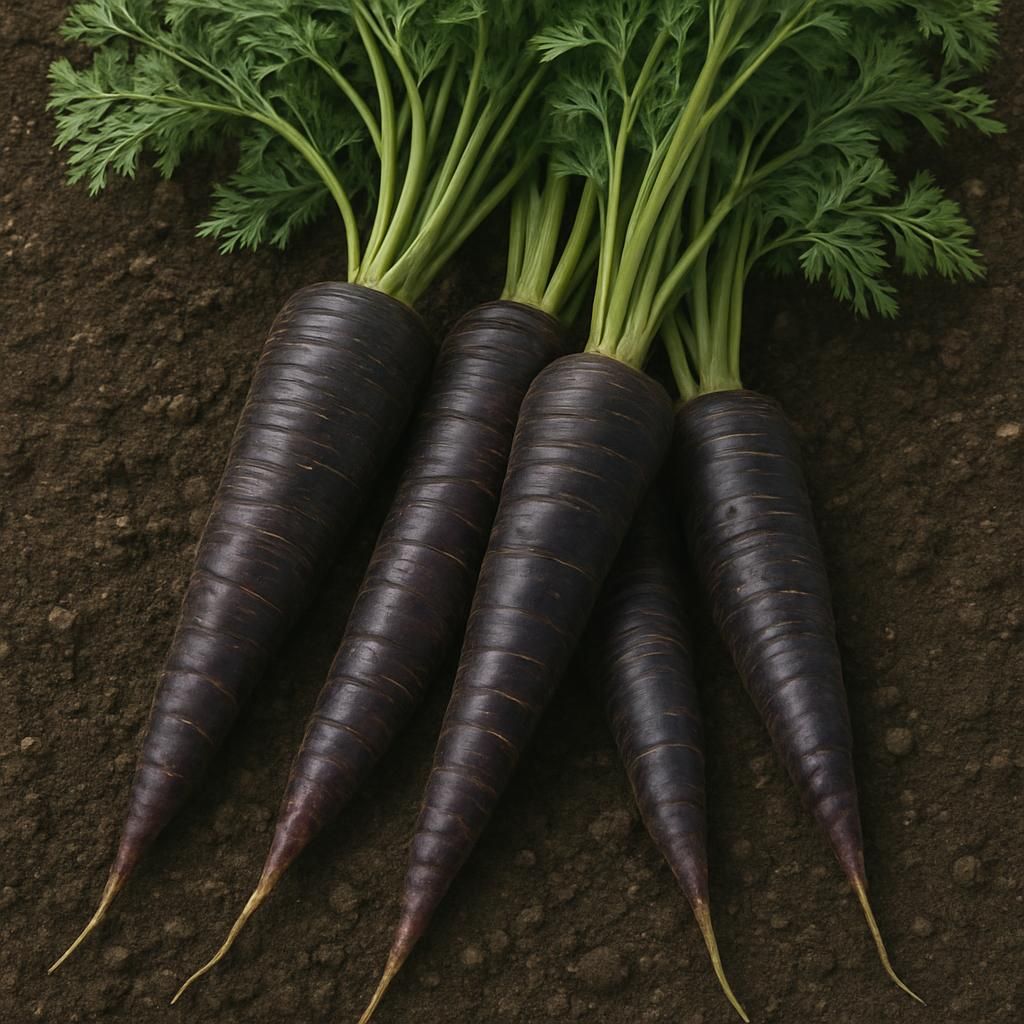
Introduction to Carrot (Black Nebula)
Black Nebula carrot is a specialty variety known for its deep purple to nearly black skin and flesh. Developed for both culinary excellence and high antioxidant levels, this cultivar stands out among traditional orange carrots. Its rich color comes from anthocyanins that remain stable even after cooking, making it popular with restaurants and health-focused growers.
This variety offers a sweet, slightly spicy flavor with earthy undertones. The roots typically reach 7–9 inches in length and maintain their color throughout the interior, unlike some purple carrots that fade toward the core. Black Nebula performs well in both home gardens and small-scale commercial production when proper soil preparation is followed.
Botanical Profile of Carrot (Black Nebula)
Black Nebula belongs to the Apiaceae family and shares the same species as standard carrots. It produces a tapered storage root with smooth, dark pigmentation extending from skin to core. The foliage is finely divided and fern-like, typical of Daucus carota, and reaches 12–18 inches in height at maturity.
The plant is a biennial but is grown as an annual for its edible root. Flowering occurs in the second year if roots are left in the ground, producing white umbels that attract beneficial pollinators. Seeds are small, ridged, and light brown, requiring careful handling during sowing.
Soil, pH, and Climate Requirements for Carrot (Black Nebula)
Black Nebula carrots demand loose, well-drained soil free of rocks and clumps to prevent forking and stunted growth. Heavy clay or compacted soils should be amended with aged compost or coarse sand several weeks before planting.
| Parameter | Ideal Range | Notes |
|---|---|---|
| Soil Type | Sandy loam to loam | Stone-free, deep tilth essential |
| Soil pH | 6.0 – 6.8 | Slightly acidic to neutral |
| Soil Temperature | 55–75 °F (13–24 °C) | Optimal germination 60–70 °F |
| Air Temperature | 60–75 °F (16–24 °C) | Tolerates light frost; avoid heat spikes |
| Sun Exposure | Full sun (6–8 hours) | Partial shade reduces root sweetness |
| Spacing | 2–3 inches between plants | Rows 12–18 inches apart |
| Depth | ¼–½ inch | Direct sow; keep evenly moist |
Step-by-Step Planting & Propagation
- Prepare the bed by removing all stones and breaking up the soil to at least 12 inches deep.
- Sow seeds directly outdoors 2–3 weeks before the last spring frost or in late summer for fall harvest.
- Mix seeds with fine sand for even distribution; sow thinly in rows.
- Cover lightly with ¼ inch of fine soil or vermiculite and firm gently.
- Keep the seedbed consistently moist until germination (7–14 days).
- Thin seedlings to 2–3 inches apart when they reach 2 inches tall to allow proper root development.
- For succession planting, sow new rows every 3 weeks until midsummer.
Care & Maintenance regimes for Carrot (Black Nebula)
Consistent moisture and weed control are critical. Avoid high-nitrogen fertilizers that promote leafy growth at the expense of root quality. Mulch between rows to suppress weeds and retain moisture.
| Task | Frequency | Details |
|---|---|---|
| Watering | 1 inch per week | Even moisture; avoid waterlogging |
| Fertilizer | At sowing and 4 weeks later | Low-nitrogen, high-phosphorus organic blend |
| Weeding | Weekly until canopy closes | Hand-pull or shallow hoe to protect roots |
| Thinning | Once at 2-inch height | Maintain 2–3 inch spacing |
| Mulching | After thinning | 2-inch layer of straw or leaf mold |
| Pruning (foliage) | Not required | Remove only damaged or diseased leaves |
Pests, Diseases & Organic Management
Common pests include carrot rust fly, aphids, and wireworms. Floating row covers effectively exclude carrot rust fly adults. Root-knot nematodes can be managed through crop rotation with marigold or mustard cover crops.
Diseases such as Alternaria leaf spot and powdery mildew may appear in humid conditions. Improve airflow, avoid overhead watering, and remove infected foliage promptly. Pythium and Rhizoctonia can cause damping-off in cool, wet soils; use sterile seed-starting mix and ensure good drainage.
Harvesting, Curing & Optimal Storage
Black Nebula carrots reach harvest readiness 65–75 days after sowing when roots are ½–¾ inch in diameter at the shoulder. Loosen soil with a fork and pull gently to avoid breakage. Harvest fall crops after light frosts for improved sweetness.
Cure harvested roots by removing tops to ½ inch and allowing surface moisture to dry for 1–2 hours. Store in perforated plastic bags or damp sand at 32–38 °F (0–3 °C) with 95% humidity. Properly stored roots maintain quality for 4–6 months.
Companion Planting for Carrot (Black Nebula)
Plant onion or leeks nearby to deter carrot rust fly. Radish and lettuce make excellent companions as their shallow roots do not compete. Avoid planting near dill or parsley, which can cross-pollinate and reduce seed purity in future generations.
Tomato and pepper beds benefit from nearby carrot rows that improve soil structure. Interplant with nasturtium to attract aphids away from carrot foliage. Rotate carrots with legumes such as peas to restore nitrogen and break pest cycles.