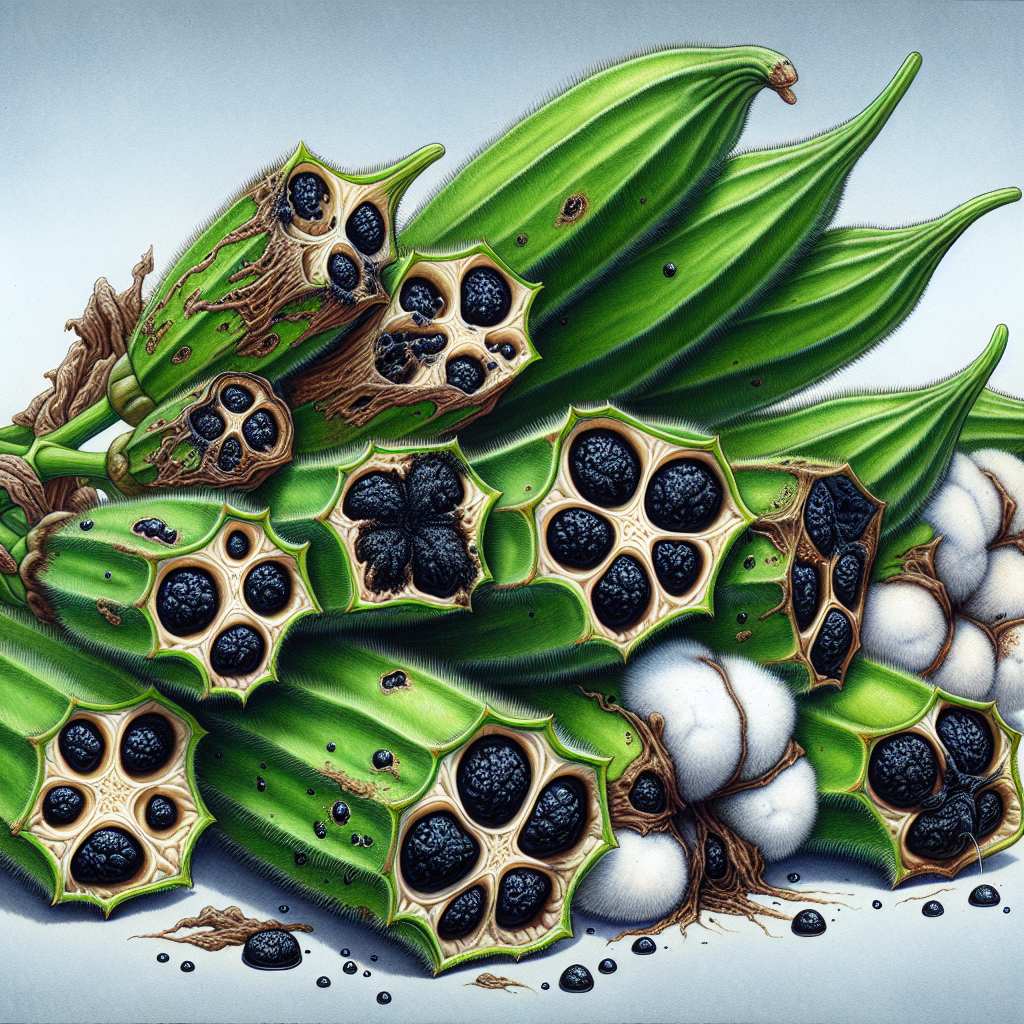
Introduction to Capsule rots
Capsule rots represent a critical challenge in agricultural production, particularly for crops bearing seed pods or capsules. This disease complex, primarily caused by fungal pathogens such as Colletotrichum spp., Alternaria spp., Phytophthora spp., and Botrytis spp., along with bacterial contributors, leads to the softening, discoloration, and eventual disintegration of fruit capsules. In severe cases, entire harvests can be lost, with economic impacts felt most acutely by small-scale farmers growing okra, cotton, capsicum, and certain solanaceous plants like bell pepper.
The term 'capsule rots' encompasses multiple rots affecting the protective structures enclosing seeds, distinguishing it from fruit rots or pod rots. Symptoms often mimic other issues like anthracnose or Alternaria, making accurate diagnosis essential. Early detection and intervention are key to minimizing damage. For small farms, integrating organic strategies with precise monitoring can turn this destructive disease into a manageable issue. Learn more about Why Misidentifying Plants Costs Small Farms Thousands - And How AI Camera Diagnosis Fixes It Fast to enhance your diagnostic skills.
Globally, capsule rots cause 20-50% yield reductions in susceptible crops under favorable conditions. In tropical and subtropical regions, where humidity persists, outbreaks are annual threats. Understanding the pathology allows farmers to implement proactive measures, safeguarding productivity and profitability.
Identifying Symptoms & Damage
Recognizing capsule rots early is crucial for containment. Initial symptoms appear as small, water-soaked lesions on young capsules, often at the blossom end or near the peduncle. These spots expand rapidly, turning dark brown to black with a sunken, leathery texture. Affected capsules may emit a foul odor as secondary bacteria invade, accelerating rot.
In cotton, rotted bolls fail to open, trapping lint and seeds inside decayed locks. Okra pods become shriveled, mushy, and covered in grayish fungal mycelium. For chili pepper and bell pepper, capsules show concentric rings of rot, often confused with blossom end rot, but distinguished by sporulation and rapid spread to adjacent fruits.
Damage extends beyond direct loss: infected capsules drop prematurely, fostering root rots from soil splash. Yield impacts are profound—up to 70% in untreated fields. Inspect plants weekly during flowering and fruit set, focusing on lower canopy where humidity builds. Use a hand lens to spot fungal spores or bacterial ooze, confirming diagnosis over abiotic disorders like nutrient deficiencies.
Secondary signs include yellowing leaves from girdling at the capsule base and increased pest attraction, such as capsule borers, exacerbating damage. Differentiate from powdery mildew by the wet, necrotic tissue versus powdery growth.
Lifecycle and Progression of Capsule rots
Capsule rots follow a polycyclic lifecycle, with pathogens overwintering as sclerotia, mycelium, or spores in crop debris, soil, or on alternate hosts. Primary infection occurs via rain splash or wind carrying conidia to blossoms during anthesis, when capsules are most susceptible.
Germination requires free moisture (12-24 hours) and temperatures of 25-30°C (77-86°F). Hyphae penetrate through natural openings or wounds, colonizing capsule walls. Lesions sporulate within 5-7 days, releasing secondary inoculum in humid conditions, leading to exponential spread. Progression accelerates post-rainfall, with full rot in 7-14 days.
In cotton, Colletotrichum enters via stomatal pores, causing anthracnose-type rots. Botrytis thrives in cool, wet nights, producing fluffy gray mold. Bacterial forms, like Xanthomonas, ooze from cracks, spreading via tools or insects. Disease culminates in mummified capsules, serving as reservoirs for next season.
Understanding this cycle informs timing of interventions: target pre-flowering debris removal to break primary inoculum.
Environmental Triggers & Risk Factors
Capsule rots flourish in warm (24-32°C), humid environments with prolonged leaf wetness (>10 hours). High rainfall (>1000mm annually) or overhead irrigation creates ideal splash-dispersal conditions. Poor air circulation in dense plantings (>50,000 plants/ha) traps moisture, elevating risk.
Soil factors include high organic matter retaining wetness and pH >7 favoring fungal growth. Over-fertilization with nitrogen promotes lush foliage, shading capsules and hindering drying. Wounded plants from thrips or mechanical injury serve as entry points.
Risk spikes during monsoon seasons or in lowland fields with standing water. Susceptible varieties like non-hybrid okra amplify vulnerability. Crop rotation gaps with potato or tomato—common hosts—increase inoculum buildup. Monitor weather forecasts; Why 80% of Small Farms Battle Weather Disasters - And How Hyper-Local AI Forecasts Can Save Your Harvest offers tools for prediction.
Organic Control & Treatment Plans
Organic management emphasizes integrated approaches. Cultural Controls: Prune for airflow, stake plants to elevate capsules. Avoid overhead watering; use drip irrigation. Remove and destroy infected debris promptly.
Biological Agents: Apply Trichoderma spp. or Bacillus subtilis as soil drenches pre-planting to antagonize pathogens. Beauveria bassiana targets associated fungi gnats.
Organic Fungicides: Copper octanoate (0.5-1%) or potassium bicarbonate sprays at 7-10 day intervals during high-risk periods. Neem oil (2-3%) disrupts spore germination. For cotton, seed-treat with Streptomyces griseoviridis.
Step-by-Step Treatment Plan:
- Scout fields twice weekly.
- At first lesion, apply copper spray + sticker.
- Thin dense canopies.
- Introduce predatory mites if vectors present.
- Post-harvest, deep plow residues.
Resistant varieties like hybrid okra 'Clemson Spineless' reduce incidence by 40%. Combine with mulching to suppress splash.
Preventing Capsule rots in the Future
Prevention hinges on long-term strategies. Select resistant cultivars: for cotton, choose Bt hybrids with rot tolerance. Implement 2-3 year rotations with non-hosts like grains or legumes.
Soil solarization in off-season kills soilborne inoculum. Enhance drainage with raised beds (20-30cm high). Balance nutrition: avoid excess N; supplement K and Ca for capsule firmness.
Monitor via traps for early capsule borers, preventing wounds. Foliar calcium sprays (1-2%) strengthen walls. Sanitize tools with 10% bleach. For small farms, Soil Health Mastery: 5 Proven Strategies for Small Farms to Build Fertile Ground Without Breaking the Bank builds resilience.
Annual planning: pre-season soil tests, weather-based spray schedules. These reduce incidence by 70-90%.
Crops Most Affected by Capsule rots
Capsule rots strike capsule-bearing crops hardest:
- Cotton ([/wiki/cotton]): Boll rot devastates lint yield.
- Okra ([/wiki/okra]): Pod decay halves marketable produce.
- Chili & Bell Pepper ([/wiki/chili-pepper], [/wiki/bell-pepper]): Fruit abortion common.
- Eggplant ([/wiki/eggplant]): Calyx and fruit rots.
- Other: Sunflower heads, safflower capsules.
Tropical crops like mango pseudocapsules occasionally affected. Hybrids show partial resistance.