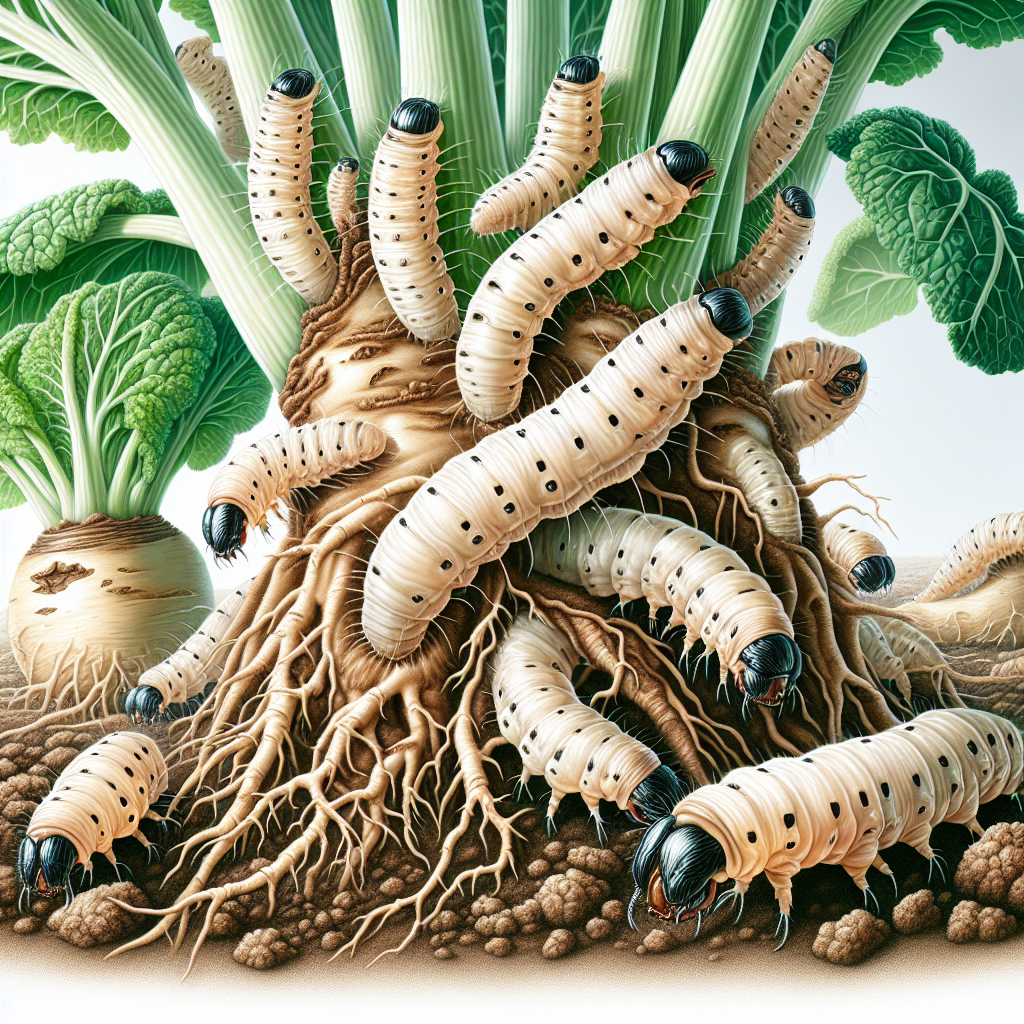
Introduction to cabbage maggot larvae
Cabbage maggot larvae, the immature stage of the cabbage root fly (Delia radicum), represent one of the most insidious pests affecting brassica crops worldwide. These tiny, legless, white maggots (typically 5-8 mm long) bore into the roots and stems of plants like cabbage, broccoli, cauliflower, and related vegetables, leading to severe damage that often goes unnoticed until plants suddenly wilt and collapse. Native to Europe but now cosmopolitan, this pest thrives in cool, moist conditions, completing multiple generations per season in temperate climates.
Farmers and gardeners face significant losses from cabbage maggots, with yields reduced by up to 50-100% in untreated fields. Early detection is challenging due to the subterranean feeding habit, but understanding their biology enables proactive management. This definitive guide covers identification, lifecycle, triggers, organic controls, prevention, and affected crops, empowering you to safeguard your brassicas effectively. For more on integrated pest strategies, check out this Spring Pest Patrol blog post.
Identifying Symptoms & Damage
Diagnosing cabbage maggot larvae requires keen observation of both above- and below-ground signs. The most telling symptom is sudden wilting of young plants during the day, even under adequate moisture—plants recover at night but repeat the cycle until they yellow, stunt, or die. Seedlings may disappear entirely, leaving only stubble, while older plants show blue-tinged leaves, delayed maturity, and reduced heads.
Inspect roots for the primary evidence: glossy white maggots with black mouth hooks feeding on fine root hairs and tunneling into larger taproots. Damage appears as brown, mushy lesions or cavities, often accompanied by rusty-brown discoloration and secondary bacterial infections. Dig up suspect plants carefully; you'll find maggots coiled in tunnels, sometimes with puparia (brown, seed-like cases).
Secondary signs include increased susceptibility to root rot and clubroot, as maggot wounds provide entry points for pathogens. In heavy infestations, adult flies—grayish, 6-7 mm long with yellowish legs—may be seen hovering low over plants in zigzag patterns. Differentiate from cutworms (surface chewers) or wireworms (hard-bodied, click beetles); cabbage maggots are soft, tapered, and root-specific. Use yellow sticky traps to monitor adult emergence for confirmation.
Economic thresholds vary: in commercial fields, 10-20% seedling loss warrants action; home gardens tolerate less. Regular scouting—checking 20-25 plants weekly from planting—ensures timely intervention.
Lifecycle and Progression of cabbage maggot larvae
The cabbage root fly completes 2-4 generations annually, depending on climate, with overlapping cycles in summer. Adults overwinter as pupae 5-15 cm deep in soil, emerging in spring (April-May in temperate zones) when soil temperatures hit 10-15°C (50-59°F). Females lay 50-200 tiny white eggs in clusters of 20-30 at the soil-plant interface, hatching in 3-7 days.
Newly hatched larvae (1-2 mm) immediately burrow into roots, molting three times over 3-4 weeks while feeding voraciously. Full-grown maggots (7-9 mm) exit to pupate in soil, forming barrel-shaped brown puparia. First-generation adults emerge 2-3 weeks later, repeating the cycle through summer until fall pupae overwinter.
Lifecycle duration shortens with warmth: eggs 3 days at 20°C (68°F), larvae 18 days, pupae 15 days. Peak damage occurs from successive larval waves, with second/third generations hitting mid-season crops hardest. Adults live 1-2 weeks, attracted by brassica volatiles; males patrol territories, females oviposit on contact.
Monitoring with soil thermometers and traps predicts peaks: first flight at 165-200 degree-days (base 4°C). This knowledge guides timed controls, disrupting vulnerable stages like eggs/young larvae.
Environmental Triggers & Risk Factors
Cabbage maggots flourish in cool (15-21°C), moist soils, with optimal egg-laying at 17-20°C and high humidity. Spring plantings coincide with adult emergence, amplifying risk; minimum development threshold is 6°C, halting below 10°C. Heavy, poorly drained soils retain moisture, favoring survival; pH 6.0-7.0 suits them best.
Key triggers include nearby overwintering sites—weed brassicas, crop residues—or volunteer plants signaling females to oviposit. Acidic soils (pH <6.0) stress plants, increasing susceptibility; nitrogen-rich fertilizers boost root growth, a maggot magnet. Close proximity to infested fields (<1 km) spreads flies rapidly.
Climate change extends seasons, adding generations in milder winters. Monoculture brassicas heighten risk versus diversified rotations. Weeds like shepherd's purse host flies, while slugs exacerbate damage by chewing wounded roots. Risk mapping via farm history and weather data predicts outbreaks.
Organic Control & Treatment Plans
Organic management integrates cultural, physical, biological, and minimal chemical tactics for sustainable control. Cultural: Delay planting until after first fly peak (use transplants over direct seed); rotate brassicas with non-hosts like potato or grains (3-4 years). Till soil post-harvest to expose pupae to predators/weather.
Physical Barriers: Floating row covers (0.6 mil, UV-treated) exclude adults from emergence—secure edges with soil/sandbags, ventilate on hot days. Collars (tar paper, aluminum foil) around stems deter egg-laying; apply at transplanting.
Biological: Beneficial nematodes (Heterorhabditis bacteriophora or Steinernema feltiae) applied as soil drench (3 billion/ha) target larvae when soil is 12-25°C, moist. Parasitic wasps (Trybliographa rapae) and rove beetles (Aleochara bilineata) naturally regulate; encourage with flowering borders.
Organic Insecticides: Spinosad (OMRI-listed) drenches kill young larvae; pyrethrins repel adults. Diatomaceous earth or wood ash around bases irritates crawlers. Trap crops (early radishes) divert flies.
Integrated Plan: Scout weekly; deploy row covers at planting; nematodes at first wilt (repeat 7-10 days). For Spring Pest Patrol: Organic AI Strategies to Shield Your Crops from Common Invaders, AI aids timing. Expect 70-90% control; monitor for resistance.
Preventing cabbage maggot larvae in the Future
Prevention trumps cure: start with site selection—avoid low, wet spots; amend soil to pH 6.5-7.0 with lime. Use resistant varieties like 'Market Prize' cabbage or 'Consor' broccoli. Time plantings post-peak fly (soil >15°C); interplant with repellents like onion, garlic, or nasturtium.
Crop rotation is cornerstone: follow brassicas with peas or carrot. Sanitize by deep plowing (20 cm) and cover crops like mustard biofumigants suppress pupae. Mulch with straw (5 cm) post-planting buries eggs.
Enhance biodiversity: sow marigold borders, release predatory beetles. Soil solarization in summer kills pupae via heat. Long-term, trap crops and pheromone traps reduce populations. Annual monitoring with sticky traps sustains low densities.
Crops Most Affected by cabbage maggot larvae
Primarily brassicas: cabbage (all types, especially early varieties), broccoli, cauliflower, kale, Brussels sprouts, kohlrabi. Radishes, turnip, rutabaga suffer seedling losses. Occasionally beet, mustard greens, horseradish. Seedlings most vulnerable; mature plants tolerate light feeding. Global impact hits organic/home gardens hardest due to chemical avoidance.