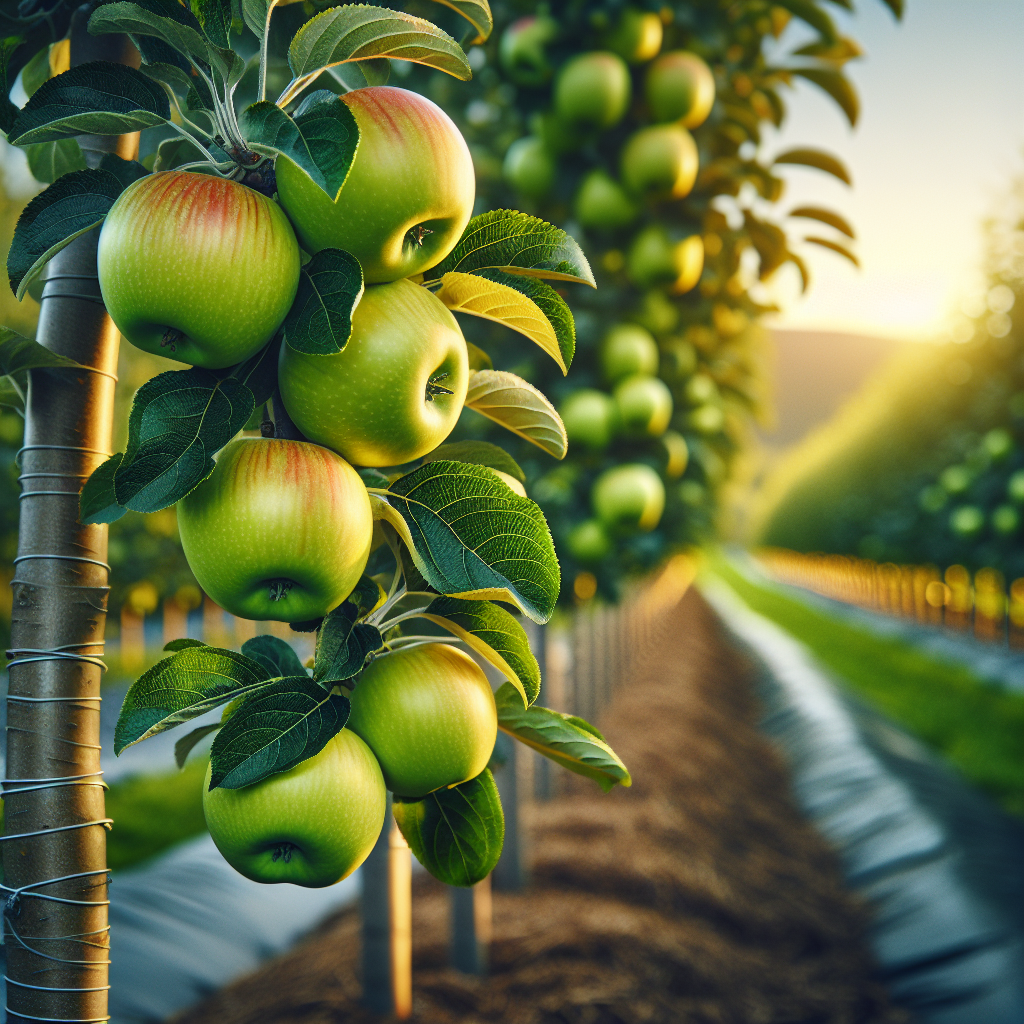
Introduction to Braeburn Apple
Originating in New Zealand in the mid-20th century, this cultivar rose to international popularity because it combines strong eating quality with dependable storage performance and broad market appeal. The fruit is typically medium to large, with a distinctive red-orange flush over green to yellow background skin, and flesh that is dense, crisp, aromatic, and notably well balanced between sweetness and acidity.
From a grower’s perspective, it is a productive apple with commercial potential, but it is not a “plant and forget” variety. It tends to perform best where warm days and cool nights during ripening improve color and flavor, and where orchard managers can control vigor, fruit set, and harvest timing precisely. When mismanaged, fruit may be undersized, poorly colored, or susceptible to physiological disorders in storage. When managed well, it is one of the more rewarding late apples for fresh market, farm stands, and long-keeping home orchards.
For a broader species overview, see our Apple guide. Growers also benefit from strong orchard floor ecology and soil structure; this general soil health article is useful background reading.
Botanical Profile of Braeburn Apple
This cultivar belongs to the rose family, Rosaceae, and is a domesticated apple selection of Malus domestica. Like most commercial apples, it is normally propagated by grafting onto a clonal rootstock rather than grown from seed, because seedlings do not come true to type and can differ dramatically in fruit quality, vigor, disease tolerance, and bearing habit.
Key botanical and horticultural traits include:
- Growth habit: moderately vigorous to vigorous depending on rootstock, soil fertility, and pruning style.
- Bearing habit: fruits on spurs and on older wood, with regular productivity when pollination is adequate and crop load is thinned.
- Bloom period: generally mid-season, though exact timing shifts by region and spring temperatures.
- Pollination: not self-fertile in the practical commercial sense; it requires compatible pollinizer cultivars flowering at the same time and active bee movement.
- Fruit character: firm, crisp, aromatic, medium acidity, soluble solids often improving significantly if left to mature properly on the tree.
- Ripening window: late season, commonly after Gala and often around Fuji timing depending on climate.
Braeburn is known for excellent texture retention in storage, but it can also be prone to Braeburn browning disorder, bitter pit, and internal disorders if nutrition, irrigation, maturity, and storage atmosphere are not well controlled. In orchard design, that means nutrition should not be pushed excessively toward late nitrogen, and calcium management should be intentional rather than assumed.
Tree size depends heavily on rootstock. On dwarfing stocks such as M.9, trees may remain compact and precocious, often 2.5-3.5 m tall with support. On semi-dwarf stocks like M.26 or MM.106, trees become larger, with broader canopies and wider spacing needs. Rootstock choice will determine not only size but precocity, anchorage, drought response, and tolerance to certain soil conditions.
Soil, pH, and Climate Requirements for Braeburn Apple
This cultivar performs best in deep, fertile, well-drained loam or sandy loam with moderate water-holding capacity and good aeration. Apple roots require oxygen in the root zone; soils that remain saturated for more than 48 hours after heavy rainfall significantly increase the risk of root decline, Phytophthora infection, and poor tree establishment.
Ideal soil characteristics include:
- Texture: loam, sandy loam, or silty loam.
- Effective rooting depth: at least 60-90 cm, deeper if possible.
- Drainage: internal drainage should be good; avoid perched water tables.
- Organic matter: roughly 3-5% is excellent for orchard establishment.
- pH: ideal 6.0-6.8; acceptable about 5.8-7.0.
At pH below 5.5, nutrient imbalances become more likely, especially reduced calcium and magnesium availability and potential aluminum stress in strongly acidic soils. At pH above 7.2, iron, manganese, zinc, and boron uptake may become limited, producing chlorosis, weak shoot growth, and reduced fruit quality. A pre-plant soil test is essential. If lime is needed, it should be incorporated months before planting. If the soil is alkaline, elemental sulfur and organic matter additions may help, but site choice is often the better long-term solution.
Climate requirements are distinctly temperate. Trees need winter chilling to break dormancy and bloom evenly; approximately 700-1,000 chill hours is a useful broad target, though local performance varies. Insufficient chill can cause delayed leaf-out, uneven bud break, weak bloom, and poor fruit set. Excessively mild winters often reduce productivity.
During the growing season, full sun is mandatory for premium fruit quality. A minimum of 8 hours of direct sunlight is desirable, while commercial-quality color and sugar accumulation improve with unobstructed exposure from morning through late afternoon. Sites with good air drainage are preferable because cold air settles in low spots, increasing spring frost risk.
Braeburn particularly benefits from:
- Warm but not extreme summers.
- Cool night temperatures during ripening for better color and flavor development.
- Moderate humidity or good air movement to reduce foliar disease pressure.
- Annual rainfall of roughly 700-1,000 mm if well distributed, or supplemental irrigation where dry summers occur.
Heat stress above about 32-35°C during ripening can reduce red coloration, increase sunburn risk, and soften acid balance. In hot inland climates, reflective mulches, evaporative cooling, or strategic canopy shading may be justified. Conversely, in cool maritime climates, fruit may color well but require careful crop thinning and harvest timing to achieve adequate sugars.
Step-by-Step Planting & Propagation
Commercially and professionally, propagation is by bench grafting, budding, or whip-and-tongue grafting onto selected rootstocks. Seed propagation is unsuitable if the goal is true Braeburn fruit. For most growers, purchasing certified disease-free nursery trees is the best route.
Follow this planting sequence:
- Select the site carefully. Choose a frost-sheltered but well-aerated location with full sun, no chronic standing water, and enough room for mature canopy spread and equipment access.
- Test the soil before planting. Measure pH, phosphorus, potassium, calcium, magnesium, boron, and organic matter. Correct major imbalances before trees go in.
- Prepare the ground. Remove perennial weeds thoroughly. In compacted sites, deep rip or subsoil before planting, but only when soil moisture is suitable so compaction is actually relieved rather than smeared.
- Lay out spacing by rootstock. Dwarf systems may use 1-1.5 m between trees and 3-4 m between rows. Semi-dwarf systems may need 3.5-5 m between trees and 5-6 m between rows. Wider spacing is needed for low-input or freestanding systems.
- Install support if needed. Dwarf rootstocks often require trellis or permanent staking before or at planting, not after the tree is already leaning.
- Plant during dormancy. Late winter to early spring is ideal in cold temperate regions; autumn planting suits milder climates where soil remains workable and roots can establish before summer.
- Dig correctly. Dig a hole wide enough to spread roots naturally, but no deeper than the root system. The graft union should remain 10-15 cm above final soil level to prevent scion rooting, which would negate rootstock size control.
- Backfill with native soil. Avoid heavily amended “potting hole” effects. Break clods and settle soil around roots, eliminating air pockets.
- Water in thoroughly. Apply enough water to wet the root zone to approximately 25-30 cm deep immediately after planting.
- Mulch properly. Apply 5-8 cm of organic mulch in a broad ring, but keep it 10-15 cm away from the trunk to avoid collar rot and rodent shelter.
Young trees should be headed or trained immediately according to system. In a central leader system, remove broken branches, retain a dominant leader, and begin scaffold positioning early. For high-density orchards, feathered trees with good lateral branches are especially valuable because they bring earlier cropping.
Pollination planning is essential. A separate compatible cultivar with overlapping bloom is typically needed within bee flight range, often every third row or through grafted pollinizer limbs. Managed honeybees are standard, but wild pollinators improve fruit set resilience.
Care & Maintenance regimes for Braeburn Apple
Water management should be precise, especially in the first three years and during fruit sizing. The goal is evenly moist but well-aerated soil. In practical terms, soil in the active root zone should feel cool and slightly damp, not muddy, and should form a weak ball when squeezed before crumbling with pressure. Tensiometers in loam soils often guide irrigation well when kept roughly in the 20-40 centibar range during active growth; sustained readings much above that indicate increasing water stress, while near-zero readings for prolonged periods may signal excessive saturation.
Young trees commonly need 10-20 liters per watering 1-3 times weekly depending on soil and weather. Mature trees may need 25-50 liters or more per irrigation event under drip, adjusted by evapotranspiration, crop load, and canopy volume. Critical periods are bloom, fruit set, and rapid fruit expansion. Water stress during those phases reduces cell division, leading to smaller fruit and weaker return bloom.
Signs of under-watering include dull or inward-cupping leaves, reduced extension growth, premature fruit drop, and hard, undersized fruit. Signs of overwatering include persistently yellowing foliage, soft lush shoots, poor root anchorage, algae or sour smell at the soil surface, and shoot growth with little fruit firmness. Chronic over-irrigation also increases nutrient leaching and disease pressure.
Nutrient management should be based on annual leaf analysis and periodic soil tests. In non-bearing years, modest nitrogen supports canopy establishment. Once trees begin cropping, excessive nitrogen should be avoided because it drives vegetative growth, shades fruit, delays color, and may worsen storage disorders. A split application in spring is safer than heavy late-season feeding.
General nutrient priorities include:
- Nitrogen: adequate but not excessive; deficiency causes pale leaves and weak shoot growth, while excess causes overly vigorous shoots and poor color.
- Potassium: important for fruit size and sugar movement, but overuse can antagonize calcium uptake.
- Calcium: critical for firmness and disorder prevention. Low calcium is associated with bitter pit and storage breakdown.
- Boron: needed in small amounts for flowering and fruit set; deficiency can impair pollination success.
- Magnesium and zinc: important in marginal soils and high pH situations.
Pruning should aim for light penetration, balanced cropping, and renewal of productive fruiting wood. This cultivar benefits from an open, calm canopy where leaves dry quickly and interior fruit still receives filtered light. Winter pruning establishes structure, while summer pruning can reduce vigor and improve color if done judiciously.
Best practices include:
- Maintain a strong central leader unless using a different deliberate system.
- Remove narrow crotch angles and upright water sprouts.
- Preserve fruitful spurs but thin congested spur systems over time.
- Keep branch diameter subordinate to the leader.
- Avoid over-pruning, which can stimulate rank vegetative growth.
Fruit thinning is especially important. Thin when fruitlets are about 10-15 mm across, ideally soon after natural June drop begins. A practical target is one fruit per cluster, spaced roughly 15-20 cm apart along the branch. Without thinning, Braeburn may overcrop, yielding smaller fruit, lower color, biennial tendency, and weakened next-year bloom. Thinning also reduces limb breakage and improves calcium distribution per fruit.
Weed control should keep at least a 0.75-1.5 m vegetation-free strip around the trunk in young orchards. Grasses and aggressive weeds compete heavily for water and nitrogen. Orchard alleyways can remain in sod for trafficability, but the tree row should stay mulched or cultivated lightly as appropriate.
Pests, Diseases & Organic Management
Braeburn shares the pest and disease pressures common to many apples, and its dense canopies can exacerbate issues if not pruned well. The most important approach is integrated orchard hygiene: sanitation, airflow, monitoring, resistant rootstock selection where relevant, and timely organic interventions.
Key insect pests include codling moth, apple maggot in some regions, aphids, scale insects, mites, leafrollers, and woolly apple aphid. codling moth is often the flagship pest because larvae tunnel directly into fruit. Organic management relies on pheromone traps for monitoring, mating disruption in larger blocks, sanitation of fallen fruit, trunk banding in some systems, and well-timed applications of granulosis virus, kaolin clay, or spinosad where permitted by local standards.
aphids distort shoots and can reduce vigor in young trees. Strong populations are often encouraged by excess nitrogen. Encourage beneficial insects with flowering margins and avoid broad-spectrum materials that disrupt predator populations. Horticultural oils during dormant or delayed-dormant periods help suppress overwintering eggs and scale.
Major diseases include apple scab, powdery mildew, fire blight, cedar apple rust in affected regions, sooty blotch/flyspeck, and crown/root rots in wet soils. fire blight risk increases with warm, humid bloom periods and lush nitrogen-fed growth. Prune out strikes well below visible symptoms, disinfect tools when disease pressure is high, and avoid stimulating tender late-season shoots.
For disease prevention:
- Remove and destroy mummified or fallen fruit.
- Rake and compost or shred infected leaves to reduce scab carryover.
- Prune for rapid drying after rain or dew.
- Avoid overhead irrigation where possible.
- Apply sulfur, copper, lime sulfur, potassium bicarbonate, or biologicals according to disease pressure and local registration rules.
Physiological disorders deserve special emphasis in this cultivar. bitter pit often appears as small, dark, sunken spots associated with calcium imbalance, vigorous growth, irregular watering, and large fruit. Braeburn browning disorder can develop in storage, especially under low-oxygen atmospheres if fruit is harvested immature or stored improperly. sunburn may occur on exposed fruit in hot climates.
To reduce disorder risk:
- Maintain even irrigation, avoiding cycles of drought then heavy watering.
- Do not oversupply nitrogen late in the season.
- Keep potassium and magnesium balanced relative to calcium.
- Consider multiple foliar calcium sprays during the season, especially in vigorous or high-value orchards.
- Harvest at correct maturity, not simply by external color.
Harvesting, Curing & Optimal Storage
This is a late-harvest apple, and timing matters more than many growers realize. If harvested too early, fruit may seem firm but fail to develop full aroma and can be more prone to storage disorders. If harvested too late, fruit can lose some storage life and become more vulnerable to bruising and internal breakdown.
Maturity indicators should be combined rather than judged by one sign alone:
- Background skin color shifting from green toward yellow-green.
- Good red-orange overcolor on exposed fruit.
- Seeds turning brown.
- Fruit separating with an upward twist rather than needing to be yanked.
- Starch conversion and soluble solids tests where available.
For quality-focused production, pick selectively in two or more passes if color develops unevenly across the canopy. Harvest only when fruit is dry. Lift and roll each apple gently upward; do not pull straight down, which can tear spurs and reduce next year’s crop potential.
Handle fruit as though it bruises more easily than it appears to. Dense, crisp flesh can hide impact damage that later shows as brown internal bruising. Use padded bins, avoid overfilling containers, and remove field heat quickly after harvest.
Unlike bulbs or tubers, apples do not require curing in the classic sense, but they do benefit from prompt conditioning and cooling. Sort out damaged, insect-stung, cracked, or diseased fruit immediately. Store the soundest fruit only.
Optimal storage conditions are:
- Temperature: 0-1°C.
- Relative humidity: 90-95%.
- Strong air circulation without dehydration.
- Dark storage environment.
At room temperature, quality may decline within 1-3 weeks depending on ripeness. In common cold storage, sound fruit can often keep for 2-4 months, sometimes longer under excellent conditions. Controlled atmosphere storage extends life further, but this cultivar must be managed carefully because improper oxygen and carbon dioxide levels can trigger Braeburn browning. Small-scale growers should prioritize consistent cold temperature and high humidity rather than improvised low-oxygen storage unless they have reliable monitoring.
For home or farm storage, perforated food-grade liners, clean crates, and separation of damaged fruit from premium fruit help preserve lot quality. Check stored apples every 1-2 weeks and remove any softening or decaying fruit at once.
Companion Planting for Braeburn Apple
The most useful companions in an apple system are those that improve pollinator activity, reduce bare-soil stress, build soil, or discourage certain pests without creating excessive competition at the root zone. Companion planting in orchards works best when plants are placed in the alleyways, border strips, or outer edge of the drip line rather than directly against the trunk.
Clover is one of the best orchard companions because it acts as a living mulch, supports pollinators, improves soil aggregation, and, as a legume, contributes biologically fixed nitrogen over time. It should still be managed carefully in young orchards so that the immediate tree row does not become too competitive.
Garlic is valued by many growers around orchard edges or in nearby guild plantings for its pungent sulfur compounds and compact growth habit. While it is not a magic pest repellent, it fits well into diversified orchard understories and can help maximize productive use of space.
Thai Basil attracts pollinators and beneficial insects when allowed to flower, and its shallow rooting habit makes it suitable for orchard-margin herb zones. It is especially useful in mixed-market gardens where culinary herbs provide an extra revenue stream alongside fruit.
Other good companions include insectary flowers and low-growing herbs that do not form dense woody thickets. Avoid highly competitive perennial grasses right up to the trunk, and avoid large nutrient-hungry crops planted inside the main root zone. The goal is support, not competition: more pollinators, better soil cover, less erosion, and improved beneficial insect habitat without reducing water or calcium access to the tree.