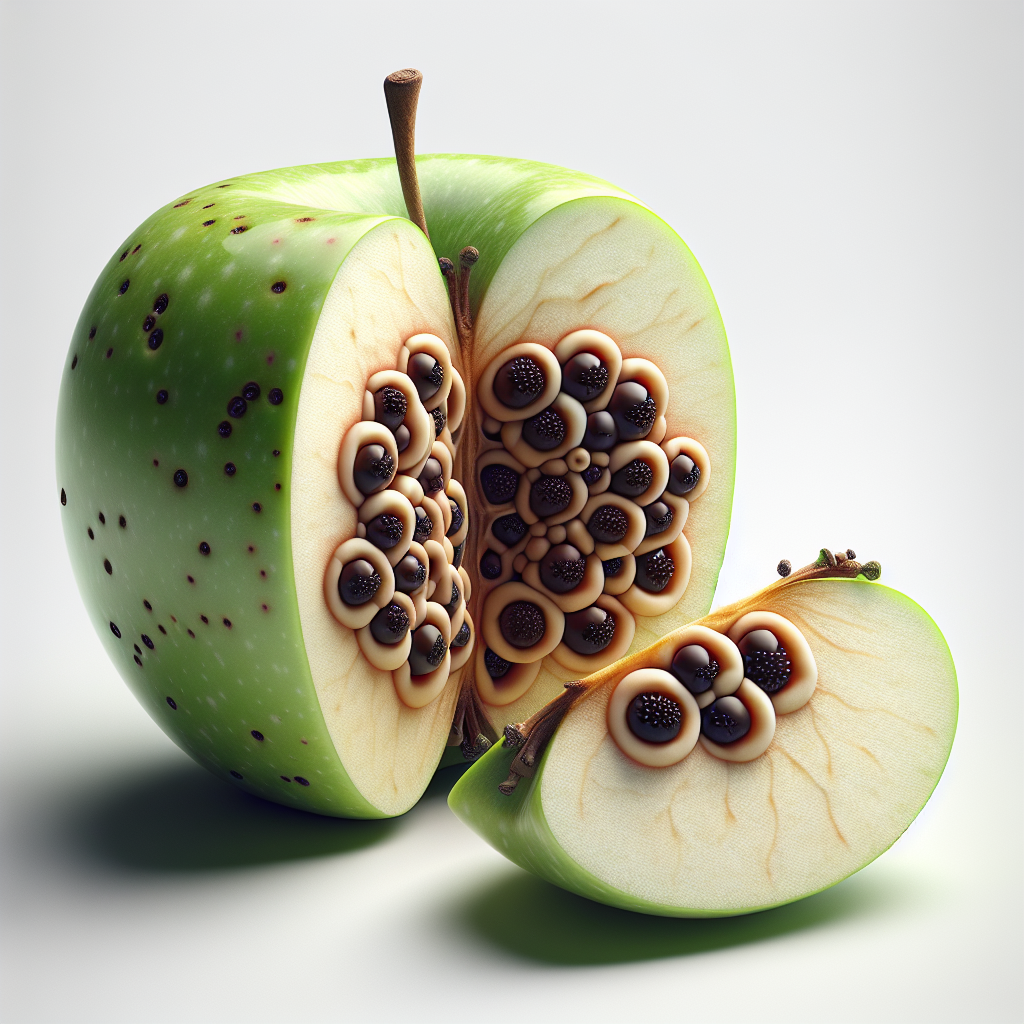
Introduction to bitter pit
Bitter pit represents one of the most economically damaging physiological disorders affecting apple and pear production worldwide. Characterized by discrete, sunken pits on the fruit skin that extend into the flesh, this condition renders affected fruits unmarketable and bitter-tasting due to localized cell breakdown. Unlike biotic pests or diseases, bitter pit stems from calcium (Ca) deficiency in fruit tissues, exacerbated by environmental stresses, imbalanced nutrition, and rapid fruit growth. First documented in the early 20th century, it continues to challenge growers, with incidence rates reaching 50-90% in susceptible cultivars under poor management. This guide provides comprehensive diagnostics, lifecycle insights, triggers, organic controls, prevention strategies, and affected crops to empower farmers with actionable, science-backed solutions. Understanding bitter pit's nuances is crucial for sustainable orchard management, as it directly correlates with fruit quality and profitability. For small-scale and commercial operations alike, proactive calcium management can reduce losses by up to 80%. Recent studies from agricultural extensions emphasize integrated approaches combining soil amendments, foliar sprays, and precision irrigation. Soil Health Mastery: 5 Proven Strategies for Small Farms to Build Fertile Ground Without Breaking the Bank offers complementary tactics to enhance nutrient availability.
Identifying Symptoms & Damage
Early detection of bitter pit is essential for timely intervention. Initial symptoms appear as small, dark green to black spots (1-3 mm) on the fruit surface, primarily at the calyx end or along the sides, sparing the stem end. These spots evolve into sunken depressions (pits) 3-10 mm wide and deep, often with a water-soaked halo. Internally, affected areas show brown, spongy necrosis extending 5-10 mm into the flesh, imparting a bitter flavor. Symptoms typically emerge pre-harvest but can develop post-harvest during storage, worsening under low humidity or ethylene exposure. Severity varies: mild cases show 5-10 pits per fruit, while severe infestations pit 50%+ of the surface, leading to total rejection. Differentiate from similar disorders like blossom end rot in tomatoes (firmer lesions, larger areas) or cork spot in pears (raised, corky tissue). Damage quantification: each affected fruit incurs 20-100% value loss, with global estimates exceeding $100 million annually in apple crops alone. Diagnostic tip: slice fruits longitudinally; bitter pit lesions are discrete and lens-shaped, unlike rot diseases which spread diffusely. Use a hand lens to confirm no fungal hyphae or insect frass, confirming physiological origin. Regular scouting from fruitlet stage (10-20 mm diameter) through maturity is key.
Lifecycle and Progression of bitter pit
Bitter pit lacks a biological lifecycle as it's abiotic, but follows a developmental progression tied to fruit ontogeny. Calcium demand peaks during cell division (first 4-6 weeks post-bloom), yet transport to fruit is limited post-petal fall, relying on xylem flow. Deficiency manifests when Ca levels drop below 0.15-0.20% dry weight in fruit cortex. Progression stages: 1) Latent phase (bloom to 30 days): Ca starvation weakens cell walls. 2) Incipient (30-60 days): Micro-lesions form due to membrane instability. 3) Visible (60+ days to harvest): Pits enlarge via cell collapse. 4) Post-harvest: Pitting intensifies 2-4 weeks in storage, accelerated by low Ca (below 0.10%). Incidence peaks in late-maturing cultivars like Honeycrisp or Anjou pears. Environmental stressors amplify progression: drought halts transpiration-driven Ca uptake, while excessive potassium (K) or nitrogen (N) competes for transport. Seasonal patterns show higher rates in 'off' years of alternate bearing. Tissue sampling tracks progression: leaf petioles (July) >5 meq/100g Ca indicate low risk; fruitlets <0.12% Ca signal high risk. Modeling tools predict incidence based on fruit size, crop load, and weather, aiding decisions.
Environmental Triggers & Risk Factors
Bitter pit susceptibility hinges on interacting triggers. Primary: Low soil Ca availability, especially in sandy/acidic soils (pH <6.0). High K, Mg, or N fertilization antagonizes Ca uptake via cation competition. Drought stress reduces transpiration, limiting passive Ca movement; irrigation deficits during cell expansion (June-August) spike incidence 3-fold. Excessive vigor from over-fertilization promotes large fruits with diluted Ca. Cultivar genetics: Honeycrisp apple, Golden Delicious, and d'Anjou pear are highly prone. Orchard factors: heavy crop loads (>100 fruits/tree) stretch Ca supply; poor root health from root rot or compaction impairs absorption. Climatic extremes—low humidity, high winds, or hot spells—exacerbate by closing stomata. Post-harvest risks include rapid cooling failures or CA storage imbalances. Risk assessment: Soil test (exchangeable Ca >1000 ppm), leaf analysis (Ca >1.2%), and fruit Ca sampling. Thresholds: Fruit Ca <0.15% + high crop load = 70% risk. Mitigate via liming (dolomitic lime at 2-4 tons/acre) and balanced nutrition (Ca:N >1:10).
Organic Control & Treatment Plans
Organic management prioritizes enhancing Ca delivery without synthetics. Core strategy: Foliar Ca sprays (calcium chloride 0.5-1% or chelated Ca) at 10-14 day intervals from petal fall to 4th cover (8-10 sprays/season), improving fruit Ca 20-40%. Target evenings to minimize leaf burn. Soil amendments: Gypsum (CaSO4, 1-2 tons/acre) supplies Ca without raising pH; apply pre-bloom. Mulching with compost boosts microbial activity and Ca cycling. Irrigation scheduling: Maintain 1-1.5 inches/week via drip, avoiding waterlogging. Crop load thinning to 1-2 fruits/spur reduces competition. Organic bio-stimulants like seaweed extracts or humic acids enhance uptake. Post-harvest: Store at 0-4°C, 95% RH; dip in 1% Ca gluconate. Integrated plan: Year 1—soil test + gypsum + sprays; monitor incidence. Efficacy: Reduces bitter pit 60-85% in trials. Avoid high K fertilizers; use wood ash sparingly. Companion practices: Interplant clover for N-fixation without excess. For severe cases, blend with vacuum infiltration of Ca solutions pre-storage.
Preventing bitter pit in the Future
Long-term prevention builds resilient orchards. Select resistant rootstocks (M.9, MM.106 low-risk) and cultivars like Fuji or Empire apple. Annual soil testing guides liming (target pH 6.2-6.8) and gypsum applications. Balance fertilizers: N <80 lb/acre, K:Ca <1:3 ratio. Precision irrigation with tensiometers maintains -10 to -20 kPa soil moisture. Prune for moderate vigor (annual growth 12-18 inches). Thin aggressively to 40-60 fruits/tree. Foliar Ca programs as preventive standard. Root zone management: Aerate compacted soils, avoid herbicide strips. Monitor via petiole/fruit analysis quarterly. Cover crops like hairy vetch improve structure. Post-harvest sorting with optical graders culls risks. Orchard redesign: Wider spacing (12x15 ft) for better light/airflow. Track weather via apps for irrigation triggers. Success metrics: <5% incidence sustained 3+ years. Economic ROI: Prevention costs $200-400/acre vs. $1000+ losses. Spring Pest Patrol: Organic AI Strategies to Shield Your Crops from Common Invaders integrates tech for monitoring.
Crops Most Affected by bitter pit
Bitter pit predominantly strikes pome fruits. Apples top the list: 20-30% global incidence, worst in Honeycrisp (50-90%), Gala, and Granny Smith varieties. Pears follow: d'Anjou (30-70%), Comice, and Bosc highly susceptible. Minor reports in stone fruits like peaches under extreme Ca stress, and tomato shows analogous blossom end rot. Regional hotspots: Pacific Northwest (high rainfall leaches Ca), New York apple belt, Europe (Braeburn). Susceptible crops demand vigilant management; resistant ones like Idared apples rarely exceed 5%.