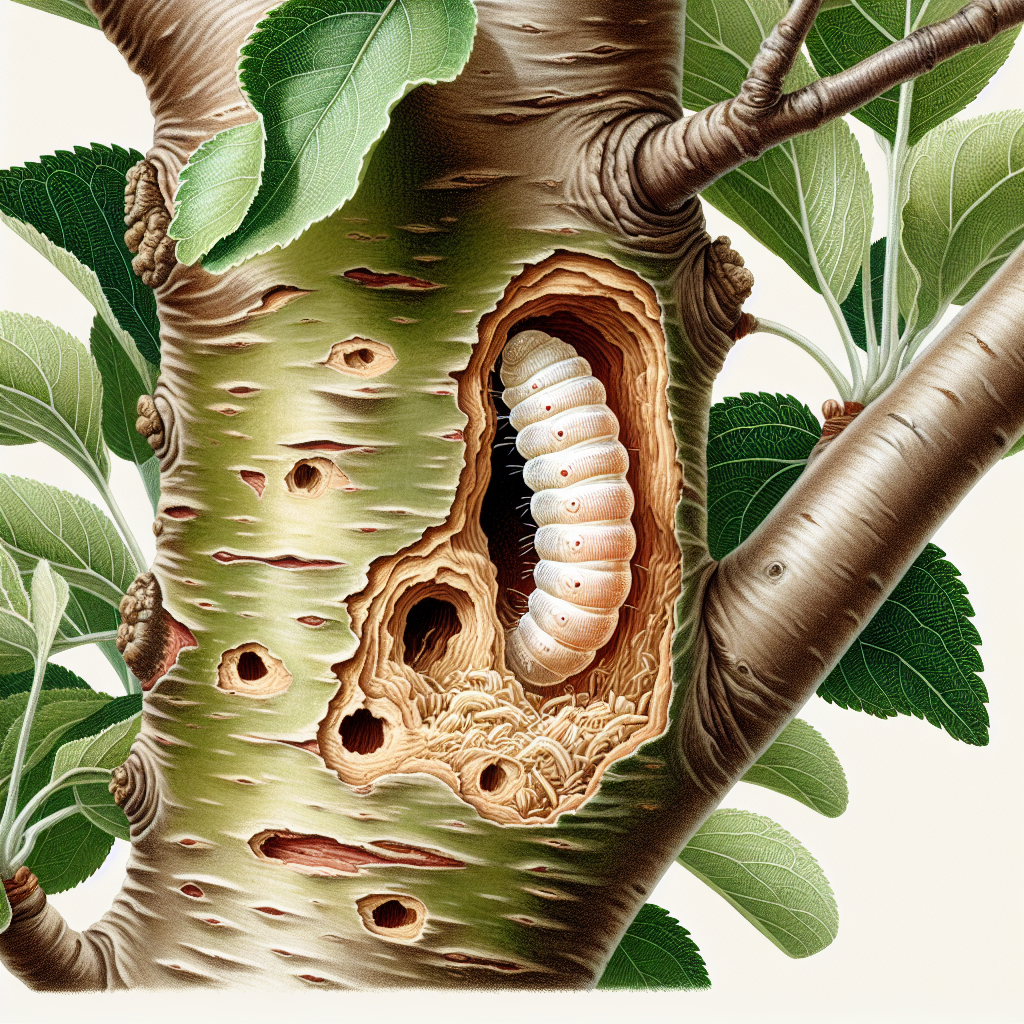
Introduction to boring insects
Boring insects represent a diverse group of pests that infest crops by tunneling into plant tissues, primarily stems, trunks, branches, roots, and fruits. These pests include species from orders Coleoptera (beetles like longhorned borers and bark beetles), Lepidoptera (moths such as peach tree borers and corn borers), and Hymenoptera (sawflies and woodwasps). Unlike surface feeders, borers cause hidden damage, making early detection challenging but crucial for apple and corn growers. Globally, they inflict billions in losses annually, particularly in woody perennials and cereals. Understanding their biology enables targeted interventions, reducing reliance on synthetic pesticides. This definitive guide equips farmers with diagnostic tools, lifecycle insights, organic treatments, and prevention strategies to safeguard yields.
Identifying Symptoms & Damage
Spotting boring insect activity requires vigilance for subtle signs. Primary indicators include:
- Entry holes and frass: Small, round holes (1-5mm) on bark or stems, often with sawdust-like frass (insect excrement). In squash, look for oval holes near vines.
- Sap oozing or gummosis: Sticky resin or gum exudes from wounds, common in stone fruits like peach.
- Wilting or dieback: Sudden branch tip wilting, progressing to canopy thinning. Affected Hass avocado trees show C-shaped galleries under bark.
- Sawdust tunnels: Peel bark to reveal clean, meandering tunnels packed with frass. In sugarcane, internodes split longitudinally.
- Secondary symptoms: Wood discoloration, fungal staining (e.g., black streaks), or premature leaf drop. Differentiate from root rot by probing for live larvae.
Damage escalates rapidly: larvae feed internally, girdling vascular tissues and blocking nutrient flow. Yield impacts range from 20-80%, with severe cases causing tree mortality. Use a knife to dissect suspect areas; creamy-white, legless larvae confirm infestation. For precise ID, note size, shape, and crop—e.g., European corn borer larvae are pinkish with brown heads in corn.
Lifecycle and Progression of boring insects
Boring insects exhibit complete metamorphosis: egg, larva (boring stage), pupa, adult. Lifecycles vary by species and climate, typically 1-2 years.
- Eggs: Laid singly or in clusters on bark, leaves, or soil near hosts. Clear/white, microscopic to 2mm.
- Larvae: Most destructive phase (months to years). Hatch and bore inward, feeding on cambium/phloem. E.g., peach tree borer (Synanthedon exitiosa) overwinters as partially grown larvae.
- Pupae: Form in tunnels or cocoons; non-feeding.
- Adults: Emerge to mate/lay eggs. Beetles chew D-shaped exits; moths clearwing exits.
Progression: Overwintering larvae resume feeding in spring, pupating mid-summer. Multiple generations in tropics (e.g., mango stem borers). Monitor with pheromone traps for adult flights, peaking at 15-25°C. In banana, corm borers sync with monsoon.
Environmental Triggers & Risk Factors
Borers thrive under stress:
- Weakened plants: Drought, over-fertilization, mechanical injury invite attacks. Stressed orange trees attract citrus flatheaded borers.
- Climate: Warm, humid conditions favor multi-generations. High humidity post-rain triggers egg-laying.
- Poor sanitation: Leftover stumps/brush harbor pupae. Infested pecan debris spreads locally.
- Monocultures: Large wheat fields amplify outbreaks.
- Companion pests: Aphids weaken plants, synergizing damage.
Risk peaks in new plantations or after pruning wounds. Soil type matters—sandy soils hinder larval movement, reducing spread.
Organic Control & Treatment Plans
Integrated organic management emphasizes prevention over cures. Check out Spring Pest Patrol: Organic AI Strategies to Shield Your Crops from Common Invaders for timing tips.
Cultural Controls:
- Prune/destroy infested branches before larval entry.
- Maintain vigor: Mulch, irrigate evenly.
Biological Controls:
- Parasitic wasps (e.g., Trichogramma for moth eggs). Release 50,000/ha.
- Beneficial nematodes (Steinernema carpocapsae) target soil-dwelling larvae; apply evenings.
- Bacillus thuringiensis (Bt) kurstaki for lepidopteran borers.
Organic Insecticides:
- Neem oil (azadirachtin): Smother eggs/larvae; 2-3% solution weekly.
- Spinosad: Targets larvae; OMRI-listed, low mammalian toxicity.
- Pyrethrins: Knockdown for adults.
Physical/Mechanical:
- Pheromone traps disrupt mating.
- Probe tunnels with wire; seal with lime-sulfur.
- Solarize soil for root borers.
Treatment Plan:
- Scout weekly spring-fall.
- Remove heavily infested plants.
- Apply nematodes/neem at first frass.
- Monitor 4-6 weeks; reapply if needed.
Efficacy: 70-90% with IPM. Rotate tactics to prevent resistance.
Preventing boring insects in the Future
Proactive strategies minimize risks:
- Resistant varieties: Choose borer-tolerant rootstocks (e.g., for avocado).
- Sanitation: Shred/destroy debris; deep-plow stubble.
- Barriers: Wrap trunks with burlap/tanglefoot bands.
- Crop rotation: Break cycles in annuals like potato.
- Trap crops: Plant sunflowers near orchards.
- Timing: Delay planting post-adult emergence.
Monitor with degree-day models. Companion planting with marigold repels via nematodes. Annual audits prevent buildup.
Crops Most Affected by boring insects
Borers target high-value crops:
| Crop | Key Borers | Damage |
|---|---|---|
| Apple | Codling moth, flatheaded appletree borer | Fruit/stem tunneling, 30% loss |
| Corn | European Corn Borer, southwestern corn borer | Stalk breakage, ear rot entry |
| Peach | Peach tree borer | Girdling, tree death |
| Hass Avocado | Avocado stem borer | Wilt, reduced fruit set |
| Mango | Mango stem borer | Sap loss, dieback |
| Sugarcane | Sugarcane borer | Stalk lodging |
| Banana | Banana weevil borer | Corm destruction |
| Pecan | Pecan bark beetle | Branch drop |
Others: squash vine borers, grapes trunk borers. Woody crops suffer most due to longevity.