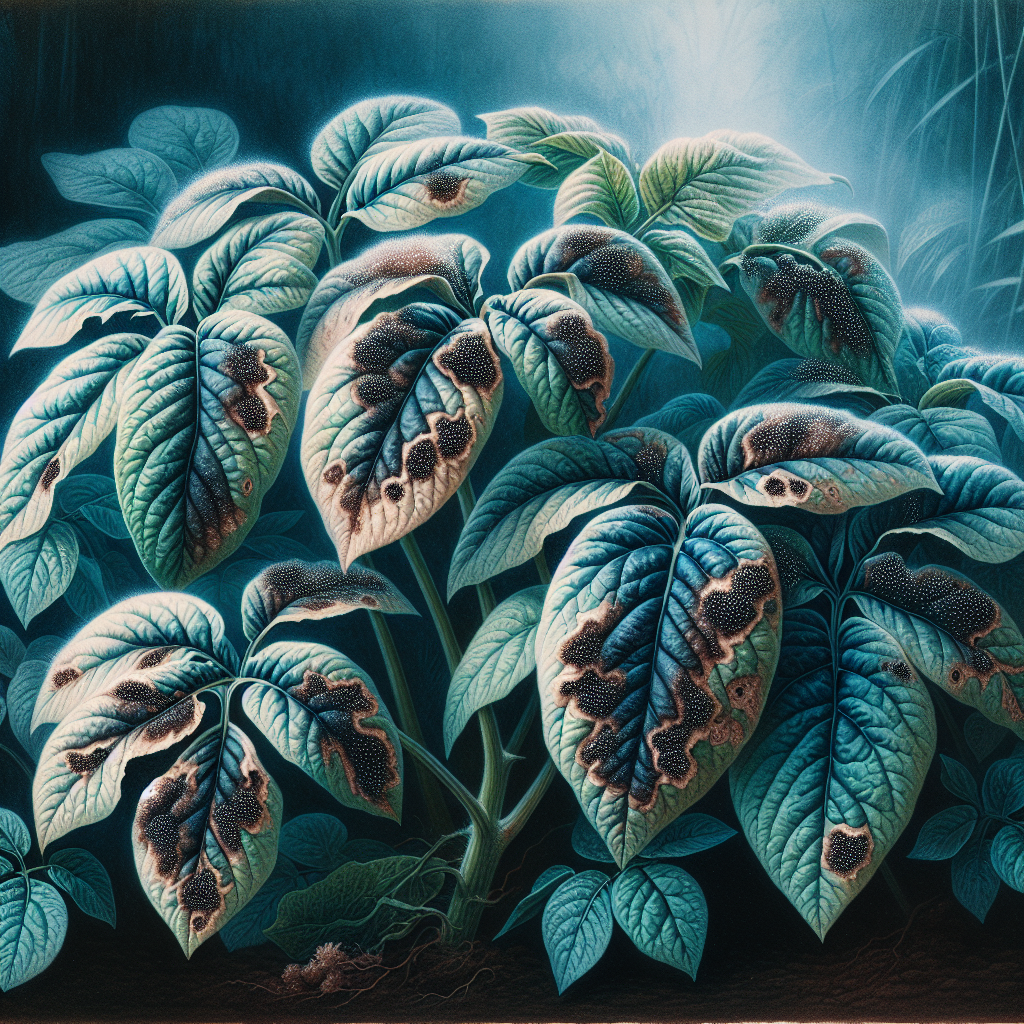
Introduction to Late blight
Late blight, caused by the oomycete Phytophthora infestans, ranks among the most destructive diseases in agriculture, particularly affecting solanaceous crops like potatoes and tomatoes. First identified in the 1840s, it triggered the Irish Potato Famine, wiping out harvests and causing widespread starvation. Today, it remains a global threat, capable of destroying entire fields in days under favorable conditions. This disease thrives in cool, wet weather, spreading via airborne spores and splashing rain. Farmers must act swiftly upon detection, as late blight progresses rapidly from foliar lesions to plant collapse. Understanding its biology is crucial for effective management in organic and conventional systems alike. Regular scouting and cultural practices form the backbone of control, supplemented by resistant varieties and targeted treatments. For detailed cultivation tips on affected crops, see the Potato (crop) page.
Identifying Symptoms & Damage
Early detection is key to managing late blight. Initial symptoms appear as small, water-soaked spots on leaves, often on the lower canopy. These lesions expand rapidly, turning dark green to black with a pale green halo. A hallmark is the white, fuzzy mycelial growth on the underside of leaves during humid nights, confirming P. infestans infection. Stems develop brown to black streaks, leading to wilting and collapse. On tubers or fruits, symptoms manifest as firm, reddish-brown rot starting at the skin, progressing inward. In tomatoes, green fruits show greasy, brown blotches that rot quickly.
Damage escalates fast: within 3-5 days, lesions coalesce, causing defoliation and vine death. Tubers rot in soil or storage, rendering them unmarketable. Yield losses can exceed 50-100% without intervention. Differentiate from look-alikes like early blight (concentric rings) or Septoria leaf spot (smaller spots with fruiting bodies). Use a moist chamber test: place suspect tissue in a plastic bag overnight; late blight shows profuse white sporulation. Economic impact is severe—global losses exceed $6 billion annually. Scout weekly, especially after rain, using a 10x hand lens for sporangia.
Lifecycle and Progression of Late blight
Phytophthora infestans has a complex lifecycle alternating between asexual and sexual phases. Primary inoculum overwinters as oospores in soil, infected debris, or volunteer plants. In spring, cool (10-25°C), wet conditions trigger sporangia production on infected tissue. These lemon-shaped sporangia release zoospores or germinate directly, infecting leaves via stomata or wounds.
The disease cycle repeats every 3-7 days: sporangia spread by wind up to 50 km, splashing rain, or tools. High humidity (>90%) and leaf wetness >10 hours drive epidemics. Secondary spread is explosive, with one lesion producing millions of sporangia nightly. Late in season, sexual reproduction forms thick-walled oospores, persisting years in soil. Progression: Day 1-2 water-soaked spots; Day 3-5 necrosis and sporulation; Week 2 plant death; tubers infected via soil splash. Understanding this polycyclic nature underscores the need for early, repeated interventions. For more on related pathogens, check Phytophthora (disease).
Environmental Triggers & Risk Factors
Late blight epidemics require specific conditions: temperatures 10-24°C (optimum 18°C), relative humidity >90%, and leaf wetness periods >8-12 hours. Nighttime temps 10-15°C with daytime 21°C are ideal for sporulation. Free water on leaves from dew, fog, or rain initiates infection. Risk factors include dense canopies, overhead irrigation, poor air circulation, and susceptible varieties like Russet Burbank potato.
High nitrogen fertilizers promote lush growth, increasing susceptibility. Volunteer plants and cull piles serve as reservoirs. Global warming shifts risk periods, with earlier springs favoring outbreaks. Soil with high organic matter harbors oospores. Use forecasting tools like BlightCast or UK Met Office models tracking temperature-humidity accumulations. Avoid planting in low-lying fog-prone areas. For tomato growers, heirloom varieties heighten risk. Monitor weather apps for "blight favorable" alerts.
Organic Control & Treatment Plans
Organic management integrates cultural, biological, and approved fungicides. Immediate Action: Remove and destroy infected plants, avoiding composting. Cultural Controls: Space plants for airflow (45-60 cm), stake tomatoes, mulch to reduce soil splash. Avoid overhead watering; use drip irrigation. Hill potatoes deeply.
Resistant Varieties: Plant Sarpo Mira potatoes or Mountain Magic tomatoes. Biologicals: Apply Trichoderma or Bacillus subtilis (Serenade) preventively. Organic Fungicides: Copper hydroxide (fixed copper like Cueva), OMRI-listed. Spray every 5-7 days in high risk, alternating with potassium bicarbonate or REGALIA (extract of Reynoutria sachalinii). Spray Schedule: Begin at canopy closure, reapply post-rain. Efficacy: 70-90% with vigilance.
Advanced Organic Plan: 1) Scout twice weekly. 2) Apply micronutrients (calcium, silicon) for resistance. 3) Use row covers early. 4) Companion plant with garlic or horseradish. For detailed strategies, read Spring Pest Patrol: Organic AI Strategies to Shield Your Crops from Common Invaders. Integrate with downy mildew controls, as symptoms overlap.
Preventing Late blight in the Future
Prevention beats cure. Site Selection: Choose well-drained, sunny slopes. Crop Rotation: 3-4 years away from solanaceae; include brassicas or grains. Seed/Seedling Certification: Use disease-free stock. Sanitation: Destroy volunteers, rotate tools, disinfect with 10% bleach.
Forecasting: Use apps like PlantVillage or local ag extensions for blight risk maps. Plant early maturing varieties to beat peak infection. Resistant Cultivars: Defender, Jacqueline potatoes; Iron Lady tomatoes. Soil Health: Balance pH 6.0-6.5, add compost for resilience. Fall tillage buries debris. Monitoring: Deploy spore traps or weather stations. Long-term: Breed for polygenic resistance. Combine with IPM for early blight and powdery mildew. Success rates: 90%+ with integrated practices.
Crops Most Affected by Late blight
Primarily attacks nightshades: potatoes (all varieties, e.g., Yukon Gold Potato, Roma Tomato), tomatoes, and occasionally eggplant, peppers, and hairy nightshade (wild host). Potatoes suffer tuber rot, tomatoes fruit lesions. Global staples like Irish potatoes face annual threats. Other solanaceae like petunias ornamental. Not squash or cucurbits. Focus protection on these high-value crops.