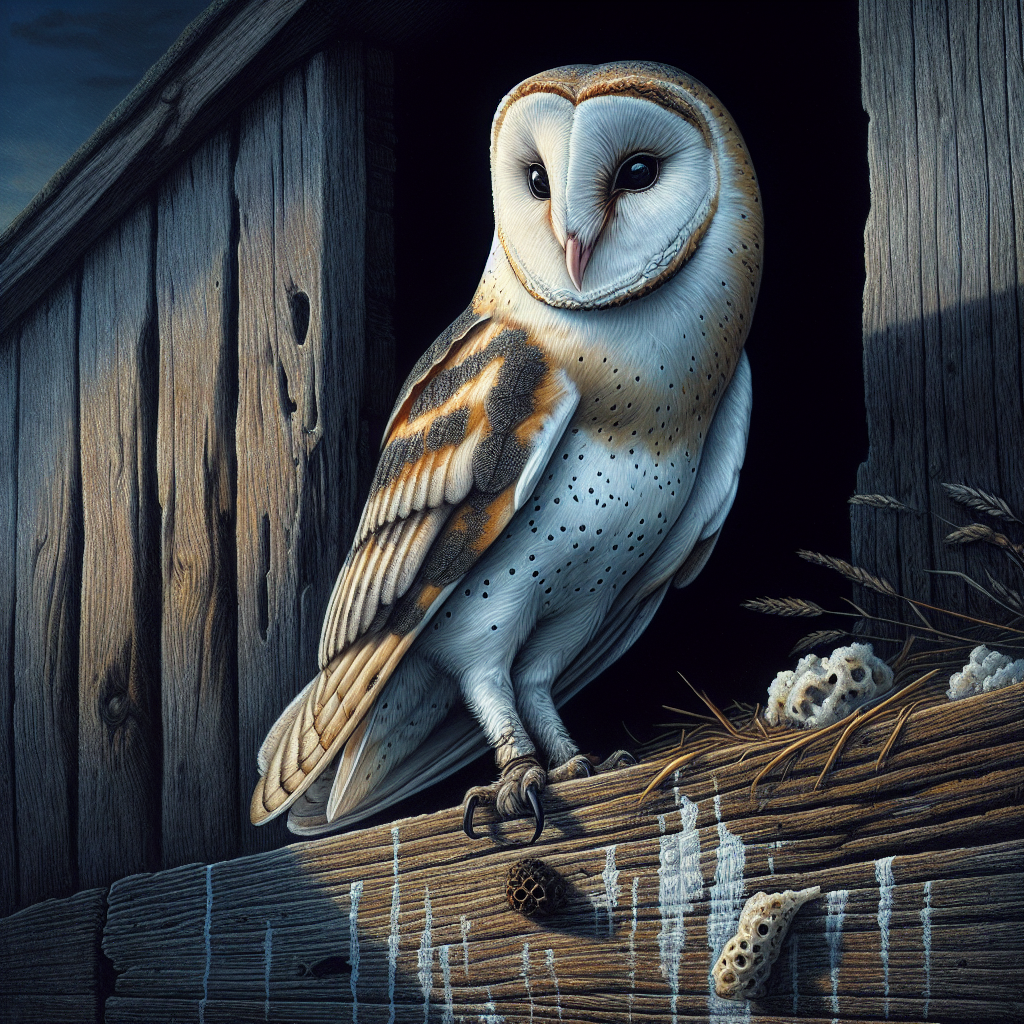
Introduction to barn owls
Barn owls, scientifically known as Tyto alba, are elegant nocturnal predators recognized by their heart-shaped facial discs, pale plumage, and silent flight. Found worldwide in rural landscapes, these birds typically roost in barns, silos, and abandoned structures—hence their name. In agricultural contexts, barn owls are double-edged swords: they excel at controlling rodents like mice and rats that damage crops such as wheat and corn, consuming thousands annually. However, they can become pests when they target stored grains, bird seed, or fruits in orchards, leading to economic losses for small farms and homesteads.
Farmers often spot barn owls at dusk hunting over open fields or perching near farm buildings. Their ghostly appearance and eerie screeches make them memorable, but unchecked populations may exacerbate issues during scarcity of natural prey. Understanding their behavior is key to balancing ecological benefits with crop protection. This definitive guide equips growers with professional diagnostics, lifecycle insights, and humane management plans to handle barn owl intrusions effectively while promoting sustainable farming. Early intervention prevents escalation, safeguarding yields without harming these vital predators.
Identifying Symptoms & Damage
Detecting barn owl activity starts with keen observation of indirect signs rather than the birds themselves, as they are nocturnal. Look for whitewash droppings—chalky, splattered accumulations—under roosting sites like barn rafters, silos, or shed eaves. Pellet casts, compact oval masses of indigestible fur, bones, and feathers (1-3 inches long), litter floors below roosts, often numbering dozens daily from a single owl.
Crop damage manifests as partially eaten fruits in orchards, with neat puncture marks from talons and beaks targeting soft flesh. In grain storage, scattered seeds or nibbled sacks indicate opportunistic feeding, especially in winter when rodents dwindle. Feathers or downy fluff near feed bins signal nesting. Listen for hissing or screeching at night from structures.
Differentiate from other pests: squirrels leave chew marks and nut debris; raccoons create messier scat. Barn owl damage is precise, minimal per incident but cumulative in flocks. Scout at dawn/dusk with binoculars; use trail cameras for confirmation. Early ID prevents nesting, as females lay clutches in spring, amplifying issues.
Lifecycle and Progression of barn owls
Barn owls follow a year-round lifecycle adapted to agricultural environments, with breeding peaking in spring. Adults measure 12-16 inches, weigh 1-1.5 pounds, with females larger. Courtship involves males presenting prey to females at potential nest sites like barn lofts.
Egg-laying occurs March-June (varying by region), with 4-7 white eggs incubated 30-31 days by the female. Chicks hatch blind, downy; parents regurgitate food. Nestlings fledge at 50-55 days but remain dependent 1-3 weeks. Juveniles disperse post-fledging, establishing territories.
Lifespan averages 2 years wild, up to 20 in captivity. Multiple broods possible if food abundant. Progression: eggs → hatchlings (feed every 1-2 hours) → fledglings (hunt with parents) → independents. Peak pest pressure during chick-rearing when food demands surge, prompting bolder farm forays. Winter sees adults roosting communally in barns for warmth, increasing grain raids.
Monitor lifecycle stages for intervention timing: block nests pre-breeding; deter during winter roosts. Understanding this cycle aids predictive management, aligning controls with vulnerable phases.
Environmental Triggers & Risk Factors
Barn owls thrive where prey and shelter converge, making farms prime habitats. Abundant rodents from poor sanitation trigger influxes; unmanaged corn fields or rice paddies harbor mice, drawing owls. Open grasslands adjacent to crops facilitate hunting.
Risk factors include aging structures—crumbling barns with gaps invite roosting. Artificial lighting disorients juveniles, causing crop mishaps. Droughts reduce wild prey, pushing owls to farms. Proximity to woodlands boosts populations via dispersal corridors.
Climate plays a role: mild winters sustain rodents, prolonging owl residency. Over-fertilized fields boost prey via lush cover. Learn more about zoning farm layouts effectively in Why Zoning Your Small Farm Chaos into Profit Zones Feels Impossible - And How AI Changes Everything. High-risk farms have >20% open storage, water sources, and no deterrents. Assess via audits: count pellets/droppings monthly.
Organic Control & Treatment Plans
Humane, organic methods prioritize deterrence over harm, leveraging barn owls' beneficial role. Immediate Actions: Install owl boxes away from crops (10-20 feet high on poles) to redirect nesting. Use reflective tape, old CDs, or Mylar balloons over fields; motion-activated lights/noisemakers disrupt roosting.
Physical Barriers: Net silos/bins (1-inch mesh); seal barn gaps with hardware cloth. Ultrasonic devices emit predator calls (hawks, eagles) tolerated by regulations. Habitat Modification: Trim perches near storage; maintain short grass to expose prey, reducing owl appeal.
Biological Boost: Encourage natural enemies like hawks via perches. Plant thorny hedges (hawthorn) around orchards. Trap-and-relocate humanely (check local laws); use live traps baited with mice.
Integrated Plan: Week 1: Scout/install barriers. Week 2-4: Deploy visuals/audios. Monitor weekly; adjust. For severe cases, consult wildlife experts for relocation. Avoid poisons—toxic prey kills owls indirectly. Success rates: 80-90% with consistent use. Combine with rodent IPM for synergy.
Preventing barn owls in the Future
Long-term prevention builds owl-unfriendly farms without eradication. Secure all structures: caulk cracks, screen vents. Elevate storage on pallets; use metal bins. Landscape strategically: floodlights on timers mimic daylight; dense tree belts block flight paths.
Annual audits pre-spring: remove old nests/pellets. Promote biodiversity—plant clover cover crops to suppress rodents naturally. Install permanent deterrents: bird spikes on ledges, sloping roofs. Educate staff on signs; integrate into rotations.
Rotate owl boxes off-farm yearly. Monitor via apps for activity spikes. Sustainable prevention yields 95% reduction, fostering coexistence. Pair with Spring Pest Patrol: Organic AI Strategies to Shield Your Crops from Common Invaders for holistic defense.
Crops Most Affected by barn owls
Barn owls rarely destroy crops directly but opportunistically target accessible produce. Grains: Wheat, corn, rice—scattered from silos. Fruits: Apple, grapes, strawberry fields near roosts suffer pecking. Nuts: Almond, walnut stores raided.
Orchards like mango and avocado see fruit drops. Seed crops (sunflower) vulnerable in open bags. Minimal damage per bird (grams daily) amplifies in groups. Protect high-value Hass Avocado and Cherry Tomato via netting. Rodent control indirectly mitigates via prey reduction.