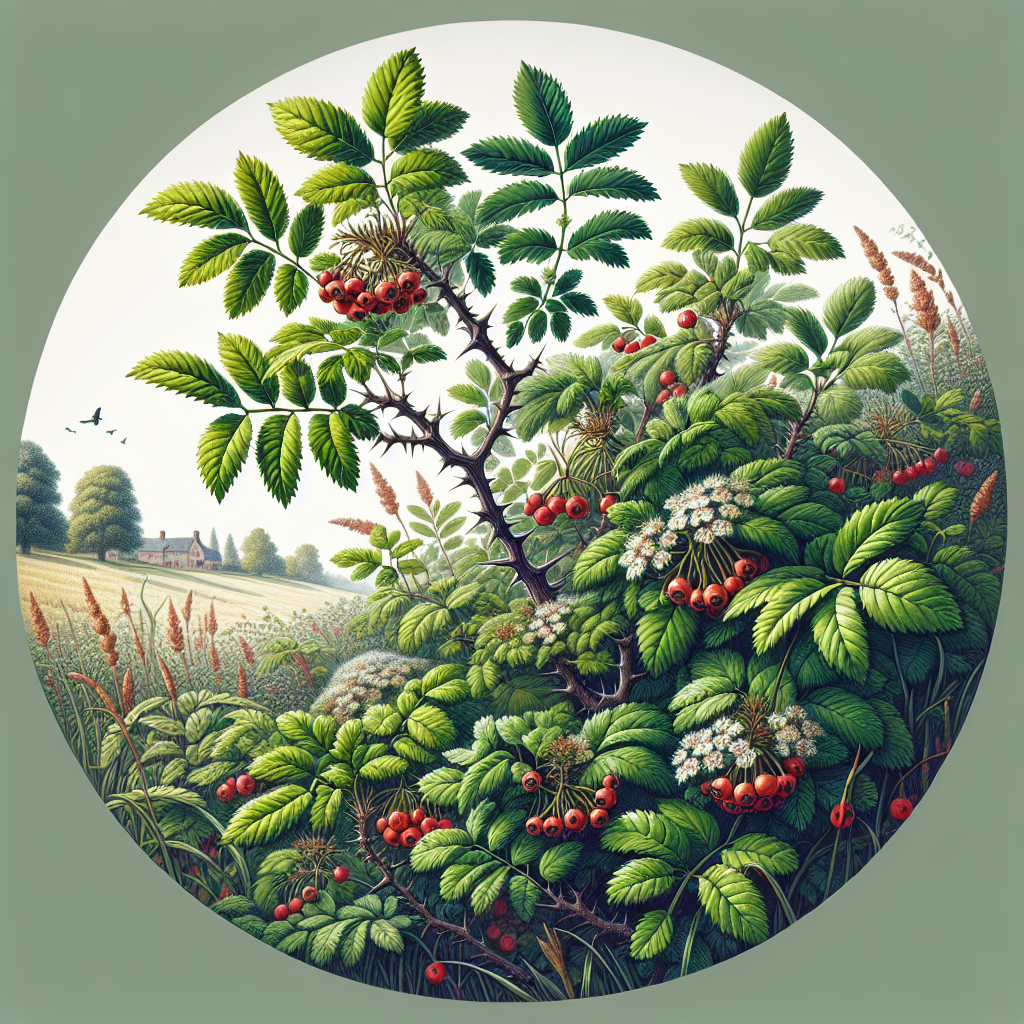
Introduction to hawthorn
Hawthorn, scientifically known as Crataegus species, represents a group of thorny shrubs and small trees notorious in agricultural settings as persistent invaders. Native to temperate regions of North America, Europe, and Asia, these plants have been widely introduced worldwide, often escaping cultivation to become problematic weeds. In farming contexts, hawthorn establishes dense thickets that smother crops, block access for equipment, and provide harborage for insect pests and wildlife.
Farmers encounter hawthorn most frequently in fence rows, field margins, pastures, and abandoned areas, where it spreads rapidly via bird-dispersed seeds and root suckers. Its resilience to drought, poor soils, and grazing pressure makes it a formidable challenge. Economically, hawthorn infestations can reduce forage yields by up to 50% in pastures and complicate orchard management by interfering with spray applications and harvest. This guide provides professional-grade diagnostics, lifecycle insights, and proven management tactics to reclaim infested lands. For small farms struggling with invasive species timing, check out Why Timing Kills Small Farm Profits - And How AI Task Scheduling Saves Your Harvests.
Recognizing hawthorn early is crucial, as mature stands are exponentially harder to eradicate. With proper identification and intervention, growers can restore productivity and prevent reinfestation. This comprehensive resource draws from entomological, botanical, and agronomic expertise to equip you with actionable strategies.
Identifying Symptoms & Damage
Hawthorn damage manifests in multiple ways, often mistaken for neglect or other stressors. Key symptoms include thorny stems piercing tires and injuring livestock, dense canopies shading out understory crops like clover or grasses, and prolific red berries attracting birds that spread seeds across fields.
Visual Diagnostics:
- Leaves: Lobed or serrated, glossy green turning red in fall; alternate on stems.
- Thorns: Sharp, 1-5 cm long on branches, distinguishing from similar brambles.
- Flowers: White clusters in spring, emitting musky odor.
- Fruit: Bright red pomes in autumn, persisting into winter.
- Growth Habit: Multi-stemmed shrub (2-10m tall) forming impenetrable thickets.
Crop Impacts: In orchards such as apple groves, hawthorn competes for water and nutrients, stunting trees and reducing fruit size. Pastures see forage suppression, with studies showing 30-70% biomass loss. Wildlife damage amplifies as thickets shelter deer and rabbits, leading to browsing on adjacent crops. Root competition extends 2-3m from stems, dehydrating nearby potato or corn rows.
Diagnostic Tips: Scout field edges in spring for blooms and fall for fruits. Cut stems reveal orange inner pith. Differentiate from blackthorn (Prunus spinosa) by hawthorn's lobed leaves and apple-like fruit. Use a hand lens to check for associated pests like scale insects on bark.
Lifecycle and Progression of hawthorn
Understanding hawthorn's lifecycle is essential for timing interventions. It follows a perennial woody cycle with distinct phases:
- Seed Germination (Spring): Stratified seeds sprout after cold exposure, aided by bird ingestion.
- Vegetative Growth (Summer): Rapid shoot extension via apical dominance; root suckers emerge from lateral roots.
- Flowering (Late Spring): Perfect flowers pollinated by insects, setting seed.
- Fruiting (Fall): Pomes mature, dispersed by birds/mammals.
- Dormancy (Winter): Hardy buds withstand -30°C; roots store carbohydrates.
Progression from seedling to mature thicket takes 3-7 years. Vegetative reproduction via suckers allows clonal spread, evading seed-based controls. Peak infestation occurs in disturbed soils post-clearing. Annual seed production exceeds 10,000 per mature plant, with 70% viability after passing through bird digestive tracts.
In agricultural timelines, hawthorn synchronizes with crop cycles: spring growth coincides with planting, shading seedlings; fall fruits disseminate during harvest. Multi-year persistence demands repeated management.
Environmental Triggers & Risk Factors
Hawthorn thrives under specific conditions, enabling predictive scouting:
- Soil Preferences: Well-drained loams, pH 6.0-7.5; tolerates clay and compaction.
- Climate: Temperate zones (USDA 4-8); drought-resistant once established.
- Disturbance: Thrives post-grazing, tillage, or fire; nitrogen-rich soils accelerate growth.
- Proximity Risks: Bird perches (fences, wires) near fields seed starting points.
- Associated Factors: Often co-occurs with aphids, honeydew fostering sooty mold.
Risk spikes in overgrazed pastures or fencerows neglected >2 years. Climate change extends range northward. Monitor after floods, as seeds float and germinate on moist banks.
Organic Control & Treatment Plans
Organic management emphasizes integrated approaches for sustainable control:
1. Mechanical: Mow repeatedly (3-4x/year) at 10cm height to exhaust roots; effectiveness peaks pre-flowering. Grubbing for small stands (<3m); mulch stumps to prevent resprouting.
2. Cultural: Overseed invasives with competitive wheat or clover; graze heavily with goats (preferred for thorns).
3. Biological: Encourage natural enemies like hawthorn leafminer (Phyllonorycter crataegella). Release bioherbicides or use vinegar-based desiccants.
Integrated Plan:
- Year 1: Mow + goats; fall basal bark treatment with organic-approved oils.
- Year 2: Replant cover crops; monitor suckers.
- Maintenance: Annual scouting.
For companion strategies, see Why Companion Planting Feels Like Guesswork for Small Farms - And How AI Makes It Foolproof. Avoid burning due to resprouting.
Preventing hawthorn in the Future
Prevention outperforms cure:
- Sanitation: Remove seedlings promptly; clean equipment.
- Barriers: Maintain 2m weed-free zones around fields with tillage/mulch.
- Monitoring: Weekly spring/fall walks; use drones for large areas.
- Resistant Design: Plant dense hedgerows of non-hosts like thyme.
- Soil Health: Build fertility to favor crops over weeds (Soil Health Mastery).
Long-term: Rotate grazing; certify weed-free seed sources.
Crops Most Affected by hawthorn
Hawthorn plagues orchards and pastures:
- Orchards: Apple, pear, cherry – shading, competition, pest reservoirs.
- Pastures: Forages reduced; thorns injure stock.
- Row Crops: Corn, soybeans – edge infestations block harvest.
- Berries: Strawberry, raspberry – bird vectors from hawthorn fruits.
Yield losses: 20-40% in fence-proximal areas.