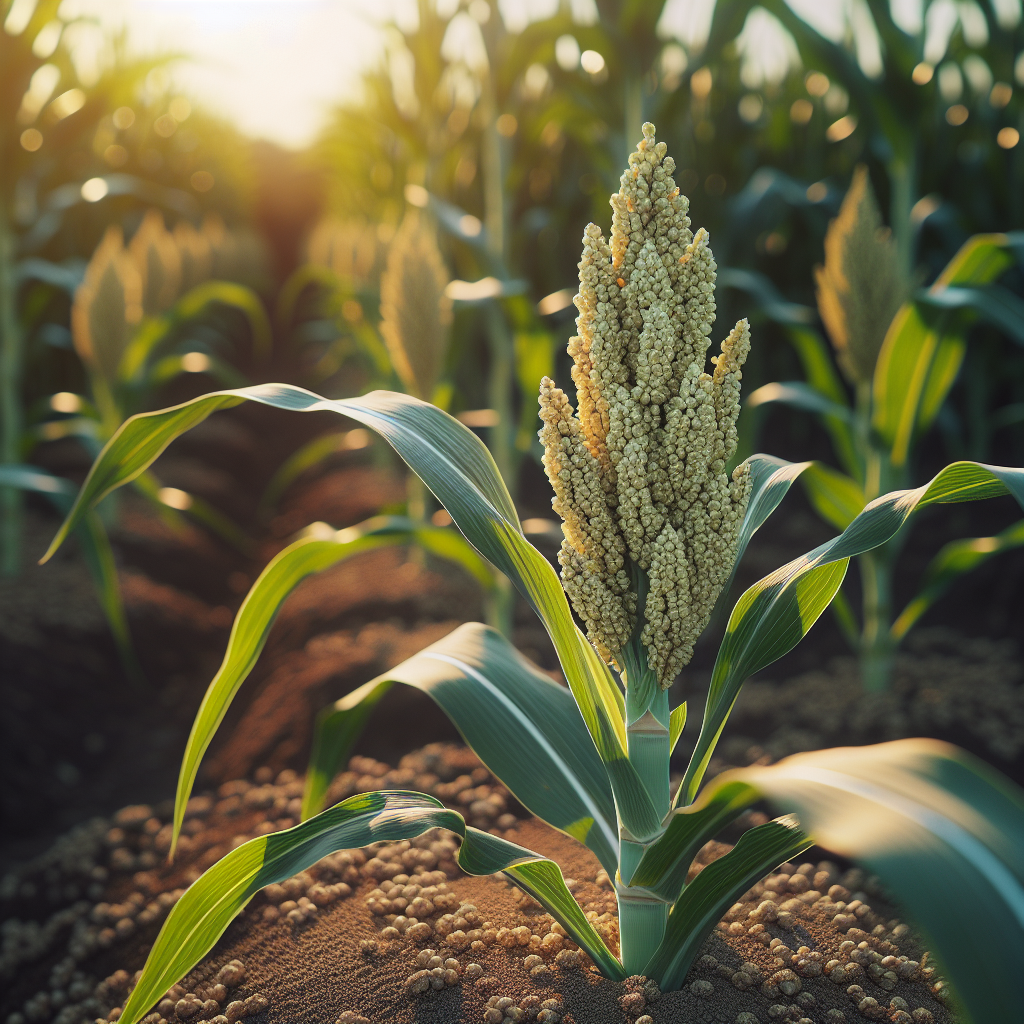
Introduction to White Sorghum
A pale-seeded grain type within the species Sorghum bicolor, this crop has been cultivated for thousands of years across Africa and later spread into Asia, the Americas, and dry subtropical farming systems worldwide. White-grained sorghums are especially prized for human food because their light color, generally milder flavor, and lower tannin content make them suitable for flour, porridge, flatbreads, steamed foods, popped grain, and brewing. In many semi-arid production zones, it functions as a strategic cereal because it can continue growing through heat and temporary moisture stress that would severely reduce yields in Corn.
White sorghum is not a single uniform cultivar but a market class that includes landraces, improved open-pollinated lines, and hybrids selected for grain color, bird resistance, plant height, maturity length, and adaptation to local rainfall. Some white types are compact-headed and shorter for mechanized harvest, while others are taller, more leafy, and dual-purpose for both grain and fodder. Professional growers should choose seed not just for grain color, but for maturity days, standability, grain mold resistance, and suitability to the target environment.
Its importance is growing as water scarcity, erratic rainfall, and high summer temperatures challenge cereal production. For growers building resilient systems, white sorghum deserves consideration not merely as a fallback crop, but as a primary grain with strong agronomic and nutritional value. For broader fertility planning, see soil health strategies.
Botanical Profile of White Sorghum
This annual warm-season grass belongs to the Poaceae family. It develops a fibrous root system with excellent soil exploration capacity, a solid or pithy stem with distinct nodes and internodes, broad waxy leaves, and a terminal inflorescence called a panicle. Depending on genotype and fertility, plants may range from about 0.9 to over 3 meters tall, though grain-focused white sorghum hybrids are commonly maintained in the 1.2 to 1.8 meter range for standability and harvest efficiency.
Leaves are typically glaucous, with a bluish-green cast and wax bloom that helps reduce transpiration. One of sorghum's major physiological advantages is its drought-adaptive behavior: it can slow growth during severe stress and resume when moisture returns. Many types also produce a protective wax on stems and leaves that reduces water loss. The crop is a C4 plant, meaning it uses sunlight and heat very efficiently and performs particularly well under high temperatures and strong light intensity.
The panicle shape varies from open and loose to semi-compact or compact. White sorghum grains are usually cream, ivory, or chalk-white at maturity, though exact shade depends on pericarp and endosperm characteristics. Grain quality is influenced by endosperm hardness, starch composition, protein level, and tannin content. Food-grade white sorghums are often preferred when low pigmentation and better flour color are required.
Flowering usually begins 55 to 80 days after emergence, depending on maturity class. Sorghum is largely self-pollinated, though some cross-pollination can occur. Each floret can form a single caryopsis, or grain. After pollination, grain filling depends heavily on available soil moisture, potassium balance, and healthy leaf area. Stress during flowering and early grain fill can sharply reduce seed set and kernel weight.
Soil, pH, and Climate Requirements for White Sorghum
This crop is adaptable but not indifferent to soil conditions. It performs best in well-drained loams, sandy loams, and clay loams with moderate depth and good rooting structure. Ideal soil pH is typically 5.8 to 7.5, with the strongest nutrient availability and root function generally occurring around pH 6.2 to 7.0. It can tolerate slightly alkaline ground better than many cereals, but severe alkalinity, salinity, or sodicity will reduce emergence and stand vigor.
The most important soil limitation is poor drainage. White sorghum can handle drought far better than waterlogging. Saturated soil for even 48 to 72 hours during early growth can stunt roots, yellow foliage, promote seedling disease, and reduce final stand density. If the field remains tacky, puddled, or anaerobic after rain, drainage correction should come before planting. In compacted subsoil, roots may spread shallowly rather than penetrate, which reduces drought resilience later in the season.
For germination, soil temperature should be at least 18 to 20°C, with faster and more uniform emergence above 21°C. Cool soils delay emergence and increase seed rot risk. The crop thrives where daytime temperatures range from 27 to 35°C. It tolerates heat above that range better than many cereals, but extreme temperatures above 40°C during flowering can still reduce pollen viability and grain set, especially when paired with hot, dry wind.
Rainfall needs depend on yield target and maturity length. Grain sorghum can produce a survival crop on 350 to 450 mm seasonal rainfall, but higher commercial yields are more realistic with 500 to 750 mm well distributed through establishment, stem elongation, boot stage, flowering, and grain fill. The most drought-sensitive phases are emergence, the 3- to 6-leaf stage, booting, flowering, and early grain fill.
Although drought tolerant, white sorghum is not drought-proof. The ideal soil moisture profile is evenly moist but never saturated during establishment. In practical terms, the top 5 to 7 cm of soil should stay damp enough to support rapid emergence without crusting. Later, the root zone should dry moderately between irrigations, especially on heavier soils, to encourage deep rooting. Visible overwatering signs include persistent pale green leaves, lower leaf chlorosis unrelated to nitrogen shortage, slowed growth despite ample fertility, sour-smelling soil, and a tendency for plants to lodge because root anchorage remains weak.
Nutrient demand is moderate to high depending on yield goal. Nitrogen is the principal driver of biomass and grain production, but excess nitrogen can cause lush growth, delayed maturity, and lodging. Phosphorus is essential for early root development and vigor, while potassium supports water regulation, stem strength, and disease tolerance. Zinc deficiency may appear in high-pH soils as pale striping or stunted young leaves.
Step-by-Step Planting & Propagation
This crop is almost always established by direct seeding rather than transplanting. Start with a clean, firm, weed-reduced seedbed or a well-managed no-till residue surface. Uniform seed placement matters because uneven depth leads to erratic emergence and nonuniform maturity.
Select seed adapted to local rainfall, day length, disease pressure, and intended market. Food-grade white sorghum should be chosen for grain quality as well as agronomic performance.
Test the soil before planting. Base fertility on realistic yield targets. A common commercial approach is to apply phosphorus and potassium pre-plant according to soil test results, then split nitrogen between pre-plant and early topdress in higher rainfall or irrigated systems.
Plant only when frost danger has passed and the soil has warmed. In warm regions, this is often late spring to early summer. In monsoonal climates, planting is typically timed to reliable early rains but not into waterlogged ground.
Place seed 2.5 to 4 cm deep in moist soil. On heavy clay or crust-prone soils, stay shallower, around 2.5 cm. On sandy soils with drying surface conditions, 4 cm may be appropriate if moisture is stable.
Use row spacing suited to rainfall and weed management. Narrow rows of 25 to 50 cm usually improve canopy closure and weed suppression under moderate to high moisture. Wider rows of 60 to 75 cm may perform better in dryland conditions by reducing plant competition for limited water.
Aim for final plant populations based on environment. Dryland white sorghum often performs well at roughly 80,000 to 140,000 plants per hectare, while irrigated or high-rainfall grain systems may support 150,000 to 220,000 plants per hectare. Excessively dense stands in low-rainfall zones produce thin stems, smaller heads, and more moisture stress during grain fill.
Roll or lightly firm the soil after planting where needed to improve seed-to-soil contact, but avoid creating a sealed surface on crusting soils.
Emergence generally occurs in 5 to 10 days in warm soils. If seedlings fail to emerge evenly, inspect for surface crusting, seed corn maggot-like injury, poor seed vigor, seed rot, or herbicide carryover. Replant decisions should be made quickly, because sorghum loses competitive advantage if establishment is delayed into hotter, drier periods.
Care & Maintenance regimes for White Sorghum
Early management determines most of the crop's success. During the first 30 to 40 days after emergence, growth may seem modest above ground while roots establish. This is the critical weed-competition window. Once the canopy closes and the crop enters rapid stem elongation, it becomes much more competitive.
Water management should be stage-specific. From planting to the 5-leaf stage, maintain enough moisture in the topsoil for uninterrupted root extension. At this stage, repeated drying and rewetting of only the top few centimeters can create shallow-rooted plants. From vegetative growth through boot stage, deeper but less frequent irrigation is better than daily light watering. The target is to moisten the full active root zone and then allow partial drawdown before irrigating again. Avoid frequent shallow irrigation that leaves the surface constantly wet; it encourages weak roots and increases disease pressure.
The most yield-sensitive irrigation windows are booting, flowering, and early grain fill. Moisture stress here causes incomplete panicle exertion, poor flowering, pollen sterility, floret abortion, and shriveled grain. If water is limited, prioritize these stages over late vegetative growth. After hard dough stage, irrigation can often be reduced substantially unless severe heat is still accelerating plant desiccation.
Nitrogen management should be calibrated carefully. Typical grain systems may require roughly 60 to 140 kg actual N per hectare depending on soil reserves, previous crop, and expected yield. Apply too little and plants remain pale, tillering is weak, heads are small, and lower leaves senesce early. Apply too much and you risk lodging, delayed dry-down, and possible nitrate accumulation in forage situations. Where leaching or volatilization is a concern, split applications are safer than a single heavy pre-plant dose.
Micronutrient correction should not be guesswork. Zinc deficiency is among the more common issues in calcareous or high-pH soils. Sulfur may also become limiting in sandy low-organic-matter fields. Tissue testing at early vegetative stages can confirm subtle deficiencies before they cut yield potential.
Weed control is essential until canopy closure. White sorghum seedlings are vulnerable to early competition from fast-growing annual grasses and broadleaf weeds. Mechanical inter-row cultivation works well in wider-row systems if performed shallowly to avoid root pruning. Organic production relies on stale seedbed preparation, blind cultivation before emergence, early hoeing, and high-residue rotations. Mulch is less practical at scale but may help in garden or microfarm systems.
Lodging prevention involves balanced fertility, proper stand density, and avoiding excessive late nitrogen. Wind exposure, soft wet soils, and stalk pests increase lodging risk. Shorter white grain sorghum hybrids usually stand better than taller dual-purpose types.
Pests, Diseases & Organic Management
The main insect pests vary by region, but common problems include sorghum midge, aphids, shoot fly, stem borers, armyworms, and head-feeding caterpillars. birds can also become a major pre-harvest pest, especially in white-seeded types because lighter grains are often more attractive and more visible in drying heads.
aphids, particularly sugarcane aphid in some regions, can colonize leaf undersides and stems, sucking sap and coating foliage with sticky honeydew that interferes with photosynthesis and harvest. Early signs include shiny sticky leaves, black sooty mold, and curling or yellowing lower foliage. Organic suppression depends on frequent scouting, conserving lady beetles, lacewings, hoverflies, and parasitic wasps, and avoiding unnecessary broad-spectrum insecticides that destroy beneficial insects. Strong water sprays may help in small plantings but are unrealistic in field-scale operations.
sorghum midge attacks flowering heads and can sharply reduce grain set. Uniform planting dates and synchronized flowering reduce vulnerability, because prolonged or staggered flowering gives the pest more time to exploit fields. Early-maturing cultivars often escape some pressure. stem borers weaken stalks and predispose plants to lodging; clean residue management and rotation help disrupt their life cycle.
Bird pressure often intensifies as grain reaches soft dough to hard dough. The best nonchemical strategies are synchronous planting across an area, using bird-scarer lines or reflective tape in small blocks, and choosing cultivars with tighter glumes or better field holding when regional bird pressure is chronic.
Disease concerns include anthracnose, grain mold, rust, smut, downy mildew, and charcoal rot. anthracnose causes reddish to dark lesions on leaves and may progress to stalk infection under warm, humid conditions. grain mold is especially important in wet weather during maturity; white sorghum intended for human food is particularly vulnerable because stained or moldy grain loses market quality quickly. The best defense is resistant genetics, good airflow, timely harvest, and avoiding over-dense stands with excessive nitrogen.
charcoal rot is a classic late-season stress disease, often appearing when drought and heat follow heavy early growth. Plants may lodge suddenly, stalk tissue becomes weak, and internal shredding or dark microsclerotia can develop. The disease is aggravated by moisture stress during grain fill and high plant populations. Balanced density and irrigation management are the most effective preventive tools.
Organic disease management rests on four pillars: resistant varieties, crop rotation of at least two to three years away from host grasses where practical, residue decomposition, and stress reduction. Rotating with legumes such as Soybeans can help break disease cycles while improving nitrogen economy. Avoid planting into cold wet soil, because weak seedlings are much more vulnerable to damping-off and early root disease.
Harvesting, Curing & Optimal Storage
Harvest timing depends on the end use. For dry grain, heads are usually ready when the grain reaches physiological maturity and then dries down to safe harvest moisture. Physiological maturity is often indicated by hard kernels and the formation of a black layer at the grain base in many sorghum types. For most storage purposes, harvested grain should be dried to about 12 to 13% moisture, and even lower, around 10 to 12%, in humid storage environments or where long-term holding is expected.
Do not rush harvest while grain is still too wet unless you have reliable forced-air drying. Wet grain heats easily, molds rapidly, and loses milling quality. On the other hand, leaving mature heads in the field too long invites bird feeding, weathering, lodging, and grain mold. In white sorghum marketed for food, preserving bright grain color is important, so timely harvest after dry-down is crucial.
Small growers may harvest by cutting heads by hand once kernels are firm and dry, then threshing after additional drying under cover. Commercial systems use combines adjusted to reduce cracking. Cylinder or rotor speed should be moderate, with enough threshing action to separate grain without excessive seed coat damage. Because white sorghum can show quality defects more visibly than darker grain, gentle handling matters.
If heads are harvested slightly above ideal moisture, cure them in a dry, shaded, well-ventilated area on racks, mesh trays, or breathable tarps. Do not heap freshly cut heads in deep piles, because trapped respiration heat can trigger mold growth within hours in warm climates.
For storage, clean grain thoroughly to remove chaff, broken kernels, and insect-damaged seed, since fines attract moisture and pests. Store only in rodent-proof, insect-resistant bins or sealed containers once moisture is verified safe. Grain should feel hard, not dent easily under a fingernail, and produce a dry metallic sound when stirred in bulk. Monitor stored grain every two to three weeks at first for condensation, off odors, insect movement, or hot spots. Cool, dry storage below 15°C is ideal, though many farms rely on ambient conditions and must therefore prioritize very low grain moisture and excellent sanitation.
Companion Planting for White Sorghum
In mixed plantings and diversified small farms, the most practical companions are species that either improve nitrogen supply, attract beneficial insects, or provide low-growing ground cover without smothering the cereal. Cowpea is one of the best partners in warm climates because it fixes nitrogen, shades the soil, and can suppress some weeds when seeded at a restrained density. The key is to keep the legume population low enough that it does not outcompete young sorghum for moisture.
Sunflower can be useful on field margins or in strip systems as a beneficial-insect resource and wind-filter, though it should not be crowded tightly into the sorghum stand because both crops can compete strongly for light and potassium. Clover works better as an undersown or adjacent living cover in milder conditions where moisture is adequate; in dryland systems it can become too competitive unless rainfall is dependable. Soybeans are also a sensible rotational or strip companion in larger field designs, especially where the goal is combining cereal and legume functions.
The best companion strategy is usually spatial separation rather than intimate intermixing: border rows, alternating strips, or relay systems tend to outperform dense mixed sowings. White sorghum is highly efficient when given sun, warmth, and moderate root-zone freedom. Companion crops should support those conditions, not compromise them.