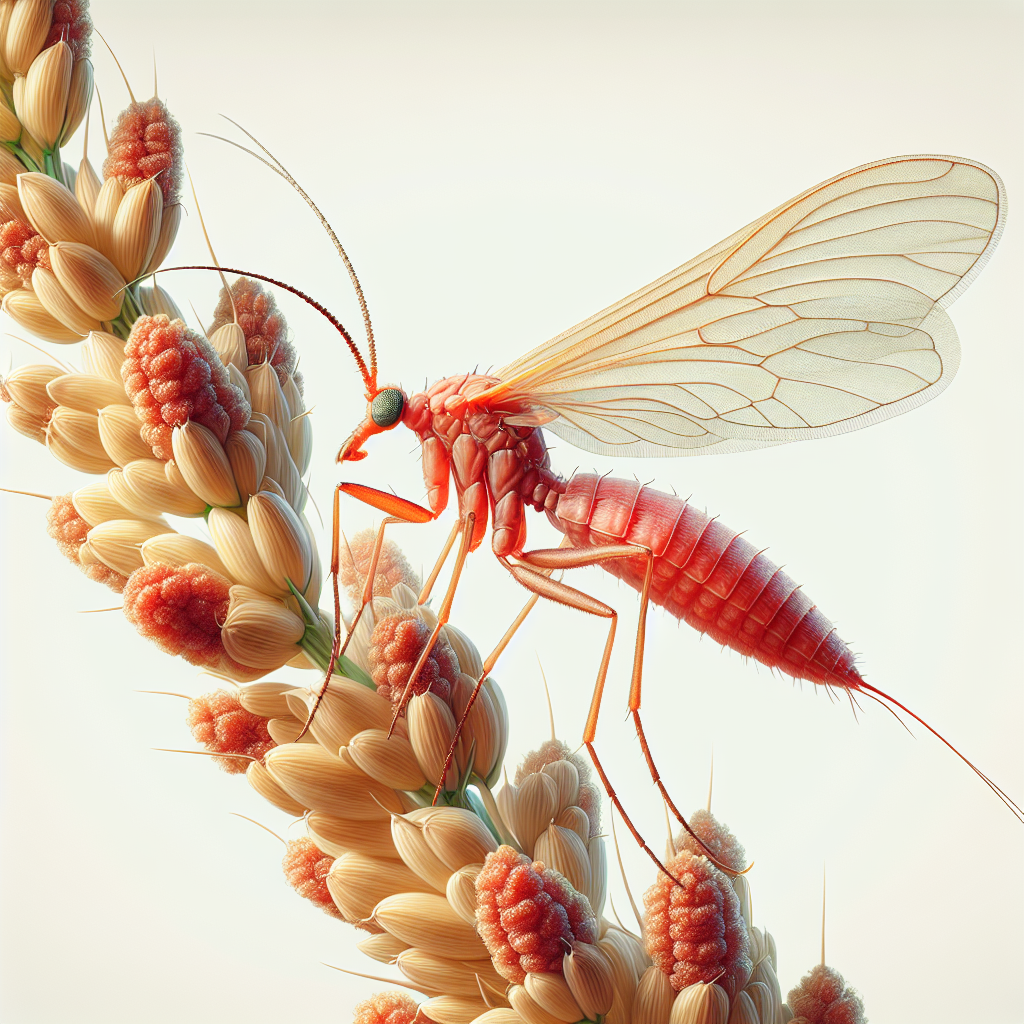
Introduction to sorghum midge
Sorghum midge (Contarinia sorghicola), a minuscule yet formidable pest, poses one of the most severe threats to sorghum production worldwide. This tiny fly, often smaller than a grain of rice at 1.5-2.5 mm long, targets the developing grains of sorghum heads, leading to catastrophic yield reductions. Native to Asia but now cosmopolitan in sorghum-growing regions, it thrives in warm climates and can cause losses exceeding 85% in unmanaged fields. Understanding this pest is crucial for grain sorghum and sweet sorghum growers, as timely intervention can preserve harvests. This definitive guide covers identification, lifecycle, triggers, organic controls, prevention, and affected crops, empowering farmers with professional-grade strategies to combat sorghum midge infestations effectively.
Farmers in the U.S. Corn Belt, India, Africa, and Australia report annual global losses in the millions of dollars due to this pest. Its insidious nature lies in synchronized attacks during flowering, turning promising panicles into barren husks. Early detection and integrated management are key to minimizing damage, especially as climate change extends its range into new areas. For more on sorghum cultivation challenges, check this insightful Spring Pest Patrol blog post.
Identifying Symptoms & Damage
Sorghum midge damage manifests distinctly on panicles, making diagnosis straightforward with practice. The hallmark symptom is the 'shot-hole' appearance: tiny, pale, tubular husks (glumes) that remain on the panicle after infested grains abort. Healthy sorghum grains develop plump and filled, but midge-infested ones produce only empty, light-brown husks 2-3 mm long, often with a red larva visible inside upon close inspection.
Inspect panicles 7-14 days after mid-bloom (50% bloom stage), when damage peaks. Shake heads over white paper; orange eggs, red-orange larvae, or tiny reddish adults signal active infestation. Severe attacks leave panicles with 70-100% empty spikelets, reducing yield drastically. Differentiate from headworms or grain-sucking bugs by the absence of webbing, frass, or sucking scars—midge damage is clean and uniform.
Yield impacts are profound: even 20% infestation can cut production by 50%. In millet fields, similar symptoms may appear, but sorghum midge prefers grain sorghum varieties. Use a 10x hand lens for confirmation; adults have long antennae and delicate wings. Scout weekly from boot stage onward, noting hotspots near field edges or previous crop residues. Economic thresholds vary: treat if 1 midge per 10 sorghum heads at bloom.
Associated signs include honeydew from secondary pests like sugarcane aphid, but primary diagnosis hinges on those diagnostic empty glumes. Document with photos for IPM records.
Lifecycle and Progression of sorghum midge
The sorghum midge completes 6-10 generations per season in tropical regions, syncing perfectly with sorghum's flowering. Adults emerge at dawn, live 1-2 days, and females lay 30-70 eggs singly inside florets using their ovipositor. Eggs hatch in 2-4 days into orange larvae that feed on the ovary, maturing in 4-6 days before dropping to pupate in soil.
Pupae form reddish cocoons 1-2 cm deep, taking 7-10 days to produce new adults. Total cycle: 10-20 days at 25-35°C. Overwintering occurs as diapausing larvae in dry glumes. One generation per sorghum crop in temperate zones, multiple in perennials or ratoons.
Monitor with blue sticky traps or panicle inspections. Peak activity coincides with 50% bloom; females prefer soft, yellow anthers. Lifecycle knowledge enables precise timing: scout pre-bloom, apply controls at egg-lay window. In corn rotations, overlapping generations amplify risks.
Environmental Triggers & Risk Factors
Warm temperatures (25-35°C) and high humidity (>60%) trigger midge outbreaks, with optimal development at 30°C. Early planting aligns bloom with peak midge flights, increasing vulnerability. Susceptible mid-maturity hybrids suffer most; late-planted fields escape by blooming post-midge season.
Refuge crops like corn, millet, or Johnson grass host midges, infesting nearby sorghum. Drought-stressed plants attract more oviposition. Soil types matter: sandy soils favor pupation survival. Regional risks peak in July-August for U.S. sorghum belt.
Climate shifts extend seasons, boosting populations. Volunteer sorghum and shattered seed perpetuate infestations. Assess farm history: fields with prior midge exceed 20% damage risk.
Organic Control & Treatment Plans
Organic management emphasizes cultural, biological, and minimal mechanical tactics. Plant resistant varieties like TAM-256 or Super Dove, which deter oviposition via tight glumes. Time planting to avoid peak midge flights: delay 10-14 days post-risk window.
Destroy volunteers and shatter seed pre-planting. Use trap crops: border rows of susceptible sorghum lure midges away. Early harvest at hard-dough stage prevents larval drop; burn or deep-bury residues to kill pupae.
Biologicals shine: release parasitic wasps (Aprostocetus diplosidis) at 1:10 midge ratio. Neem oil (azadirachtin 0.03%) sprays at 50% bloom disrupt egg hatch—apply evenings to spare pollinators. Bacillus thuringiensis (Bt) targets larvae if combined with midges. Rotate with non-hosts like soybeans or wheat for 2 years.
Integrated plan: Scout thresholds (1 midge/10 heads), apply neem + parasitoids, till post-harvest. For detailed organic IPM, see sorghum midge specifics in Grain Sorghum wiki. Yields recover 30-50% with diligence.
Preventing sorghum midge in the Future
Long-term prevention builds resilient systems. Select midge-tolerant hybrids certified by seed companies. Implement 3-year rotations excluding grasses: sorghum-millet-corn cycles break cycles, but prefer legumes.
Clean equipment to eliminate seed hitchhikers. Border fields with 20m non-host strips like sunflowers. Use overhead irrigation to deter adults. Monitor with regional traps; apps predict flights via degree-days (base 15°C).
Soil solarization kills pupae pre-season. Encourage natural enemies: plant marigold for predatory insects. Harvest timing: combine at <25% moisture. Store grain below 13% moisture to starve emerging adults. Annual scouting logs predict risks; zero-tolerance for volunteers.
Farm-wide IPM reduces populations 70% over years.
Crops Most Affected by sorghum midge
Sorghum midge primarily targets grain sorghum (Sorghum bicolor), inflicting heaviest damage on grain types. Grain Sorghum for food/feed loses most value. Sweet Sorghum for syrup suffers syrup yield drops. Wild relatives like Johnson grass serve as reservoirs.
Secondary hosts include pearl millet, finger millet, and sudangrass, but damage is lighter. No reports on corn or wheat, confirming host specificity. Global hotspots: India (85% losses), U.S. Plains, Sudan. Hybrids vary: photoperiod-sensitive types evade better.