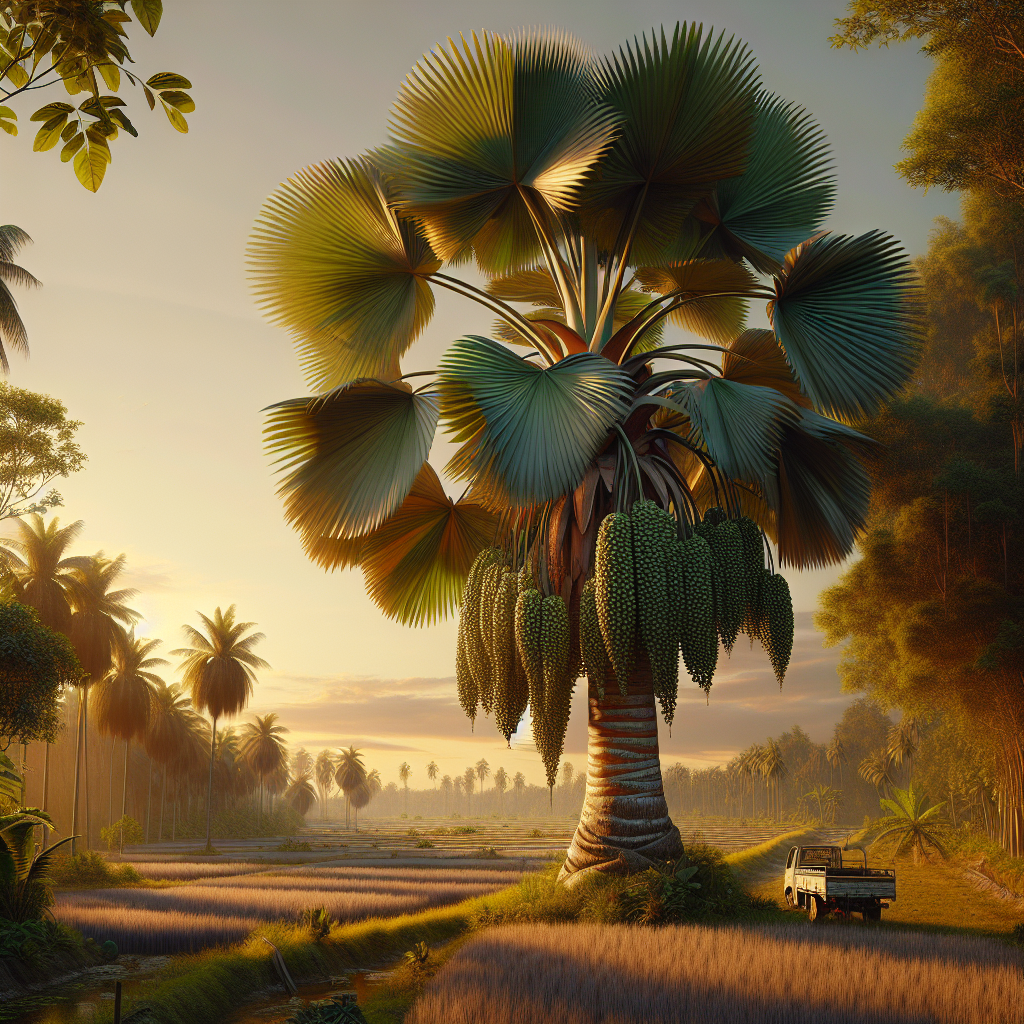
Introduction to Toddy Palm
Toddy palm (Borassus flabellifer), revered across South Asia, Southeast Asia, and parts of Africa, stands as a cornerstone of tropical agroforestry. Known locally as palmyra, lontar, or sugar palm, this majestic fan palm reaches heights of 30 meters with a robust trunk up to 1 meter in diameter. Farmers cultivate it not just for the fermented sap (toddy) that yields palm wine, jaggery, and vinegar, but also for its fibrous fruit, tender pith, and durable leaves used in roofing and handicrafts.
With a lifespan exceeding 100 years, toddy palm delivers perennial returns, making it ideal for sustainable small-scale farming. Each mature tree can produce 50-100 liters of sap daily during peak seasons, translating to substantial revenue. Its deep taproot system enhances drought tolerance, positioning it as a climate-resilient crop amid rising global temperatures. For more on heatwave strategies, see Why Summer Heatwaves Are Silently Killing Small Farm Yields - And 7 Organic Strategies to Fight Back. This deep-dive guide equips growers with professional-grade protocols for propagation, care, and harvest to maximize profitability.
Botanical Profile of Toddy Palm
Family: Arecaceae (Palm family) Genus: Borassus Species: flabellifer
Toddy palm is dioecious, meaning male and female flowers occur on separate trees. Mature specimens feature massive, fan-shaped leaves up to 3 meters across, with bifurcated segments that create a distinctive wedge shape. The trunk, covered in old leaf bases, supports a crown of 40-60 leaves. Flowering begins at 12-15 years, with female trees bearing large, orange-brown fruit clusters containing 1-3 seeds encased in sweet, edible pulp.
Roots form a deep taproot extending 6-10 meters, complemented by extensive lateral feeders for nutrient uptake. The tree's slow growth—reaching maturity in 15-20 years—demands patience but rewards with annual yields. Unlike Coconut, toddy palm excels in marginal soils, tolerating salinity and waterlogging better than most palms. Its inflorescences, spathes up to 2 meters long, are tapped for sap from December to June in the Northern Hemisphere.
Key Varieties:
- Indian Palmyra: High sap yield, robust fruits.
- Thai Lontar: Larger fruits, faster maturation.
- African Borassus: Drought-hardy, smaller stature.
Soil, pH, and Climate Requirements for Toddy Palm
Toddy palm thrives in well-drained, sandy loam soils with pH 6.0-8.0, exhibiting remarkable adaptability to poor, rocky, or lateritic terrains. Avoid heavy clay or waterlogged sites to prevent root rot. Incorporate organic matter like composted coconut husks to boost fertility; aim for 2-3% organic content. Salinity tolerance up to 4-6 dS/m makes it suitable for coastal plantations.
Climate Ideal: Tropical hot-dry; 25-40°C daytime, minimum 15°C. Annual rainfall 500-1500 mm, with distinct dry periods triggering flowering. USDA zones 10-12. It withstands prolonged droughts but benefits from supplemental irrigation during establishment. High wind resistance suits exposed sites, though young plants need protection.
Soil preparation involves deep plowing (1-1.5m) to accommodate the taproot, followed by green manuring with cowpea or pigeon pea. Test soil annually; maintain NPK at 100:50:100 g/tree/year via split applications. Mulch with dried leaves to conserve moisture and suppress weeds.
Step-by-Step Planting & Propagation
Propagation Methods:
- Seed (Primary Method): Select fresh, ripe fruits from high-yielding mother trees. Extract seeds, soak in water 48 hours, sow horizontally 5-10 cm deep in raised nursery beds with sand:compost (3:1). Germination: 2-4 months at 30-35°C. Transplant seedlings at 6-12 months (30-45 cm tall) to permanent sites.
- Seedling Transplant: Space 10x10m (100 trees/ha) or 8x8m for intensive (150 trees/ha). Dig pits 1x1x1m, fill with topsoil + 10kg FYM + 500g superphosphate. Plant during monsoon onset; stake if windy.
- Vegetative (Rare): Offshoots from young trees, but low success rate.
Planting Steps:
- Site selection: South-facing slopes for drainage.
- Pit preparation: 15-20 days prior, expose to sun.
- Transplant: Evening hours, water immediately.
- Initial care: Shade nets for 3-6 months, irrigate weekly.
Expect 80-90% survival with proper hardening. For palm comparisons, see Dwarf Coconut.
Care & Maintenance regimes for Toddy Palm
Irrigation: Drip or basin system; 40-60 liters/tree/week in dry seasons. Mature trees forage deeply, needing less. Fertilization: Year 1-5: 250g N, 125g P, 250g K/tree annually, increasing to 2kg NPK by maturity. Foliar micronutrients (Zn, Mn) biannually. Pruning: Remove dead fronds annually post-harvest; retain 20-30 live leaves/tree. Weeding: Manual or mulch; intercrop with groundnut or sesame years 1-5. Pollination: Ensure 1:6 male:female ratio; hand-pollinate if needed.
Seasonal Schedule:
| Season | Key Tasks |
|---|---|
| Pre-monsoon | Fertilize, irrigate |
| Monsoon | Weed control |
| Dry | Sap tapping prep |
| Post-harvest | Prune, mulch |
Monitor growth; canopy closure by year 10 signals maturity.
Pests, Diseases & Organic Management
Major Pests:
- Rhinoceros beetle: Larvae bore crowns. Control: Neem oil drenches, pheromone traps.
- Red palm weevil: Trunk borers. Scout frond axils; inject biopesticides.
- Scale insects: Sap suckers. Horticultural oil sprays.
- Rhizome weevils: Soil drenches with entomopathogenic nematodes.
Key Diseases:
- Bud rot (Phytophthora palmivora): Wet crowns. Improve drainage, copper fungicides.
- Leaf spots (Alternaria): Remove infected parts, potassium phosphite.
- Ganoderma trunk rot: Avoid wounds, remove stumps.
Organic IPM: Companion with marigold for nematodes; release predatory beetles. For broader strategies, explore Why 90% of Small Farms Fail at Pest Management - And 8 Organic Fixes That Actually Work. Rotate intercrops, maintain sanitation.
Harvesting, Curing & Optimal Storage
Sap Tapping (Primary): Age 12+. Select healthy inflorescences, beat gently 7-10 days to soften, slice daily. Yield: 1-3L/inflorescence/day. Collect in earthen pots; ferment 12-24h for toddy or boil for jaggery. Fruit Harvest: Mature clusters (12-16 months post-pollination) via climbing; yield 100-200 fruits/tree. Other: Tender heart (apex) from young trees; leaves year-round.
Post-Harvest:
- Sap: Process within 4h; refrigerate at 4°C (3 days shelf life).
- Fruit: Dry pulp 50-60°C; store airtight (6 months).
- Jaggery: Cool, mold, store dry (1 year).
Yield Potential: 20-30 tons jaggery/ha/year at maturity.
Companion Planting for Toddy Palm
Leverage toddy palm's canopy for agroforestry. Compatible:
- Ground: Peanuts, Sesame, Cowpea (N-fixers).
- Mid: Ginger, Turmeric for shade tolerance.
- Shade-lovers: Pineapple, Banana.
Benefits: Nitrogen from legumes, erosion control, diversified income. Avoid water-hungry crops like sugarcane. Plant Yarrow for pest repulsion. For more, check companion guides.