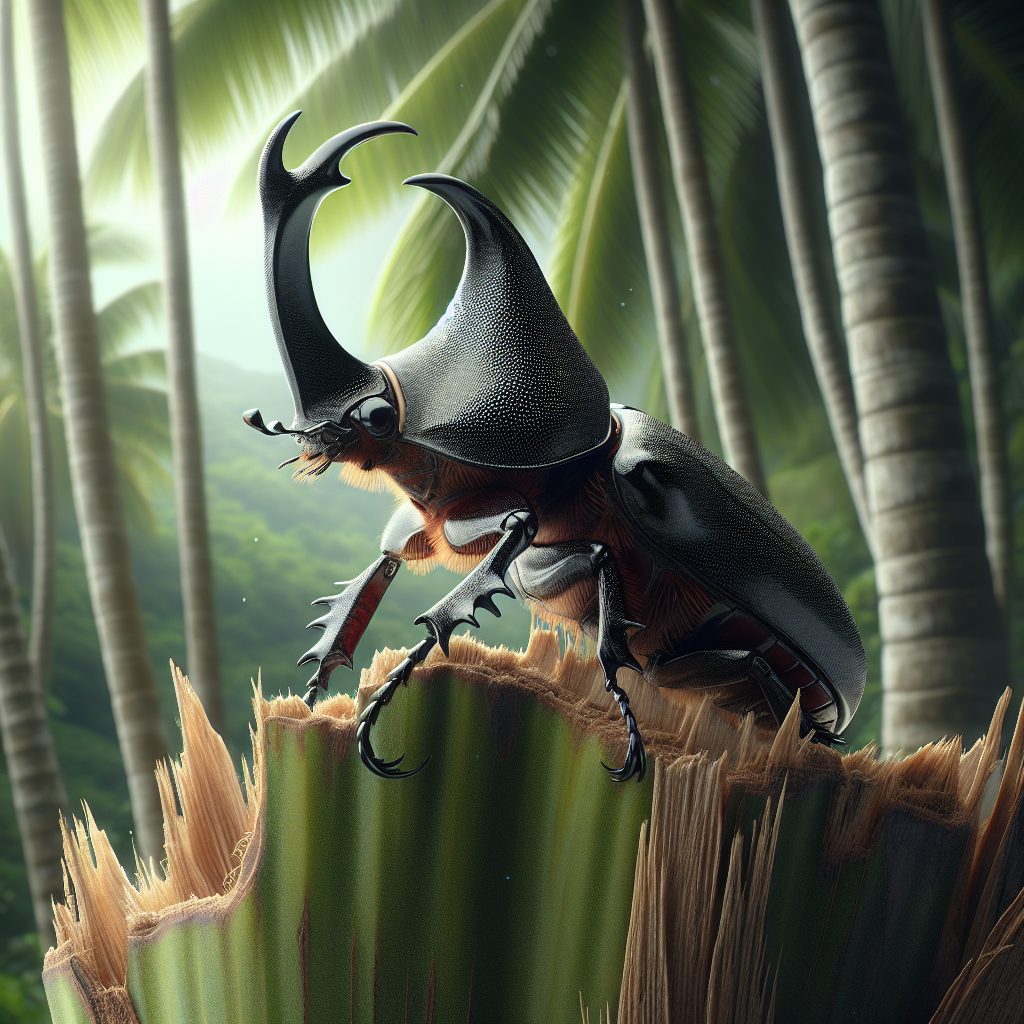
Introduction to Rhinoceros beetle
The rhinoceros beetle, scientifically known as Oryctes rhinoceros, is one of the most notorious pests in tropical agriculture, particularly devastating to palm crops. Native to Southeast Asia, this large scarab beetle has spread globally through trade, infesting regions from the Pacific Islands to Africa and the Caribbean. Adult beetles can reach 6 cm in length, with males sporting a prominent horn-like projection on their head, resembling a rhinoceros—hence the name. These beetles are primarily nocturnal and powerful fliers, capable of traveling several kilometers in search of food and mates.
Grubs, the larval stage, are the most destructive, burrowing into palm trunks and crowns, feeding on soft tissues and sap. A single infestation can weaken mature palms, reduce fruit production by up to 40%, and predispose trees to secondary infections like Phytophthora palmivora. In commercial plantations, rhinoceros beetles cause billions in annual losses, making them a top priority for integrated pest management (IPM) programs. This guide provides professional-grade diagnostics, organic controls, and prevention strategies tailored for smallholder and large-scale farmers. For real-world success stories, check out this Spring Pest Patrol: Organic AI Strategies to Shield Your Crops from Common Invaders.
Understanding the beetle's biology is crucial for effective control. Females lay up to 40 eggs in decaying plant matter or palm debris, kicking off a lifecycle that can span 1-2 years. Early intervention prevents population explosions, especially in humid, tropical environments where organic methods shine. This definitive resource equips growers with actionable steps to protect high-value palms and sustain yields.
Identifying Symptoms & Damage
Spotting rhinoceros beetle damage early is essential for containment. Adult beetles chew semi-circular notches (1-2 cm wide) in emerging fronds, creating ragged, V-shaped tears. Look for glistening trails of sap and frass (beetle excrement) around feeding sites—frass appears as fibrous, brown pellets. Severely damaged fronds wilt, turn yellow, and fail to unfurl, stunting canopy development.
Grub damage is subtler but more lethal. Larvae tunnel axially into the heartleaf (meristem), causing crown collapse. Symptoms include a fermented odor from rotting tissues, buckling trunks, and palm death within 6-12 months. Shake suspect crowns at dawn; dislodged adults confirm infestation. In young palms, grubs girdle the growing point, halting vertical growth entirely.
Secondary signs include bird activity (pecking at grubs), increased susceptibility to root rot, and reduced bunch production. Differentiate from similar pests like termites by the presence of horned adults and sap trails. Use a sharp knife to probe crown bases for tunnels up to 1 meter deep. Regular scouting—weekly in high-risk areas—catches infestations before irreversible harm. Document damage with photos for IPM tracking.
Lifecycle and Progression of Rhinoceros beetle
The rhinoceros beetle lifecycle is holometabolous, completing in 12-18 months under optimal tropical conditions (26-30°C, 70-80% humidity). Females oviposit 20-50 eggs singly in compost heaps, rotting logs, or palm stumps. Eggs hatch in 7-10 days into tiny, C-shaped grubs that feed voraciously on decaying organic matter.
Grubs progress through three instars over 8-12 months, growing to 12 cm. First instar (1-2 months) feeds superficially; second (3-4 months) burrows deeper; third (4-6 months) is most destructive, migrating to live palms. Pupation occurs in earthen cells within debris, lasting 20-40 days, yielding adults that emerge at night.
Adults live 4-8 months, feeding on palm sap and tree wounds. Males use horns for combat; mating peaks during rainy seasons. Peak activity aligns with monsoon onset, with 2-3 generations per year in equatorial zones. Progression accelerates in nutrient-rich debris piles—remove them to disrupt cycles. Monitor with pheromone traps to time interventions.
Environmental Triggers & Risk Factors
Rhinoceros beetles thrive in warm, humid tropics (USDA zones 10-12), with outbreaks triggered by abundant breeding sites: unmanaged palm debris, coconut husks, and oil palm replants. High rainfall (>2000 mm/year) and temperatures above 25°C boost egg hatch and grub survival. Poor plantation hygiene—leaving felled trunks—multiplies populations 10-fold.
Risk spikes in monoculture palms like coconut and oil palm, especially post-typhoon when wounds invite adults. Soil compaction and waterlogging favor grubs by concentrating organic matter. Proximity to wild palms or tourist imports heightens invasion risk. Nutrient-stressed trees (banana intercropped without barriers) attract beetles. Climate change extends ranges into subtropical areas. Assess risk via debris audits and trap counts.
Organic Control & Treatment Plans
Organic management emphasizes IPM: cultural, biological, and mechanical controls over chemicals. Cultural: Remove breeding sites—chip and compost palm waste off-site or bury 1m deep. Plant trap crops like pineapple borders to divert adults.
Biological: Deploy Bacillus thuringiensis (Bt) sprays on young fronds and Oryctes virus (baculovirus) inoculants into grubs (80-95% mortality). Release predators like the histerid beetle Scaptocoleus nigricornis (1:10 ratio). Nematodes (Heterorhabditis bacteriophora) target soil grubs effectively.
Mechanical: Install pheromone traps (ethyl 4-methyloctanoate lures, 20-40/ha) to capture males, reducing mating. Hook-and-poke grubs from crowns using long poles with barbed wires—labor-intensive but 90% effective on small farms. Mulch with neem cake to deter oviposition.
Treatment Plan: 1) Scout weekly. 2) Trap adults (threshold: 5/trap/week). 3) Inject virus into 10% infested palms. 4) Destroy grubs manually. 5) Monitor 3 months. Rotate methods to prevent resistance. Success rates exceed 85% in organic systems.
Preventing Rhinoceros beetle in the Future
Prevention hinges on farm hygiene and monitoring. Quarantine new palms; inspect for grubs before planting. Maintain 1m clear zones around trunks, free of debris. Use resistant varieties like hybrid coconuts (e.g., MYD x Talls). Erect physical barriers: fine-mesh netting over crowns of juveniles.
Implement trap networks year-round, serviced biweekly. Promote biodiversity with marigold hedges repelling beetles. Solarize soil pre-planting to kill eggs. Educate workers on sanitation. Annual audits reduce incidence by 70%. Integrate with broader IPM for termites and scale.
Crops Most Affected by Rhinoceros beetle
Rhinoceros beetles target over 200 palm species, with economic heavyweights bearing the brunt:
- Coconut (Cocos nucifera): Primary host; grubs kill 20-50% of urban trees.
- Oil Palm (Elaeis guineensis): Devastates plantations; 30% yield loss in Asia.
- Date Palm (Phoenix dactylifera): Crown boring topples mature trees.
- Sago Palm (Metroxylon sagu) and Areca Palm (Areca catechu): Frequent in Pacific islands. Secondary hosts include banana, mango, and sugarcane, though less severely. Focus vigilance on palms; intercropping with non-hosts like cassava dilutes risk.