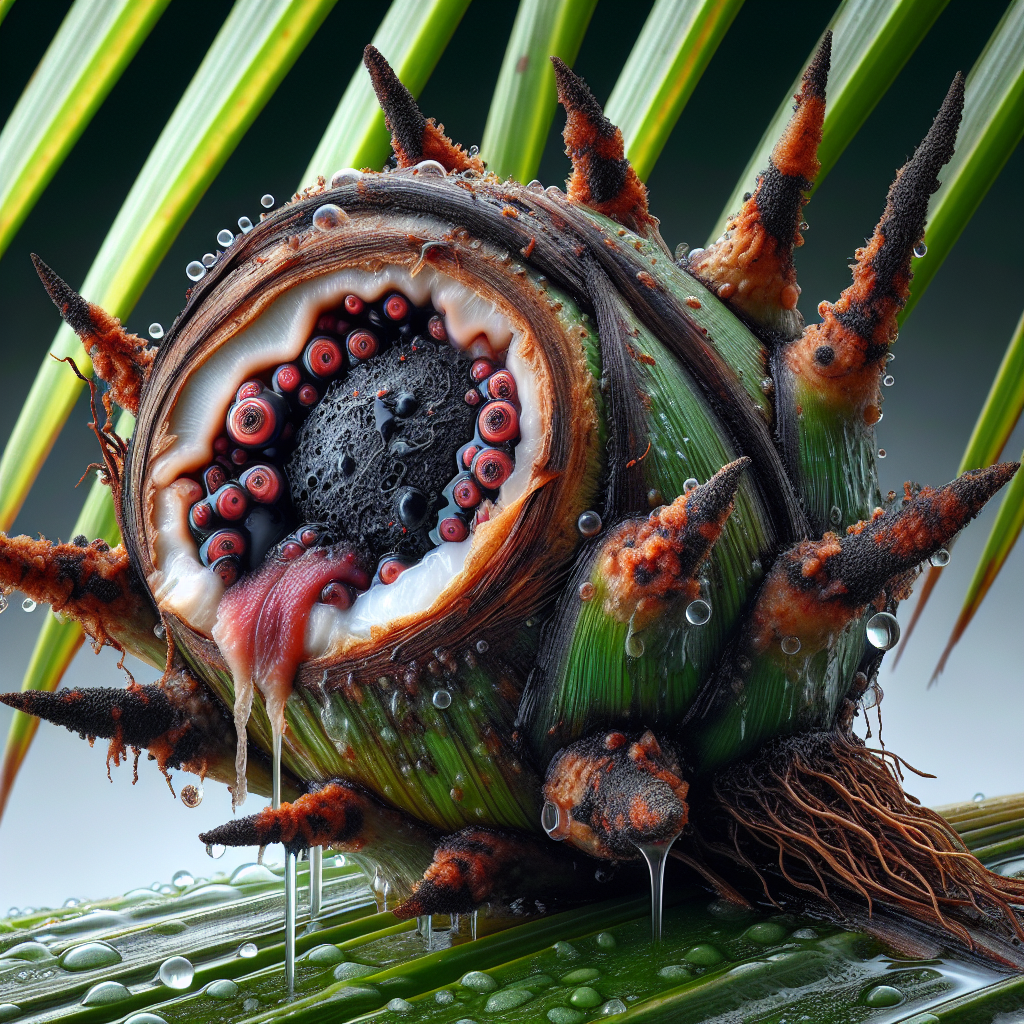
Introduction to Bud rot
Bud rot represents one of the most destructive diseases affecting tropical and subtropical agriculture, particularly in high-value perennial crops. Caused primarily by the oomycete pathogen Phytophthora palmivora (Phytophthora palmivora), this disease targets the tender buds and growing points of plants, leading to their rapid necrosis and collapse. The name 'bud rot' encompasses several similar conditions caused by related Phytophthora species or other pathogens like Phytophthora (Phytophthora), but P. palmivora is the most notorious due to its wide host range and aggressive nature.
First identified in oil palm plantations in Southeast Asia, bud rot has since spread globally, devastating crops in regions with high humidity and rainfall. In severe outbreaks, it can wipe out entire plantations, causing economic losses in the millions. For instance, in coconut groves, bud rot can kill young palms within weeks, while in avocado orchards, it compromises fruit production by destroying floral buds. This guide provides comprehensive diagnostic criteria, lifecycle insights, and proven organic management strategies to help growers protect their crops effectively. Understanding bud rot is crucial for sustainable farming, especially as climate change increases periods of wet weather that favor the pathogen.
The disease's impact extends beyond direct tissue destruction; it weakens plants, making them susceptible to secondary infections like root rot or crown rot. Early intervention is vital, as advanced stages are nearly impossible to reverse. By integrating cultural practices, biological controls, and vigilant monitoring, farmers can minimize losses and maintain productivity.
Identifying Symptoms & Damage
Accurate identification of bud rot is essential for timely intervention. The disease typically begins with subtle signs on the youngest, most tender tissues. Initial symptoms include water-soaked, discolored lesions on buds, spears, or young leaves, often appearing as dark brown or black spots. As the infection progresses, the affected bud fails to open, wilts, and collapses into a slimy, rotted mass emitting a foul, alcoholic odor characteristic of Phytophthora decay.
In palms like coconut or oil palm, the spear leaf (central growing point) turns grayish-brown and hangs down, with internal tissues showing reddish-brown discoloration when split open. Advanced rot leads to complete disintegration of the bud, exposing the heart to further invasion. On Hass Avocado trees, buds and blossoms blacken, drop prematurely, and flowers fail to set fruit, resulting in defoliation and dieback. Banana plants exhibit rotting at the pseudostem base near the bud, with yellowing leaves and toppling of the bunch.
Damage assessment reveals severe yield losses: up to 50% in fruit crops and total plant death in perennials. Secondary symptoms include gum oozing in avocados, bacterial contamination in rotted tissues, and attraction of insects like fruit flies. Differentiate from other issues like borers (which leave frass) or lightning strike (sharp cuts without rot). Use a knife to inspect: healthy tissue is firm and white; infected is soft, dark, and malodorous. Lab confirmation via culturing or PCR identifies the pathogen definitively.
Lifecycle and Progression of Bud rot
The lifecycle of bud rot pathogens like P. palmivora is adapted to wet environments, making it a classic water mold. The pathogen survives as oospores in soil, plant debris, or infected roots for years. Under favorable conditions (high moisture, 25-30°C), zoospores are released from sporangia, swimming to host tissues via water films on leaves or soil splash.
Infection occurs through wounds, natural openings like stomata, or directly into tender buds. Hyphae penetrate cells, producing toxins that kill tissue within 24-48 hours. The disease progresses rapidly: Day 1-2 shows lesions; by Day 3-5, bud collapse; within 7-10 days, full necrosis and sporulation on dead tissue. In humid conditions, secondary spread via rain splash or tools accelerates epidemics.
Oospores form in rotting tissue, completing the sexual cycle and ensuring long-term survival. Progression varies by host: in banana, it moves from bud to pseudostem; in palms, it descends the meristem. Warm nights (>25°C) and day temperatures (28-32°C) with leaf wetness >12 hours trigger outbreaks. Without intervention, a single infected plant can inoculate dozens nearby via runoff.
Environmental Triggers & Risk Factors
Bud rot epidemics are driven by environmental factors favoring Phytophthora. High humidity (>80%), prolonged leaf wetness from rain or overhead irrigation, and temperatures of 25-32°C are primary triggers. Poor drainage, compacted soils, and waterlogging create anaerobic conditions that stress roots, reducing plant defenses.
Risk factors include dense planting, excessive nitrogen fertilization promoting succulent growth, and mechanical injury from wind, pruning, or machinery. In mango orchards, monsoon seasons amplify spread. Susceptible varieties like young palms or certain Hass Avocado cultivars heighten vulnerability. Overcrowding hinders air circulation, trapping moisture.
Climate change exacerbates risks with intensified rainfall events. Soil pH below 5.5 or above 7.5 limits beneficial microbes that suppress Phytophthora. Companion pests like ants or mealybugs spread inoculum by carrying sporangia.
Organic Control & Treatment Plans
Organic management of bud rot emphasizes prevention and cultural controls, as chemical fungicides are limited. Start with sanitation: remove and destroy infected buds immediately, burying >1m deep or burning to break the lifecycle. Avoid overhead watering; use drip irrigation to keep foliage dry.
Boost plant immunity with compost teas rich in Trichoderma and Bacillus subtilis, applied as foliar sprays weekly during wet seasons. Mulch with coarse organic matter to improve drainage and suppress soil inoculum. For palms, inject trunks with potassium phosphite (OMRI-approved) to induce systemic resistance.
Biological agents like Streptomyces spp. or Pseudomonas fluorescens colonize roots, outcompeting Phytophthora. In avocado, apply gypsum to amend sodic soils. Prune for airflow, spacing plants adequately. During outbreaks, cover wounds with organic sealants. Integrate with Read our Spring Pest Patrol blog for integrated strategies. Monitor weekly; early removal halts 80% of spread.
Treatment plans: Mild cases - sanitation + biofungicides; moderate - add phosphites + drainage fixes; severe - rogue plants + soil solarization. Rotate with suppressive cover crops like mustard. Success rates exceed 70% with consistent application.
Preventing Bud rot in the Future
Long-term prevention hinges on site selection and cultural practices. Choose well-drained sites, elevating beds in flood-prone areas. Select resistant varieties: e.g., robust rootstocks for avocado or hybrid palms. Maintain soil health with cover crops, mycorrhizal inoculants, and balanced nutrition (avoid excess N).
Implement strict sanitation: disinfect tools with 10% bleach, quarantine new plants. Promote biodiversity with hedgerows of thyme or marigold, which deter pathogens. Time pruning for dry periods. Use windbreaks to reduce storm damage.
Soil solarization in off-season kills soil oospores. Regular phosphite drenches build resistance. Scout using traps for early detection. Climate-resilient practices like raised beds mitigate wet extremes. Annual audits ensure compliance.
Crops Most Affected by Bud rot
Bud rot strikes a wide array of tropical crops, with palms most notorious. Coconut palms suffer spear rot, killing 20-50% in epidemics. Oil palm plantations lose billions yearly. Avocado, especially Fuerte Avocado and Hass Avocado, see bud blight reducing yields by 40%. Banana pseudostems rot at the heart leaf.
Other victims: cacao, papaya, durian, and citrus blossoms. In mango (Kulfi Mango), inflorescences blacken. Palms dominate losses, but diversification aids resilience. For detailed avocado care, see our wiki.