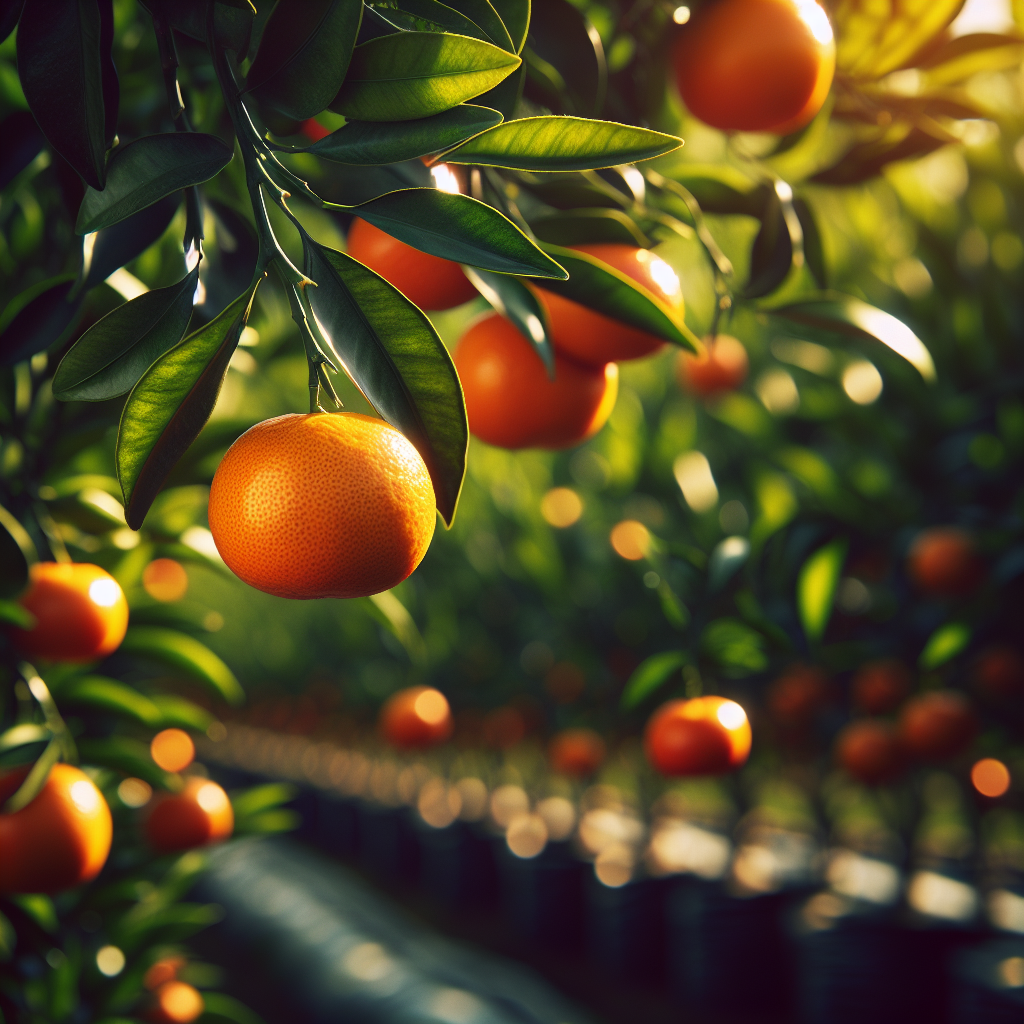
Introduction to Tangerine (Dancy)
Often called one of the classic American tangerines, this cultivar has long been admired for its rich flavor, easy-to-peel skin, and attractive deep orange to reddish peel color. Dancy emerged as an important commercial and home-orchard fruit in the United States, especially in Florida, where it helped define what many growers and consumers historically expected from a “true tangerine.” Although newer mandarins have surpassed it in large-scale commerce because of easier handling and lower seed counts, Dancy still holds horticultural value for growers seeking exceptional flavor and a traditional holiday citrus.
This tree is typically medium vigor, thorny when young, and capable of becoming highly productive under good cultural management. Fruit is usually flattened to oblate, moderately small, aromatic, and intensely colored. The flesh is tender, juicy, and distinctly sweet with balancing acidity, but quality is strongly influenced by climate, crop load, irrigation regularity, and rootstock choice. In hot regions with excessive nitrogen or erratic watering, peel can become puffy and internal quality may suffer.
Dancy is best suited to growers who understand citrus timing: feeding before major flushes, protecting bloom, thinning if overloaded, and harvesting at true maturity rather than relying on peel color alone. For comparison with another citrus production model, see our Orange guide. Good orchard planning also benefits from broader soil fertility strategy, as outlined in soil health tips.
Botanical Profile of Tangerine (Dancy)
This cultivar belongs to the mandarin group within Citrus reticulata, though “tangerine” is often used horticulturally to describe deeply colored mandarins. Dancy is generally classified as a mandarin-type citrus rather than a separate species. It forms an evergreen broadleaf fruit tree with glossy, lanceolate leaves, fragrant white flowers, and a rounded to somewhat upright canopy.
Mature trees commonly reach 10-15 feet tall on semi-dwarfing rootstocks and 15-20 feet or more on vigorous rootstocks in open ground, though long-term size depends heavily on soil depth, rootstock, pruning style, and climate. Young shoots may bear thorns, especially during juvenile growth. Flowering usually occurs in spring after winter rest or following cool-season induction in subtropical climates. Like most citrus, flowers are highly fragrant and attractive to pollinators, though many mandarins are capable of setting fruit with limited pollinator activity.
Dancy is notable for several cultivar-specific traits:
- Deep orange-red peel when mature in favorable climates
- Thin, aromatic rind that is relatively easy to peel
- Tender flesh with rich classic tangerine flavor
- Moderate to high seediness when cross-pollinated
- Tendency toward alternate bearing if heavily cropped one year
- Greater sensitivity to cold than some satsuma-type mandarins
Fruit shape is often somewhat flattened, and the rind may fit loosely if the tree receives too much water late in fruit development or if nitrogen is excessive. That loose peel does not necessarily indicate decay, but it can reduce shipping quality. Internally, the fruit has a strong, recognizable tangerine aroma because of volatile oils in the peel and juice vesicles.
Rootstock selection is critical. On trifoliate-related stocks, vigor may be moderated and cold tolerance improved, but compatibility and site conditions should be reviewed regionally. On vigorous rootstocks, Dancy may crop heavily but require more pruning and nutritional balance to maintain fruit size and peel quality.
Soil, pH, and Climate Requirements for Tangerine (Dancy)
This cultivar performs best in well-drained sandy loam to loam soils with good aeration in the top 24-36 inches. Citrus roots are intolerant of prolonged saturation because feeder roots require oxygen. If water stands in the planting area for more than 24 hours after heavy rain, the site is marginal unless raised beds, berms, or drainage improvements are used.
The ideal soil pH is 6.0-7.0, with a practical acceptable range of about 5.8-7.5. Below pH 5.5, calcium, magnesium, and phosphorus availability may become limiting and root stress can intensify. Above pH 7.5, iron, manganese, and zinc deficiencies are common, showing as interveinal chlorosis on young leaves. In alkaline soils, Dancy often struggles unless grafted to an adapted rootstock and supported with targeted micronutrient management.
Desired soil characteristics include:
- Organic matter around 2-5% in mineral soils
- Moderate water-holding capacity without compaction
- Bulk density low enough for active root exploration
- No hardpan restricting drainage
- Electrical conductivity low to moderate; citrus is not highly salt tolerant
Climate is a major determinant of success. Dancy prefers frost-free to lightly frosty subtropical and warm Mediterranean-type regions. Optimal growth generally occurs where daytime temperatures stay between 75-90°F (24-32°C) during active growth, with mild winters that provide some cool weather for color development but not severe freeze events. Flower and young fruit injury can begin near 30-32°F (-1 to 0°C), while wood damage becomes more likely with prolonged exposure below the upper 20s°F.
Unlike some very early mandarins, Dancy benefits from warm days and cool nights during ripening, which improve sugar accumulation and peel color. Excessive tropical humidity can increase disease pressure, while cool, wet spring weather may reduce bloom quality and raise fungal problems. Strong winds can scar fruit, increase moisture loss, and damage young shoots, so windbreaks are valuable in exposed orchards.
Sunlight should be full and unobstructed for at least 8 hours daily. Shaded trees produce weaker flowering, lower sugar content, and more disease-prone canopies. If planting near structures, allow enough spacing to avoid reflected heat stress on one side and shade on the other.
Step-by-Step Planting & Propagation
Commercially and professionally, Dancy should be established as a grafted tree rather than grown from seed. Seedling trees are genetically variable, slower to bear, often thornier, and may not reproduce true-to-type fruit quality. Purchase certified disease-free nursery stock propagated onto a rootstock suited to local soils, salinity, nematodes, and cold risk.
For site preparation, remove perennial weeds in at least a 3-6 foot diameter around the planting spot. Deep till only if needed to break compaction, but avoid creating a glazed planting basin in clay soils. If drainage is questionable, form a raised mound or berm 12-24 inches high and 3-5 feet wide.
Planting steps:
- Choose a warm planting window, usually early spring after frost danger or early rainy season in tropical climates.
- Dig a hole only as deep as the root ball and about 2-3 times as wide.
- Inspect roots. If container roots circle heavily, tease them apart gently or make a few vertical slices through the outer root mat.
- Set the tree so the top of the root ball sits 1-2 inches above surrounding soil grade to allow for settling.
- Keep the graft union several inches above soil level at all times.
- Backfill with native soil rather than heavily amended soil, which can create a texture interface that traps water.
- Water thoroughly to settle soil and remove major air pockets.
- Build a shallow watering ring outside the trunk zone, not against the trunk.
- Apply 2-4 inches of mulch over the root zone, keeping it 6-8 inches away from the trunk.
Spacing depends on vigor and pruning system. For backyard or small orchard planting, allow 12-18 feet between trees. On vigorous rootstocks in fertile ground, 18-20 feet is safer. Hedgerow systems can go closer, but canopy management must be more intensive.
Propagation beyond nursery grafting is usually done by budding, especially T-budding or chip budding onto rootstocks. Scionwood should come from healthy, true-to-type mother trees free from tristeza, greening exposure, and other systemic issues. Budding is best done when bark slips well and rootstocks are actively growing. Air layering and cuttings are uncommon for long-term orchard production because own-root trees may lack desired soil adaptability.
Container growing is possible if a dwarfing rootstock is used and the container is at least 20-30 gallons long term. Use a sharply drained citrus mix, not garden soil. Repot before root congestion becomes severe, and expect more frequent irrigation and nutrient supplementation than in-ground trees.
Care & Maintenance regimes for Tangerine (Dancy)
Water management is where many citrus growers succeed or fail. Newly planted trees need consistent moisture but never stagnant soil. During the first 2-3 months, water deeply 1-3 times weekly depending on heat, wind, and soil texture. Sandy soils may require smaller, more frequent irrigations; loams need deeper but less frequent watering. The goal is to moisten the active root zone roughly 12-18 inches deep while allowing the upper few inches to begin drying between events.
Signs the tree needs water include slight midday leaf curl that persists into evening, dull rather than glossy foliage, reduced flush growth, and dry soil below the mulch layer. Signs of overwatering include persistent wet soil smell, yellowing leaves without dry margins, leaf drop despite moist soil, algae or fungus growth near the base, and weak pale flushes. Chronic overwatering can lead to root decline and Phytophthora infection.
For established trees, irrigate based on evapotranspiration, crop stage, and soil type. In warm weather, an established in-ground tree in sandy soil may require 1-1.5 inches of water equivalent per week, while heavier soils need less frequent replenishment. Reduce irrigation as fruit nears maturity to avoid diluted flavor and excessively loose rind, but never impose severe drought during cell expansion or fruit may remain small.
Fertilization should be split through the active growing season. Young trees need modest but regular feeding to build canopy without forcing weak, overly succulent growth. Mature trees require enough nitrogen to sustain flowering, fruit set, and post-harvest recovery, plus balanced potassium and micronutrients.
A professional regime often includes:
- Year 1-2: 3-6 light applications annually
- Mature trees: 3-4 split applications from late winter through midsummer
- Nitrogen supplied according to tree age and leaf analysis
- Supplemental magnesium where older leaves show yellowing between veins
- Zinc, manganese, and iron corrections via foliar or soil-applied products when deficiency symptoms appear
Avoid heavy late-summer nitrogen in frost-prone regions because it stimulates tender growth susceptible to cold injury. Excess nitrogen also promotes thick canopies, larger but lower-quality fruit, and increased aphid pressure.
Pruning should be conservative. Citrus stores productive potential in leafy canopy, so severe pruning reduces yield. Remove dead wood, crossing limbs, water sprouts, and rootstock suckers promptly. Open the canopy enough for light penetration and air circulation, but do not over-thin. The best pruning time is after harvest and after major freeze risk, though emergency removal of damaged wood can occur anytime.
Fruit thinning is not always practiced, but Dancy benefits from crop load management if branches are overloaded. Heavy set can reduce fruit size, weaken the tree, and trigger alternate bearing. Where clusters are extremely dense, selectively remove some fruitlets after natural drop. Support heavily laden limbs if breakage risk is high.
Mulching improves root-zone temperature stability, moisture retention, and weed suppression. Use coarse organic mulch such as chipped bark, leaves, or composted wood products, but keep the trunk flare exposed. Do not cultivate deeply under citrus; feeder roots are shallow and easily damaged.
Pests, Diseases & Organic Management
Dancy faces the typical citrus pest complex, and because quality fruit requires healthy foliage, pest prevention matters as much as treatment. Key pests include Aphids, Citrus leafminer, Scale insects, Mealybugs, Mites, Whiteflies, and occasionally Caterpillars. In some regions, Citrus psyllid is a critical vector because it spreads Huanglongbing (Citrus greening), one of the most serious citrus diseases worldwide.
Aphids distort young flushes and excrete honeydew, which encourages sooty mold. Leafminers tunnel in tender new leaves, causing curling and reduced photosynthetic efficiency, especially on young trees. Scale and Mealybugs weaken shoots and coat leaves with honeydew. Spider Mites increase during hot, dry conditions and produce stippling or bronzing.
Organic management works best through integration:
- Encourage beneficial insects by maintaining flowering habitat near but not under the canopy, including Thyme, Yarrow, and Clover
- Avoid broad-spectrum insecticides that kill natural enemies
- Use horticultural oil during appropriate temperature windows to suppress scale, Mites, and some soft-bodied pests
- Apply insecticidal soap only when needed and with thorough coverage
- Protect tender flushes on young trees if leafminer pressure is severe
- Control ants, which farm scale and Aphids for honeydew and interfere with beneficial insects
Common diseases include Citrus canker, Greasy spot, Melanose, Scab, Root rot caused by Phytophthora, and post-bloom fungal issues in humid climates. Dancy can also show rind blemishes that reduce marketability though not always eating quality. Root diseases are especially associated with poorly drained soils or chronic overirrigation.
Disease prevention priorities:
- Start with certified clean nursery trees
- Plant only in excellent drainage
- Avoid overhead irrigation late in the day
- Prune lightly for airflow
- Sanitize tools after removing diseased tissue
- Remove fallen diseased fruit when practical
- Maintain balanced calcium and potassium nutrition for stronger tissue integrity
For fungal disease management in organic systems, copper-based sprays may be used where permitted and timed correctly, especially around susceptible flushes or wet seasons. However, overuse can injure foliage or accumulate in soil. Always align applications with local extension guidance and disease forecasts.
Huanglongbing management depends heavily on region. If present locally, rigorous psyllid monitoring, tree nutrition support, and immediate action on infected material become essential. No nutritional program cures the disease; prevention and vector control are the real strategy.
Harvesting, Curing & Optimal Storage
Dancy is usually harvested in late fall to early winter depending on climate. Peel color is a useful indicator but not sufficient by itself, since citrus can color before reaching full internal maturity in some environments. Harvest based on a combination of external color, ease of peel separation, juice content, flavor, and sugar-acid balance.
Fruit should be fully colored, aromatic, and sweet with characteristic tangerine richness before picking for best quality. Immature fruit may look acceptable but taste flat, sour, or resinous. Overmature fruit can become puffy, less firm, and more prone to drying internally.
Use clippers rather than pulling fruit when possible. Cut the stem close to the fruit to avoid puncturing neighboring fruit during storage. Harvest only when fruit is dry to reduce postharvest disease spread. Handle gently; the thin rind bruises more easily than tougher commercial mandarins.
Unlike bulb or tuber crops, citrus is not “cured” in the classic sense, but a short conditioning period can help. After harvest, sort fruit to remove damaged, cracked, or diseased specimens. Hold sound fruit in a shaded, well-ventilated area to dissipate field heat before packing or refrigeration.
Optimal storage conditions are generally 45-50°F (7-10°C) with relative humidity around 85-90%. Below that temperature range, some mandarins may develop chilling injury, including rind pitting or off-flavor. At room temperature, expect only about 5-7 days of top quality depending on harvest maturity. Under proper cool storage, fruit may hold 2-4 weeks, though flavor is usually best when consumed relatively soon after harvest.
Do not wash fruit unless necessary; surface moisture encourages decay if drying is incomplete. For home use, refrigerate in breathable bags or crisper drawers with moderate humidity. Keep away from ethylene-sensitive produce only if co-storage issues matter, though citrus itself is not highly problematic compared with some fruits.
Companion Planting for Tangerine (Dancy)
The best companion strategy for this tree is not crowding the root zone with competitive crops, but using low-growing, beneficial understory or nearby border plants that attract natural enemies, suppress weeds, protect soil, and avoid trunk moisture buildup. Citrus has shallow feeder roots concentrated near the surface, so aggressive digging and heavy-feeding annuals directly under the canopy are poor choices.
Among the best companions are Clover, Thyme, Yarrow, and Nasturtium. Clover works especially well in orchard alleys or outer root zones as a living mulch and nitrogen-contributing cover, though it should be mowed or managed so it does not compete excessively with young trees. Thyme is valuable near orchard edges or sunny drip lines because it stays relatively low, attracts pollinators, and does not cast dense shade. Yarrow supports beneficial predatory insects and improves biodiversity in mixed orchards. Nasturtium can function as a trap and pollinator-supporting plant in some systems, but place it where irrigation and airflow do not create excess humidity around the trunk.
Keep a vegetation-free zone 12-24 inches from the trunk, especially in the first years. This reduces rodent damage, trunk disease, and water competition. In dryland or low-input systems, prioritize mulch first and companion planting second. In humid regions, never allow dense companion foliage to press against the lower canopy, as that can increase fungal pressure and reduce air movement.
Good companions should support the orchard ecology without becoming a second crop that competes for potassium, irrigation, or management time. For Dancy in particular, anything that stabilizes soil moisture, reduces stress, and supports beneficial insects helps preserve the fruit quality that makes this historic tangerine worth growing.