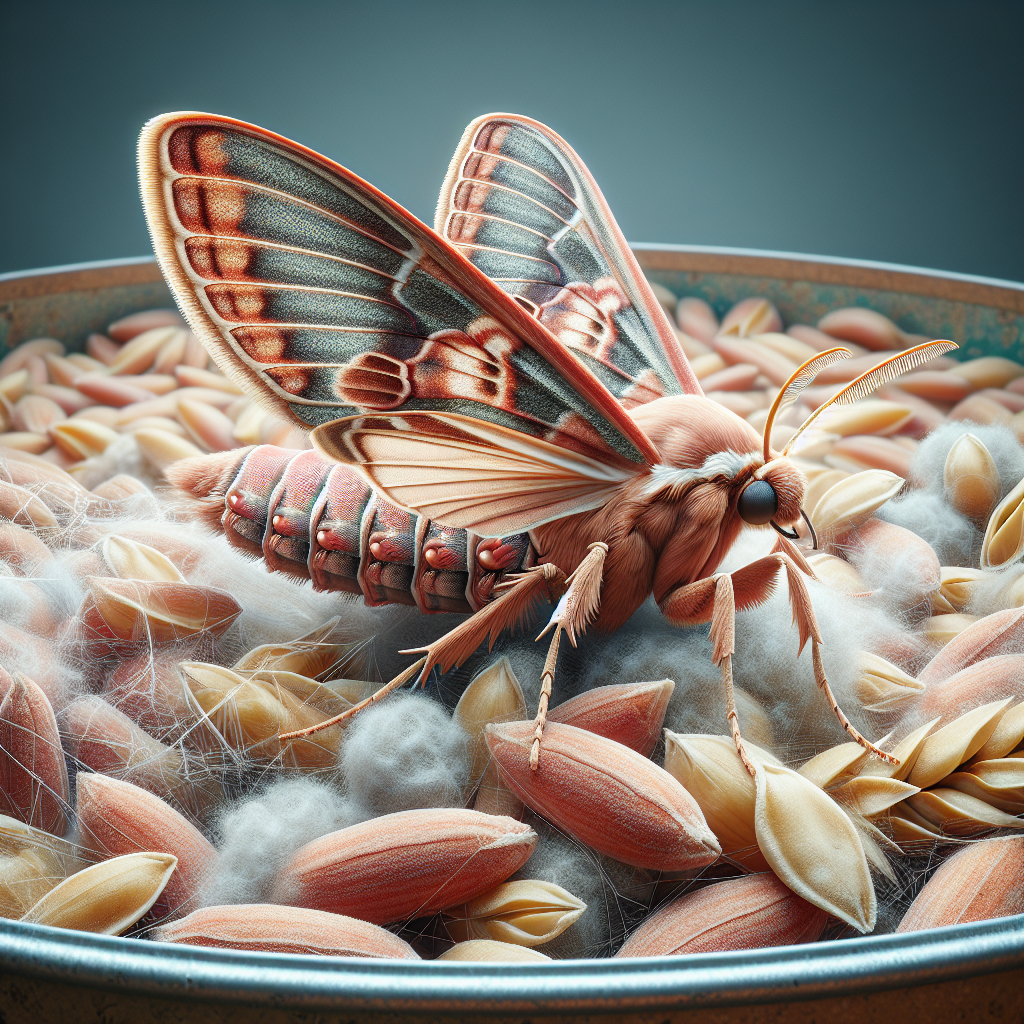
Introduction to grain moths
Grain moths, also known as pantry moths or flour moths, represent a group of small Lepidopteran insects that pose a serious threat to stored grains and dry foodstuffs worldwide. The most notorious species include the Indian meal moth (Plodia interpunctella), the tropical warehouse moth (Ephestia cautella), and the Mediterranean flour moth (Ephestia kuehniella). These pests thrive in warehouses, silos, mills, and home pantries, targeting staple crops like wheat, corn, rice, and processed products such as flour, cereals, and pasta.
Unlike field pests, grain moths primarily attack post-harvest commodities, leading to direct losses estimated at billions annually in spoiled goods and control costs. Larvae are the destructive stage, spinning silk webbing that clumps grains together, contaminates products with frass (insect waste), and promotes mold growth. Adult moths, with wingspans of 1/2 to 3/4 inch, are often noticed first fluttering around lights or food storage areas. Early detection is crucial, as infestations can spread rapidly in warm, humid environments. This guide provides professional-grade diagnostics, lifecycle insights, organic management strategies, and prevention tactics tailored for farmers, millers, and small-scale growers. For more on grain storage challenges, check this insightful blog post on small farm financial tracking.
Understanding grain moths empowers agricultural professionals to safeguard yields from these insidious invaders. With global grain production exceeding 2.7 billion tons yearly, even minor infestations can cascade into major economic hits, underscoring the need for vigilant monitoring and integrated pest management (IPM).
Identifying Symptoms & Damage
Recognizing grain moth infestations early prevents widespread losses. Key symptoms include:
- Silk webbing: Fine, white silken threads binding grains or flour into clumps, often resembling spider webs. This is produced by feeding larvae and is a hallmark sign.
- Frass and cast skins: Small, dark fecal pellets (like ground pepper) and discarded larval skins scattered in infested bins or packages.
- Adult moths: Small, beige or coppery moths with wing patterns—Indian meal moths have a distinctive light band on forewings. They fly erratically at night, attracted to lights.
- Clumped or discolored grains: Infested kernels appear dusty, moldy, or etched with feeding galleries. Flour may smell rancid or musty.
- Secondary issues: Moth presence invites molds like Aspergillus, producing mycotoxins harmful to livestock and humans.
Damage quantification: Larvae consume 20-50% of grain weight, rendering it unfit for consumption. In severe cases, entire silos require fumigation, costing $0.50-$2 per ton. Differentiate from similar pests like storage beetles by the presence of webbing—beetles leave no silk. Inspect cracks, crevices, and equipment; use pheromone traps for confirmation. Regular scouting in storage facilities reduces detection time from weeks to days, minimizing losses up to 15%.
Lifecycle and Progression of grain moths
Grain moths complete their lifecycle in 25-135 days, depending on temperature (optimal 77-86°F/25-30°C) and humidity (>60%). Understanding stages aids targeted interventions:
- Eggs: Tiny (0.3-0.5mm), white, laid in clusters of 50-300 on grains. Hatch in 2-14 days.
- Larvae: Cream-colored caterpillars (1/2 inch long) migrate from eggs, spin silk tunnels, and feed voraciously for 2-20 weeks. This is the primary damage phase; they avoid light.
- Pupa: Larvae spin cocoons in cracks or food debris, lasting 1-2 weeks.
- Adults: Short-lived (1-2 weeks), non-feeding but mate and lay eggs immediately. Females produce 100-400 eggs.
Multiple generations (4-6/year) occur in warm climates. Cold (<50°F/10°C) slows development; diapause enables overwintering. Monitor with traps: 5+ moths/week signals active infestation. Lifecycle knowledge informs timing—target larvae with diatomaceous earth during peak feeding.
Environmental Triggers & Risk Factors
Grain moths flourish under specific conditions:
- Temperature: 75-90°F accelerates breeding; above 104°F or below 50°F halts it.
- Humidity: >65% RH promotes larval survival.
- Food availability: Cracked or broken grains preferred; fresh, intact kernels resist better.
- Poor sanitation: Spilled grains, unclean bins invite entry.
- Entry points: Adults enter via open doors, infested packaging, or vehicles.
Risk factors include tropical climates, inadequate cooling in silos, and high-moisture grains (>14%). Post-harvest delays increase vulnerability. Synergistic pests like fungus gnats exacerbate issues by spreading spores. Mitigation: Dry grains to <13% moisture, cool to <60°F.
Organic Control & Treatment Plans
Organic IPM prioritizes non-chemical methods:
- Sanitation: Remove infested material, vacuum bins, heat-treat to 140°F for 1 hour or freeze at 0°F for 72 hours.
- Monitoring: Deploy pheromone traps (e.g., for Plodia); 1-2 per 100 sq ft.
- Physical barriers: Screens on vents, airtight bins.
- Biological controls: Introduce Trichogramma wasps (egg parasitoids) or Bacillus thuringiensis (Bt) for larvae.
- Insecticides: Diatomaceous earth (DE), silica aerogel, or spinosad (OMRI-listed) applied to surfaces.
Treatment Plan:
- Week 1: Clean thoroughly, discard infested lots (>10% damage).
- Week 2-4: Trap and treat with DE; release beneficials.
- Ongoing: Monitor, repeat as needed.
Efficacy: Sanitation alone reduces populations 90%; combined IPM >99%. Avoid synthetics for organic certification.
Preventing grain moths in the Future
Prevention beats cure:
- Harvest & Drying: Dry to <12% moisture immediately.
- Storage: Use hermetic bags, metal silos; rotate stock FIFO.
- Facility Hygiene: Seal cracks, install air curtains, UV lights.
- Temperature Control: Aerate to <60°F.
- Inspection Protocols: Quarantine new lots, use probe traps.
Integrated with crop rotation and resistant varieties (e.g., hard wheats), losses drop <1%. Regular audits ensure compliance.
Crops Most Affected by grain moths
Grain moths target dry-stored commodities:
| Crop | Vulnerability | Notes |
|---|---|---|
| Wheat | High | Flour milling hotspots. |
| Corn | High | Shelled kernels prime target. |
| Rice | High | Paddy and milled. |
| Oats, barley | Moderate | Whole grains. |
| Flour, cereals | Very High | Processed products. |
Secondary: Nuts, dried fruits, pet food. Global impact: 5-10% post-harvest losses in developing regions.