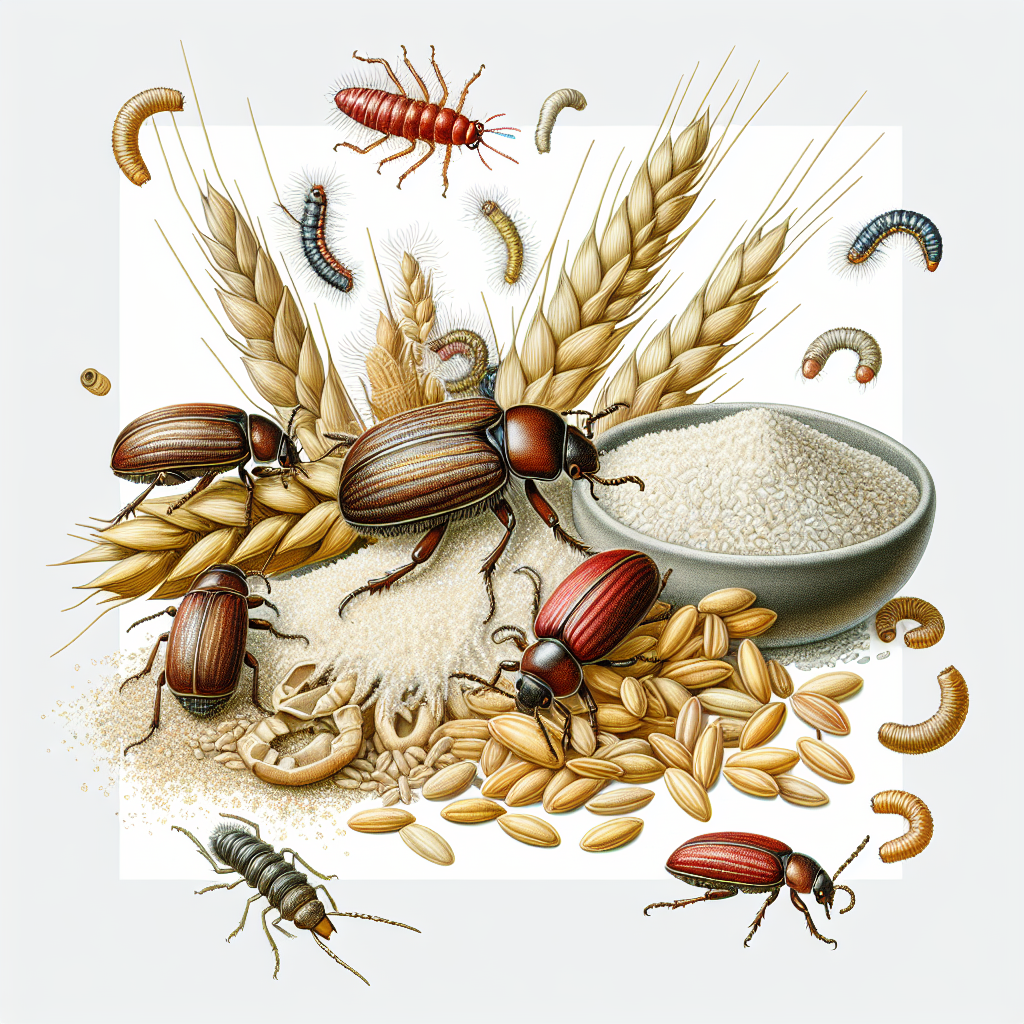
Introduction to Storage insects
Storage insects, also known as pantry pests or post-harvest pests, represent a diverse group of small insects that target stored agricultural products worldwide. These pests primarily include beetles like the rice weevil (Sitophilus oryzae), granary weevil (Sitophilus granarius), red flour beetle (Tribolium castaneum), sawtoothed grain beetle (Oryzaephilus surinamensis), and khapra beetle (Trogoderma granarium), as well as moths such as the Indian meal moth (Plodia interpunctella) and almond moth (Ephestia cautella). They thrive in warehouses, silos, mills, and home pantries, infesting grains, flours, cereals, nuts, dried fruits, and seeds.
These insects are notorious for causing massive economic losses in the agricultural sector, with global estimates exceeding billions of dollars annually due to reduced crop quality, contamination with frass (insect waste), webbing, and mold growth. Unlike field pests that attack growing crops, storage insects strike after harvest, making them a critical concern for farmers, food processors, and consumers. Early detection and integrated pest management (IPM) are essential to minimize damage. For detailed info on related pests, see Storage Beetles. Proper storage practices can prevent up to 90% of infestations, preserving the nutritional value and marketability of staples like wheat and rice.
Understanding storage insects is vital for anyone involved in grain handling. They reproduce rapidly under favorable conditions, with a single female capable of producing hundreds of offspring. This guide provides comprehensive diagnostics, lifecycle insights, and organic strategies tailored for small farms and commercial operations.
Identifying Symptoms & Damage
Recognizing storage insect infestations early is crucial for limiting spread. Common symptoms include small holes in grain kernels, fine powdery residue (frass), live insects crawling on surfaces, webbing in flour or cereals (from moth larvae), and a musty or rancid odor from degraded products.
Beetle Damage: Weevils bore into whole grains, leaving exit holes about 1-2mm in diameter. Infested kernels often contain powdery interiors and larvae. Flour beetles create a flour-like dust and can cause clumping due to moisture from their feeding. Khapra beetles hide in cracks, producing thick skins from molting larvae.
Moth Damage: Larvae spin silken webs that mat grains together, contaminating products. Indian meal moth larvae leave irregular webbing and fecal pellets, often migrating to walls before pupating.
Secondary Signs: Mold growth on damp grains, discoloration, weight loss (up to 30% in severe cases), and heat spots from insect metabolic activity (detectable with temperature probes). Inspect sacks, bins, and shelves for adults (1-5mm long, reddish-brown to black) and larvae (white, C-shaped). Use sieving or Berlese funnels for sampling. Differentiate from similar pests like Bruchids, which target legumes specifically.
Damage escalates quickly: a small infestation can spread to entire storage facilities within weeks, rendering products unfit for consumption or sale. Regular monitoring with pheromone traps catches low-level populations.
Lifecycle and Progression of Storage insects
Storage insects exhibit complete metamorphosis: egg, larva, pupa, adult. Lifecycles vary by species and conditions but typically span 4-8 weeks, allowing multiple generations per year.
Weevils (Sitophilus spp.): Females lay 200-400 eggs inside grains. Eggs hatch in 3-7 days into legless larvae that feed internally for 2-4 weeks, pupate within the kernel, and emerge as adults (3-4mm). Adults live 5-7 months, feeding and reproducing.
Flour Beetles (Tribolium spp.): Eggs laid loosely in flour (up to 450/female). Larvae (6-12mm, mobile) feed externally for 2-5 months, pupate in protected spots, adults live 1-2 years.
Grain Moths (Plodia, Ephestia): Eggs (100-300/female) hatch in 3-5 days. Larvae wander and spin webs for 2-6 weeks, then pupate in cocoons. Adults (8-20mm wingspan) live 1-2 weeks, not feeding but laying eggs.
Progression accelerates in warm, humid environments. Overwinter as larvae or pupae. Population explosions occur post-harvest if grains exceed 13% moisture. Understanding this enables targeted interventions, like heat treatments during vulnerable larval stages. Check grain moths for moth-specific details.
Environmental Triggers & Risk Factors
Storage insects flourish above 20°C (68°F) and 60% relative humidity (RH), with optimal ranges of 25-35°C and 70-90% RH for most species. Key triggers include high-moisture grains (>14%), poor ventilation, and residual infestations from previous crops.
Risk Factors:
- Harvested Crop Moisture: Damp corn or wheat invites pests.
- Storage Hygiene: Cracks, spills, and old debris harbor survivors.
- Temperature Fluctuations: Warm days activate dormant insects.
- Transport: Infested vehicles spread pests between farms.
- Global Trade: Imported goods introduce exotics like khapra beetle.
Vulnerable sites: silos, bags on pallets, mills. Risk peaks in tropical regions or poorly cooled warehouses. Mitigation starts with drying grains to <12% moisture and cooling to <15°C.
Organic Control & Treatment Plans
Organic management emphasizes non-chemical IPM: sanitation, physical controls, biological agents, and approved botanicals. Avoid synthetics for certified organic status.
1. Sanitation (Foundation): Remove spills, vacuum cracks, discard infested lots. Heat-clean bins to 60°C.
2. Physical Controls:
Aeration/Cooling: Fans to lower grain to 10-15°C, halting development.
Heat Treatment: 50-60°C for 30-60 min kills all stages (e.g., solar tents for small batches).
Diatomaceous Earth (DE): 0.5-1g/kg grain; abrades exoskeletons. Regulate for Spring Pest Patrol.
Traps: Pheromone lures for monitoring/mass-trapping (e.g., for flour beetles).
3. Biological Controls: Introduce predatory beetles (Teretriosoma championi) or parasitoids (Anisopteromalus calandrae). Effective in mills.
4. Botanicals: Neem oil (azadirachtin) at 1-2% sprays on surfaces; pyrethrum aerosols. Doses: 5-10ml/m³.
Treatment Plan:
- Inspect weekly.
- Isolate infested areas.
- Apply DE + aeration.
- Monitor with traps; if >5 insects/trap, treat with heat.
Efficacy: 95% control with integrated approach. Rotate methods to prevent resistance.
Preventing Storage Insects in the Future
Prevention outperforms cure. Implement these layered strategies:
Pre-Harvest: Clean fields of volunteer plants, rotate crops away from grains.
Harvest/Storage: Dry to <12% moisture, clean machinery, use hermetic bags (PICS) or metal silos.
Monitoring: Install traps at entry points; probe grain cores monthly.
Structural: Seal cracks, screens on vents, rodent-proofing.
Best Practices: FIFO inventory, essential oil sachets (e.g., peppermint), CO2 fumigation for organics.
Long-term: Build on-farm drying facilities. For small farms, community storage reduces risks. Consistent prevention sustains yields, as seen in successful wheat programs.
Crops Most Affected by Storage insects
Storage insects target dry-stored commodities:
Legumes: Chickpeas, lentils, soybeans.
Nuts: Almonds, walnuts, peanuts.
Processed: Flour, pasta, birdseed.
High-value losses in developing nations; Storage Beetles hit hardest in bulk storage. Protect potato tubers similarly.