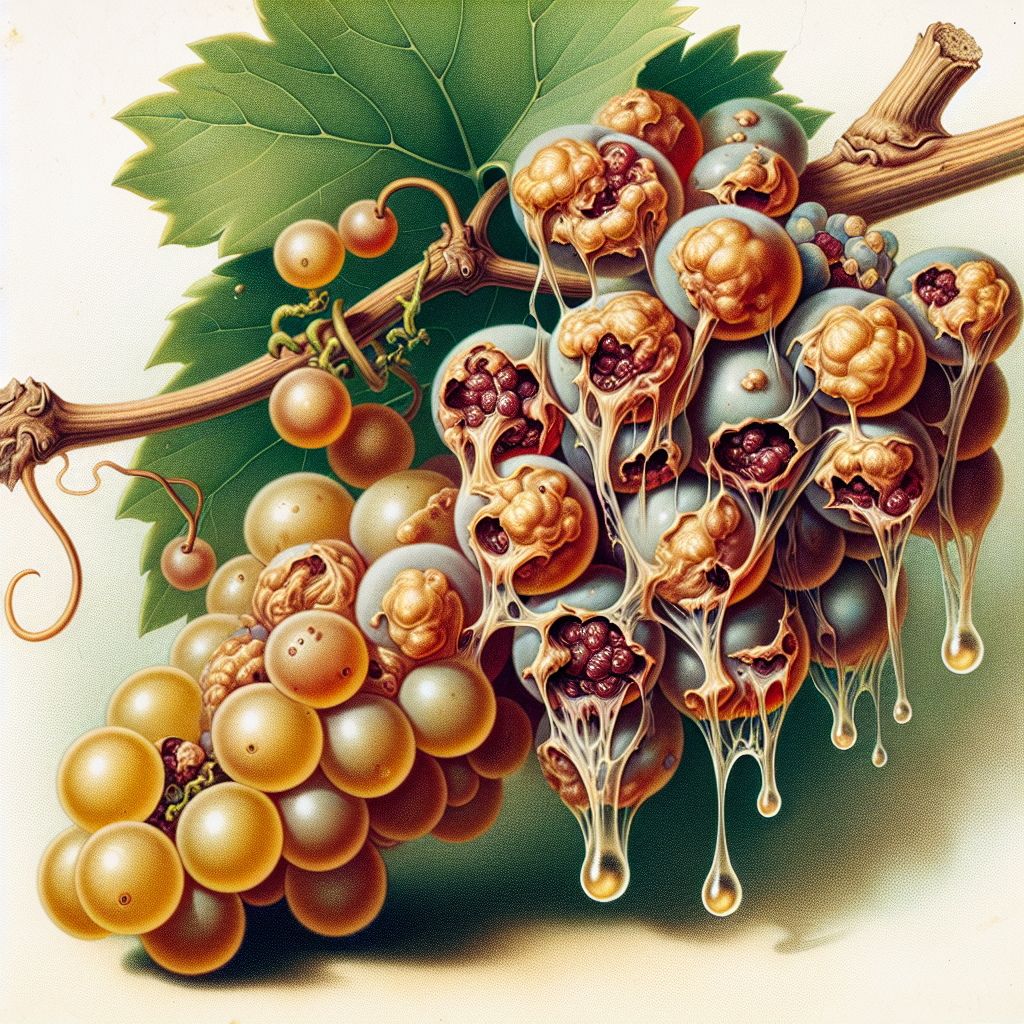
Introduction to Sour rot
Sour rot is a pervasive fungal-bacterial complex disease that devastates fruit crops, particularly in humid climates during late-season ripening. Unlike typical rots caused by single pathogens, sour rot involves a synergistic infection by yeasts like Hanseniaspora uvarum, acetic acid bacteria (Gluconobacter spp.), and sometimes lactic acid bacteria, leading to rapid fermentation of fruit tissue. The disease earns its name from the distinctive sour, vinegar-like odor emitted as sugars convert to acetic acid, rendering fruit unmarketable.
First documented in grape-growing regions like New York and Ontario in the early 2000s, sour rot has since spread globally, correlating with the invasion of the spotted wing drosophila (Drosophila suzukii), which punctures fruit skin and inoculates microbes. Losses can exceed 50% in untreated vineyards, with berries collapsing into a soupy mass that drips from clusters, contaminating healthy fruit. This guide provides professional-grade diagnostic criteria, lifecycle insights, and organic management strategies tailored for small farms and commercial operations growing susceptible crops like grapes and tomato. For deeper insights on integrated pest management, check this Spring Pest Patrol blog post.
Understanding sour rot's etiology is crucial: wounds from insects, birds, or mechanical injury allow ambient yeasts and bacteria to colonize, thriving in the high-sugar, low-acid environment of ripening fruit. Unlike Botrytis bunch rot, which produces gray sporulation, sour rot lacks mycelial growth and instead shows granular, slimy breakdown. Early detection and intervention are key to preserving yields, especially as climate change extends warm, wet harvest windows.
Identifying Symptoms & Damage
Diagnosing sour rot requires keen observation during veraison through harvest. Initial symptoms appear as small, water-soaked spots on berry skins, often near puncture wounds from fruit flies or birds. Within 24-48 hours, affected berries lighten in color—turning from deep purple to amber or grayish-white—while exuding a thin, watery liquid that smells sharply of vinegar or nail polish remover (ethyl acetate).
As progression accelerates, berries lose turgor, shrivel slightly, and rupture, spilling viscous contents that form a frothy slurry. Unlike anthracnose, there's no sunken lesion or spore mass; instead, the pulp turns granular and tan-colored, with a slimy texture. Clusters show 'dripping' where rotted berries leak onto adjacent healthy ones, spreading inoculum. Damage extends beyond aesthetics: sour rot berries are inedible, with off-flavors ruining juice and wine quality.
In grapes, entire clusters may collapse, leading to 20-100% yield loss in severe outbreaks. Tomatoes exhibit similar symptoms—soft, leaking fruits with sour odor—often confused with blossom end rot, but sour rot affects the entire fruit and spreads contagiously. Use a knife test: cut affected fruit reveals fizzy, fermented pulp without fungal sporulation. Economic impact is severe; a single outbreak can slash revenue by thousands per acre, underscoring the need for vigilant scouting.
Lifecycle and Progression of Sour rot
Sour rot's lifecycle is opportunistic, lacking a true dormant phase like many fungal pathogens. It begins with skin breaches from Drosophila suzukii oviposition, hail, or sunburn, providing entry for ubiquitous yeasts and bacteria present on bloom or leaf surfaces. Once inside, Hanseniaspora ferments sugars to ethanol, which acetic bacteria oxidize to vinegar under aerobic conditions, creating an acidic (pH 3.0-3.5) environment that kills fruit cells.
Progression is temperature-dependent: optimal at 25-30°C (77-86°F), halting below 15°C (59°F). From infection to berry rupture takes 3-7 days in humid weather (>80% RH). Infected berries serve as reservoirs, splashing inoculum via rain or dripping onto clusters below. Unlike Phytophthora, no soil phase exists; overwintering occurs minimally on mummies or debris, but primary sources are annual.
Drosophila suzukii amplifies cycles: adults feed on exudate, laying eggs in new wounds, perpetuating infestation. In multi-year studies, sour rot incidence peaks post-veraison when Brix >15°, correlating with insect pressure. Progression halts in dry conditions but explodes with prolonged leaf wetness. Monitoring with sticky traps for D. suzukii) reveals risk spikes.
Environmental Triggers & Risk Factors
Warm, humid conditions are sour rot's prime triggers: temperatures above 20°C (68°F) with >90% RH for 48+ hours drive epidemics. High canopy density traps moisture, exacerbating issues in tight clusters like Thompson Seedless Grapes. Susceptibility rises post-veraison as skins thin and sugars accumulate, compounded by spider mites or powdery mildew weakening berries.
Key risk factors include Drosophila suzukii presence—traps exceeding 1 fly/week signal danger—overcrowded canopies, excessive nitrogen promoting lush growth, and delayed harvest. Sites near wild hosts like overripe strawberry or blackberry face higher pressure. Soil moisture stress cracks fruit, inviting entry. In tomatoes, overhead irrigation mimics rain splash. Climate models predict rising incidence with warmer falls, demanding proactive mitigation.
Organic Control & Treatment Plans
Organic management hinges on sanitation, insect exclusion, and microbials, as no single curative exists. Step 1: Sanitation—Remove and destroy (bury or burn) affected clusters weekly; drop-crop high-risk blocks pre-veraison. Step 2: Insect Control—Deploy D. suzukii traps baited with apple cider vinegar + yeast; apply organic-approved spinosad (Entrust) at 1-2 flies/trap/week, rotating with neem oil to avoid resistance. Kaolin clay (Surround) barriers reduce oviposition by 70%.
Step 3: Canopy Management—Leaf-pull cluster zone 7-10 days post-bloom for airflow; thin clusters to 1-2/ shoot. Step 4: Biologicals—Spray Bacillus subtilis (Serenade) or acetic acid dilutions (5-10%) weekly from veraison; these outcompete pathogens. Step 5: Acidity Adjustment—Pre-harvest dips in potassium bicarbonate lower pH, slowing fermentation.
Integrated plans: Scout traps daily, spray at 0.5 flies/trap, sanitize post-rain. In trials, this cuts incidence 80%. For tomatoes, row covers exclude flies; copper soaps target bacteria. Avoid wounding during operations. Monitor with a sour rot risk index: (flies/trap × wetness hours × Brix)/100 >5 = treat.
Preventing Sour rot in the Future
Prevention builds resilient systems: Select resistant varieties like loose-clustered Concord Grapes. Optimize spacing (6-8 ft vines) and training (vertical shoot positioning) for ventilation. Time irrigation to dry foliage; mulch suppresses splash. Perennial covers like clover host fewer D. suzukii.
Pre-veraison cluster thinning reduces microclimate humidity. Border traps (50/acre) intercept flies; wild blackberry removal cuts reservoirs. Post-harvest, flail-chop debris, disk incorporate. Annual soil tests guide balanced fertility—avoid excess N. Early harvest (<22° Brix) evades peak risk. Long-term, diversify with less-susceptible crops like apple. Track via apps for hyper-local forecasts, integrating with Why 80% of Small Farms Battle Weather Disasters. These yield 90%+ prevention.
Crops Most Affected by Sour rot
Sour rot strikes soft-skinned, high-sugar fruits. Grapes top the list: tight clusters like Pinot Noir and Chardonnay suffer most, with epidemics in humid East Coast vineyards. Table grapes (Thompson Seedless) lose market value rapidly. Tomatoes, especially ripe Roma Tomato, show 30% losses in wet harvests.
Other victims: berries (strawberry, blueberry); stone fruits like peach; figs (Brown Turkey Fig). Avocado skin wounds invite it, mimicking Phytophthora fruit rot. Citrus rarely affected due to thicker peels. In tropics, mango reports sporadic cases post-hail. Focus prevention on these high-value crops.