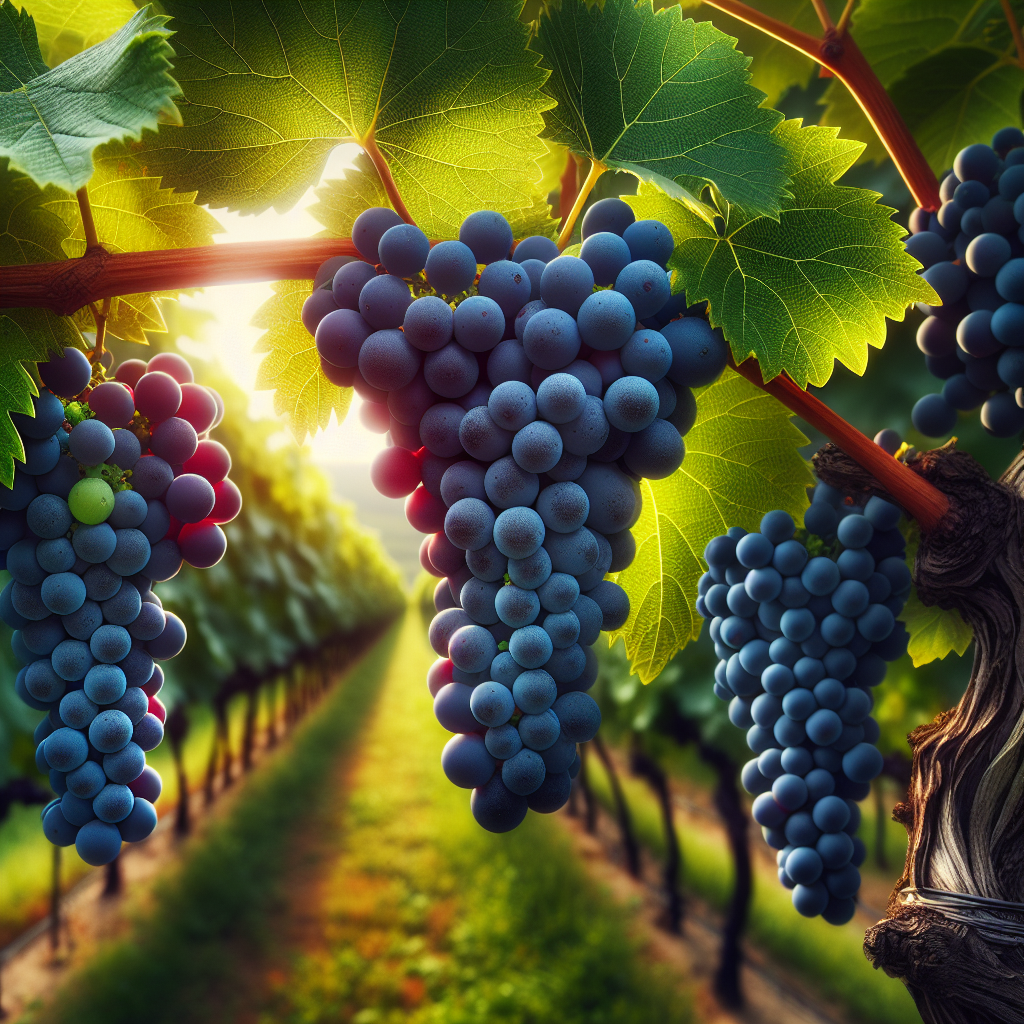
Introduction to Concord Grapes
Developed in Concord, Massachusetts in the mid-19th century by Ephraim Wales Bull, this cultivar became one of North America's most influential fruit varieties. It belongs to the American grape species Vitis labrusca, not the European wine grape group Vitis vinifera, and that distinction matters in the field: Concord is generally more cold-hardy, more adaptable to humid summers, and more forgiving of imperfect soils than many fine wine grapes.
Its berries are medium to large, dark blue to nearly black with a heavy bloom, and are famous for the so-called “foxy” aroma characteristic of labrusca grapes. The fruit has slip-skin texture, meaning the skin separates easily from the pulp when squeezed. Seeds are usually present, sugar accumulation is moderate to high under full sun, and acidity remains pronounced enough to give juice and preserves their signature bright flavor. For growers, Concord is often a practical choice where winter injury, summer disease pressure, and variable soils make other grape types less dependable. For a broader foundation on vineyard biology and training systems, see our Grapes guide.
Concord is especially well suited to home vineyards, pick-your-own operations, and diversified farms in the northeastern, midwestern, and upper mid-Atlantic United States, as well as similar temperate regions elsewhere. While often described as easy, high-quality production still depends on disciplined annual pruning, balanced crop load, and careful management of fungal diseases in wet years.
Botanical Profile of Concord Grapes
This is a deciduous, woody, perennial climbing vine with tendrils opposite many leaves. New shoots emerge in spring from compound buds formed the previous season. Productive grape clusters typically arise on shoots growing from one-year-old canes, which is why pruning strategy determines next season's crop more than almost any other management step.
Leaves are broad, cordate to orbicular, with serrated margins and a somewhat matte surface compared with some vinifera cultivars. The underside may show light pubescence, reflecting its American species lineage. Vines can grow vigorously, often producing several meters of shoot growth in one season if fertility and moisture are abundant.
Flowering is usually self-fertile, so Concord does not require a separate pollinizer. Inflorescences appear in spring after budbreak, and fruit set is generally dependable unless cold, windy, or rainy conditions interfere during bloom. Clusters are moderately compact; in humid climates, overly dense canopies and shaded fruiting zones can increase berry splitting and disease incidence.
Key cultivar traits include:
- Strong winter hardiness, often tolerating temperatures around -20 to -25°F (-29 to -32°C) when well acclimated, though trunk damage can still occur after rapid temperature swings.
- Moderate to strong vigor, especially on fertile soils.
- Good adaptation to humid temperate regions.
- Slip-skin berries with pronounced aroma.
- Mid-season to late-season ripening relative to many table grapes.
- Strong suitability for juice, jam, jelly, and processing; acceptable for fresh eating if fully ripe.
Because Concord fruits on current-season shoots arising from last year's canes, growers should think in three time scales at once: old wood supports structure, one-year-old wood carries future fruitfulness, and current shoots build both this year's crop and next year's pruning options.
Soil, pH, and Climate Requirements for Concord Grapes
Concord performs best in well-drained loam or sandy loam but can tolerate heavier soils better than many vinifera grapes if drainage is improved. The non-negotiable factor is oxygen in the root zone. Grapevine roots suffer when soil remains saturated for extended periods, especially during spring establishment and warm-weather growth. If water sits in a planting hole for more than 24 hours after heavy rain, drainage is inadequate and the site should be tiled, bermed, or avoided.
Ideal soil pH is generally 5.5 to 6.8, with 6.0 to 6.5 being a comfortable target for nutrient availability and root performance. Concord is more acid-tolerant than some fruit crops, but strongly acidic soils below about pH 5.2 can reduce calcium, magnesium, and phosphorus availability, while also increasing the risk of aluminum or manganese toxicity in some soil types. If pH is above 7.2, iron chlorosis may appear on calcareous soils, especially where drainage is poor.
Before planting, conduct a complete soil test for:
- pH
- organic matter
- phosphorus and potassium
- calcium and magnesium
- cation exchange capacity
- soluble salts if irrigation water quality is uncertain
A target organic matter range of roughly 2.5% to 5% is generally favorable. Extremely rich soils can drive excessive vigor, producing dense shade and soft tissue more vulnerable to mildew. If soils are highly fertile, avoid heavy pre-plant nitrogen additions.
Climate preferences are temperate with a clear winter dormancy period. Concord generally needs winter chilling and performs poorly in frost-free subtropical climates. It thrives where summers are warm but not relentlessly hot, and where nights cool enough to preserve acidity and aromatic quality. Full sun is essential: at least 7 to 8 hours of direct sunlight daily, with excellent air movement. Rows oriented north-south often improve canopy light distribution, though slope, prevailing wind, and erosion risk may justify other orientations.
Rainfall of 25 to 35 inches (635 to 890 mm) annually can support vines, but disease pressure rises sharply when summer humidity is high. Dry late summers favor clean ripening. In low-lying frost pockets, delayed spring budbreak can still be damaged by late freezes, so elevated slopes with cold-air drainage are ideal.
For long-term soil improvement in the alleyways and adjacent zones, many growers rely on sods and living covers; practices such as those described in soil health strategies can help stabilize vineyard soils and reduce compaction.
Step-by-Step Planting & Propagation
Start with dormant, certified disease-free one-year vines from a reputable nursery. Own-rooted vines are common for Concord because of its American grape background, though rootstocks may still be useful in specific nematode, drought, lime, or vigor-management situations.
- Choose the site carefully. Select a sunny area with free air circulation, away from tree root competition and standing water. Avoid pockets where cold air settles.
- Prepare the soil 3 to 12 months ahead if possible. Correct pH, incorporate phosphorus or potassium only if soil tests call for it, and remove perennial weeds thoroughly. Grapes resent long-term weed competition during establishment.
- Install trellis infrastructure before or at planting. Concord is commonly trained to high cordon, four-arm Kniffin, or other systems suited to vigorous American grapes. End posts should be heavily braced; mature vines exert significant wire tension.
- Plant during dormancy. Early spring is ideal in cold climates, after soil is workable but before strong shoot growth begins. In milder regions, late winter planting may also work.
- Trim damaged roots and soak briefly if roots are dry. A 1 to 3 hour soak in clean water is sufficient; do not leave roots submerged overnight for long periods.
- Set depth correctly. Plant so roots spread naturally downward and outward. If grafted, keep the graft union above soil level. Firm soil gently to eliminate air pockets.
- Water in thoroughly. Apply enough water to settle soil around roots, typically 1 to 2 gallons (4 to 8 liters) per vine at planting.
- Cut back to 2 or 3 healthy buds if recommended for bare-root stock. This concentrates energy into strong establishment shoots.
- Mulch cautiously. Use a light organic mulch 2 to 3 inches deep, kept several inches away from the trunk to prevent rot and vole habitat. In wetter climates, many growers prefer a weed-free strip rather than heavy mulch.
Spacing depends on vigor and training system. A common range is 6 to 8 feet (1.8 to 2.4 m) between vines and 8 to 10 feet (2.4 to 3 m) between rows. On rich soils with vigorous growth, wider spacing is often better.
Propagation is usually by hardwood cuttings taken during dormancy. Use pencil-thick, disease-free one-year wood with 3 to 4 nodes. Make the basal cut just below a node and the top cut above a node, maintain polarity, and root in a well-drained propagation medium. Commercial growers more often purchase nursery vines because indexed stock reduces the risk of virus introduction.
In year one, the priority is trunk establishment, not fruiting. Remove flower clusters if they appear. Select the strongest shoot and tie it vertically to a stake. When it reaches the fruiting wire, pinch or train according to the desired system.
Care & Maintenance regimes for Concord Grapes
Irrigation should be deliberate rather than constant. Newly planted vines need evenly moist but not saturated soil through their first growing season. As a working guideline, keep the top 6 to 8 inches (15 to 20 cm) of soil lightly moist, allowing the surface inch to dry slightly between waterings. In sandy soils, that may mean watering once or twice weekly during hot weather; in loams, every 7 to 10 days may suffice if rainfall is absent.
For established vines, deep, infrequent irrigation is better than shallow daily watering. During active shoot growth and berry sizing, roughly 0.5 to 1.5 inches (12 to 38 mm) of water per week from rain plus irrigation is often adequate, adjusted for soil texture and evapotranspiration. The critical period is from bloom through berry enlargement. Severe drought then can reduce berry size and next year's bud fruitfulness.
Signs of underwatering include:
- Shoot tips slowing or stopping elongation prematurely
- Dull, slightly cupped leaves
- Smaller berries and loose clusters
- Tendrils drying early
Signs of overwatering include:
- Persistently yellowing lower leaves despite adequate fertility
- Soft, lush growth with poor cane maturation
- Soil that smells anaerobic or remains sticky for days
- Increased splitting, sour rot, or root stress
A useful field test is to squeeze soil from the root zone. It should hold together lightly but crumble with pressure; if it forms a slick, wet ribbon long after irrigation, the profile is too wet.
Fertilization should be conservative. Excess nitrogen is one of the most common causes of poor fruit quality in Concord, leading to rampant canopy growth, shading, delayed ripening, and increased black rot and mildew pressure. In the establishment year, many soils require little to no nitrogen beyond what modest compost or pre-plant fertility provides. From year two onward, apply nutrients based on leaf analysis and soil tests. If nitrogen is needed, split light applications in spring rather than one heavy dose. Avoid late-summer nitrogen, which can delay hardening and increase winter injury.
Pruning is the defining annual task. Concord is often cane-pruned or spur-pruned depending on system and local practice, but because it is vigorous and fruitful, many growers favor systems that spread shoots and maintain light penetration. During dormancy, remove 80% to 90% of the previous season's growth. This seems severe but is necessary. If too many buds are retained, the vine overcrops, producing many small clusters, delayed ripening, and weak wood.
For a mature vine on a standard backyard trellis, a rough target might be 40 to 60 retained buds depending on vigor. More vigorous vines can carry more buds; weaker vines should be pruned harder. The “balanced pruning” method adjusts retained buds according to the weight of one-year wood removed.
Canopy management during the season includes:
- Tying or positioning shoots early to prevent tangling
- Removing watersprouts from trunk and lower cordon areas
- Limited leaf removal around clusters after fruit set in humid climates to improve airflow
- Hedging excessively long shoots if they shade the fruiting zone
Weed management is crucial for young vines. Maintain a 2 to 4 foot (60 to 120 cm) vegetation-free strip under the row for at least the first 3 years. Grass growing directly at the trunk competes strongly for moisture and nitrogen. Organic growers often combine shallow cultivation, mulch, and repeated hand hoeing.
Winter care in colder regions may include trunk guards against rodents, white paint or wraps for sunscald-prone young trunks, and snow management where vole pressure is high. Concord usually withstands winter better than tender grape cultivars, but a healthy, well-ripened cane is still the best insurance against cold injury.
Pests, Diseases & Organic Management
Concord is tougher than many grapes, but humid climates still create significant disease pressure. Prevention depends on sanitation, pruning, and canopy airflow more than rescue sprays.
Major fungal diseases include black rot, downy mildew, powdery mildew, anthracnose, and Phomopsis cane and leaf spot. Botrytis can appear in tight canopies or after berry injury. Concord also shows some tolerance to certain diseases compared with vinifera grapes, but tolerance is not immunity.
black rot often starts as tan leaf lesions with black pycnidia, then causes shriveled, mummified berries. Remove mummies during dormant pruning and keep clusters exposed to sun and airflow.
powdery mildew can infect leaves and fruit even in relatively dry weather, especially where nights are humid. Look for gray-white powdery growth and berry russeting or cracking. Sulfur sprays can be effective in organic programs if applied preventively and not during extreme heat.
downy mildew thrives in wet conditions, causing yellow oil spots on upper leaf surfaces and white down on the underside. Copper-based products may help in certified organic systems, but overuse can accumulate copper in soil, so integrate cultural controls first.
Phomopsis often begins on canes and rachises in wet springs. Good dormant pruning, sanitation, and avoiding overhead irrigation reduce severity.
Common insect and animal pests include grape berry moth, Japanese beetles, grape flea beetle, leafhoppers, birds, and raccoons. In some areas, spotted lanternfly has become a serious concern, especially where wild hosts are nearby.
Organic management priorities:
- Prune for an open canopy and rapid drying after rain.
- Remove diseased fruit mummies and prunings from the site.
- Keep weeds and suckers down to improve air movement.
- Use bird netting before berries fully color; once birds learn the fruit is sweet, losses escalate quickly.
- Scout weekly from budbreak through harvest.
- Use pheromone traps or local extension advisories for berry moth timing.
- Apply sulfur, copper, or biologicals only as part of a preventive schedule and according to label restrictions.
- Encourage beneficial habitat with flowering companion plants nearby, not directly crowding trunks.
Mammal damage can be severe in small plantings. Deer browse shoots readily, and raccoons can strip clusters overnight. Fencing and netting are often more reliable than repellents.
Harvesting, Curing & Optimal Storage
Concord typically ripens from late summer into early fall depending on region. Color alone is not a reliable harvest signal because berries darken before they reach full flavor. The best indicators are taste, soluble solids, seed maturity, and ease of slip from the cluster.
For juice and jelly, harvest when berries are fully colored, aromatic, and sweet-tart, typically around 15 to 18° Brix for home use, though processors may target different specifications. For fresh eating, many growers wait a little longer for fuller flavor and reduced acidity. Taste several clusters from different parts of the vine because shaded fruit often lags behind exposed fruit.
Use clean shears to cut clusters rather than pulling by hand, which can tear pedicels and bruise berries. Harvest in the cool part of the morning after dew dries. Wet fruit stores poorly and is more susceptible to postharvest decay.
There is no true curing stage as with onions or sweet potatoes. Instead, postharvest handling should focus on rapid cooling and gentle storage. Remove damaged, split, or diseased berries immediately. Field heat should be reduced quickly; ideally cool fruit to near 32 to 34°F (0 to 1°C) with high relative humidity around 90% to 95% for short-term storage.
Under excellent conditions, Concord keeps for about 2 to 6 weeks, though quality is usually best when used sooner. Home refrigerators are often too dry, so store clusters in perforated bags or vented containers to reduce dehydration while preventing condensation buildup. If berries become soft, leak juice, or develop off odors, they should be processed or discarded promptly.
For processing, Concord excels because flavor remains strong after cooking, freezing, or juicing. Freeze whole berries on trays before bagging to prevent clumping. For juice or jelly, process as soon as possible after harvest to preserve aroma and acidity.
Companion Planting for Concord Grapes
In vineyards and home arbors alike, companion planting works best when it supports soil structure, beneficial insects, and under-row management without competing heavily for water right at the trunk. The best companions are usually low-growing, shallow-rooted, or seasonally manageable species placed in adjacent strips rather than allowed to tangle into the vine row.
Clover is one of the most useful companions in row middles. It suppresses erosion, supports pollinators and beneficial insects, and can contribute biologically fixed nitrogen when managed carefully. In vigorous Concord plantings, however, do not let clover grow dense directly at the base of young vines, or it may intensify competition during establishment.
Garlic is valued by many growers around vineyard edges and garden trellises because it occupies little vertical space, helps diversify the planting, and may modestly confuse some pests through its strong scent, though it should not be treated as a standalone pest control method.
Thai Basil can attract predatory and pollinating insects when planted nearby in sunny margins. Its flowers support beneficial populations, and its manageable root system makes it suitable for diversified garden-scale systems.
Strawberry can function as a living groundcover in carefully managed settings, helping reduce soil splash and weed pressure. However, it should be used only where irrigation is precise and disease pressure is moderate, because dense groundcovers can also raise humidity if poorly ventilated.
Avoid large, thirsty companions such as corn or sprawling cucurbits immediately beneath mature vines. Also avoid species that create dense shade or impede airflow around trunks, since stagnant humidity is one of the main drivers of grape disease. The most successful companion strategy for Concord is not crowding the vine, but designing a biologically active, easy-to-maintain zone around it.