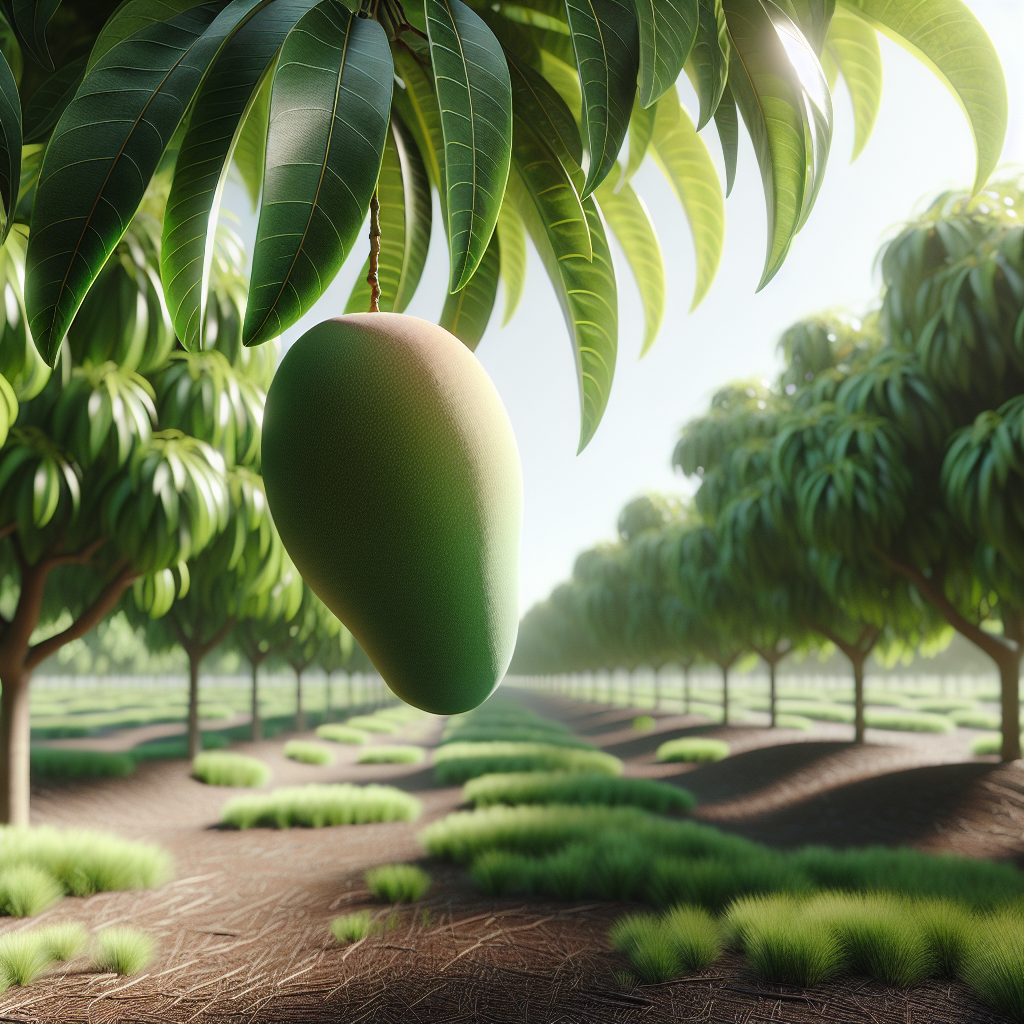
Introduction to Kulfi Mango
A specialty mango of South Asian character, Kulfi Mango is prized less for sheer commercial ubiquity and more for eating quality: concentrated sweetness, low to moderate fiber, aromatic pulp, and a rich, almost custard-like texture that explains its dessert-associated name. Like most cultivated mangoes, it belongs to the species Mangifera indica, one of the most economically and culturally important fruit trees in the tropics. While local naming traditions can vary by district and market, growers generally recognize Kulfi-type mangoes as table fruit with premium fresh consumption value rather than purely processing-grade fruit.
For the professional or serious home grower, this is not a variety to treat casually. Fruit quality in mango is determined long before harvest: irrigation timing, nitrogen restraint before flowering, balanced potassium and calcium nutrition, sunlight penetration into the canopy, and disease control during bloom all strongly influence sweetness, skin finish, fruit set, and storage life. Kulfi Mango rewards disciplined orchard management with fruit that commands attention for flavor rather than just appearance.
In orchard planning, Kulfi Mango should be treated as a medium- to large-growing evergreen fruit tree unless proven otherwise by local nursery data. It benefits from warm dry weather during flowering and fruit maturation, and it is notably less forgiving of prolonged cold, waterlogging, or dense shade. Growers familiar with subtropical fruit systems such as Fuerte Avocado will recognize the importance of drainage, microclimate, and canopy architecture, although mango generally prefers even more heat during fruit development.
Botanical Profile of Kulfi Mango
Kulfi Mango is a grafted cultivar selection within Mangifera indica, family Anacardiaceae. The species is a long-lived evergreen tree capable of developing a broad, dome-shaped canopy, deep anchoring roots with a wide feeder-root zone, and periodic flushes of red-bronze to coppery juvenile leaves that harden to glossy deep green. Leaf blades are generally lanceolate to oblong-lanceolate, leathery, and arranged alternately. The tree produces terminal panicles bearing hundreds to thousands of tiny yellowish, cream, or pink-tinged flowers, though only a small fraction become mature fruit.
Mango flowering biology matters greatly for this cultivar. Panicles carry both male and hermaphroditic flowers, and fruit set is influenced by temperature, humidity, cultivar genetics, pollinator activity, and tree vigor. Excessive nitrogen or late vigorous vegetative flushes before bloom often suppress floral induction. In many regions, cool but not cold dry weather helps trigger flowering, whereas unseasonal rain during bloom can sharply reduce set through Anthracnose infection and poor pollinator movement.
Kulfi Mango fruit is typically selected for dessert quality traits: a strong aroma, dense orange to deep yellow pulp, pleasant sweetness-acid balance, and a relatively thin to moderate skin. Shape may range from ovate-oblong to somewhat rounded depending on local strain and rootstock influence. Professional growers should document their own planting material carefully because fruit shape, beak prominence, shoulder development, and harvest timing can differ among similarly named nursery lines.
The tree’s growth habit is usually vigorous in youth, then more spreading under bearing conditions. Annual flushes may occur in waves depending on rainfall and fertility. This has practical implications: pruning should guide the tree into a low, open, harvestable structure early, because neglected mangoes become tall, shaded, and difficult to spray or pick safely.
Soil, pH, and Climate Requirements for Kulfi Mango
Kulfi Mango performs best in deep, well-drained soils with good internal aeration and a rooting depth of at least 1.5 meters, though successful cultivation is possible on shallower soils if drainage is excellent and irrigation is precise. Ideal textures are sandy loam, loam, or light clay loam with enough structure to retain moisture but never remain saturated. Heavy clay can work only if planted on raised mounds or berms and managed to avoid standing water around the trunk.
The optimal soil pH is generally 5.5 to 7.5, with a sweet spot around 6.0 to 7.0 for most nutrient availability. In acidic soils below pH 5.2, calcium, magnesium, and phosphorus availability can decline while manganese toxicity may rise. In alkaline soils above pH 7.8, iron, zinc, and manganese deficiencies are common, appearing as interveinal chlorosis on young leaves. Where bicarbonates are high, foliar micronutrient correction is often necessary.
Drainage is more important than fertility at establishment. Mango roots tolerate short dry periods much better than chronic saturation. If the soil stays wet for more than 48 hours after rain or irrigation, root respiration declines and trees become vulnerable to root rot, poor nutrient uptake, weak flushes, and eventual dieback. Practical field indicators of poor suitability include a sulfur smell in wet soil, persistent puddling, moss growth near the trunk base, and yellowing leaves despite adequate fertilization.
Climatically, Kulfi Mango is best suited to tropical and warm subtropical zones with annual mean temperatures of roughly 24-30°C. Vegetative growth slows under 15°C, flowers can be damaged near 4°C, and young trees may suffer severe injury or death at 0°C or below. Mature trees may survive brief light chills, but fruiting consistency drops sharply in frost-prone sites. Ideal rainfall ranges from about 750-2500 mm annually, provided a dry period coincides with floral induction and fruit ripening.
For flowering and fruit quality, a distinct dry season is highly beneficial. High humidity and repeated rainfall during bloom increase Anthracnose pressure and reduce fruit set. By contrast, mild water deficit before flowering can help shift the tree from vegetative to reproductive growth. Wind exposure should also be managed: constant hot desiccating wind can scorch panicles and young fruit, while cyclone-prone regions need windbreak design that does not overly shade the orchard.
Where soils are marginal, orchard floor improvement becomes essential. Incorporate mature compost, gypsum where sodicity is present, and mulch outside the trunk collar to improve water infiltration and biological activity. For broader principles on maintaining productive orchard soils, see soil health strategies.
Step-by-Step Planting & Propagation
Use grafted planting material from a reputable nursery whenever possible. Seedling mangoes are genetically variable and may take much longer to bear, often producing fruit unlike the parent tree. Veneer grafting, side grafting, epicotyl grafting, and softwood grafting are standard methods for clonal propagation. Choose disease-free trees with a straight graft union, no bark cracking, no root spiraling, and at least one hardened vegetative flush before transplanting.
- Select the site. Choose full sun, free air movement, and no frost pockets. Avoid low-lying depressions where cold air and water settle.
- Prepare spacing. Traditional orchards may use 8 x 8 m to 10 x 10 m spacing depending on vigor, soil fertility, and pruning intensity. High-density systems are possible only with disciplined canopy control.
- Prepare the pit or mound. Dig a hole roughly 60-90 cm wide and deep in lighter soils. In heavier soils, create a raised mound 30-60 cm above grade rather than a deep pit that can act like a sump.
- Amend judiciously. Mix removed soil with well-decomposed compost, not fresh manure. Avoid high-salt amendments. Do not create a radically different backfill texture that traps water.
- Plant at correct depth. Keep the graft union well above the soil line, ideally 15-25 cm above finished grade. Planting too deeply encourages trunk disease and poor establishment.
- Water in thoroughly. Immediately irrigate to settle soil around roots, then allow the upper few centimeters to begin drying before the next irrigation.
- Stake if needed. In windy sites, use a soft tie and remove or loosen once the trunk is stable.
- Mulch properly. Apply 5-10 cm of organic mulch over the root zone but keep it 15-20 cm away from direct trunk contact.
- Train early. Head excessively tall nursery whips only if needed to encourage branching at 60-100 cm height. Aim for 3-4 well-spaced scaffold limbs.
Best planting time is early spring in irrigated subtropical zones after frost risk passes, or post-monsoon where soils remain warm but extreme rain has subsided. In monsoonal climates, avoid planting into waterlogged conditions even if calendar timing looks favorable.
For growers propagating their own trees, rootstock choice influences vigor, anchorage, salinity tolerance, and adaptation to local soils. Scion wood should be taken from healthy, true-to-type, mature mother trees showing reliable bearing and good fruit quality. Budwood must be pest-free and physiologically mature, neither too soft nor fully senescent.
Care & Maintenance regimes for Kulfi Mango
Irrigation should change with tree age, weather, and phenological stage. Newly planted trees need consistent but not excessive moisture in the active root zone. A practical target is evenly moist soil from 15-30 cm depth, never muddy. In sandy soils this may mean watering 2-3 times weekly during hot weather; in loams, once every 5-7 days may suffice. If leaves droop slightly by midday but recover by evening, mild stress may be present. If leaves are limp in the morning, the tree is too dry. If leaves yellow, new flush turns pale, and the soil smells sour, overwatering is more likely.
For established trees, deep infrequent irrigation is generally superior to shallow daily watering. During vegetative growth and early fruit enlargement, maintain moderate moisture without saturation. During floral induction, slightly reduced irrigation can be beneficial where climate allows. After fruit set, severe moisture swings should be avoided because irregular watering can increase fruit drop, spongy tissue in susceptible cultivars, and uneven sizing. In the final 2-3 weeks before harvest, excessive irrigation may dilute sugars and increase skin splitting risk in some conditions.
Fertilization should be based on leaf and soil analysis, but general mango principles apply. Young non-bearing trees require modest, split applications emphasizing balanced growth rather than lush soft flushes. Nitrogen drives canopy establishment, but too much produces weak, pest-prone growth. Phosphorus is most useful where soils test low. Potassium is critical for fruit size, sweetness, color development, and stress tolerance. Calcium and boron influence fruit quality and reduce certain internal disorders.
A practical regimen for immature trees is 3-4 split feeds across the warm season using a balanced fertilizer, supplemented with compost and micronutrients where deficiencies are visible or confirmed. Bearing trees often benefit from a program with restrained nitrogen pre-bloom, adequate potassium from fruit set onward, and foliar zinc-boron before flowering if local deficiency is known. Excess late nitrogen should be avoided because it stimulates vegetative flushing at the expense of flowering.
Pruning is central to Kulfi Mango quality. Mango fruits best on well-lit terminal growth, so a compact open canopy is far more productive than a tall dense one. In the first 3 years, shape the tree into a low-headed framework. Remove upright competing leaders, inward-growing branches, crossing limbs, and weak crotches. After harvest, conduct light to moderate pruning to maintain height, ideally below 3.5-4.5 m in intensive systems. Severe pruning can delay bearing and trigger excessive vegetative regrowth.
Mulching improves moisture stability, root-zone biology, and weed suppression. Keep a broad mulched ring under the canopy drip line, especially in hot regions. However, never pile mulch against the trunk. Weed control is especially important for young trees because grasses compete aggressively for water and nitrogen in the upper soil profile.
Flowering management depends heavily on local climate. In warm areas where trees remain too vegetative, careful postharvest nutrient and irrigation control can encourage floral induction. In commercial settings, some growers use growth regulators, but for most farms and gardens, canopy maturity, dry rest periods, and nutrition management remain the most reliable non-chemical tools.
Pests, Diseases & Organic Management
The most serious disease concerns in Kulfi Mango are usually Anthracnose (Colletotrichum gloeosporioides complex), Powdery Mildew, Bacterial Black Spot in some regions, and various stem-end or Postharvest Rots. Anthracnose is favored by humid, rainy conditions and can infect flowers, young fruit, leaves, and ripening fruit. Symptoms include black lesions on panicles, blossom blight, fruit spotting, and latent infections that emerge after harvest. Powdery Mildew appears as whitish fungal growth on panicles and tender tissues, often causing flower abortion and poor fruit set in drier but cool-humid bloom periods.
Organic disease management begins with canopy architecture. Prune for airflow and sunlight penetration. Avoid overhead irrigation during bloom and late afternoon wetting. Remove mummified fruit, dead twigs, and infected panicles after harvest. Copper-based organic-approved sprays are widely used preventively, especially before and during flowering in disease-prone regions. Sulfur may help with Powdery Mildew where temperatures are suitable and label guidance permits. Always rotate approaches and avoid phytotoxicity during hot weather.
Major insect pests may include Mango Hopper, Thrips, Mealybugs, Fruit Flies, Scale Insects, and occasionally Stem Borers depending on region. Mango Hoppers feed on panicles and excrete honeydew that encourages Sooty Mold, directly reducing flowering success. Thrips scar young fruit and distort tender tissues. Mealybugs colonize shoots and fruit, often protected by ants. Fruit Flies are especially damaging near maturity, leading to internal maggot infestation and rapid breakdown.
Organic control depends on monitoring and sanitation rather than rescue spraying alone. Keep orchard floors clean of fallen fruit. Destroy infested fruit promptly. Use bait traps or male annihilation traps for fruit fly management where locally recommended. Apply sticky bands or trunk barriers to reduce ant-assisted mealybug movement. Encourage beneficial insects by avoiding broad-spectrum disruptive products during bloom. Neem-based products, horticultural oils, insecticidal soaps, entomopathogenic fungi, and carefully timed kaolin clay can all play roles when used as part of an integrated program.
Nutrient disorders are often mistaken for pests. Zinc deficiency produces small narrow leaves and rosetting; iron deficiency causes yellowing on young leaves with greener veins; boron deficiency may impair fruit set and deform fruit. Always confirm patterns before treatment.
Harvesting, Curing & Optimal Storage
Kulfi Mango should be harvested at physiological maturity, not simply when fully soft or highly colored on the tree. Mature fruit generally show fuller shoulders, a slight change in skin background color, reduced latex aggressiveness, and developed aroma at the stem end as ripening begins. Days from flowering to maturity vary by climate, rootstock, crop load, and locality, so growers should keep block-level records rather than relying solely on published averages.
Harvest in the cool part of the morning using clippers, leaving a short stem stub initially to reduce latex burn on the skin. De-sap fruit on racks or with the stem end downward so caustic sap does not streak the peel. Mechanical bruising is one of the most common causes of postharvest losses in premium mangoes, so fruit should never be dropped into sacks or heaped deeply.
Curing in mango is less about wound-healing like some root crops and more about careful de-sapping, drying, grading, and stabilizing fruit before transport. Allow harvested fruit to dry in shade with good airflow. Sort out cracked, insect-stung, sap-burned, or diseased fruit immediately. Wash only if your system includes hygienic water and proper drying afterward; otherwise careless washing can spread rot organisms.
For ripening, mature-green fruit can be held at about 20-24°C with moderate humidity and good ventilation. Cooler temperatures slow ripening but temperatures below about 10-13°C, depending on maturity, can cause chilling injury: patchy discoloration, poor flavor development, internal browning, and uneven softening. Ripe fruit stores best for short periods at around 12-14°C with 85-90% relative humidity. Fully ripe mangoes are highly perishable and should be marketed quickly.
A well-grown Kulfi Mango intended for fresh premium sale should have clean skin, characteristic aroma, firm but mature flesh at harvest, and balanced sweetness after ripening. Postharvest calcium nutrition, careful latex management, and strict sanitation all improve shelf life.
Companion Planting for Kulfi Mango
Companion planting around mango should serve orchard function, not romantic garden theory. The best companions are species that suppress weeds, support pollinators, add biomass, improve soil cover, or attract beneficial insects without competing excessively for water and light. Because mango has a wide feeder-root zone, avoid planting heavy-feeding crops too close to the trunk.
Useful companions in young orchards include low-growing legumes such as sunn hemp, cowpea, or perennial peanut in suitable climates. These can reduce erosion, improve soil organic matter, and moderate soil temperature. Flowering insectary plants can be placed in alleyways rather than directly against the tree row; options may include marigold, alyssum in cooler margins, and suitable local native pollinator species. Culinary herbs with moderate water demand, such as Thai Basil, can fit into diversified small systems if placed outside the immediate trunk zone and managed so they do not increase humidity around the tree base.
Avoid dense vine crops climbing the trunk, tall shade-casting intercrops that block light, and water-hungry annuals planted right under the canopy. Also avoid companions that host overlapping pests where local evidence suggests risk. During the first 2-4 years, temporary intercropping is often most practical while mango canopies are small. As trees mature, reduce intercrops and prioritize mulch, beneficial flowering strips, and clean harvest lanes.
The most effective companion strategy for Kulfi Mango is a managed understory: low competition, high biodiversity, easy sanitation, and good airflow. In commercial blocks, this usually outperforms crowded polyculture around individual trees because disease pressure stays lower and harvest operations remain efficient.