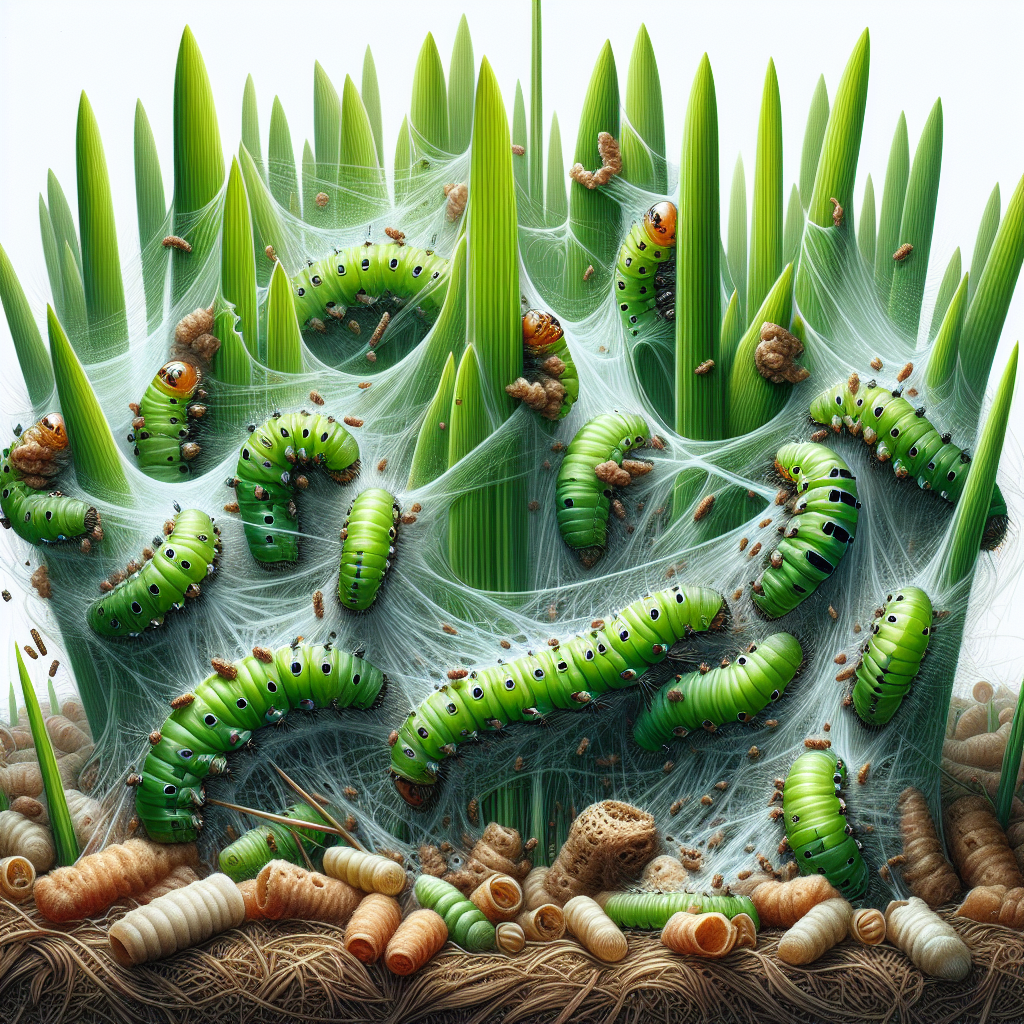
Introduction to Sod webworms
Sod webworms, belonging to the genus Crambus spp. (notably Crambus topiarius and Herpetogramma sphinx), represent one of the most pervasive pests in turfgrass management, lawns, golf courses, and certain agricultural settings. These caterpillars, larvae of inconspicuous brown moths, tunnel through grass blades and crowns, leading to rapid deterioration of grass health. Unlike surface-chewing pests like armyworms, sod webworms create silk-lined tunnels at the soil surface, producing a characteristic 'notched' or ragged appearance on grass blades.
Primarily active from late spring through fall in temperate regions, sod webworms thrive in warm, humid conditions, making them a seasonal nightmare for turf managers. Their damage mimics drought stress, often leading to misdiagnosis and delayed intervention. In agricultural contexts, they impact wheat, barley, and oats fields, where larval feeding reduces forage quality and yield. Early identification is crucial, as unchecked infestations can necessitate full reseeding. This definitive guide equips farmers, landscapers, and homeowners with professional-grade diagnostics, lifecycle knowledge, organic controls, and prevention strategies to safeguard turf and crops effectively. For more on related pests, see our comprehensive Spring Pest Patrol: Organic AI Strategies to Shield Your Crops from Common Invaders.
Identifying Symptoms & Damage
Recognizing sod webworm damage requires distinguishing it from environmental stressors like drought or disease. Initial signs include small, irregular notches on grass blades, as larvae clip sections while retreating to silk tunnels at the base. Affected areas appear yellowish-brown, thinning progressively to bare patches 2-6 inches in diameter. Unlike grubs, which damage roots, sod webworms target crowns and blades, leaving roots intact but foliage sparse.
Nighttime scouting reveals the culprits: small, green-to-brown caterpillars (1/2 to 3/4 inch long) with dark spots and pale stripes, curled in silk-lined burrows amid green fecal pellets (frass). Heavy infestations cause widespread browning, mimicking brown patch or dollar spot diseases. Pull back affected turf to expose tunnels; active larvae will be evident. Damage peaks in late summer, with 'sawdust-like' frass signaling severe activity.
Diagnostic tip: Perform the 'soap flush' test—mix 2 tablespoons dish soap in 2 gallons water, pour over 1 sq ft suspect area. Webworms surface within minutes, confirming infestation (5+ larvae per sq ft warrants action). Differentiate from cutworms, which sever stems at soil level, or armyworms, which march in groups. In crops like sorghum, leaf skeletonization and head clipping mimic fall armyworm damage. Accurate ID prevents unnecessary chemical use, preserving beneficial insects.
Lifecycle and Progression of Sod webworms
Sod webworms complete 4-8 generations annually, depending on climate, with a lifecycle spanning 3-6 weeks per cycle. Adult moths (3/4-inch wingspan, brown with wing spots) emerge at dusk, flying low over turf in zigzag patterns. Females lay 50-150 eggs singly on grass blades or soil, hatching in 3-7 days into tiny larvae.
Larvae progress through 5-7 instars over 2-3 weeks, feeding nocturnally and hiding by day in silk tunnels. Mature larvae (greenish, spotted) pupate in soil cocoons for 7-10 days before adults emerge. Overwinter as partially grown larvae in soil, resuming feeding in spring when soil temps hit 55°F. Peak activity aligns with moth flights post-rainy periods.
In agricultural fields, synchronized generations can defoliate rice or millet rapidly. Monitoring pheromone traps tracks adult flights, predicting larval waves 7-10 days later. Understanding this progression enables timed interventions, targeting vulnerable young larvae before tunnel establishment. Lifecycle varies: southern regions see continuous broods; northern areas limit to 3-4 per season.
Environmental Triggers & Risk Factors
Warm nights (above 70°F), high humidity, and thatch accumulation (>1/2 inch) trigger sod webworm outbreaks by favoring egg hatch and larval survival. Overfertilization with nitrogen promotes lush growth, an ideal food source, while drought-stressed turf is more susceptible as plants weaken. Evening irrigation keeps soil moist, aiding larval development.
Poor soil aeration and compacted turf exacerbate issues, trapping moisture. Recent sod installation or overwatering new turf invites moths seeking oviposition sites. In crops, excessive residue from corn or sweet corn (Honey Select) harvests provides overwintering refuge. Windless, humid evenings boost adult flights.
Risk spikes near weedy margins or unmanaged areas harboring alternate hosts like clover. Avoid late-spring nitrogen apps; scout after heavy rains. Climate change extends seasons, increasing generations in transitional zones.
Organic Control & Treatment Plans
Organic management emphasizes cultural, biological, and targeted applications for sustainable control. Begin with cultural tweaks: mow at 2.5-3.5 inches to deter oviposition, dethatch to expose larvae, and aerate for drainage. Reduce evening watering; irrigate mornings to dry foliage.
Biologicals shine: Apply beneficial nematodes (Steinernema carpocapsae) at 1-2 billion/sq ft during larval stage (dusk, moist soil >60°F). They parasitize 70-90% of webworms. Bacillus thuringiensis (Bt) kurstaki targets young larvae (<1/2 inch), safe for bees/predators—apply evenings, 7-10 day intervals.
Neem oil or spinosad disrupts feeding/molting; insecticidal soaps flush/suffocate surface larvae. Introduce predatory beetles or birds via habitat. For outbreaks, combine soap flush with Bt follow-up. Rotate tactics to prevent resistance. In fields, interplant thyme or marigold as repellents. Monitor weekly; treat at 10-15 larvae/sq ft. Success rates exceed 85% with IPM.
Preventing Sod Webworms in the Future
Prevention builds resilient turf through IPM. Maintain 3-inch mow height, balanced fertility (avoid excess N), and core aeration biannually. Overseed resilient varieties like perennial ryegrass. Promote biodiversity with clover interseeding to attract predators.
Fall clean-up removes thatch/refuge. Use yellow sticky traps for early moth detection. Beneficial insects (ground beetles, ants) thrive in mulch-free zones. Solarize soil in off-seasons. For crops, till post-harvest to disrupt pupae, rotate with non-grass like peas. Scout biweekly spring-fall. Consistent practices reduce infestations 90%.
Crops Most Affected by Sod Webworms
Though notorious in lawns, sod webworms ravage turf crops and grains. Primary targets: [bermudagrass], [zoysiagrass], [fescue], [ryegrass] turfs. In agriculture, corn (especially sweet corn), wheat, barley, oats, sorghum, millet, and rice suffer defoliation, reduced tillering. Forage grasses in pastures decline, impacting livestock. Seedling stages vulnerable; mature stands recover better. See webworms for related species.