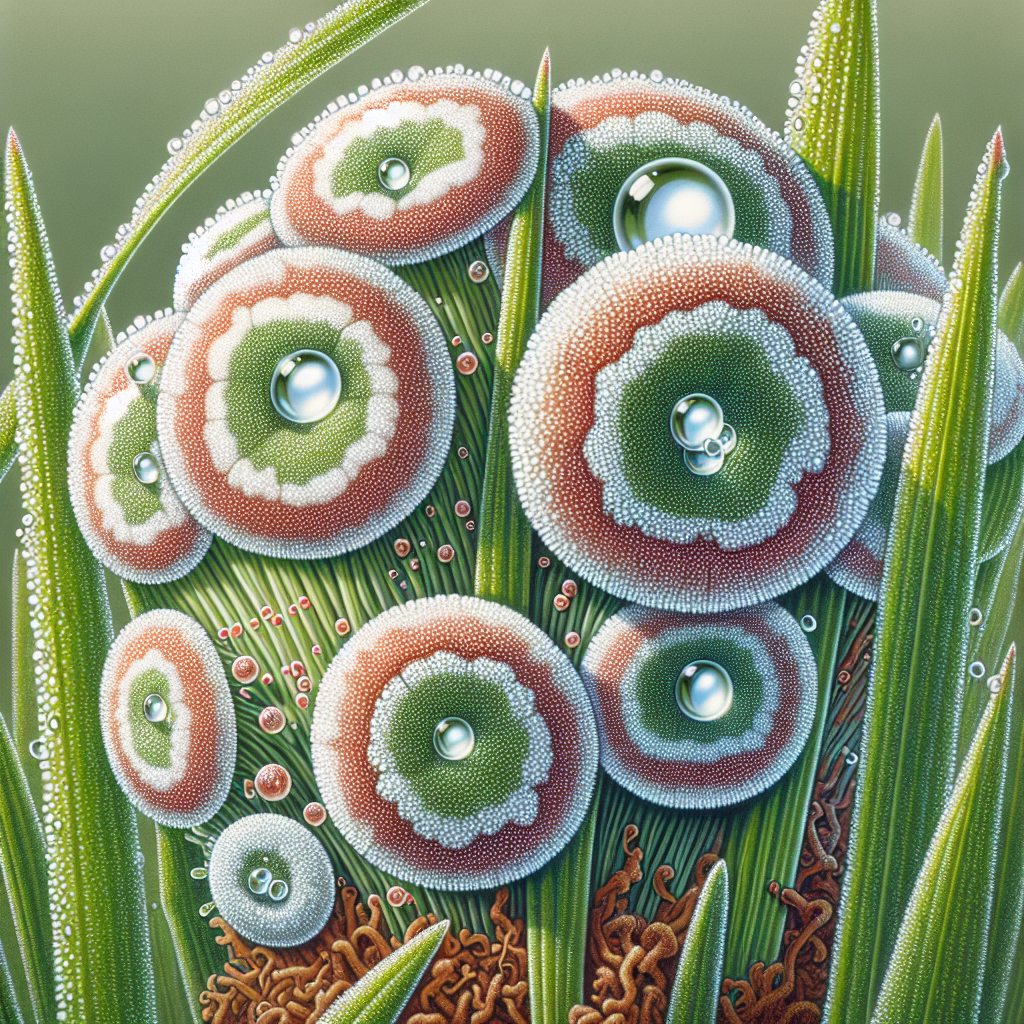
Introduction to Dollar spot
Dollar spot, caused by the fungal pathogen Clarireedia jacksonii (previously known as Sclerotinia homoeocarpa), is one of the most common and economically damaging diseases affecting turfgrass worldwide. First identified in the early 20th century, it earned its name from the distinctive small, circular spots on grass blades that resemble the size of old silver dollar coins—typically 1-2 inches (2.5-5 cm) in diameter. This disease primarily targets cool-season grasses like creeping bentgrass, annual bluegrass, and Kentucky bluegrass, but can also infect warm-season varieties such as bermudagrass and zoysiagrass under favorable conditions.
While not typically lethal to turf, dollar spot causes significant aesthetic damage and thinning, leading to bare patches that require costly renovations. In golf courses, it can reduce playability and increase maintenance expenses by up to 30%. Homeowners, landscapers, and turf managers often struggle with recurrent outbreaks due to its polycyclic lifecycle and resilience to suboptimal conditions. Early diagnosis and integrated management are crucial, as untreated infections can spread rapidly via mowing equipment, foot traffic, and water splash. This guide provides professional-grade diagnostic criteria, lifecycle insights, organic control strategies, and prevention tactics to help you reclaim lush, disease-free turf. Understanding dollar spot empowers growers to implement targeted interventions, minimizing chemical reliance and promoting sustainable turf health. For broader context on fungal turf issues, see our detailed entry on brown patch, a related disease often confused with dollar spot during wet periods.
Identifying Symptoms & Damage
Recognizing dollar spot early is key to limiting its impact. Initial symptoms appear as small, straw-colored or white lesions on grass blades, measuring 1-2 mm wide and up to 1 inch long. These lesions often have a distinctive reddish-brown border, especially in early morning dew when mycelium (white, cottony fungal growth) is visible. As lesions expand and merge, they form the hallmark 'dollar-sized' patches—crisp, silver-white circles 1-2 inches across with a diagnostic 'hourglass' shape when viewed from above due to blighting along the blade center.
Affected blades exhibit a blighted appearance, becoming dry, brittle, and straw-like, often with a slight melting texture. Unlike Pythium blight, which produces greasy, orange patches, dollar spot lesions are dry and do not girdle the entire blade. Heavy infections lead to thinned turf with straw-colored patches up to 6 inches wide, sometimes confused with powdery mildew due to white mycelium, but dollar spot lacks the powdery residue. Damage is most noticeable at dawn or dusk on dew-covered grass.
To confirm diagnosis, slice open a lesion: dollar spot shows white mycelium inside without black sclerotia (unlike red thread). Use a hand lens to spot tiny black sclerotia (pepper-like grains) on infected tissue or soil—pathogen survival structures. Yield losses in forage or sports turf can reach 20-50% in severe cases, with golf greens suffering playability drops. Monitor closely during transition zones where cool- and warm-season grasses overlap, as stress exacerbates spread.
Lifecycle and Progression of Dollar spot
Clarireedia jacksonii follows a polycyclic lifecycle, producing multiple infection cycles per season. Overwintering occurs as dormant mycelium in infected plant debris or tiny (0.5-1 mm) black sclerotia in thatch or soil. In spring (temps 50-70°F/10-21°C), sclerotia germinate in high humidity (>85% RH), releasing ascospores or mycelial strands that infect leaf blades via wounds or natural openings.
Primary infections start small but explode in summer with prolonged leaf wetness (8-12 hours) and night temps above 60°F (15°C). Conidia (asexual spores) form on lesions, splashing to new sites via dew, rain, or equipment. Optimal infection occurs at 70-85°F (21-29°C) with low nitrogen (<1 lb N/1000 sq ft monthly). Sclerotia form in 7-14 days under dry conditions, completing the cycle in 3-5 days per generation.
Progression: Week 1—micro-lesions; Week 2—dollar spots coalesce; Month 1—heavy thinning. Unlike fusarium wilt, which kills roots, dollar spot is foliar, allowing recovery with management. Long-distance spread via contaminated mowers; local via wind/water. Lifecycle peaks mid-summer, subsiding in fall with cooler temps, but sclerotia persist 2+ years.
Environmental Triggers & Risk Factors
Dollar spot thrives in specific microclimates: cool nights (55-70°F/13-21°C), warm days, high humidity, and extended leaf wetness from poor drainage, shade, or over-irrigation. Low nitrogen fertility is the #1 trigger—turf with <0.5% leaf N is highly susceptible. Excessive thatch (>0.5 inch) harbors sclerotia, while drought stress or acidic soils (pH <6.0) weaken plants.
Risk factors include close mowing (<1 inch height), high traffic (golf fairways), and unbalanced nutrition (high K, low N). Compaction reduces root depth, limiting recovery. In turf adjacent to wheat fields, spores can migrate. Nighttime dew from poor air circulation exacerbates outbreaks. Climate change extends humid periods, increasing incidence by 15-20% in transitional zones.
Organic Control & Treatment Plans
Organic management emphasizes cultural IPM over fungicides. Step 1: Cultural Corrections—Fertilize with 1 lb N/1000 sq ft slow-release every 4 weeks (e.g., composted poultry manure). Mow at 2.5-3 inches, removing no more than 1/3 blade. Irrigate deeply (1 inch/week) in early morning to minimize wetness.
Step 2: Biologicals—Apply Trichoderma virens or Bacillus subtilis biweekly (e.g., BioWorks RootShield). Compost tea drenches suppress sclerotia. Step 3: Organic Fungicides—Potassium bicarbonate (e.g., MilStop) at 3-5 lbs/100 gal, or sulfur-based (Thiocarc). Neem oil or potassium salts of fatty acids for mild cases. Rotate modes of action.
Step 4: Remediation—Dethatch to 0.25 inch, aerate for drainage. Overseed resistant cultivars like Tifway bermudagrass. For severe outbreaks, syringe with whey (10% solution) to boost microbes. Monitor with sticky traps for spore counts. Expect 70-90% control with consistent application. Learn more about Soil Health Mastery: 5 Proven Strategies for Small Farms to Build Fertile Ground Without Breaking the Bank to enhance resilience.
Treatment Timeline: Day 1—cultural fixes; Week 1-4—biologics weekly; Month 2—evaluate, repeat if needed. Avoid synthetic N spikes.
Preventing Dollar spot in the Future
Prevention beats cure: Maintain 1-1.5 lbs N/1000 sq ft annually, balanced with P/K. Select resistant grasses (e.g., perennial ryegrass 'Manhattan'). Aerate twice yearly, topdress sand. Improve airflow by pruning shade trees. Water early AM, 1-1.5 inches/week, avoiding evening.
Cultural scouting weekly; use apps for humidity tracking. Integrate clover as N-fixer in lawns. Rotate mowing patterns to prevent ruts. Soil test annually, amend to pH 6.5-7.0. Mulch clippings to recycle N but dethatch regularly. Resistant varieties + IPM reduce incidence 80%. Long-term: Build organic matter >4% via compost.
Crops Most Affected by Dollar spot
Primarily a turfgrass pathogen, dollar spot devastates managed lawns, golf courses (bentgrass greens), sports fields, and sod farms. Cool-season turf: creeping bentgrass (50% susceptibility), annual bluegrass (Poa annua), Kentucky bluegrass. Warm-season: bermudagrass, zoysiagrass (less severe). Rarely affects agronomic crops but noted on oats and rye in forage settings. Home lawns (fescue mixes) see 20-30% annual infections. Economic impact: $200M+ US losses yearly in turf industry.