Definitive Diagnostic and Management Guide for Brown Patch
Introduction to Brown patch
Brown patch, caused by the soilborne fungus Rhizoctonia solani (Rhizoctonia), is one of the most common and destructive diseases impacting turfgrasses worldwide, particularly in warm-season grasses like bentgrass, fescue, and ryegrass. While primarily a turf disease, it can affect agricultural crops such as rice, potato, and corn in regions with prolonged leaf wetness and high humidity. This guide provides professional-grade diagnostic criteria, lifecycle insights, organic management strategies, and prevention tactics optimized for farmers, turf managers, and agricultural experts seeking to protect yields and maintain healthy stands.
Recognizing brown patch early is critical, as it spreads rapidly during summer months when nighttime temperatures hover between 70-90°F (21-32°C). The pathogen persists in soil as dormant sclerotia, activating under favorable conditions to infect foliage and roots. In agriculture, brown patch often mimics other issues like Pythium blight or dollar spot, but distinct symptoms and environmental cues allow precise identification. This comprehensive resource draws from entomological, botanical, and agronomic expertise to deliver actionable advice, ensuring SEO-optimized strategies for 'brown patch disease control' and 'organic brown patch treatment'.
Farmers dealing with brown patch face yield losses up to 30-50% in susceptible crops without intervention. Understanding its biology empowers proactive measures, reducing reliance on synthetic fungicides. Whether managing a turf field, golf course, or crop rotation including wheat or soybeans, this guide equips you with evidence-based protocols. For small farms, integrating AI-driven monitoring can enhance early detection, as discussed in Why Misidentifying Plants Costs Small Farms Thousands - And How AI Camera Diagnosis Fixes It Fast.
Identifying Symptoms & Damage
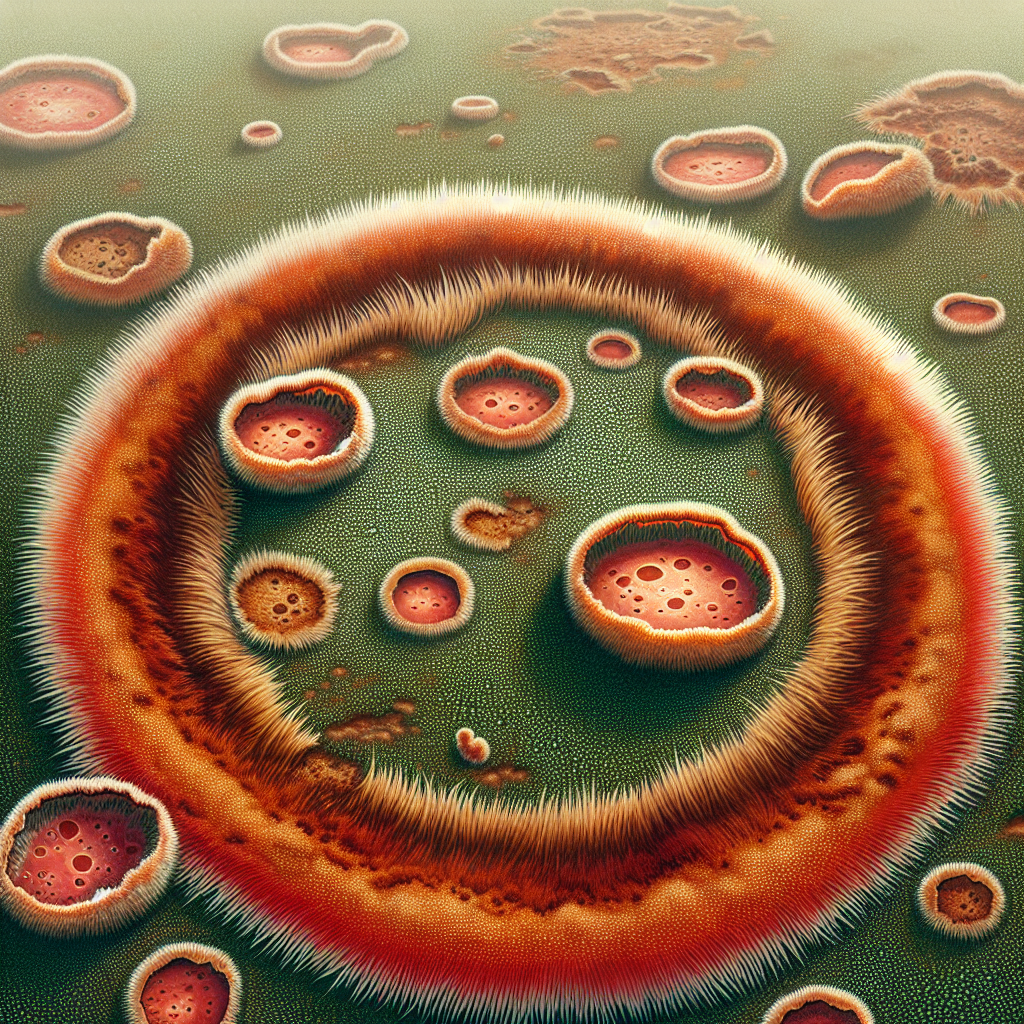
Brown patch begins with small, circular spots of blighted grass or crop foliage, expanding to 1-5 feet in diameter under ideal conditions. Affected leaves exhibit a characteristic 'smoke ring'—a thin, reddish-brown border surrounding tan to brown necrotic tissue. In turf, patches appear wilted during the day but may show grayish mycelium at night in high humidity. On crops like potato, lesions start as water-soaked spots on lower leaves, progressing to irregular brown patches with shredded margins.
Key diagnostic features include:
- Foliar symptoms: Circular to irregular lesions with a diagnostic brick-red to purple ring (not always visible in dry conditions). Inner tissue turns brown and rots, often with white, web-like mycelium in moist mornings.
- Root and crown damage: Infected crowns and roots become dark brown and soft, leading to thinning stands. Unlike damping-off, brown patch affects mature plants.
- Patch characteristics: 'Frog-eye' appearance with green centers and brown borders in recovering turf; severe cases merge into large blighted areas.
In rice, brown patch presents as 'rough neck' on stems or leaf sheath lesions, causing lodging and grain discoloration. Differentiate from Fusarium by the absence of pink spore masses and presence of sclerotia-like bodies. Yield impacts include 10-20% grain loss in rice paddies and stunted tubers in potatoes. Use a hand lens to spot mycelium or sclerotia (small, brown, hard structures) on infected tissue for confirmation. Lab testing via ELISA or PCR confirms R. solani anastomosis group 2-2 LP, the primary turf strain.
Damage escalates in over-fertilized fields, with excessive nitrogen promoting lush growth susceptible to infection. Scouting weekly during warm, humid periods is essential; early symptoms mimic drought stress, delaying response.
Lifecycle and Progression of Brown patch
Rhizoctonia solani survives as sclerotia or dormant mycelium in soil, plant debris, or thatch layers for years. Infection initiates when soil temperatures reach 75-95°F (24-35°C) and leaf wetness exceeds 10-14 hours. Basidiospores or hyphae germinate on wet foliage, penetrating directly through stomata or wounds.
Lifecycle stages:
- Dormancy: Sclerotia (0.5-2mm, brown) overwinter in soil or residue.
- Activation: Warm soil (above 70°F) and high humidity trigger mycelial growth.
- Infection: Hyphae colonize leaf sheaths, killing tissue within 48 hours.
- Sporulation: Mycelium produces new sclerotia on dead tissue, completing the cycle in 5-7 days.
- Spread: Wind, water splash, or mowers disseminate mycelium; sclerotia via soil movement.
Progression peaks mid-summer, subsiding with dry weather or cooler nights. Multiple cycles occur per season, with secondary infections from sclerotia. In crops, progression from seedling blight to mature plant infection mirrors turf patterns, exacerbated by dense canopies.
Environmental Triggers & Risk Factors
Brown patch thrives in warm (75-90°F days, >70°F nights), humid conditions with prolonged leaf wetness. Excessive nitrogen (>1 lb N/1000 sq ft/month) promotes succulent growth, increasing susceptibility. Poor drainage, high thatch (>0.5 inches), and low mowing heights (<2 inches for cool-season grasses) create microclimates for infection.
Risk factors:
- Soil/Thatch: Compacted, wet soils; thick thatch harbors sclerotia.
- Cultural: Overwatering (daily irrigation), evening applications.
- Crop-specific: High-density planting in rice or corn; acidic soils (pH <6).
- Stress: Drought-stressed plants recover poorly post-infection.
Monitor with weather stations; risk spikes when relative humidity >90% for 8+ hours.
Organic Control & Treatment Plans
Organic management emphasizes cultural IPM over fungicides. Immediate actions:
- Reduce irrigation to morning cycles, allowing 8-hour dry-down.
- Mow at higher heights (3-4 inches for fescue); remove clippings.
- Aerate compacted soils; dethatch to <0.25 inches.
Organic treatments:
- Biologicals: Apply Trichoderma virens or Bacillus subtilis (e.g., 2-4 oz/1000 sq ft biweekly). These antagonize R. solani via mycoparasitism.
- Composts/Teas: Compost tea (aerated, 20:1 ratio) at 10 gal/1000 sq ft monthly boosts beneficial microbes.
- Silicon: Potassium silicate (2-4 oz/1000 sq ft) strengthens cell walls.
- Biopesticides: Gliocladium virens or Streptomyces products suppress sclerotia.
Crop-specific: In potato, rotate with non-hosts (3 years); use Trichoderma seed treatments. For rice, drain fields briefly to dry sheaths. Combine with soil health practices. Reapply after rain; expect 70-80% control with consistent use.
Preventing Brown patch in the Future
Prevention is 90% of success. Select resistant cultivars (e.g., perennial ryegrass 'Manhattan' for turf). Maintain balanced fertility (0.5 lb N/1000 sq ft/month); soil test annually. Irrigate deeply/infrequently (1 inch/week). Improve airflow via pruning and spacing. Mulch with organic matter to enhance microbial diversity.
Long-term: Rotate crops avoiding solanaceous hosts; solarize soil in off-season (6 weeks at 140°F). Scout with apps for early warnings. Integrate cover crops like clover to suppress sclerotia.
Crops Most Affected by Brown patch
While turf dominates, agricultural impacts include:
- Rice: Sheath blight, 20-40% yield loss.
- Potato: Tuber rot, stem cankers.
- Corn: Seedling blight, stalk rot.
- Others: Soybeans, beets, turf-adjacent crops.
Global distribution spans temperate to tropical zones.