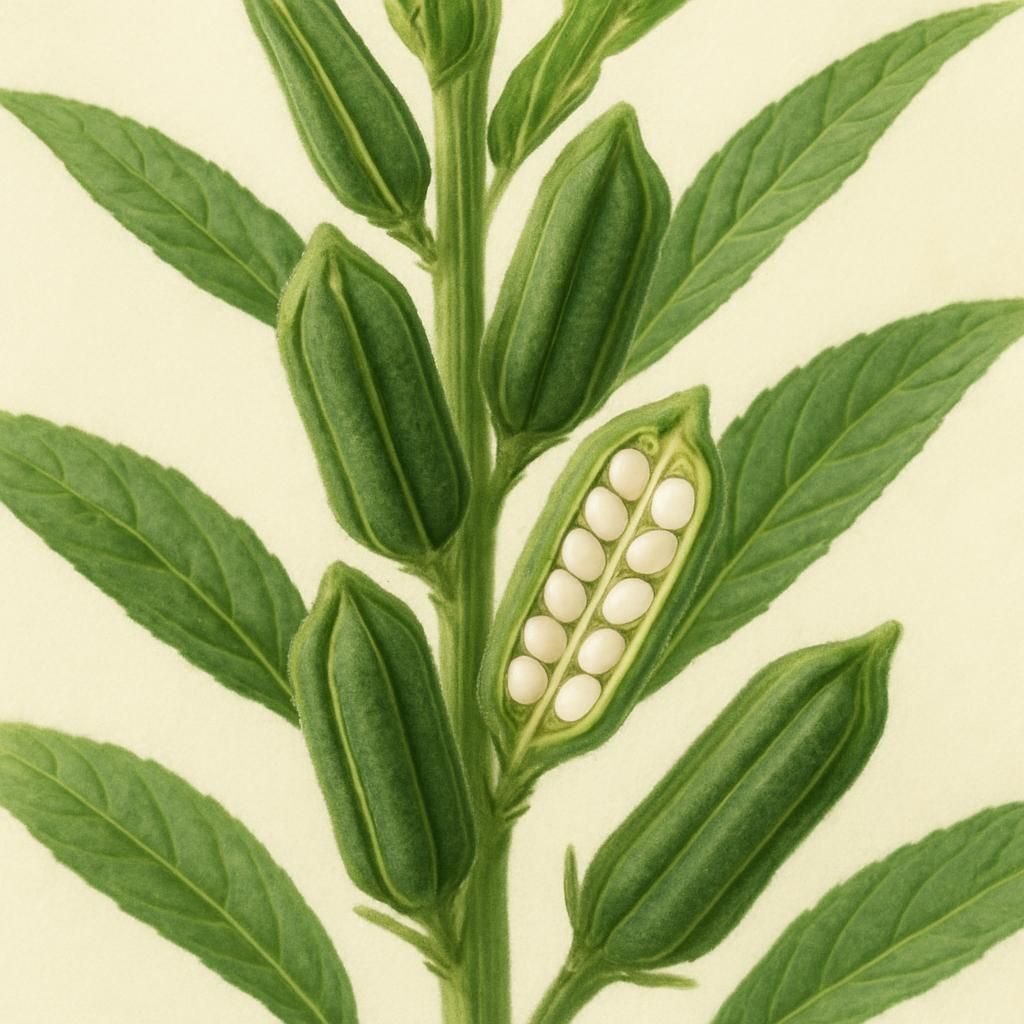
Introduction to Sesame Seed (White)
White sesame (Sesamum indicum) is one of the oldest cultivated oilseed crops, valued for its high-quality edible oil, protein-rich seeds, and use in confectionery and baking. The white-seeded varieties produce lighter-colored seeds with a milder taste compared to black sesame, making them the preferred choice for tahini, halvah, and premium oil extraction. Commercial growers appreciate sesame for its drought tolerance once established, relatively low input requirements, and ability to fit into rotations with Rice or Corn.
Global demand for white sesame continues to rise due to health-conscious consumers seeking natural oils and plant-based proteins. Yields of 800–1,200 kg/ha are achievable under good management on well-drained soils. This guide covers every stage from seedbed preparation to storage, emphasizing sustainable practices that protect soil health and minimize chemical inputs.
Botanical Profile of Sesame Seed (White)
Sesame belongs to the Pedaliaceae family and is an erect, herbaceous annual reaching 60–150 cm in height. The plant develops a deep taproot that accesses subsoil moisture, supporting its reputation for drought resilience. Leaves are opposite, lanceolate to ovate, and vary from entire to deeply lobed depending on cultivar and growth stage.
Flowers are tubular, typically white or pale pink, and borne singly or in clusters in leaf axils. Each capsule contains 50–80 small, flat seeds. White-seeded types contain approximately 50–55% oil rich in oleic and linoleic acids plus 18–25% protein. The crop completes its cycle in 90–120 days depending on temperature and variety.
Soil, pH, and Climate Requirements for Sesame Seed (White)
Sesame performs best on light to medium-textured, well-drained soils. Heavy clays increase the risk of waterlogging and seed rot. The following table summarizes ideal conditions:
| Parameter | Ideal Range | Notes |
|---|---|---|
| Soil Type | Sandy loam to loam | Avoid heavy clay and waterlogged sites |
| Soil pH | 5.5–7.5 | Slightly acidic to neutral |
| Temperature (Growing) | 25–35 °C daytime | Minimum 18 °C for germination |
| Annual Rainfall | 400–750 mm | Supplemental irrigation improves yields |
| Altitude | 0–1,500 m | Performs well in tropical and subtropical zones |
The crop is highly sensitive to frost; temperatures below 10 °C during flowering cause flower abortion. High humidity at harvest increases disease pressure and reduces seed quality.
Step-by-Step Planting & Propagation
- Seed Selection and Treatment: Use certified, disease-free seed of locally adapted white varieties. Treat with a fungicide or hot-water treatment (52 °C for 20 min) to control seed-borne pathogens.
- Land Preparation: Plough to 20–25 cm depth, harrow to create a fine tilth, and form ridges or flat beds 60–75 cm wide. Incorporate 5–8 t/ha well-rotted compost or farmyard manure.
- Sowing Time: Sow when soil temperature reaches 18 °C and risk of frost has passed. In tropical regions this is typically at the onset of the rainy season.
- Sowing Method and Depth: Drill seeds 2–3 cm deep in rows 45–60 cm apart with 10–15 cm between plants (approximately 8–10 kg/ha seed rate). Maintain 150,000–200,000 plants/ha.
- Irrigation at Planting: Provide light irrigation immediately after sowing to ensure uniform germination if rainfall is insufficient.
Care & Maintenance regimes for Sesame Seed (White)
Consistent moisture during flowering and capsule formation is critical. Over-watering promotes root diseases while drought stress reduces oil content. The following table outlines recommended schedules:
| Growth Stage | Watering Frequency | Fertilizer Application | Pruning / Other Operations |
|---|---|---|---|
| Germination–30 DAS | Light irrigation every 5–7 days | 20 kg N + 40 kg P₂O₅ + 20 kg K₂O basal | None |
| 30–60 DAS (Vegetative) | 10–12 day intervals if rain <20 mm | 20–30 kg N top-dress at 30–35 DAS | Weed control at 20 and 40 DAS |
| Flowering–Capsule Fill | Maintain field capacity | Optional 10 kg N at flowering if deficiency | Remove diseased plants |
| Maturity (last 15 days) | Withhold irrigation | None | Monitor for capsule shattering |
Mulch with 5 cm of straw or plastic film to conserve moisture and suppress weeds. Avoid excessive nitrogen that promotes vegetative growth at the expense of seed set.
Pests, Diseases & Organic Management
Major insect pests include Aphids, Thrips, Jassids, and capsule borers. Spider mites can flare under hot, dry conditions. Monitor weekly and release predatory mites or apply neem-based sprays at economic thresholds.
Key diseases are Alternaria leaf spot, Cercospora leaf spot, charcoal rot, Phyllody, and root rots caused by Rhizoctonia and Fusarium. Practice crop rotation with non-hosts such as Sorghum or Millet for at least two seasons. Use disease-free seed, maintain optimal plant spacing for airflow, and remove crop residues after harvest. Copper-based sprays or Trichoderma seed treatments provide organic control options.
Harvesting, Curing & Optimal Storage
Sesame reaches physiological maturity when lower leaves yellow and capsules begin to turn brown. Harvest when 75–80% of capsules are mature to minimize shattering losses. Cut plants at the base and bundle in small stacks for 7–10 days of field drying. Thresh by beating bundles over a clean tarp and winnow to remove chaff.
Dry seeds to 6–8% moisture content before storage. Use hermetic bags or sealed metal bins to protect against Storage Beetles and Bruchids. Store in a cool, dry place away from direct sunlight. Properly cured white sesame maintains viability and oil quality for 12–18 months.
Companion Planting for Sesame Seed (White)
Sesame benefits from association with Marigold and Coriander, which repel aphids and attract beneficial insects. Intercropping with Pigeon pea or Cowpea improves nitrogen availability and provides ground cover. Avoid planting near Tomato or Eggplant because shared pests and diseases can cross-infect. Rotate sesame with cereals or legumes to break disease cycles and maintain soil structure.