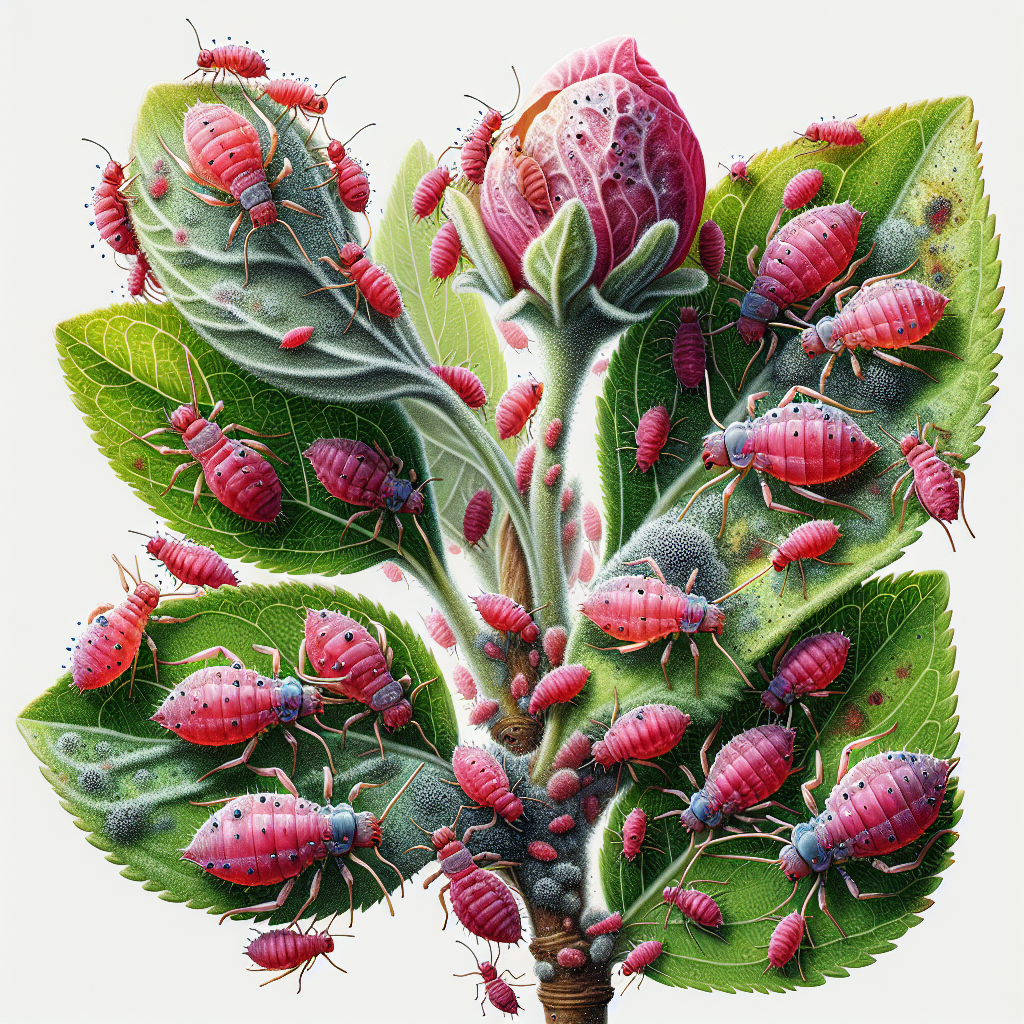
Introduction to Rosy apple aphid
The rosy apple aphid, scientifically known as Dysaphis plantaginea, stands out as one of the most destructive pests in apple production worldwide. Native to Europe but now prevalent in North America, Asia, and other apple-growing regions, this aphid species targets primarily apple trees, infesting buds, leaves, and shoots. Unlike many aphids, the rosy apple aphid has a complex lifecycle involving host alternation between apple trees (primary host) and plantain or related weeds (secondary host), making it particularly resilient.
Farmers recognize it by its distinctive rosy or pinkish coloration, especially in wingless females, which cluster in tight colonies on tender new growth. Heavy infestations can reduce tree vigor, distort fruit development, and promote secondary issues like sooty mold fungus growing on the honeydew excrement. Economic losses from rosy apple aphid can exceed 30-50% in untreated orchards, particularly in organic systems where chemical options are limited. Early detection and integrated management are crucial, as this pest reproduces parthenogenetically (asexually) at explosive rates during spring flushes. For small-scale growers, understanding its biology empowers proactive defense, preserving fruit quality and yield. Check out this Spring Pest Patrol: Organic AI Strategies to Shield Your Crops from Common Invaders for timely tips.
Identifying Symptoms & Damage
Spotting rosy apple aphid damage early prevents escalation. The hallmark sign is severe leaf curling and crinkling on young shoots, often enclosing aphid colonies within protected pockets. Infested leaves appear shiny and sticky from honeydew, which attracts ants and fosters sooty mold—a black fungal growth that discolors leaves and fruit, reducing photosynthesis and market value.
Buds fail to open properly, turning pinkish or reddish, with aphids visible as small, pear-shaped insects (1-2 mm long) in pink, green, or reddish hues. Nymphs are smaller and paler. Heavily infested shoots stunt, with shortened internodes and twisted growth. Fruit damage includes misshapen apples with russeted, scarred skin, especially near the calyx end, lowering grade and storability.
Examine terminals during green tip to tight cluster stages; colonies start small (10-20 aphids) but explode to hundreds per leaf. Differentiate from green apple aphid (less curling) or woolly apple aphid (waxy filaments). Use a hand lens: rosy aphids have a cauda (tail-like structure) and lack woolly covering. Yield impacts peak in varieties like Gala Apple or Honeycrisp Apple, where aesthetic damage slashes premiums. Scout weekly, shaking shoots over white paper to dislodge aphids for counting.
Lifecycle and Progression of Rosy apple aphid
Dysaphis plantaginea completes 8-12 generations annually, with a lifecycle finely tuned to apple phenology. Overwintering occurs as shiny black eggs laid in fall (September-October) on spurs, twigs, and bark near buds—up to 100 per female fundatrix. Eggs hatch at silver tip (3-5°C), with fundatrices (stem mothers) emerging olive-green, migrating to buds.
These wingless females reproduce viviparously, birthing 20-50 nymphs each over 2-3 weeks. By green cluster, colonies swell on leaves. Around petal fall (May-June), winged alates (migrants) form, dispersing to plantain (Plantago spp.) for summer generations. On secondary hosts, they produce sexual forms: males and oviparae return to apple in late summer, mating to produce overwintering eggs.
Peak damage occurs during bloom to fruit set, with populations doubling every 3-5 days at 15-20°C. Temperatures above 25°C or heavy rain suppress spread. One fundatrix can yield 500+ progeny in first generation alone. Monitor with degree-day models (base 5°C); control targets fundatrix stage for 90% reduction.
Environmental Triggers & Risk Factors
Rosy apple aphid thrives in cool, moist springs (10-20°C), with populations surging under humid, overcast conditions favoring low natural enemy activity. Susceptible varieties like Fuji Apple, Golden Delicious Apple, and young trees face highest risk. Poor orchard sanitation—uncontrolled plantain weeds—boosts migration back to apples.
Nitrogen excess promotes tender growth, ideal for aphids. Dense canopies trap humidity, shielding colonies. Alternate hosts nearby (roadsides, lawns) perpetuate infestations. Climate change extends active periods in milder winters. Risk multiplies in reduced-spray programs or near pear orchards sharing pests. Assess via historical data: previous infestations predict 80% recurrence.
Organic Control & Treatment Plans
Organic management hinges on integrated pest management (IPM), timing interventions precisely. Cultural: Prune for open canopy, remove egg-bearing twigs in winter (80% egg reduction). Plant clover understory to harbor predators. Destroy plantain within 1 km.
Biological: Encourage natural enemies—ladybugs (Coccinellidae), lacewings (Chrysoperla), syrphid flies eat 50-100 aphids/day. Release Aphidoletes aphidimyza (predatory midge) at 1-2/m² when colonies hit 10 aphids/leaf. Bird houses attract insectivorous species.
Mechanical/Physical: High-pressure water jets dislodge colonies pre-bloom (repeat 3x/week). Reflective mulches deter alates.
Organic Sprays: Dormant oil (2-3% superior oil) at delayed dormant smothers eggs (95% control). Neem oil or insecticidal soap at green tip/pet fall targets nymphs (LC50 at 1%). Pyrethrum or spinosad as spot treatments, but preserve predators—apply evenings. Sulfur burns aphids but watch phytotoxicity. Threshold: 5-10 aphids/shoot.
Integrated plan: Scout weekly, treat if above threshold during critical periods. Rotate modes, monitor efficacy. Success yields 85-95% control without synthetics.
Preventing Rosy apple aphid in the Future
Prevention outperforms cure. Winter egg scouting/pruning cuts populations 70%. Plant resistant rootstocks (e.g., Geneva series) and varieties like Liberty Apple. Maintain biodiversity: interplant thyme or yarrow for predator habitat.
Sanitation eliminates alternate hosts. Balanced fertility avoids lush flushes. Kaolin clay barriers pre-bloom repel settlers. Monitor with traps (yellow sticky cards). Long-term: Breeders develop aphid-resistant scions. Annual IPM audits sustain low densities, minimizing outbreaks.
Crops Most Affected by Rosy apple aphid
Primarily apple (all cultivars, esp. Granny Smith Apple, Pink Lady Apple), with occasional spillover to pear and cherry. Rare on stone fruits like peach. Secondary hosts: Plantago spp. (non-crop). Global impact: $100M+ annual losses in U.S. orchards alone.