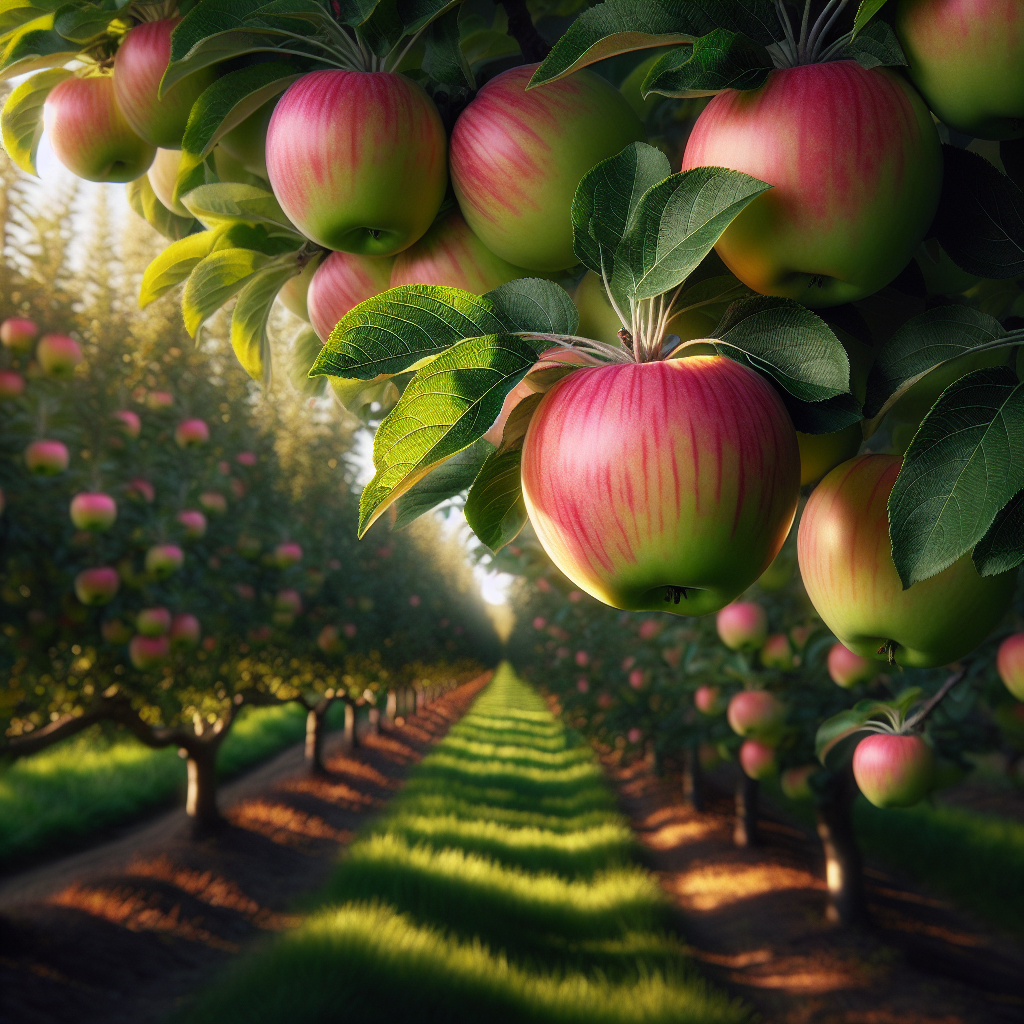
Introduction to Pink Lady Apple
Developed in Western Australia in the 1970s by breeder John Cripps, this variety arose from a cross between 'Golden Delicious' and 'Lady Williams.' The result was unusual among dessert apples: a fruit requiring a long, warm ripening season to fully develop its signature pink-red blush, high sugar, and bright acidity. That late maturity is central to how it should be grown. In climates that cool too early or lack enough heat units after flowering, fruit may remain pale, under-colored, and overly tart.
Commercially, Pink Lady is a trademarked brand, while the cultivar itself is 'Cripps Pink.' Not all Cripps Pink fruit qualifies for sale under the branded name; only fruit meeting color and quality standards does. For growers, that distinction matters because orchard practices must aim not only at yield, but at finish quality: light penetration, crop load balance, potassium nutrition, and harvest timing all affect whether fruit develops premium blush and texture.
This is not usually the easiest backyard apple to master, but it is one of the most rewarding in suitable temperate regions with long autumns. Compared with many standard apples, it tends to bloom mid to late, ripen very late, and hold exceptional firmness in storage. For broader species background, see our Apple guide.
Botanical Profile of Pink Lady Apple
This cultivar belongs to the Rosaceae family, genus Malus, species domestica. Trees are typically moderately vigorous depending on rootstock, training system, soil fertility, and irrigation. Growth habit is upright-spreading when young, often becoming more open with correct pruning. On dwarfing rootstocks, trees are easier to manage for light distribution, which is especially important because fruit color development is highly dependent on sun exposure.
Leaves are oval to elliptic, serrated, and medium green, with a typical apple canopy response to nitrogen: overly high nitrogen drives lush vegetative growth, which can shade fruit and suppress color. Blossoms are white to pale pink, borne in clusters, and like most apples, the variety is not reliably self-fertile. A compatible pollenizer is strongly recommended, ideally one with overlapping bloom.
Fruit is medium to large, conical to round-conical, with a yellow-green background overlaid by pink to deep rose blush when mature. Flesh is cream-white, very dense, crisp, and fine-textured. Sugar levels often reach 13-15° Brix under good maturity, while acidity stays relatively high compared with sweeter mild apples, giving the characteristic sweet-sharp flavor. The skin can be somewhat sensitive to sunburn in hot exposed sites, yet insufficient light reduces blush, so canopy balance is critical.
One defining trait is its very late harvest window, often several weeks after cultivars such as Gala or even Fuji in many regions. This long hang time means the tree needs an extended frost-free period. It also means growers must maintain canopy health late into the season, because premature leaf drop from disease, mites, or nutrient imbalance can significantly reduce final fruit size, sugar accumulation, and red color.
Soil, pH, and Climate Requirements for Pink Lady Apple
This variety performs best in well-drained loam or sandy loam with good aeration, moderate water-holding capacity, and at least 1-1.5 meters of penetrable soil depth. Heavy clay can work if structured with organic matter and drainage correction, but prolonged root-zone saturation is a serious problem. Apple roots need oxygen; if the soil remains waterlogged for more than 48 hours during active growth, fine feeder roots begin to die back, leading to weak shoot growth, nutrient uptake problems, and greater susceptibility to Phytophthora root and crown rot.
Target soil pH is 6.0-6.8, with an ideal around 6.2-6.5. Below pH 5.8, calcium, magnesium, and phosphorus availability may become less favorable, while aluminum toxicity may increase in acidic subsoils. Above pH 7.2, iron, manganese, and zinc deficiencies become more common, especially on calcareous ground. Conduct a complete pre-plant soil test including pH, cation exchange capacity, organic matter, base saturation, phosphorus, potassium, calcium, magnesium, boron, and salinity.
Pink Lady especially benefits from steady calcium availability because the fruit is intended for long storage and premium crisp texture. Calcium does not move freely into fruit, so good soil moisture consistency and moderate vegetative vigor are essential. Large swings between drought and heavy irrigation can increase risk of bitter pit-like calcium disorders, lenticel stress, and inconsistent sizing.
Climatically, Pink Lady is best suited to warm temperate zones with adequate winter chilling and long, sunny autumns. It generally requires enough chill to break dormancy uniformly, often in the range typical for mainstream apple production, but its greater challenge is heat and season length rather than winter rest. The cultivar needs substantial time after bloom to reach color and flavor maturity. Regions with cool summers, early autumn frost, persistent cloud cover, or low heat accumulation often struggle to produce top-quality fruit.
Ideal growing conditions include:
- Full sun, with at least 8 hours of direct light daily
- Warm days and cool nights in late season to improve blush and flavor complexity
- Low to moderate spring frost risk during bloom
- Good air drainage to reduce cold injury and disease pressure
- Annual rainfall supplemented by irrigation where summers are dry
A mature orchard typically needs 600-900 mm of total water per season, depending on evapotranspiration, soil type, canopy size, and rootstock. The goal is even moisture, not constant saturation. In the active root zone, soil should generally remain moist but crumbly. As a practical rule, the top 15-20 cm may dry slightly between irrigations, but the 20-40 cm zone should not become powder-dry during fruit sizing. Tensiometer targets in many orchard soils fall roughly around 20-40 centibars in loam during peak demand; values well above that for extended periods can suppress fruit enlargement.
For foundational orchard soil management principles, see Soil health strategies.
Step-by-Step Planting & Propagation
Propagation is almost always by grafting rather than seed. Seedlings do not come true to type, and apples are genetically variable. Purchase certified disease-free nursery trees of 'Cripps Pink' on a rootstock matched to your soil, spacing, and management intensity.
Common rootstock considerations:
- M.9: highly dwarfing, early bearing, requires permanent support, excellent for high-density systems
- M.26: semi-dwarf, productive, still often needs support in fertile sites
- MM.106: semi-vigorous, adaptable, but avoid poorly drained soils due to root disease risk
- MM.111: more vigorous, drought-tolerant, suited to lower-input or wider-spaced orchards
Plant during dormancy, usually late winter to early spring before bud break, when soil is workable but not waterlogged. In mild climates, planting in late autumn to winter is also possible if trees can establish roots before spring growth.
Step-by-step planting method:
- Prepare the site 3-12 months in advance. Remove perennial weeds, rip compacted subsoil if needed, and correct pH based on soil test.
- Lay out rows to maximize light interception, usually north-south where practical.
- Install irrigation before or immediately after planting. Drip or microsprinkler systems are preferred for water efficiency and root-zone control.
- Dig a hole only as deep as the root system and 2-3 times as wide. Avoid glazing the sides in clay soils.
- Set the tree so the graft union remains 10-15 cm above finished soil level. Burying the graft can cause scion rooting and loss of rootstock benefits.
- Spread roots naturally and backfill with native soil. Avoid placing concentrated fertilizer directly in the planting hole.
- Water deeply after planting to settle soil around roots.
- Stake dwarf and many semi-dwarf trees immediately.
- Mulch with 5-8 cm of organic material, keeping mulch 10-15 cm away from the trunk to prevent collar rot and rodent damage.
- Head the whip or select primary scaffold branches depending on your training system.
Spacing depends on rootstock and orchard design. High-density systems on M.9 may be spaced roughly 0.9-1.5 m within row and 3-4 m between rows. Semi-dwarf backyard trees may be spaced 3.5-5 m apart. Wider spacing can reduce disease pressure but may lower early production per hectare.
Pollination is essential. Plant with a compatible cultivar that blooms at the same time, or ensure nearby crabapple or apple pollenizers are present. Bee activity is critical during flowering; avoid insecticide applications during bloom.
Care & Maintenance regimes for Pink Lady Apple
Training and pruning should prioritize light distribution. Pink Lady needs good sun exposure on fruiting wood to color properly, so dense canopies are a liability. Tall spindle, vertical axis, open center for small plantings, and modified central leader systems can all work if managed for narrow, well-illuminated fruiting walls.
In the first three years, focus on structure:
- Develop a strong central leader if using spindle or axis systems
- Spread overly upright branches to 50-70 degrees to encourage flowering and calm vigor
- Remove competing leaders early
- Limit severe winter cuts on vigorous young trees, as they stimulate vegetative regrowth
On bearing trees, annual pruning should remove shaded, weak, diseased, and overcrowded wood. Summer pruning can be especially useful for this cultivar where excessive shading reduces color. Remove vigorous upright water sprouts that block afternoon sun from fruiting zones, but do not over-thin the canopy to the point of sunburn risk.
Irrigation management should follow phenological stage:
- Establishment year: water deeply 1-3 times weekly depending on heat and soil type, keeping the root zone uniformly moist
- Bloom to fruit set: avoid severe stress, as moisture deficits can reduce set and cell division
- Fruit enlargement: maintain steady moisture; this is the most important period for size
- Preharvest: avoid drought stress, but also avoid sudden heavy irrigation after a dry spell, which can increase splitting risk in some fruits and dilute quality
- Postharvest: continue enough watering to support root growth and bud development until natural leaf fall
Signs of underwatering include dull leaves, reduced shoot extension, smaller fruit, premature fruit drop, and dry soil below mulch. Signs of overwatering include yellowing leaves despite wet soil, lack of shoot vigor, sour-smelling soil, darkened roots, mossy or persistently wet basin surfaces, and increased incidence of root diseases.
Fertilization should be based on leaf analysis and soil testing, not guesswork. In young trees, modest nitrogen encourages canopy establishment, but excess nitrogen is a common mistake. Too much nitrogen produces rank shoots, delays fruiting, increases aphid and fire blight susceptibility, and reduces color development. Mature bearing trees often need less nitrogen than growers expect.
General nutrient priorities:
- Nitrogen: apply conservatively in split doses if needed, often in spring
- Potassium: important for fruit size, color, and sugar movement; deficiency may show as marginal leaf scorch on older leaves
- Calcium: supports fruit firmness and storage quality
- Boron: critical in tiny amounts for flower fertility and fruit set; excess is toxic
- Zinc and manganese: often needed in alkaline or cold soils, sometimes via foliar sprays
Thinning is crucial. Pink Lady can set more fruit than it can finish at premium size and quality. Hand thin or chemically thin so remaining apples are spaced roughly 15-20 cm apart along branches, depending on tree vigor and target fruit size. Thin within 4-6 weeks after bloom for best effect on final size and return bloom. Overcropped trees produce smaller, greener, later-maturing fruit and may biennial bear.
Weed control around the tree row is important, especially for young trees. Maintain a vegetation-free strip 60-100 cm wide for the first few years. Grass competition directly reduces growth by robbing surface moisture and nutrients.
Pests, Diseases & Organic Management
Pink Lady shares many pest and disease pressures common to apples, but because it hangs late, late-season canopy health is especially important. An integrated program combining sanitation, monitoring, beneficial organisms, airflow, and carefully timed organic sprays gives the best results.
Major insect pests include codling moth, apple maggot in affected regions, aphids, leafrollers, mites, scale, and stink bugs. codling moth is often the key direct fruit pest. Use pheromone traps to monitor adult flight and degree-day timing to target interventions. Bagging individual fruit is practical for small plantings. Kaolin clay can deter egg-laying and reduce sunburn pressure somewhat, though it must be maintained as a film. Spinosad may be permitted in some organic-compatible systems depending on certification rules and local regulations.
aphids distort shoots and can increase sooty mold through honeydew. Encourage predators such as lacewings, hoverflies, and lady beetles. Avoid excessive soluble nitrogen, which makes tissues more attractive to aphids.
Common diseases include apple scab, powdery mildew, fire blight, cedar apple rust in some regions, and sooty blotch/flyspeck late in the season. Storage disorders may also develop if harvest maturity or calcium balance is poor.
Organic management priorities:
- Remove mummified fruit and fallen infected leaves
- Prune for airflow and rapid drying after rain or dew
- Sanitize tools when fire blight is present
- Avoid overhead irrigation during bloom and periods favorable for foliar disease
- Use resistant rootstocks where applicable for soilborne issues
- Apply sulfur or lime sulfur where appropriate for scab and mildew prevention, following label and weather safety guidance
- Use copper cautiously in dormant or delayed dormant periods; excessive in-season copper can russet fruit or injure foliage
fire blight deserves special attention. It thrives in warm, humid bloom conditions and enters through blossoms or active shoots. Symptoms include blackened blossom clusters, shepherd's crook shoot tips, and cankers on wood. Prune infected shoots well below visible symptoms during dry weather, sterilizing tools between cuts when disease pressure is high. Avoid heavy spring nitrogen that fuels succulent growth.
Root diseases are aggravated by poor drainage. If trees show chronic weakness, sparse canopy, and reddish or prematurely yellow leaves despite irrigation, inspect the crown and roots. Dark, decayed bark at the base can indicate crown rot.
For orchard-floor biodiversity, flowering insectary plants can help support beneficial insects. Clover is often used between rows or nearby as a living groundcover in well-managed systems, though it should be kept from directly competing with young tree trunks.
Harvesting, Curing & Optimal Storage
This is a very late-season apple, and harvest timing determines whether the fruit is merely acceptable or exceptional. External color alone is not enough. Fruit may blush before internal maturity is complete, especially if exposed to strong sun. Professional timing uses a combination of starch conversion, ground color, firmness, soluble solids, seed color, and ease of separation from the spur.
Typical maturity indicators include:
- Background color shifting from green toward yellow-green
- Starch index progressing to the recommended range for long-storage harvest
- Firmness still high, often above levels acceptable for immediate tree-ripened softness
- Soluble solids increasing into a commercially desirable range, often 13° Brix or higher
- Characteristic sweet-tart flavor emerging rather than flat sourness
Harvest selectively in 2-3 picks if color is uneven. Fruit on the outer, sunlit canopy often matures first. Handle carefully; even though the flesh is firm, bruising and stem punctures reduce storage life. Pick by lifting and rolling the apple upward so the stem stays attached. Do not yank fruit free.
Unlike curing crops such as onions or sweet potatoes, apples are not cured in the traditional sense, but they do benefit from prompt field heat removal. Cool fruit as quickly as possible after harvest. Ideal storage is 0-1°C with 90-95% relative humidity. At these conditions, Pink Lady stores very well and can maintain texture for several months. Warmer storage accelerates softening and loss of acidity.
Do not store damaged, cracked, insect-stung, or diseased fruit with premium lots. One decaying apple can increase ethylene and disease spread in storage. Good ventilation and sanitation in storage rooms are essential.
Common postharvest problems include superficial scald, shrivel if humidity is too low, internal browning from improper atmosphere management, and loss of acidity if held too warm for too long. For small-scale growers, a dedicated orchard refrigerator or cool room is far better than ambient garage storage.
Companion Planting for Pink Lady Apple
Companion planting around apple trees should support pollination, beneficial insects, soil moderation, and weed suppression without creating excessive competition at the trunk. The best companions are usually low-growing, shallowly competitive, and ecologically functional rather than large nutrient-hungry crops.
Garlic is one of the most useful companions because its pungent foliage may help deter some browsing animals and it occupies the orchard floor without creating dense shade. It also fits well in the outer edge of the drip zone where cultivation is possible. Keep it far enough from the trunk to avoid root crowding in young trees.
Thai Basil and Sunflower can support pollinators and beneficial insects, though sunflowers should be placed where they do not shade the tree canopy or compete heavily for moisture in dry climates. Basil is better suited to warmer sites and can be grown in nearby beds rather than directly at the trunk line.
Clover is valuable as a living mulch or alley cover because it helps protect soil structure, supports pollinators when flowering, and can contribute nitrogen biologically. However, it should be mowed and managed so it does not compete aggressively with young trees or create excessive humidity around the base.
Avoid planting aggressive grasses, large brassicas, or sprawling vegetables directly beneath young trees where root competition and irrigation conflicts can slow establishment. Also avoid companions that require frequent overhead watering, because prolonged canopy wetness favors apple diseases. In commercial-style orchards, the most effective companion strategy is often a clean tree row with beneficial flowering strips and managed cover crops between rows rather than crowded mixed planting right at the trunk.