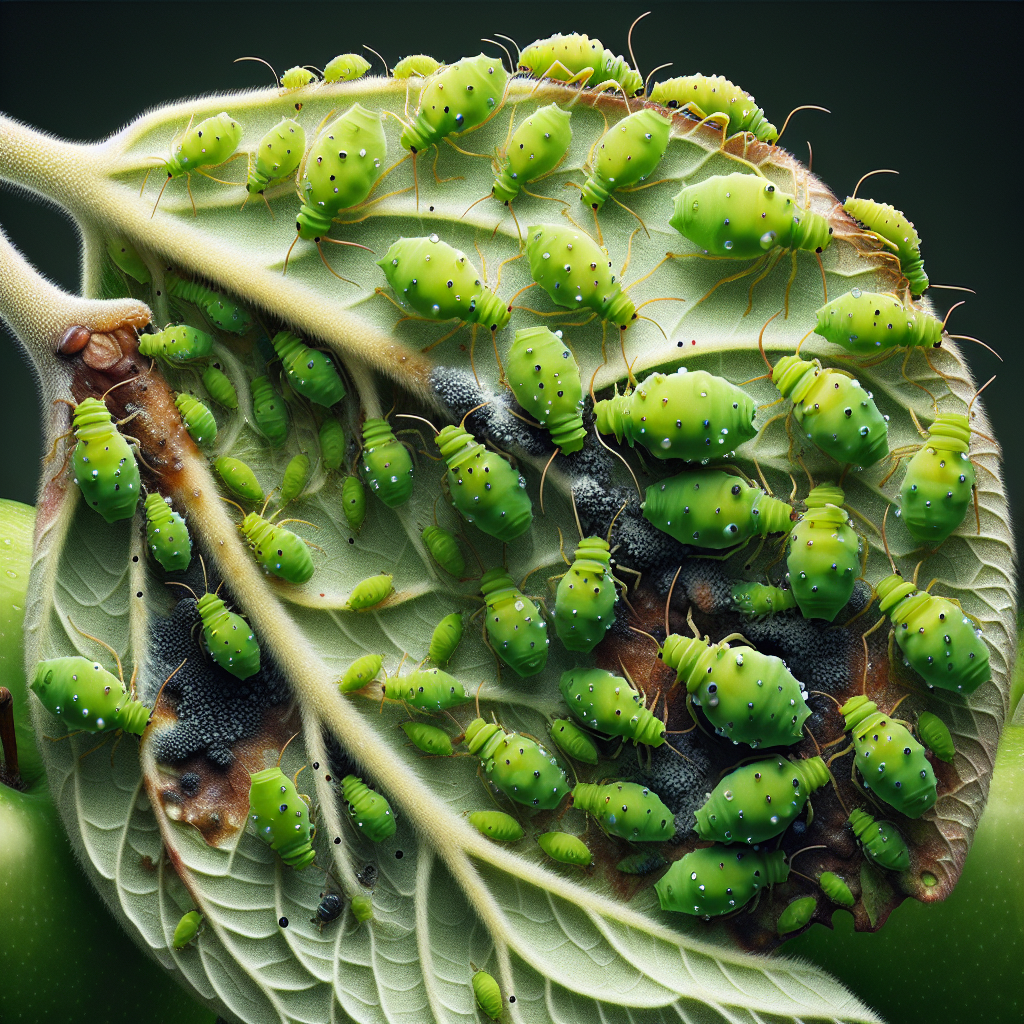
Introduction to Green apple aphid
The green apple aphid, scientifically known as Aphis pomi, is one of the most notorious pests in apple orchards worldwide. These small, soft-bodied insects thrive on tender new growth, sucking sap from leaves, shoots, and buds, which leads to significant economic losses for growers. Native to Europe but now cosmopolitan, green apple aphids can reproduce rapidly—females give birth to live young without mating—allowing populations to explode in favorable conditions. A single female can produce up to 50 offspring per week, leading to infestations that curl leaves, stunt shoots, and reduce fruit quality. Beyond direct feeding damage, they excrete honeydew, a sugary substance that attracts ants and fosters sooty mold, a black fungal growth that disfigures fruit and foliage.
In commercial apple production, green apple aphids can cause up to 30-50% yield reductions if unchecked, particularly on young trees or stressed orchards. They are most problematic in temperate regions during spring and early summer, coinciding with bud break and shoot growth. For small-scale and organic growers, understanding this pest's behavior is crucial, as it often serves as a gateway for secondary issues like mites or viral transmission. This guide provides professional-grade diagnostics, lifecycle insights, and proven organic management strategies to safeguard your apple crops. For broader context on aphid pests, see our detailed entry on Aphids (pest).
Identifying Symptoms & Damage
Spotting green apple aphid infestations early is essential for timely intervention. Adult aphids are small (1-2 mm), pear-shaped, bright green with black siphuncles (tail pipes) and antennae. Nymphs resemble adults but are smaller and wingless. Look for clusters on the undersides of young leaves, at the base of buds, and along tender shoots—often 100s per leaf in heavy infestations.
Primary Symptoms:
- Leaf curling and cupping: Aphids inject toxins while feeding, causing leaves to twist inward, protecting the colony.
- Stunted shoots: Terminal growth yellows and stops elongating, giving trees a "tufted" appearance.
- Honeydew and sooty mold: Sticky droplets coat leaves and fruit, leading to black fungal spots that reduce photosynthesis by 20-30%.
- Distorted fruit: Small, misshapen apples with raised, corky areas where aphids fed nearby.
Secondary Damage: Ants farm aphids for honeydew, protecting them from predators. Heavy infestations weaken trees, making them susceptible to powdery mildew or drought stress. Scout weekly from green tip stage (early spring) using a 10x hand lens; thresholds are 10 aphids per leaf or visible curling on 25% of shoots.
Differentiate from similar pests: Unlike woolly apple aphids (covered in white wax), green apple aphids are glossy. Whiteflies flutter when disturbed, while aphids walk slowly. Use sticky traps to monitor winged forms migrating from weeds or nearby pear trees.
Lifecycle and Progression of Green apple aphid
Green apple aphids have a complex lifecycle adapted to temperate climates, with 10-20 generations per season. Overwinter as black eggs on bark spurs, hatching at bud swell (March-April in USDA zones 5-8). Wingless females (1-2 mm) emerge, feeding on new leaves and producing 3-6 nymphs daily for 2-3 weeks.
Nymphs mature in 7-10 days at 70°F (21°C), molting 4 times. Populations peak at petal fall (May), with winged alates forming to colonize new shoots or disperse to secondary hosts like potato, clover, or thyme. Summer sees overcrowding trigger wing production; males appear in fall for egg-laying on primary hosts.
Key Stages:
- Eggs: Shiny black, 0.7 mm, clustered on wood.
- Fundatrices (spring females): Produce first summer generations.
- Summer aphids: Rapid parthenogenesis (asexual).
- Alates: Winged migrants.
- Fall males/females: Sexual reproduction for overwintering eggs.
Lifecycle completes in 8-12 days under optimal conditions (65-75°F, high humidity). Cold snaps (<40°F) slow development; droughts reduce survival. Monitor with degree-day models: First hatch at 100-150 heat units (base 45°F).
Environmental Triggers & Risk Factors
Green apple aphids exploit specific conditions for outbreaks. Warm springs (above 60°F) with mild winters favor egg survival (90% hatch if temps >32°F). High nitrogen fertility promotes succulent growth, ideal for feeding—avoid excess N in spring fertilizers.
Triggers:
- Weather: Rain-free periods >7 days allow populations to build; irrigation mimics this.
- Orchard factors: Dense canopies reduce airflow, trapping humidity; young trees (<5 years) are vulnerable.
- Weeds/hosts: Nearby onion, garlic, or grasses harbor overwintering eggs.
- Predator disruption: Dust from tillage or broad-spectrum sprays kills ladybugs and lacewings.
Risk is highest in blocks without refugia (untreated rows for beneficials). Climate change extends seasons, increasing generations by 2-3 in warming regions. Check Spring Pest Patrol: Organic AI Strategies to Shield Your Crops from Common Invaders for predictive tools.
Organic Control & Treatment Plans
Organic management emphasizes IPM: monitor, cultural controls, biologicals, then targeted sprays. Avoid prophylactics to preserve predators like lady beetles (eat 50 aphids/day), syrphid flies, and parasitoids.
Cultural: Prune for open canopies (airflow >50% light penetration); remove mummies and egg sites in winter. Plant trap crops like nasturtium to divert aphids.
Biological: Release Aphidoletes aphidimyza (larvae devour 20 aphids/day) or Chrysopa carnea lacewings. Encourage birds with perches.
Organic Sprays (threshold-based, evening application):
- Insecticidal soap (5% potassium salts): 2-3 gal/100 gal water, weekly; smothers soft bodies.
- Neem oil (0.5-1%): Disrupts feeding/molting; add yarrow extract for synergy.
- Pyrethrins + oils: For heavy infestations; 48-hr REI.
- Horticultural oil (2% dormant): Smothers eggs in winter.
Treatment Plan: Scout weekly; treat if >10 aphids/leaf. Alternate modes of action; stop at fruit set to protect pollinators. Efficacy: 80-95% with IPM vs. 50% soaps alone. Test on small areas.
Preventing Green apple aphid in the Future
Prevention beats cure: Select resistant varieties like Gala Apple or Honeycrisp Apple. Time N fertilizers post-bloom; mulch to suppress weeds. Winter sanitation removes 70% eggs.
Long-term Strategies:
- Refugia: Leave 10% orchard unsprayed for predators.
- Cover crops: Thai Basil or marigolds repel aphids.
- Monitoring tech: Yellow sticky traps + apps for degree-days.
- Rotation/diversity: Interplant with yarrow (attracts predators).
Annual audits reduce incidence by 60%; combine with hyper-local forecasts for proactive sprays.
Crops Most Affected by Green apple aphid
Primarily attacks Rosaceae family:
- Apples (all varieties): Worst hit, especially Golden Delicious Apple.
- Pears: Shoots and fruitlets.
- Quince, hawthorn, cotoneaster: Secondary hosts.
Rarely peach, cherry; avoids stone fruits. In mixed orchards, monitor Fuji Apple blocks first. Global impact: $100M+ annual losses in U.S. alone.