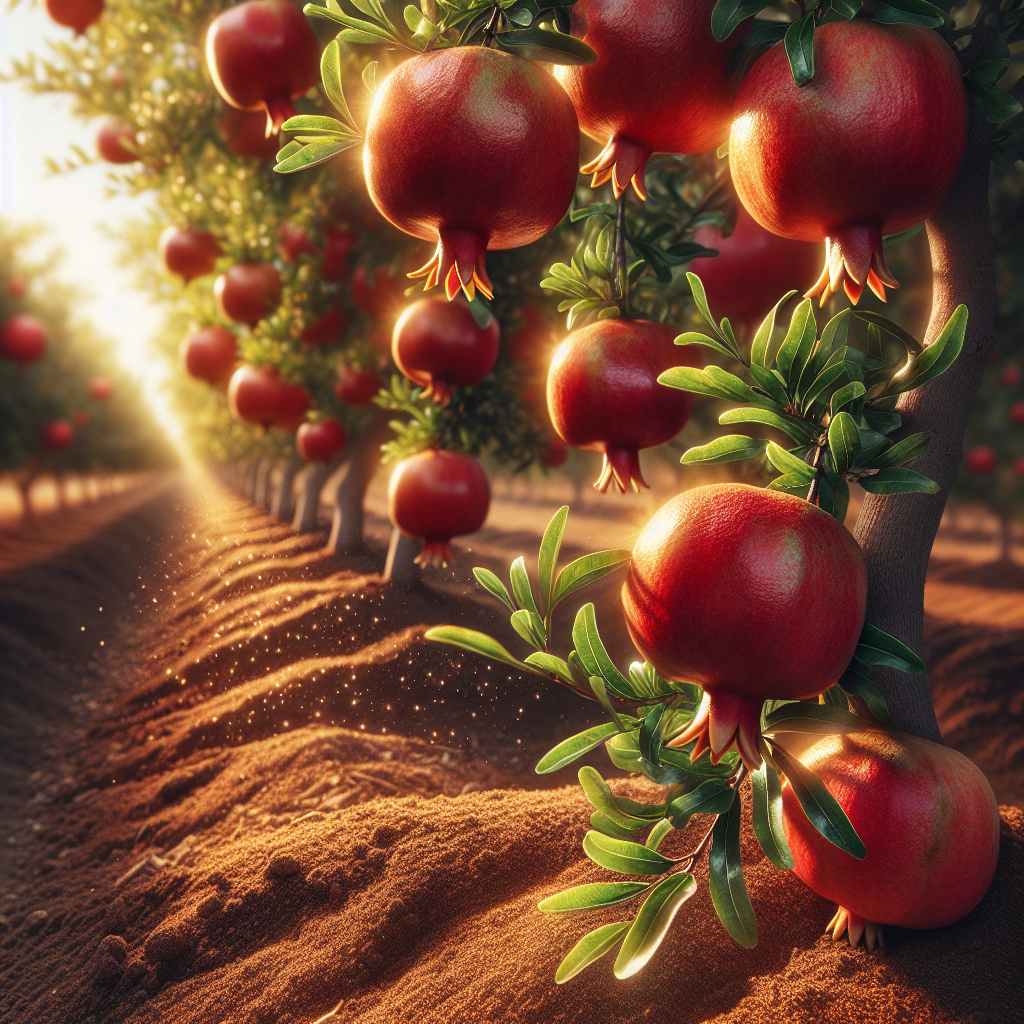
Introduction to Pomegranate (Angel Red)
A modern commercial-type pomegranate selection, Angel Red is especially prized for its rich red arils, high juice content, relatively soft seeds, and appealing balance of sweetness with mild acidity. Compared with older standard cultivars, it is often grown where growers want fresh-market fruit that is easier to eat out of hand and attractive enough for premium sales.
This cultivar belongs to the long-cultivated species Punica granatum, one of the oldest domesticated fruit crops of the Mediterranean-to-West Asian belt. Pomegranates have moved across Persia, the Levant, North Africa, India, and southern Europe for thousands of years, and their agronomy still reflects that heritage: they excel where summers are hot, light is intense, humidity is not excessive, and soils drain quickly. Angel Red follows that classic pattern but stands out for its striking exterior color and consumer-friendly seed texture.
In the orchard, Angel Red typically forms a large shrub or small multi-trunk tree with a naturally vigorous habit. Like many pomegranates, it can tolerate drought better than many fruit crops once established, but that should never be confused with optimal production under neglect. The best fruit size, rind finish, internal color, and splitting resistance come from steady, moderate moisture and a nutrition program that emphasizes balance rather than overfeeding. For growers comparing pomegranate types, the broader Pomegranate guide helps frame how this cultivar fits into the species as a whole.
Botanical Profile of Pomegranate (Angel Red)
This cultivar is a deciduous to semi-deciduous fruiting shrub in warm winter climates, though leaf retention depends heavily on chill accumulation and seasonal stress. In colder areas it sheds leaves fully, while in mild regions it may remain partly foliated. Mature plants commonly reach 10 to 14 feet tall and wide if grown naturally, though training can maintain smaller orchard forms.
Leaves are opposite to sub-opposite, narrow, glossy, and medium green, typically emerging on fine branchlets that may terminate in short spines. Flowers are thick-petaled, waxy, and bright orange-red to scarlet, with a bell to urn-like calyx that later persists at the fruit apex. Pomegranate flowers are botanically interesting because not all blooms are equally fruitful. Many are functionally male or intermediate, while the more urn-shaped, heavy-based flowers are the ones most likely to set marketable fruit. This means heavy bloom does not always translate into heavy yield.
Angel Red fruit are generally medium to large, round to slightly flattened, with a smooth, glossy rind that develops strong red coloration in good heat and sunlight. Inside, the arils are deep red and notably juicy. The seeds are considered soft for a pomegranate, making the fruit especially attractive for fresh eating and juicing. Fruit quality is strongly tied to heat units during ripening; in cooler districts, internal color may still develop, but sugars can lag and flavor may be less concentrated.
Pomegranate bears primarily on short spurs and on mature wood produced in previous seasons, though some fruit may also form on current-season growth. Productive wood is generally found on healthy, well-lit secondary branches. This has direct pruning implications: aggressive heading cuts can stimulate rank vegetative shoots at the expense of stable fruiting wood, while selective thinning preserves light and renewal.
Pollination is generally not a limiting factor because pomegranates are commonly self-fruitful, and Angel Red usually sets acceptably as a single cultivar. Even so, bee activity improves pollination consistency and can increase set under marginal weather. Windy bloom periods, cold snaps during flowering, or excess nitrogen that drives vegetative growth can all reduce final crop load.
Soil, pH, and Climate Requirements for Pomegranate (Angel Red)
This cultivar performs best in full sun with at least 8 hours of direct light daily; 10 or more hours in summer is ideal for rind color, sugar development, and flower bud formation. It is best adapted to Mediterranean, subtropical dry, and warm temperate climates. Long, hot summers and relatively cool winters are preferred. Ideal daytime temperatures during active growth are roughly 75 to 95°F (24 to 35°C), while fruit ripening is most reliable where late summer and early autumn remain warm and mostly dry.
Pomegranate tolerates short periods of cold better than many subtropical fruit species, but Angel Red fruit and young wood can be injured by hard freezes. Mature dormant plants may survive into the mid-teens °F for brief periods, but flower buds, new flushes, and young trees are much more vulnerable. Temperatures below about 28°F (-2°C) during bloom or young fruit set can significantly reduce yield.
Soil texture can range from sandy loam to loam to even light clay, provided drainage is strong. The key is oxygen in the root zone. Pomegranate roots dislike persistent saturation; if soil remains waterlogged for more than 24 to 48 hours after irrigation or rain, root stress begins, and susceptibility to crown and root pathogens rises sharply. Deep alluvial loams with moderate water-holding capacity are excellent. In sandy soils, irrigation frequency must increase; in heavier soils, irrigation volume must be reduced and intervals widened.
The preferred soil pH is approximately 5.5 to 7.2, with best nutrient availability commonly seen around 6.0 to 6.8. The species tolerates mild alkalinity better than blueberries or citrus, but iron and zinc deficiency can appear in high-pH calcareous soils, especially above 7.5. Chlorosis usually shows first on young leaves as pale interveinal yellowing. In those conditions, use chelated micronutrients and organic matter additions rather than repeated heavy nitrogen applications, which do not solve the underlying chemistry.
Salinity tolerance is moderate compared with many fruit crops, but not unlimited. Electrical conductivity in irrigation water above roughly 2.0 dS/m begins to warrant caution, especially in arid zones with poor leaching. Excess salts often show up as marginal leaf burn, reduced shoot elongation, and smaller fruit. If salinity is unavoidable, mulching, deep occasional leaching, and gypsum in sodic soils may help.
Humidity is an underrated factor. Angel Red prefers relatively dry ripening weather. High humidity and late-season rain increase risks of fungal blemishes, cracking, and lower packout quality. Sites with good airflow are preferable, but avoid exposed wind tunnels that can shred blossoms and stress young growth.
Step-by-Step Planting & Propagation
Start with a healthy, true-to-type nursery plant from a reputable source. Container-grown plants 1 to 2 years old establish fastest and preserve cultivar identity, which is important because seed-grown pomegranates do not come true. Angel Red is usually propagated vegetatively by hardwood cuttings.
For field planting, choose a frost-safe, sun-exposed location. In commercial rows, spacing of 12 to 16 feet between plants and 16 to 20 feet between rows is common depending on whether you want a shrub system, small tree system, or mechanized access. Home orchard growers can plant closer if they are committed to annual canopy control.
Prepare the site by removing perennial weeds and loosening a broad planting area rather than digging a narrow hole in compacted ground. If drainage is questionable, perform a simple percolation test: fill a hole 18 inches deep with water and see whether it drains within a day. If not, plant on a berm or raised mound 8 to 18 inches high.
Plant during late winter to early spring in climates with cold winters, or during the cool season in mild climates so roots establish before summer heat. Dig a hole only as deep as the root ball and 2 to 3 times as wide. Set the plant at the same depth it grew in the container; planting too deep increases crown disease risk. Backfill with native soil rather than a rich pocket of amended compost, which can create a water bathtub effect in heavier soils.
Water immediately after planting to settle soil around roots. Apply 2 to 4 inches of coarse organic mulch over the root zone, keeping it 3 to 6 inches away from the trunk base. This moderates soil temperature, conserves moisture, and reduces weed competition. In windy areas, stake loosely for the first season only.
To propagate from cuttings, take dormant hardwood pieces 8 to 12 inches long and pencil-thick from healthy one-year-old wood. Make a flat cut at the top and angled cut at the base to preserve orientation. Dip the basal end in rooting hormone, then insert two-thirds of the cutting into a free-draining propagation medium or nursery bed. Bottom warmth around 70 to 75°F (21 to 24°C) improves rooting. Once rooted and actively growing, pot up or transplant after danger of frost. This method is far more reliable than seed and preserves the soft-seeded fruiting traits.
Training begins immediately. Decide early whether to grow as a multi-trunk bush or single-trunk small tree. Multi-trunk systems are traditional and resilient if freeze damage occurs, since replacement shoots arise readily from the base. Single-trunk trees look tidier and can simplify under-canopy access, but they require stricter sucker removal.
Care & Maintenance regimes for Pomegranate (Angel Red)
Irrigation management determines fruit quality more than almost any other cultural factor. During establishment, keep the root zone evenly moist but never saturated. A practical target is soil that feels cool and slightly damp 4 to 6 inches deep, not sticky, sour-smelling, or glistening wet. In warm weather, newly planted trees often need deep watering 1 to 3 times weekly depending on soil type. Sandy soils may require more frequent irrigation; clay loams much less.
Once established, pomegranates are drought-tolerant, but high-quality Angel Red production needs consistent moisture from bloom through fruit enlargement. Large fluctuations are dangerous. If trees become very dry and then receive heavy irrigation or rainfall, fruit splitting becomes much more likely. Aim to wet the main root zone to roughly 18 to 24 inches depth, then allow the upper few inches to dry slightly before the next irrigation. Drip irrigation is ideal. As a rough commercial guide, mature trees may need 20 to 40 gallons per week in moderate weather and significantly more in extreme heat, but exact demand depends on canopy size, soil, mulch, and evapotranspiration.
Overwatering signs include yellowing leaves that drop prematurely, weak soft shoots, algae or moss near emitters, sour-smelling soil, and reduced new root vigor. Chronic excess moisture also produces smaller, less flavorful fruit and encourages root disease. Underwatering signs include leaf curl, dull or gray-green foliage, tip burn, reduced fruit size, early fruit drop, and hard soil that pulls away from the wetted zone.
Nutrient needs are modest compared with heavy-feeding fruit crops. Excess nitrogen pushes lush vegetative growth, increases aphid pressure, and may reduce flowering and fruit color. Young trees benefit from small, split applications during spring and early summer. Mature trees often do well with a balanced fertility program delivering modest nitrogen along with potassium for fruit quality. Many orchardists use composted manure or mature compost in late winter plus targeted supplemental fertilizer during active growth. Leaf analysis in midsummer is the professional way to refine nutrition, especially where deficiencies of zinc, iron, or boron recur.
Pruning should be light but intentional. In the first 2 to 3 years, build a framework of 3 to 5 main trunks or scaffold limbs. Remove weak interior shoots, crossing wood, damaged branches, and basal suckers not needed for structure. On mature trees, thin congested growth annually to maintain light penetration. Fruiting is best where the canopy is airy and sun reaches spur-bearing wood. Avoid severe topping every year; it triggers water sprouts and delays stable production.
Suckering is characteristic of pomegranates. Remove unwanted basal shoots while young by rubbing or cutting them off cleanly. If allowed to harden, they divert energy and create dense thickets that shade fruit and complicate harvest.
Fruit thinning is not always necessary, but in very heavy set years it can improve size and reduce branch breakage. Remove damaged, crowded, or undersized fruit early. Support overloaded branches if needed; pomegranate wood can split under crop weight.
Weed control is especially important for young trees. Keep a vegetation-free strip 2 to 3 feet around the trunk. Grass competition reduces establishment speed and can dramatically lower growth in the first two seasons. For long-term orchard floor health, mulches and living alley covers work well. For broader soil-management strategy, see soil health tips.
Pests, Diseases & Organic Management
Angel Red is relatively resilient, but its performance improves significantly under prevention-based management. The most common pest problems vary by region and may include aphids, whiteflies, mealybugs, scale insects, leaf-footed bugs, stink bugs, mites, and thrips. aphids usually cluster on tender spring flushes and flower parts, producing sticky honeydew that leads to sooty mold. They are often controlled by beneficial insects if broad-spectrum sprays are avoided.
mealybugs and scale are more serious in dense, shaded canopies. They hide in bark crevices, fruit clusters, and calyx areas, weakening plants and downgrading fruit appearance. Pruning for airflow, ant control, and dormant-season horticultural oil are the cornerstone organic tools. If ants are abundant, they protect sap-feeding pests from predators, so baiting or barrier methods around trunks can greatly improve biological control.
leaf-footed bugs and stink bugs can puncture developing fruit, causing internal breakdown, discoloration, or premature drop. Sanitation matters: remove dropped fruit promptly and reduce alternate host weeds nearby. Fine exclusion netting can help in high-pressure small plantings.
Fungal and bacterial issues increase in humid or rainy climates. leaf spots, fruit rots, anthracnose-type lesions, and alternaria-like blackening may appear where canopy humidity remains high. Cracked fruit are particularly vulnerable. Good spacing, sun exposure, prompt harvest, and avoiding overhead irrigation are the most effective nonchemical defenses.
Root and crown diseases are the most avoidable serious problems. Phytophthora and similar pathogens thrive in saturated soil. The organic solution is fundamentally architectural, not spray-based: raised planting, excellent drainage, cautious irrigation, and keeping mulch away from the crown.
fruit cracking is technically a physiological disorder, but growers often experience it like a disease problem because losses can be severe. It is most commonly triggered by irregular moisture, abrupt rainfall after drought, excessive heat stress, or nutrient imbalance, especially low calcium and potassium in weak soils. Consistent irrigation and mulch are the best prevention. Harvesting promptly at maturity also reduces splitting exposure.
birds can be a major economic pest as fruit color intensifies. Netting is the most reliable control. Individual fruit bagging works on a small scale but is labor-intensive. Rodent gnawing at drip lines and trunk bases should also be monitored, especially under heavy mulch.
Organic spray options, when needed, include insecticidal soap for aphids and whiteflies, horticultural oil for scale and mealybugs during dormant or low-heat periods, neem-based products where allowed, kaolin clay for sunburn and some insect deterrence, and copper products used carefully and only where disease pressure justifies them. Always avoid spraying open flowers when bees are active.
Harvesting, Curing & Optimal Storage
Angel Red is typically harvested when rind color is fully developed, the fruit has reached characteristic size, and internal sugars are high. Unlike some fruits, pomegranates do not continue to ripen significantly after picking, so harvest timing matters. External color alone is helpful but not sufficient; mature fruit should feel heavy for size, indicating high juice content. The sides may become slightly flattened rather than perfectly round as the arils fully expand.
Do not rely solely on the old advice that fruit should sound metallic when tapped; this can vary by orchard and is less reliable than a combination of color, size, days from bloom, and sample tasting. For commercial precision, periodic Brix testing of juice from representative fruit is useful.
Harvest with clean pruners, clipping the stem close to the fruit without tearing the rind. Pulling by hand often damages the fruit shoulder and opens entry points for rot. Handle gently; even though pomegranates appear tough, bruised fruit store poorly.
There is no classic curing process like onions or sweet potatoes, but a short postharvest conditioning period in shade with good airflow helps field heat dissipate before packing. Never leave harvested fruit in direct sun or stacked deeply in hot bins. Sort immediately to remove cracked, punctured, sunburned, or pest-damaged fruit.
Optimal storage is cool and moderately humid. Ideal conditions are around 41 to 45°F (5 to 7°C) with relative humidity near 85 to 90%. Under those conditions, sound fruit may store for several weeks to a few months depending on harvest maturity and orchard sanitation. Too little humidity causes weight loss and shriveling; too much free moisture encourages mold. Store in shallow, ventilated crates rather than sealed containers.
For short-term home storage, refrigeration works well. For processing, arils can be removed and refrigerated for several days or frozen for longer preservation. Juice quality is best from fruit harvested at full maturity but before cracking or internal breakdown begins.
Companion Planting for Pomegranate (Angel Red)
The best companions around pomegranate are plants that improve pollinator activity, suppress weeds, stabilize soil, or repel nuisance pests without competing aggressively for water at the trunk line. Keep all companions outside a clear ring around the base of the plant, especially in the first 2 years.
Thyme is an excellent low-growing companion because it attracts beneficial insects when flowering, tolerates the same lean, well-drained conditions, and does not form dense, tall shade around the root crown. It also works well along sunny borders where irrigation is moderate rather than excessive.
Clover is useful in alleyways or outer root-zone areas as a living mulch and nitrogen-contributing cover, especially in mixed orchards. Mow it regularly so it does not compete for moisture during fruit enlargement. In very dry regions, terminate or suppress clover before peak summer if irrigation is limited.
Yarrow supports predatory insects and pollinators, improves biodiversity, and tolerates hot, bright exposures. Its upright flower umbels are particularly valuable in integrated pest management plantings.
Nasturtium can function as a soft trap crop for aphids in diversified gardens while also drawing pollinators. Use it where moisture is somewhat higher than in the driest orchard strips, and avoid letting it climb into the canopy.
Avoid heavy feeders or thirsty companions directly beneath the canopy, especially annual vegetables that need frequent irrigation. Pomegranate roots perform best when moisture is deep, moderate, and stable rather than shallow and constantly replenished at the surface.