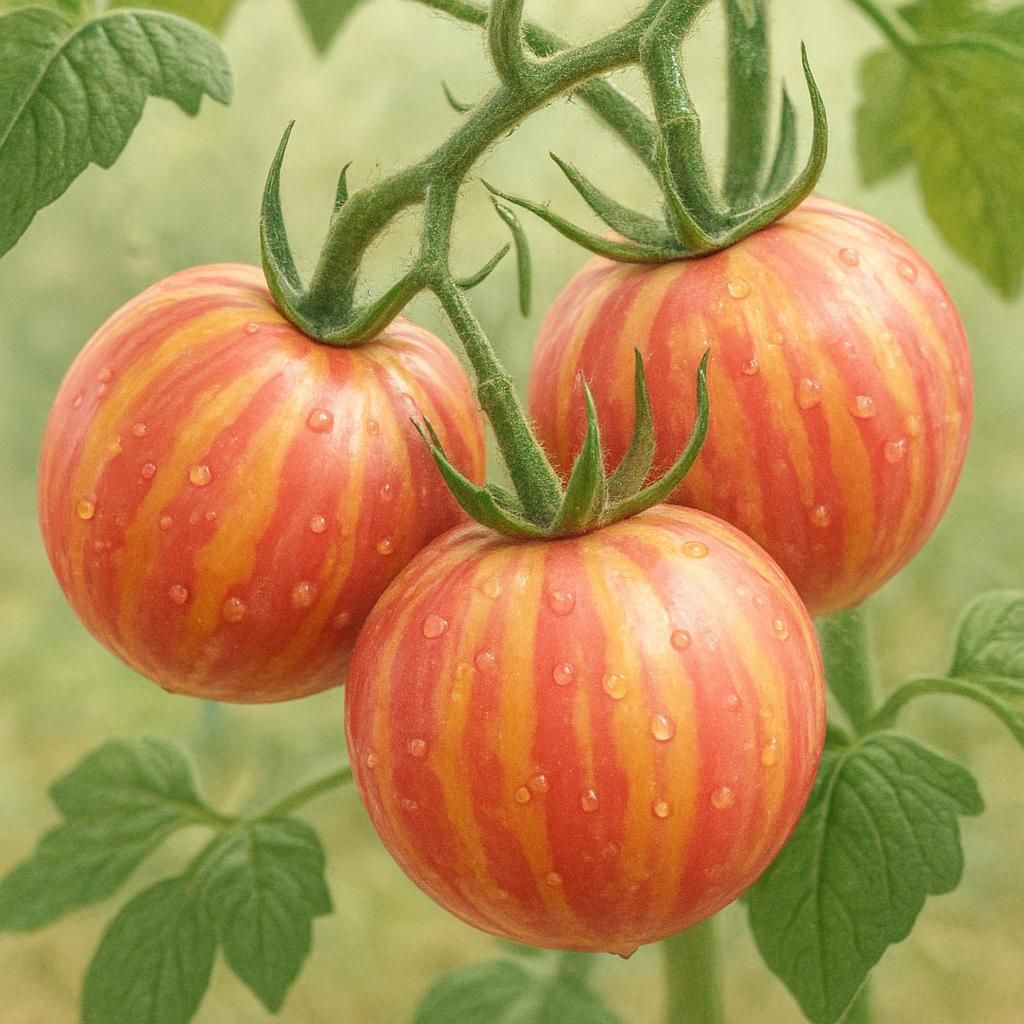
Introduction to Pink Bumble Bee Tomato
The Pink Bumble Bee Tomato stands out among cherry tomatoes for its distinctive pink and yellow bumblebee-like stripes, making it both a visual delight and a flavor powerhouse. This indeterminate variety produces elongated, oval fruits typically 1.5–2 inches long that ripen to a soft pink base with bold yellow striping. Its balanced sweet-tart profile and thin skin make it ideal for fresh eating, salads, and gourmet presentations.
Developed through selective breeding for both aesthetics and performance, Pink Bumble Bee Tomato delivers reliable yields even in challenging conditions. Its vigorous vines continue producing until frost when properly supported, often yielding 8–12 pounds per plant under optimal management. The variety’s resistance to common tomato ailments further enhances its value for organic and conventional systems alike.
Whether grown in raised beds, containers, or field rows, Pink Bumble Bee Tomato rewards attentive growers with continuous harvests of eye-catching, market-ready fruit. Its compact fruit size also reduces cracking and extends shelf life, contributing to strong post-harvest performance.
Botanical Profile of Pink Bumble Bee Tomato
Pink Bumble Bee Tomato belongs to the nightshade family (Solanaceae) and shares the same species as all cultivated tomatoes, Tomato. As an indeterminate variety, it exhibits continuous vegetative growth and fruiting throughout the season. Vines typically reach 5–7 feet in height when trellised, featuring compound leaves with serrated margins and a medium-green hue.
Flowers appear in clusters of 6–10 along the stems; each blossom is self-pollinating but benefits from gentle shaking or pollinator activity to improve fruit set. The resulting fruits develop the signature pink-yellow striped pattern as they mature, with the yellow pigment concentrated in the epidermis while the flesh remains pinkish-red. Seeds are small, flat, and pale tan, typical of cherry tomato types.
This variety exhibits moderate heat tolerance and maintains fruit quality during summer temperature spikes better than many heirloom tomatoes. Its thin yet durable skin resists splitting, a trait that supports both fresh-market sales and home preservation.
Soil, pH, and Climate Requirements for Pink Bumble Bee Tomato
Successful cultivation begins with understanding the precise environmental parameters this variety demands. Pink Bumble Bee Tomato thrives in well-drained, fertile loam enriched with organic matter. Soil structure should allow rapid drainage while retaining adequate moisture for consistent fruit development.
| Parameter | Ideal Range | Notes |
|---|---|---|
| Soil Type | Loamy, well-drained | Incorporate compost for structure |
| Soil pH | 6.2–6.8 | Test and amend with lime if below 6.0 |
| Temperature (Day) | 70–85°F (21–29°C) | Optimal for flowering and fruit set |
| Temperature (Night) | 55–65°F (13–18°C) | Below 50°F slows growth |
| Spacing | 18–24 inches between plants | Rows 4–5 feet apart |
| Sunlight | Full sun (8+ hours) | Morning sun reduces disease pressure |
| Frost Tolerance | None | Transplant after last frost date |
Site selection should prioritize south-facing slopes or raised beds that warm quickly in spring. Avoid low-lying areas prone to cold air pooling. In regions with intense summer heat, afternoon shade cloth (30–40%) can prevent blossom drop while maintaining the required light intensity.
Step-by-Step Planting & Propagation
Start seeds indoors 6–8 weeks before the expected last frost. Sow seeds ¼ inch deep in sterile seed-starting mix, maintaining soil temperature at 75–80°F for rapid germination (5–8 days). Provide 14–16 hours of supplemental light daily to produce stocky transplants.
Harden off seedlings for 7–10 days by gradually exposing them to outdoor conditions. Transplant when soil temperature reaches at least 60°F and all danger of frost has passed. Dig holes 12–18 inches deep, incorporating ½ cup of balanced organic fertilizer and a handful of compost per planting site.
Install trellising systems—Florida weave, single-string, or cattle-panel arches—before transplanting to avoid root disturbance later. Space plants 18–24 inches apart within rows 4–5 feet wide. Water thoroughly after transplanting and apply a 2–3 inch layer of organic mulch to conserve moisture and suppress weeds.
Care & Maintenance regimes for Pink Bumble Bee Tomato
Consistent care throughout the growing season ensures maximum productivity and fruit quality. Focus on balanced nutrition, proper irrigation, and structural support to prevent disease and mechanical damage.
| Growth Stage | Watering Schedule | Fertilizer Application | Pruning & Training |
|---|---|---|---|
| Seedling/Transplant | Keep evenly moist; 1 inch/week | None; transplant fertilizer only | Remove lower leaves touching soil |
| Vegetative | 1–1.5 inches/week; deep soak | Side-dress with 2-3-2 NPK every 3 weeks | Remove suckers below first flower cluster |
| Flowering/Fruit Set | Maintain consistent moisture | Switch to 4-6-8 or calcium-rich formula | Continue selective sucker removal |
| Harvest Peak | Reduce slightly to concentrate sugars | Light side-dress every 4 weeks | Top vines at 6–7 feet to focus energy |
Monitor leaf color weekly; yellowing between veins often indicates magnesium deficiency, correctable with Epsom salt foliar sprays (1 tablespoon per gallon). Remove any foliage showing early disease symptoms immediately to limit spread.
Pests, Diseases & Organic Management
Pink Bumble Bee Tomato faces the same suite of challenges as other tomatoes but responds well to integrated organic strategies. Common pests include Aphids, Spider Mites, Hornworms, and Whiteflies. Scout undersides of leaves twice weekly during warm weather.
Preventive measures such as row covers during early season and beneficial insect releases (lady beetles, lacewings, parasitic wasps) significantly reduce pest pressure. For outbreaks, apply insecticidal soap or neem oil in the evening to minimize impact on pollinators.
Diseases of concern include Early Blight, Septoria Leaf Spot, Fusarium Wilt, and Tomato Spotted Wilt Virus. Rotate crops on a 3–4 year cycle, avoid overhead irrigation, and maintain good airflow through proper spacing and pruning. Copper-based fungicides and Bacillus subtilis products provide organic suppression when applied preventively.
Harvesting, Curing & Optimal Storage
Begin harvesting when fruits reach full color with slight give at the blossom end. Frequent picking every 2–3 days encourages continued production. Use clean pruners to sever the stem just above the calyx, avoiding bruising.
For short-term storage, keep tomatoes at 55–60°F with 85–90% humidity; do not refrigerate, as temperatures below 50°F cause flavor loss and mealy texture. Fully ripe fruits can be held 4–6 days under these conditions.
For extended preservation, dehydrate slices at 135°F until leathery or freeze whole fruits on trays before transferring to freezer bags. Both methods retain the distinctive striped appearance and sweet flavor for winter use.
Companion Planting for Pink Bumble Bee Tomato
Strategic companions enhance growth, deter pests, and improve soil health. Basil planted nearby repels Aphids and Whiteflies while potentially improving tomato flavor. Marigold roots release compounds that suppress Root-knot Nematodes in the surrounding soil.
Carrot and Radish serve as living mulch, shading soil and reducing moisture evaporation. Avoid planting near Fennel or Walnut trees, as these can inhibit tomato growth through allelopathy. Interplanting with Cucumber or Pepper families works well when adequate spacing prevents competition for light.
Crop rotation with Legumes such as Peas or Beans the following season replenishes soil nitrogen and breaks disease cycles. This integrated approach supports long-term soil fertility and reduces reliance on external inputs.