Introduction to Penicillium
Penicillium represents one of the most common post-harvest fungal pathogens affecting global agriculture, particularly in stored fruits, vegetables, and grains. As a saprophytic fungus, Penicillium spp. excel at colonizing wounded or decaying plant tissues, rapidly spreading under suboptimal storage conditions. This definitive guide provides professional-grade diagnostic criteria, lifecycle insights, and organic management strategies tailored for small farms and commercial growers. Understanding Penicillium's behavior is crucial, as it accounts for up to 20-50% of post-harvest losses in susceptible crops like citrus, apples, and onions. Early identification prevents widespread contamination, preserving yield quality and market value. For farms battling storage losses, integrating cultural practices with targeted treatments offers the best defense against this pervasive mold.
Identifying Symptoms & Damage
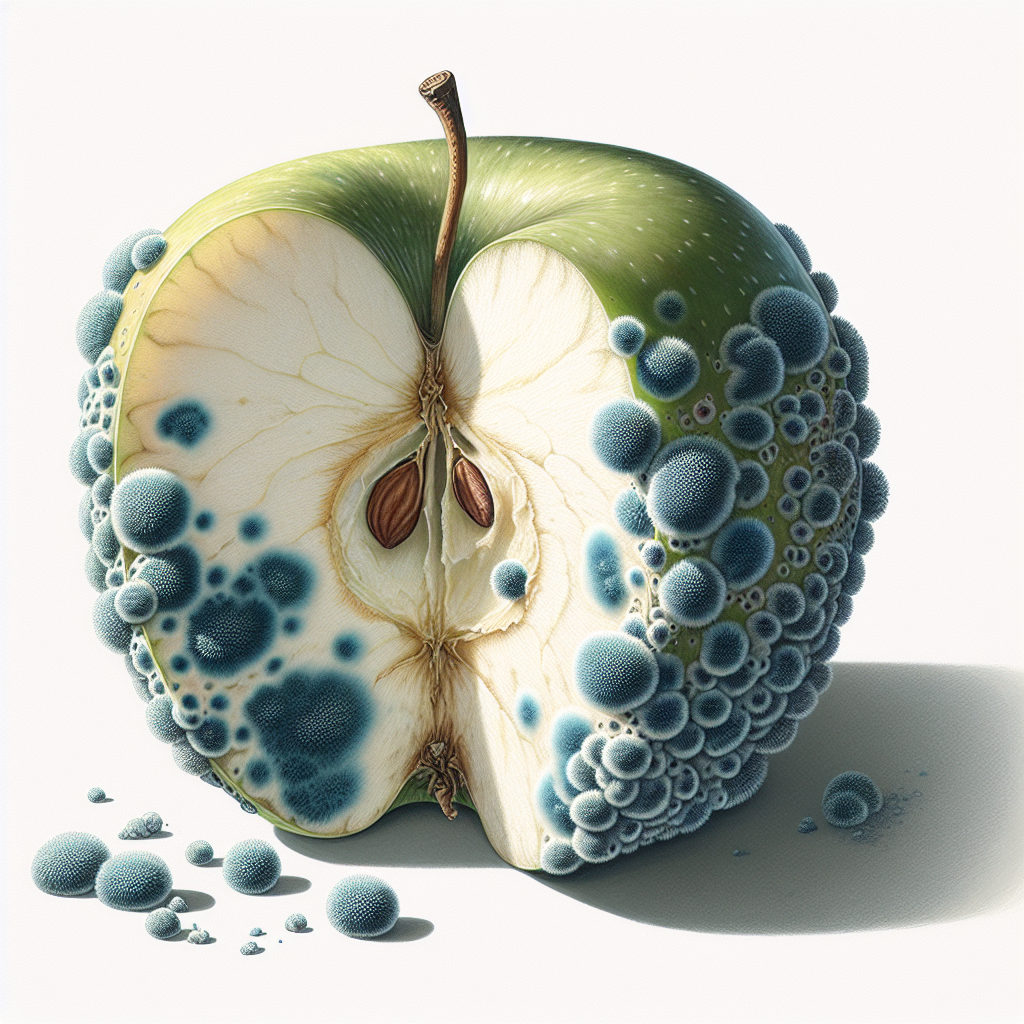
Penicillium infections manifest distinctly, enabling quick diagnosis through visual cues. Initial symptoms appear as small, water-soaked lesions on fruit or vegetable surfaces, often at injury sites from harvest bruises or mechanical damage. Within 2-5 days, these lesions expand into soft, spongy rots covered by velvety blue-green mycelium and powdery spores. The characteristic "blue mold" name derives from this spore mass, which emits a musty odor signaling advanced decay.
On apple fruits, lesions start tan and circular, turning dark green with white margins before blue sporulation dominates. Citrus like oranges and lemons show green-blue mold at the stem end or navel, accompanied by rind softening. Onions develop soft, brown scales with blue sporodochia emerging from necks. Damage extends beyond aesthetics: mycotoxins like patulin in apple infections pose health risks, contaminating juice products. Yield losses occur as infected produce becomes unmarketable, with single lesions spreading via airborne spores to contaminate entire storage bins. Differentiate from Botrytis (gray fuzz, no blue spores) or bacterial rots (slimy, foul-smelling). Use a hand lens to confirm brush-like conidiophores under magnification, a hallmark of Penicillium. Monitor storage areas weekly, especially at 5-10°C with >85% humidity, where symptoms accelerate.
Lifecycle and Progression of Penicillium
Penicillium's lifecycle is rapid and opportunistic, completing in 7-14 days under ideal conditions. Spores, microscopic and airborne, germinate on moist plant surfaces within hours, penetrating via wounds or natural openings. Hyphae grow intracellularly, secreting enzymes that dissolve cell walls, causing tissue maceration. Mycelium ramifies, forming conidiophores—erect stalks bearing chains of green conidia (asexual spores).
Progression unfolds in phases: latent infection (1-3 days, invisible); rot expansion (3-7 days, lesion growth); sporulation (7+ days, visible mold). Mature conidia detach easily, dispersing via air currents, insects, or handling, infecting nearby produce. Sexual reproduction is rare; the fungus relies on prolific asexual cycles, producing billions of spores per lesion. In storage, progression halts below 0°C or above 30°C, but resumes upon warming. Overwintering occurs as dormant spores on bins, crates, or debris. This cycle explains explosive outbreaks in packed warehouses. For detailed misidentification pitfalls, see Why Misidentifying Plants Costs Small Farms Thousands - And How AI Camera Diagnosis Fixes It Fast. Understanding this enables timed interventions, like pre-storage sanitation.
Environmental Triggers & Risk Factors
Penicillium thrives in cool, humid environments mimicking post-harvest storage: 4-25°C optimal, with free water (dew point >85% RH) essential for germination. Poor ventilation exacerbates spore buildup, while ethylene from ripening fruits accelerates senescence, inviting invasion. Risk factors include mechanical damage during harvest (e.g., drops, rough handling), over-mature picking, and contaminated surfaces from prior crops.
High-risk scenarios: stacking wet produce, inadequate cooling post-harvest, or intermixing varieties with varying maturity. Soil splash on bulbs like onions introduces inoculum, while wounds from aphids or thrips serve as entry points. Climate change intensifies risks via erratic humidity spikes. Susceptible crops stored >2 weeks face compounded threats, especially if combined with root rot stress pre-harvest. Mitigation starts with harvest hygiene: clip rather than pull fruits, dry immediately. Monitor RH below 80% and temperatures at 0-4°C for perishables. Scout for triggers like condensation on packaging.
Organic Control & Treatment Plans
Organic management emphasizes prevention, with curative options for outbreaks. Step 1: Sanitation – Remove infected produce immediately; sterilize bins with 10% bleach or hydrogen peroxide (1:10 dilution). Step 2: Biological Controls – Apply Bacillus subtilis or Trichoderma harzianum (e.g., RootShield) pre-storage; these antagonists outcompete Penicillium on wounds. Step 3: Natural Fungicides – Sodium bicarbonate sprays (1%) or potassium sorbate dips inhibit spore germination. Essential oils like thyme or cinnamon (0.1% emulsions) provide contact kill.
Integrated Plan: Post-harvest dip in 2% calcium chloride + biofungicide, then forced-air dry. Store with silica gel packs for RH control. For active rots, isolate and apply vinegar (20% acetic acid) soaks. Rotate with Pythium-resistant covers. Track via regular audits. Success rates exceed 80% with combined tactics, reducing chemical reliance. Avoid synthetic fungicides for organic certification.
Preventing Penicillium in the Future
Long-term prevention builds resilient systems. Select resistant varieties: e.g., late-season apples with thicker skins. Optimize harvest: pick at optimal maturity, handle with padded bins, cure bulbs at 30°C/70% RH for 2 weeks to heal wounds. Upgrade storage: use ventilated crates, maintain 0-5°C/<80% RH with dehumidifiers. Implement IPM: monitor spore traps, introduce Muscodor albus fungi for biofumigation.
Cultural shifts: avoid overhead irrigation to minimize field inoculum; till under debris. Annual deep cleans with steam (100°C) eliminate reservoirs. Educate crews on gentle handling. Pair with companion planting like marigold for soil health. For farms scaling up, zoning storage prevents cross-contamination. Consistent application yields <5% loss rates.
Crops Most Affected by Penicillium
Penicillium strikes a wide array, prioritizing high-sugar, wound-prone produce. Top victims: Apple (blue mold rot, 30% losses); Citrus (orange, green mold); Onion and garlic (neck rot); Potato (dry rot); Tomato (soft rot). Grapes suffer bunch rots; pear and stone fruits like peach decay rapidly. Grains (wheat, corn) face storage molds. Tropicals including mango and banana vulnerable in humid tropics. Blueberries, strawberries, and lemon round out lists. Prioritize high-value crops for vigilant monitoring.