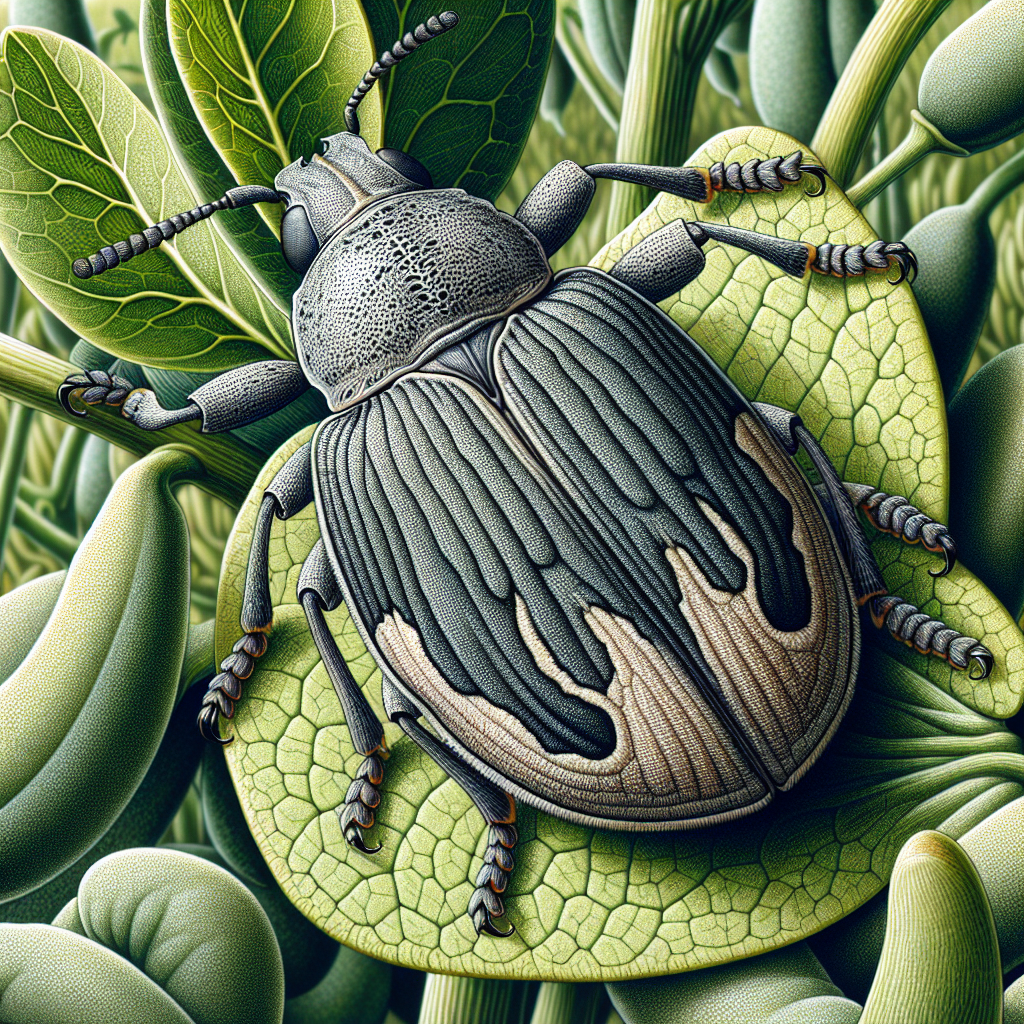
Introduction to Pea and bean weevil
Pea and bean weevils, scientifically known as Sitona lineatus, are small beetles notorious for infesting legume crops across temperate regions worldwide. These pests pose a serious threat to peas (Peas), fava beans (Fava Bean (Broad Bean)), and other pulses, leading to stunted growth, reduced yields, and potential plant death. Adults are grey-brown, 3-4 mm long with a distinctive V-shaped mark on the thorax, while larvae are creamy-white, legless grubs up to 5 mm. Originating from Europe, they have spread to North America, Australia, and parts of Asia, thriving in cool, moist climates.
Farmers and gardeners often overlook early infestations, mistaking damage for nutrient deficiencies or aphids. However, timely identification and intervention are crucial, as larvae feed voraciously on nitrogen-fixing root nodules, impairing plant vigor. In severe cases, yield losses can exceed 50%, particularly in organic systems lacking chemical interventions. Understanding their behavior enables proactive management, preserving soil health and profitability. This definitive guide equips agricultural professionals with diagnostic tools, lifecycle knowledge, and proven organic strategies to combat this pest effectively. For more on integrated pest management, check this Spring Pest Patrol resource.
Identifying Symptoms & Damage
Diagnosing pea and bean weevil infestations requires keen observation of both adult and larval activity. Adult feeding creates characteristic U-shaped notches along leaf margins, often starting at the field edges. These semicircular bites, 1-3 mm wide, give foliage a ragged appearance, especially on young plants. While cosmetic, heavy adult feeding reduces photosynthesis, stressing crops during critical growth stages.
The most devastating damage comes from larvae. After eggs hatch, grubs burrow into soil and target root nodules and fine roots, severing nitrogen-fixing structures. Affected plants exhibit stunting, yellowing lower leaves, and wilting, mimicking root rot or drought stress. Digging up suspect plants reveals C-shaped, white larvae with brown heads clustered around roots. Severe infestations cause plant death, patchy stands, and up to 80% nodulation loss, crippling nitrogen uptake.
Secondary signs include soil disturbance from larval activity and frass near roots. Differentiate from cutworms (which sever stems at soil level) or flea beetles (pitting on leaves). Use a hand lens to spot adults hiding in leaf axils during the day; they jump when disturbed. Monitor weekly from planting, using sticky traps or beat sheets for adults. Early detection prevents escalation, as larvae cause irreversible harm within 2-3 weeks of hatching.
Lifecycle and Progression of Pea and bean weevil
Sitona lineatus completes one generation per year, with lifecycle tightly synced to cool-season legumes. Adults overwinter in leaf litter, hedgerows, or soil, emerging in early spring (March-April in temperate zones) when soil temperatures reach 10°C (50°F). Drawn to emerging crops by host volatiles, females lay 500-1000 eggs singly in soil near plant bases over 4-6 weeks.
Eggs (0.6 mm, pale yellow) hatch in 7-14 days into L1 larvae, which descend roots immediately. Larvae progress through four instars over 30-45 days, peaking in damage during May-June. Fully grown L4 grubs (5 mm) pupate 5-10 cm deep in soil, emerging as new adults in 10-14 days. Summer adults aestivate in soil or weeds, resuming activity in autumn for pre-oviposition feeding before overwintering.
Total lifecycle spans 6-8 weeks active phase, with soil-embedded pupae surviving summer drought. Population dynamics favor dense plantings; one female can produce 20-50 offspring per plant. Generations overlap minimally, but mild winters boost survival. Track progression via degree-day models (base 8°C), predicting egg hatch at 100 DD and pupation at 500 DD for precise timing of interventions.
Environmental Triggers & Risk Factors
Pea and bean weevils exploit specific conditions amplifying outbreaks. Cool, wet springs (10-18°C, >60% humidity) trigger adult emergence and egg-laying synchrony with susceptible crops like Sugar Snap Peas. Minimum tillage retains overwintering sites, increasing local populations 2-3x versus plowed fields. Poor drainage fosters larval survival by maintaining moist soil for root access.
Risk spikes in weevil hotspots: field margins adjacent to last year's legumes or grassy weeds. Volunteer plants and cover crops like clover serve as bridges. Monoculture exceeds economic thresholds faster; intercropping dilutes host density. Soil temperatures above 20°C slow larval development, but prolonged mild autumns enable extra feeding cycles. Drought-stressed plants attract more adults via stress volatiles.
Climate change extends active periods, with models predicting 20% range expansion northward. Scout high-risk fields first: new plantings, reduced tillage, or history of bean weevils. Thresholds: 2 adults/plant or 20% leaf notching warrants action.
Organic Control & Treatment Plans
Organic management emphasizes prevention layered with biological and mechanical tactics. Cultural Controls: Rotate legumes with non-hosts like onion or garlic for 2-3 years, breaking lifecycle. Tillage buries pupae >15 cm, reducing emergence 70%. Sow resistant varieties (e.g., early-maturing peas) before peak adult flight.
Biological Controls: Encourage natural enemies—ground beetles, rove beetles, and parasitic wasps devour larvae. Parasitic nematodes (Heterorhabditis bacteriophora) applied at egg hatch (soil drench, 10^9 IJs/ha) achieve 60-80% mortality. Foliar sprays of Beauveria bassiana target adults (2 applications, 7-day interval).
Mechanical Barriers: Row covers (10-20 mesh) exclude adults from emergence to flowering, yielding 90% protection. Vacuum bands or beat sheets remove adults weekly. Border sprays with pyrethrins (pre-flowering) knock down immigrants without residue.
Treatment Timeline: Scout at 10% seedling emergence. If >1 adult/5 plants, deploy covers or nematodes. Monitor larvae by root dissection at V2 stage; treat if >5 grubs/plant. Integrate with Soil Health Mastery for resilient crops. Expect 80-95% control combining methods.
Preventing Pea and bean weevil in the Future
Long-term prevention builds resilient systems. Crop Rotation: Alternate with cereals like wheat or brassicas, denying hosts for 3 years. Destroy volunteers and weeds promptly.
Sanitation: Deep plow post-harvest (>20 cm) to disrupt pupae. Burn or compost residues away from fields. Perimeter hedges deter migration but mow to disrupt overwintering.
Resistant Varieties: Select cultivars like 'A good blue' peas or fava types with tough pods. Early planting evades peak egg-lay.
Monitoring Tech: Use pheromone traps (threshold 5/trap/week) and soil probes for larvae. Degree-day apps forecast risks.
Habitat Enhancement: Plant trap crops (nasturtium) at borders; till strips to expose pupae to predators. Maintain >30% ground cover with mulch to suppress soil emergence. Annual scouting prevents buildup, sustaining yields >95%.
Crops Most Affected by Pea and bean weevil
Primarily cool-season legumes: garden peas (Pisum sativum), field peas, fava/broad beans (Vicia faba), runner beans (Phaseolus coccineus), and chickpeas (Chickpeas). Peas suffer most, with larvae destroying 70-100% nodules in outbreaks. Fava beans show tolerance but still lose 30-50% yield. Lentils (Lentils) and soybeans (Soybeans) face lower pressure but require vigilance. Vetch and clover as covers host weevils, bridging to crops. Warm-season beans like kidney bean escape major damage due to mismatched phenology. Global impact: UK pea yields drop 20% annually; similar in Canada, NZ.