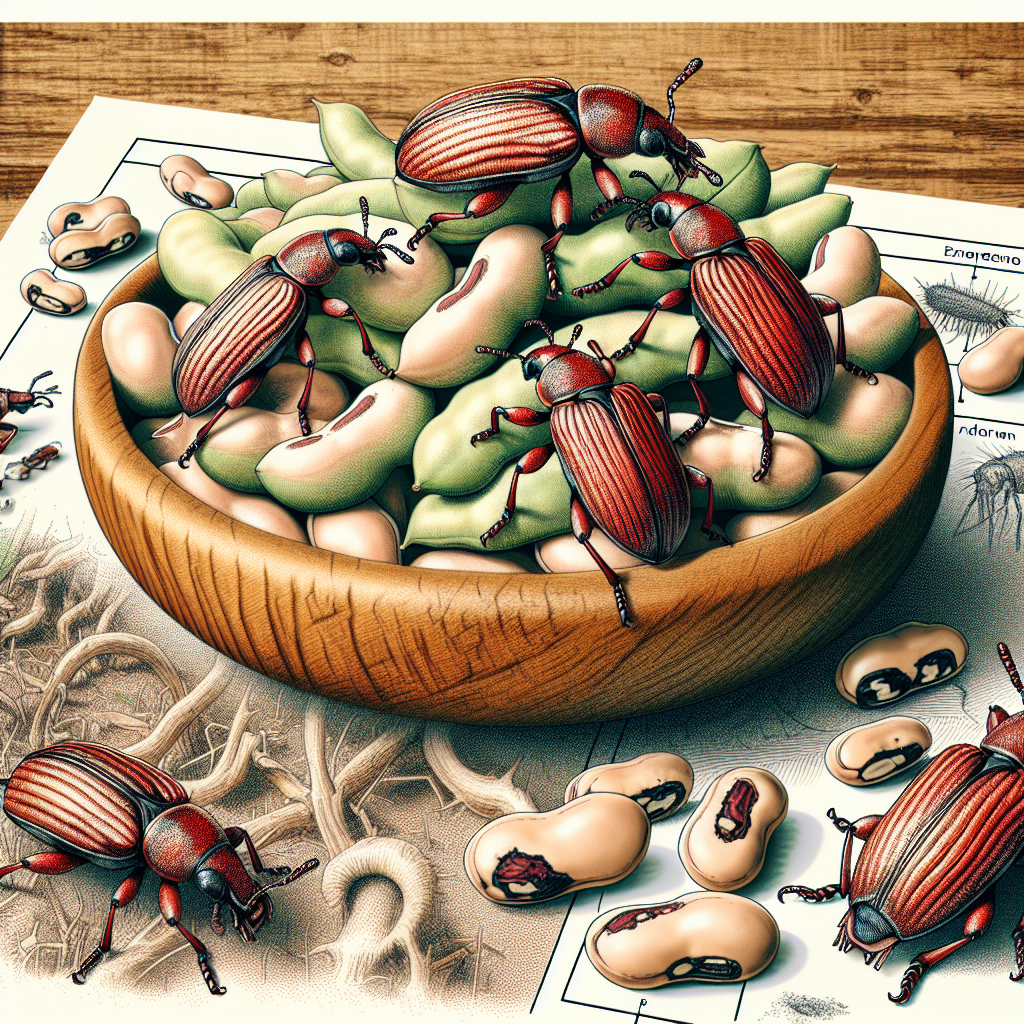
Introduction to Bean weevils
Bean weevils, also known as bean beetles or bruchid beetles, represent a major threat to stored grain legumes worldwide. Belonging primarily to the genus Acanthoscelides (e.g., Acanthoscelides obtectus) and Callosobruchus species, these pests target dry beans, chickpeas, lentils, and peas both in the field and during storage. Unlike many field pests, bean weevils excel as post-harvest invaders, infesting seeds at every stage from farm to pantry.
Farmers and home gardeners alike dread these tiny marauders—adults measure just 2-4 mm, with reddish-brown to black bodies and distinctive snouts. Females lay up to 100 eggs on seed surfaces, and the hidden larvae devour the cotyledons from within, leaving telltale emergence holes. Global agriculture loses millions annually to these pests, particularly in tropical and subtropical regions where humidity favors rapid population growth. Understanding their biology is the first step in protecting your chickpeas, lentils, and other legumes. This guide provides diagnostic tools, lifecycle insights, and proven organic strategies to safeguard your harvest. For more on storage pests, check our detailed post on Spring Pest Patrol: Organic AI Strategies to Shield Your Crops from Common Invaders.
Identifying Symptoms & Damage
Spotting bean weevil damage early can save entire batches of seeds. Key symptoms include:
- Emergence Holes: Small, round holes (1-2 mm) in seeds, often with powdery frass (insect waste) around them. Each infested seed typically has 1-2 holes where adults emerge.
- Hollowed Seeds: Shake suspect seeds; infested ones rattle due to internal feeding by larvae, which consume 30-80% of the cotyledon.
- Adult Beetles: Tiny, humpbacked insects with long snouts crawling on stored beans. Look for them in bags, jars, or silos.
- Webbing and Dust: Fine silk webbing from larvae and flour-like seed dust in heavy infestations.
- Musty Odor: A faint, unpleasant smell from damaged, moldy seeds.
Damage escalates quickly: a single female can produce hundreds of progeny in weeks, turning 1 kg of clean beans into a weevil factory. Differentiate from storage beetles or weevils by the lack of visible larvae externally and preference for legumes. Inspect stored peas or soybeans monthly, especially in warm conditions. Use a magnifying glass or blacklight at night to detect activity.
Lifecycle and Progression of Bean weevils
Bean weevils complete their lifecycle in 3-6 weeks under optimal conditions (25-35°C, 60-80% humidity), allowing 4-6 generations per year. Here's the progression:
- Eggs (3-7 days): Females glue 20-100 white, shiny eggs singly or in clusters to seed cracks or hilum. Eggs hatch in warm, humid environments.
- Larvae (2-4 weeks): Tiny grubs bore into seeds, feeding on cotyledons. They molt 3-4 times, growing to 4 mm, pupating inside without exiting.
- Pupae (5-10 days): White, comma-shaped inside seed; darkens before adult emergence.
- Adults (1-2 weeks): Non-feeding but highly mobile; females mate immediately and oviposit. Adults live 10-14 days, peaking activity at night.
In cool storage (<15°C), development halts, extending diapause up to months. Field infestations start late-season when adults attack maturing pods of crops like kidney bean or pinto bean. Post-harvest, unchecked populations explode. Monitor with pheromone traps for early detection.
Environmental Triggers & Risk Factors
Bean weevils thrive where conditions mimic their tropical origins:
- Temperature: Above 20°C accelerates breeding; optimal 28-32°C doubles populations monthly.
- Humidity: >60% RH softens seeds for egg-laying; dry storage (<50% RH) deters them.
- Poor Sanitation: Infested debris, split seeds, or unclean silos invite invasions. Crop residues harbor overwintering adults.
- Storage Practices: Open bags, paper packaging, or wooden bins allow entry. Risk spikes in densely packed, unmonitored stores.
- Field Factors: Late harvest, humid weather, or proximity to wild legumes increase field-to-storage carryover.
Vulnerable regions include the Americas, Africa, and Asia. Companion risks include aphids weakening plants pre-harvest. Mitigate by harvesting dry (<14% moisture) and cleaning equipment.
Organic Control & Treatment Plans
Integrated Pest Management (IPM) emphasizes non-chemical tactics for organic certification:
Immediate Actions:
- Freezing: Place infested seeds in a freezer (-18°C) for 72 hours; kills all stages.
- Heat Treatment: Bake at 60°C for 1 hour or solarize in black bags under sun (50°C+ for 2 hours).
- Sieving & Winnowing: Remove adults and frass; discard >5% infested seeds.
Biological Controls:
- Parasitoids: Release Anisopteromalus calandrae or Dinarmus basalis (commercial available); 70-90% efficacy.
- Steinernema carpocapsae nematodes target larvae in seeds.
Repellents & Traps:
- Diatomaceous Earth (DE): Dust 2% on seeds; abrades exoskeletons (90% kill in 7 days).
- Essential Oils: Neem, clove, or rosemary oil (1-2% solution) repels oviposition.
- Pheromone Traps: Delta traps with aggregation pheromones capture males.
Treatment Plan:
- Inspect and isolate infested lots.
- Heat/freeze clean.
- Apply DE + oil spray.
- Introduce parasitoids.
- Monitor weekly.
Avoid mixing clean/infested stocks. For Bruchids, combine with host resistance varieties.
Preventing Bean weevils in the Future
Prevention trumps cure:
- Harvest Timing: Pick pods at full maturity, dry to 12% moisture.
- Sanitation: Clean storage areas; burn/destroy cull beans.
- Airtight Storage: Use metal/glass jars, vacuum-seal, or hermetic bags (e.g., PICS bags reduce losses 99%).
- Modified Atmospheres: CO2 or nitrogen flushing suffocates pests.
- Crop Rotation: Avoid consecutive legumes; interplant with marigold for repellency.
- Varietal Resistance: Choose small-seeded, hard-coated beans like certain black bean (turtle).
- Monitoring: Use probe traps quarterly.
Maintain <15°C and <50% RH in stores. Educate supply chains for field-free seeds.
Crops Most Affected by Bean weevils
Bean weevils specialize in Fabaceae:
- Primary Hosts: Common bean (Phaseolus vulgaris)—kidney, pinto, navy; adzuki, mung.
- Chickpeas (Cicer arietinum): Kabuli and desi types.
- Lentils (Lens culinaris): Major post-harvest pest.
- Peas (Pisum sativum): Garden and field peas.
- Cowpeas (Vigna unguiculata), soybeans, fava beans.
Secondary: Bambara groundnut, pigeon pea. Field damage hits maturing pods; storage losses reach 20-100% without controls. Protect navy bean and garbanzo bean (chickpea) first. Global impact: 10-20% annual legume loss.