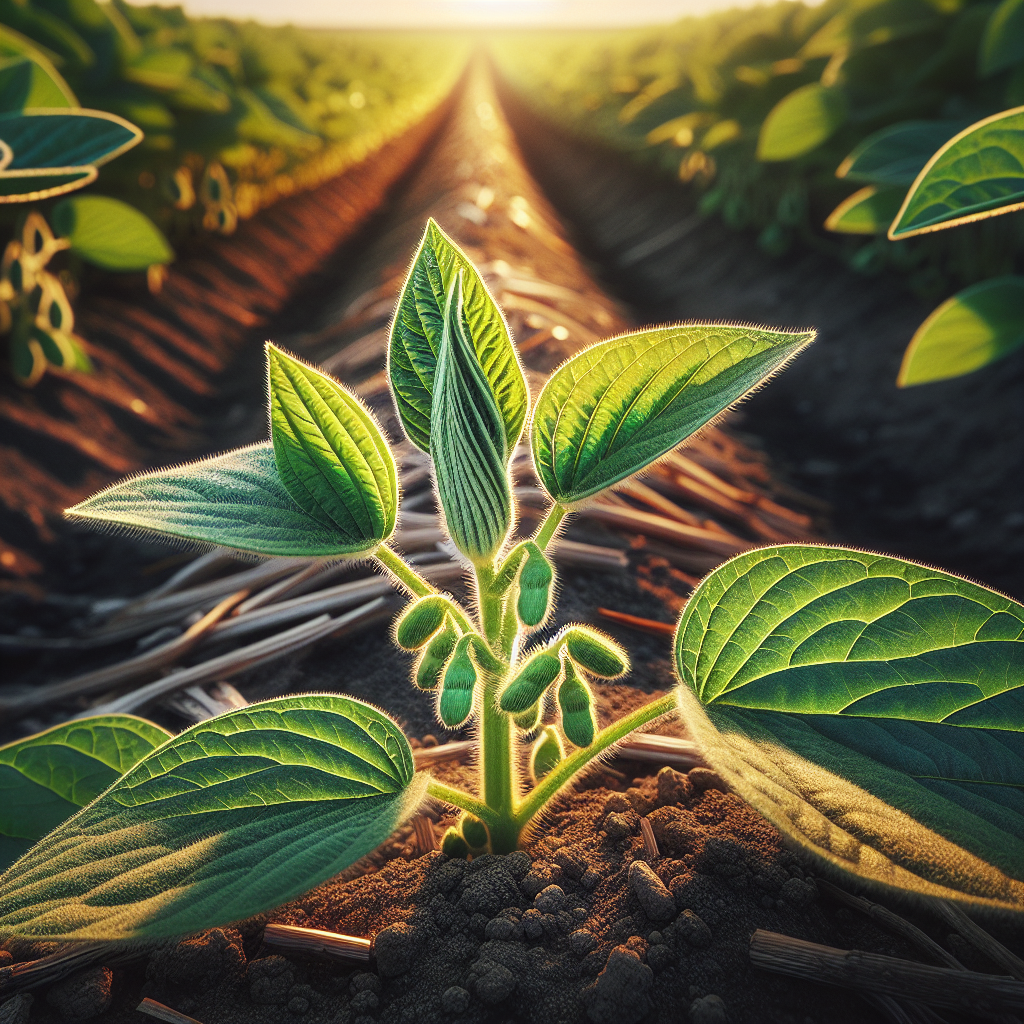
Introduction to Oilseed Soybean
Domesticated in East Asia and refined through centuries of farmer selection, soybean became a global staple because few annual crops combine such high seed protein with substantial oil content. Oilseed types are bred primarily for crushing into edible oil and meal rather than for fresh eating like edamame, so the production goal is maximum dry seed yield, uniform maturity, strong stand establishment, and seed chemistry suited to processing.
Modern oilseed soybean cultivars typically contain about 18-22% oil and 35-42% protein on a dry matter basis, though actual values vary by genotype, environment, and harvest timing. Agronomically, this crop is especially valuable in rotations because it is a legume capable of symbiotic nitrogen fixation with Bradyrhizobium bacteria. That makes it both a cash crop and a biological tool for improving system efficiency. In many regions, it is paired with corn or cereals in rotation to interrupt pest cycles, diversify residue profiles, and better distribute labor.
Oilseed soybean is photoperiod sensitive, and cultivar adaptation depends heavily on maturity group, latitude, and frost-free season length. A variety that performs well in one zone may flower too early or mature too late elsewhere. For that reason, planting success is never just about getting seed into warm ground; it is about matching the genetic maturity window to local day length and seasonal heat accumulation. Producers looking to strengthen field structure and fertility before soybean establishment often benefit from the principles outlined in soil health strategies.
Botanical Profile of Oilseed Soybean
This species belongs to the Fabaceae family. It is an annual, warm-season, self-pollinating broadleaf with a typically upright to semi-bushy growth habit. Plants commonly reach 45-120 cm tall, though height varies by variety, planting density, fertility, and rainfall. The root system consists of a central taproot with extensive lateral roots concentrated in the upper soil profile, usually the top 15-30 cm where oxygen, warmth, and microbial activity are most favorable.
Seedlings emerge with thick cotyledons that lift above the soil surface in an epigeal emergence pattern. The first true leaves are opposite and simple; subsequent leaves are alternate and trifoliate. Fine pubescence on stems, leaves, and pods can vary in color from tawny to gray and is sometimes used in cultivar identification. Flowers are small, usually white to pale purple, and borne in axillary clusters. Because soybeans are largely self-fertile, cross-pollination rates are generally low.
Pods are slightly curved to straight, most often containing 2-3 seeds. Seed coat color in oilseed types is commonly yellow, with variable hilum colors including black, brown, buff, or yellow. Commercial oilseed production favors cultivars with resistance packages for regional pests and diseases, strong standability, reduced lodging, shatter tolerance, and uniform dry-down.
Development is usually tracked with vegetative stages (VE, VC, V1, V2, etc.) and reproductive stages (R1 through R8). The most yield-sensitive reproductive periods are beginning bloom through full seed. Stress during R1-R6, especially moisture stress or severe defoliation, can sharply reduce pod set, seed number, and final seed weight.
Soil, pH, and Climate Requirements for Oilseed Soybean
This crop performs best in well-drained loam, silt loam, or clay loam soils with good structure, moderate water-holding capacity, and minimal compaction. Ideal pH is generally 6.0-6.8, though soybeans can tolerate roughly 5.8-7.2 when nutrient availability and nodulation are well managed. Below pH 5.8, nodulation often declines, molybdenum availability can become limiting, and manganese or aluminum toxicity may impair roots. Above pH 7.5, iron chlorosis becomes more likely, particularly in calcareous soils.
Soil drainage is critical. Soybean roots and nitrogen-fixing nodules require oxygen, so even short periods of saturation can reduce nodule function and predispose plants to root disease. If a field remains ponded for more than 48 hours in warm weather, yield loss risk rises quickly. Signs of excessive wetness include yellowing lower leaves, stunting, sparse nodulation, blackened roots, and a sour or anaerobic smell in the root zone.
For planting, a minimum soil temperature of 10°C is often cited, but 13-16°C at seeding depth produces faster and more uniform emergence. Optimal air temperatures during vegetative growth are about 24-30°C. Flowering and pod fill proceed well under warm days and moderate night temperatures, while prolonged heat above 35°C can reduce pollen viability, increase flower abortion, and intensify water demand. Frost is highly damaging, especially during reproductive stages.
Seasonal water demand commonly ranges from 450-700 mm depending on cultivar duration, climate, and soil type. The most critical moisture period is from first bloom through seed fill. In practical terms, available soil moisture should ideally remain above 50% of plant-available water in the top 60 cm during reproductive growth. Tension readings of roughly 20-40 centibars in loam soils are usually acceptable; sustained readings above 60 centibars during flowering or pod fill indicate developing stress. Drought symptoms include folded leaflets at midday, dull gray-green color, shortened internodes, blossom drop, and poor pod retention.
Step-by-Step Planting & Propagation
Propagation is by seed, and direct seeding is standard. Transplanting is rarely used because soybean does not respond well to root disturbance and large-scale production depends on precise spacing and emergence.
Select a locally adapted maturity group. Match the cultivar to latitude, expected first frost date, and disease pressure. In short-season regions, earlier maturity reduces frost risk; in longer seasons, later types may yield more if moisture is reliable.
Test the soil at least several weeks before planting. Correct pH if needed, and apply phosphorus, potassium, sulfur, or micronutrients based on analysis. Avoid routine nitrogen application unless a field has severe nodulation failure history, because excess N can suppress biological fixation and create lush, lodging-prone growth.
Prepare a firm, fine seedbed or use no-till into well-managed residue. Seed-to-soil contact matters more than excessively worked soil. Cloddy surfaces reduce uniform emergence, while crust-prone overworked soils can trap seedlings.
Inoculate seed with the proper Bradyrhizobium japonicum inoculant if soybean has not been grown recently in the field or if nodulation history is uncertain. Even in fields with past soybean production, reinoculation can pay in stressful soils such as sandy, flooded, or very acidic sites. Protect inoculated seed from sun and heat, and plant promptly.
Plant when soils are consistently warm enough for rapid emergence. Typical sowing depth is 2.5-4 cm in moist soils. In lighter or drying soils, depth may extend to 5 cm, but avoid going deeper than necessary because deep planting delays emergence and weakens stands.
Use row spacing suited to weed pressure and moisture availability. Narrow rows of 19-38 cm close canopy faster and suppress weeds better, while wider rows of 50-76 cm may suit mechanical cultivation systems. In small-scale plantings, aim for a final stand of roughly 25-40 plants per square meter depending on branching habit and row width.
After emergence, dig a few plants at V2-V3 to verify nodulation. Effective nodules are usually found on the main root and upper laterals. When cut open, active nodules show pink to reddish interiors from leghemoglobin; white, green, or brown nodules are immature or ineffective.
Replant only if stand loss is severe and uniformity is badly compromised. Soybeans compensate for moderate stand reductions by branching, so not every thin spot justifies reseeding.
Care & Maintenance regimes for Oilseed Soybean
Early-season weed control is decisive because soybean seedlings are not highly competitive until canopy closure. Keep fields clean for at least the first 4-6 weeks after emergence. Mechanical cultivation, stale seedbed methods, cover crop residue, mulching in garden-scale production, and timely manual hoeing can all help where herbicide-free management is preferred.
Nutrient management should emphasize phosphorus and potassium sufficiency, not heavy nitrogen feeding. A 3-tonne-per-hectare soybean crop removes substantial K and moderate P, so replacement through rotation planning is essential. Sulfur is increasingly important in low-organic-matter or heavily leached soils; deficiency can resemble nitrogen deficiency but typically appears first on younger leaves as pale, uniform chlorosis. Molybdenum and cobalt may support nodulation in some deficient soils, while iron deficiency chlorosis appears as interveinal yellowing on young leaves, especially in high-pH fields.
Moisture management should be precise rather than generic. During vegetative growth, soybeans tolerate mild drying between irrigations better than waterlogging. The top 5 cm of soil may dry somewhat, but the primary root zone should not be allowed to remain powder-dry below that level. During flowering, pod set, and seed fill, aim to maintain evenly moist soil down to 30-60 cm. A practical target is about 25-40 mm of water per week from rainfall plus irrigation, adjusted for evapotranspiration and soil texture. Sandy soils may require smaller, more frequent irrigation; heavier loams need deeper, less frequent sets.
Overwatering symptoms include persistent wilting despite wet soil, chlorosis, edema-like blistering on leaves, shallow rooting, poor nodulation, increased root rot, and delayed maturity. Underwatering during reproductive growth results in abortion of flowers and small pods, fewer seeds per pod, and shriveled seed.
Monitor canopy health through the season. Healthy stands exhibit medium to dark green leaves, steady node development, robust branching where spacing allows, and progressive pod set on upper and middle nodes. Excessive vegetative growth with delayed flowering may indicate overly rich nitrogen or dense shading. Lodging risk increases with high fertility, narrow spacing, and stormy weather; choose standable varieties and avoid unnecessary nitrogen.
Pests, Diseases & Organic Management
Major insect pests vary by region but commonly include aphids, bean leaf beetles, stink bugs, caterpillars, cutworms, and spider mites. soybean aphid infestations cause curling, sticky honeydew, and reduced vigor, especially during reproductive stages. bean leaf beetles chew round holes in leaves and may scar pods. stink bugs puncture pods and seeds, lowering quality and causing malformed grain. spider mites thrive in hot, dusty weather and cause stippling, bronzing, and premature leaf drop.
Organic management begins with prevention. Maintain rotation intervals of at least 2-3 years away from soybean or closely related legumes where disease pressure is chronic. Encourage beneficial habitat with field margins and flowering strips, but avoid creating unmanaged reservoirs for host pests. Timely planting helps crops outgrow some early infestations. Balanced fertility matters because excess nitrogen often attracts sap-feeding pests and softens tissue.
Scout weekly, and more often during flowering through pod fill. Check the undersides of leaves, new growth, and developing pods. Economic thresholds differ by region and market destination, but intervention should be based on pest density and crop stage rather than cosmetic damage.
Common diseases include damping-off from Pythium and Phytophthora, Rhizoctonia seedling blight, sudden death syndrome, Sclerotinia stem rot in cool dense canopies, frogeye leaf spot, bacterial blight, downy mildew, charcoal rot in hot dry conditions, and various root-knot or cyst nematodes depending on geography. Many of these problems are intensified by poor drainage, tight rotations, compacted soil, and infected seed.
Organic and low-input disease management relies on resistant cultivars, high-quality seed, warm planting conditions, good drainage, residue decomposition, and rotation with grasses or small grains such as wheat. Avoid planting into cold, saturated soils, because slow emergence greatly increases seedling disease. For white mold-prone fields, avoid excessively dense canopies and irrigating in ways that keep flowers and stems wet for long periods.
Biological seed treatments containing Trichoderma or Bacillus species can help suppress early soilborne pathogens in some systems. Neem, insecticidal soaps, and horticultural oils may reduce soft-bodied pests on small acreages, but coverage in dense field canopies is difficult, so these tools are most useful early and in garden-scale production. Dust suppression and conservation of predatory mites are key for spider mite management.
Harvesting, Curing & Optimal Storage
Oilseed soybean is ready for harvest when about 95% of pods have reached mature color and most leaves have dropped. Seeds at physiological maturity are still too wet for safe storage, so harvest timing should balance field dry-down against shattering risk and weather exposure. Mature pods are tan, brown, or gray depending on cultivar, and seeds are hard enough that a thumbnail leaves little mark.
For combine harvest, target seed moisture is usually around 13-15% to minimize field losses and mechanical damage, though some producers start slightly higher and dry afterward. Below about 10-11% moisture, seed coat cracking and shatter losses rise. Above about 16-18%, threshing is tougher and storage risk is unsafe without drying.
At small scale, pull or cut plants when pods are fully mature and hang them in a dry, well-ventilated area if rain threatens. Thresh once pods are crisp and seeds separate easily. Clean seed by screening and winnowing to remove chaff, split seed, stones, and diseased material.
For storage, dry seed to about 12-13% for short-term holding and closer to 10-11% for longer storage in warm climates, provided cracking is minimized. Storage areas should be cool, dry, dark, and protected from insects and rodents. Aeration is important in bulk storage because soybeans, being rich in oil, can deteriorate through heating and rancidity when moisture and temperature are too high. As a rule of thumb, the sum of storage temperature in degrees Fahrenheit and relative humidity should remain below 100 for safer long-term storage conditions.
Monitor bins regularly for hot spots, condensation, musty odors, caking, or insect activity. Seed intended for planting should be stored more carefully than crushing grain, because viability declines under heat and humidity even before visible spoilage appears.
Companion Planting for Oilseed Soybean
In broadacre systems, companion planting is often better understood as intercropping, border planting, or rotational pairing rather than dense mixed gardening. The best companions are species that suppress weeds, attract beneficial insects, improve field trafficability, or diversify rooting patterns without strongly competing during soybean’s early establishment.
buckwheat is highly useful near field margins or in adjacent strips because it flowers quickly, supports pollinators and beneficial insects, and can help create habitat for natural enemies of aphids and caterpillars. clover works well as a living groundcover in pathways or off-season cover because it protects soil, supports microbial life, and improves aggregate stability, though it must be managed carefully so it does not compete with young soybeans. radish used as a preceding or neighboring bio-drilling cover can help reduce surface compaction and improve infiltration, which is especially valuable for soybean nodulation and root health.
Avoid pairing soybean too closely with aggressive tall crops that overshade rows during early development unless the system is specifically designed for relay or strip intercropping. Also avoid following soybean immediately with another grain legume if root disease or nematodes are persistent. The most successful companion strategy is usually temporal: build soil and suppress weeds before planting, then allow soybean to close canopy quickly and finish with minimal competition.