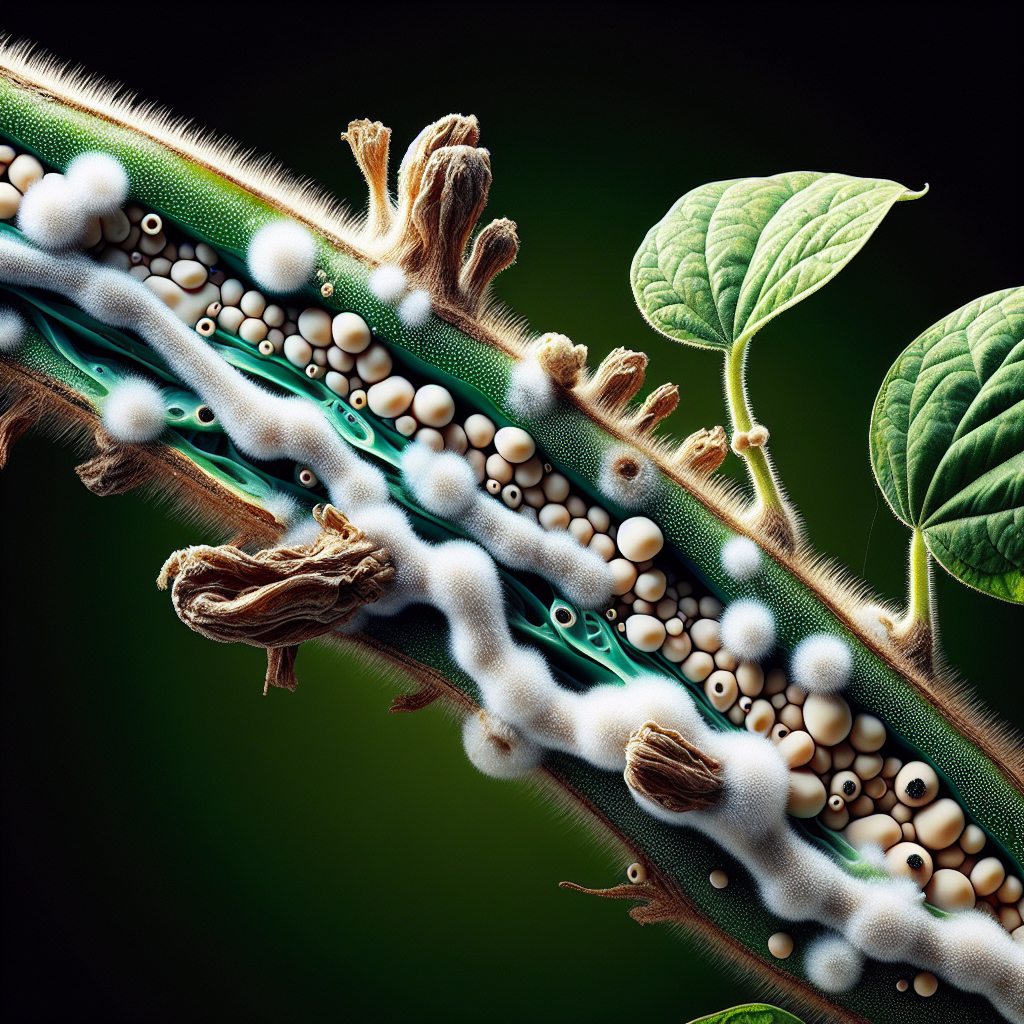
Introduction to Sclerotinia stem rot
Sclerotinia stem rot, also known as white mold, is a destructive fungal disease caused by Sclerotinia sclerotiorum. This pathogen attacks over 400 plant species, primarily broadleaf crops, causing significant economic losses worldwide. In agricultural settings, it leads to stem lesions, plant collapse, and reduced yields, with outbreaks often resulting in 20-100% crop failure under favorable conditions. Understanding this disease is crucial for growers of vegetables, legumes, and oilseeds, as it thrives in cool, moist environments common in temperate regions.
The fungus produces hardy sclerotia—small, black, irregular structures—that persist in soil for up to 10 years, making long-term management challenging. Symptoms typically appear during flowering or podding stages when humidity is high. This comprehensive guide provides professional-grade diagnostic tools, lifecycle insights, organic treatments, and prevention tactics to protect your crops. By integrating crop rotation, resistant varieties, and precise monitoring, farmers can reduce incidence and sustain profitability. For related insights on similar fungal issues, see Sclerotinia white mold.
Identifying Symptoms & Damage
Accurate diagnosis begins with recognizing early signs of Sclerotinia stem rot. Initial symptoms include water-soaked lesions on lower stems or branches, often at the soil line or where plants touch. These lesions expand rapidly, turning tan to gray with a white, cottony mycelial growth under humid conditions—the hallmark of infection.
As the disease progresses, stems develop black, hardened sclerotia inside, visible when split open. Infected plants wilt during the day but may recover at night, eventually lodging permanently. Flowers and young pods turn brown and drop prematurely, while shredded stem tissue reveals fluffy white mold. In severe cases, entire plants collapse, mimicking drought stress but distinguished by the cottony growth.
Damage quantification is critical: yield losses range from 10-50% in mild infections to total crop failure in dense, humid fields. Differentiate from Botrytis (gray mold) by the presence of sclerotia and stem girdling. Use a hand lens to spot apothecia (small mushroom-like structures) on soil nearby. Field scouting at flowering stage, combined with cutting stems longitudinally, confirms diagnosis. Economic impact is highest in high-value crops like soybeans and sunflowers, where sclerotia contaminate harvests.
Lifecycle and Progression of Sclerotinia stem rot
Sclerotinia sclerotiorum has a complex lifecycle centered on sclerotia, its primary survival structure. These 2-20 mm black bodies overwinter in soil or crop debris, germinating under cool (10-20°C), moist conditions to produce mycelia or apothecia. Apothecia—tan, cup-shaped fruiting bodies 1-2 cm wide—release millions of ascospores carried by wind to infect flowers or senescing tissues.
Infection requires free moisture for 12-48 hours, penetrating via natural openings or wounds. Inside the plant, mycelium spreads systemically, producing oxalic acid to kill host tissue and form new sclerotia in stems, pods, or dropped petals. A single sclerotium can yield 100-500 apothecia, perpetuating the cycle. Microsclerotia form on senesced plant parts, germinating directly into mycelia to infect lower canopies.
Progression accelerates in dense canopies: early infection at flowering leads to stem rot by pod fill; late infection causes pod rot. Soil populations build over years, with peaks after 2-3 susceptible crop cycles. Dormancy breaks with >7 days of soil moisture at 15°C. Understanding this enables timed interventions, like fungicide apps at bloom.
Environmental Triggers & Risk Factors
Sclerotinia stem rot thrives in temperatures of 15-25°C with relative humidity >80% for extended periods. Cool nights (8-15°C) followed by moist days favor apothecial development, common in spring-planted crops. High plant density (>30 cm rows) creates humid microclimates, exacerbating spread.
Risk factors include continuous cropping of hosts like soybeans, poor air circulation from excessive nitrogen, and heavy soils retaining moisture. Previous crop residue harbors sclerotia, while irrigation overhead increases splash dispersal. Acidic soils (pH <6.5) and low sunlight penetration heighten vulnerability. Regional outbreaks correlate with prolonged wet springs, as in the US Midwest or European canola belts.
Monitor soil temperature/moisture with probes; sclerotia germinate when 500-1000 hours accumulate below 20°C with wetness. Weed hosts like clover bridge infections. Climate change may shift risks northward with wetter conditions. For weather-related farm strategies, check Why 80% of Small Farms Battle Weather Disasters - And How Hyper-Local AI Forecasts Can Save Your Harvest.
Organic Control & Treatment Plans
Organic management emphasizes cultural, biological, and approved biopesticides, avoiding synthetic fungicides. Start with deep plowing (20-30 cm) post-harvest to bury sclerotia >10 cm, reducing germination by 70-90%. Rotate with non-hosts like corn or grasses for 3-4 years to starve the pathogen.
Enhance soil health with cover crops like mustard biofumigants, releasing isothiocyanates toxic to sclerotia. Apply Trichoderma viride or Coniothyrium minitans (1-5 kg/ha) as biocontrols; these parasitize sclerotia, achieving 50-80% reduction in trials. Bacillus subtilis-based products (e.g., Serenade) suppress infection at bloom (2-4 L/ha).
Treatment plan: Scout weekly from bloom; rogue infected plants immediately. Improve airflow with wider rows (50-75 cm) and lower plant density. Foliar sprays of potassium bicarbonate (2-5 kg/ha) raise pH, inhibiting growth. Compost teas with aerobic microbes outcompete Sclerotinia. In-furrow amendments like DL-methionine reduce soil inoculum. Integrate with resistant varieties like soy cv. 'AG 2906'. Monitor efficacy via sclerotial counts pre/post-season.
Preventing Sclerotinia stem rot in the Future
Prevention is the cornerstone of long-term control. Implement 4-year rotations excluding all hosts, favoring cereals or potato varieties with low susceptibility. Select resistant cultivars: e.g., soybeans with partial resistance reduce incidence by 40%. Optimize planting: early dates evade peak spore release, wider rows (75 cm) boost ventilation.
Soil testing guides liming to pH 6.5-7.0, as neutral conditions deter germination. Flooding fields (2-4 weeks at 20°C) kills 90% sclerotia via anaerobic decay. Tillage systems: moldboard plowing dilutes populations; no-till preserves but pairs with deep-rooted covers. Scout with bait plants (e.g., mustard) to quantify inoculum.
Forecast models using degree-days predict apothecia; apply mulches to suppress splash. Promote biodiversity with hedgerows enhancing predatory microbes. Clean equipment prevents spread. Annual soil assays track progress toward <1 sclerotia/kg soil threshold. Combine with IPM for sustainable suppression below economic thresholds.
Crops Most Affected by Sclerotinia stem rot
Sclerotinia stem rot hits broadleaf crops hardest, especially legumes and brassicas. Top victims include soybeans (losses >$300M/year US), dry beans, peas, chickpeas, and peanuts, where dense canopies trap moisture. Oilseeds like sunflower, canola (rapeseed), and flax suffer head rot equivalents.
Vegetables: lettuce (tipburn mimic), cabbage, carrots, and tomatoes show drop rot. Forage crops like alfalfa and clover perpetuate inoculum. Emerging risks in quinoa and hemp under intensification. Susceptibility ties to prolonged flowering and thick stems. Regional hotspots: soybeans in Argentina/Brazil, canola in Canada. Diversify rotations to break host cycles.