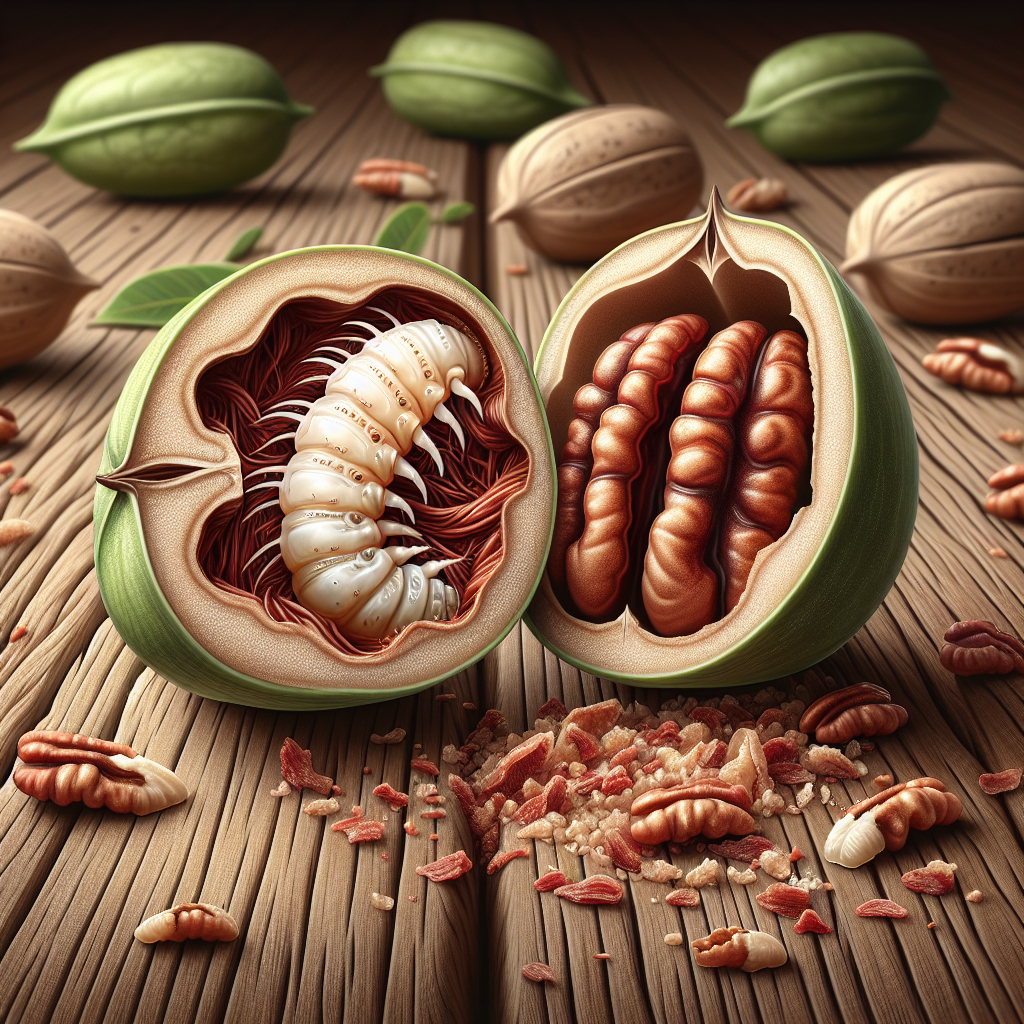
Introduction to Nut borers
Nut borers represent a group of insidious pests primarily consisting of moth and weevil larvae that target the nuts of orchard trees, burrowing into the developing fruit and kernels. Common culprits include the pecan nut casebearer (Acrobasis nuxvorella), navel orangeworm (Amyelois transitella), and various curculio weevils like the pecan weevil (Curculio caryae). These pests are particularly devastating in nut production regions such as California's Central Valley, the U.S. Southeast, and parts of Australia and the Mediterranean, where they can reduce yields by 20-50% or more if unmanaged. Navel orangeworm is one of the most notorious, infesting walnuts, almonds, and pecan nuts alike.
The economic impact is staggering: in severe outbreaks, nut borers lead to premature nut drop, kernel degradation, mold contamination, and secondary infections from fungi like Aspergillus species that produce aflatoxins. For small-scale and commercial growers alike, understanding nut borers is crucial for implementing timely interventions. This definitive guide covers identification, lifecycle, triggers, organic controls, prevention, and affected crops, empowering you to safeguard your orchard's productivity. With climate change extending growing seasons, nut borer pressure is intensifying, making proactive management non-negotiable.
Identifying Symptoms & Damage
Spotting nut borer activity early is vital, as larvae feed internally, making external signs subtle until damage is advanced. Key symptoms include:
- Entry Holes and Frass: Small, round holes (1-3 mm) on nut husks or shells, often surrounded by reddish-brown frass (insect excrement) that resembles sawdust. In walnut trees, look for silken webbing near husks.
- Premature Nut Drop: Infested nuts fall early, with larvae visible upon slicing open. Kernels appear hollowed, darkened, or riddled with tunnels.
- Kernel Damage: Bored-out, powdery kernels with brown trails; severe cases show moldy, shriveled nuts unfit for market.
- Gummy Exudates: In some species like the hickory shuckworm, sticky sap oozes from entry points, attracting ants or scale insects.
- Shell Deformities: Thinned, cracked, or pitted shells on nuts like almond or hazelnut.
Differentiate from other pests: Unlike codling moth in apples, nut borers target husks specifically; distinguish from nut weevils by frass texture—borer frass is finer. Use a knife to dissect suspect nuts: live larvae (cream-colored, 5-20 mm) confirm infestation. Monitor with pheromone traps starting at nut set for precise diagnosis. Secondary signs include bird predation on infested nuts and increased sooty mold from honeydew.
Lifecycle and Progression of Nut borers
Nut borers exhibit 1-3 generations per year, synchronized with nut development. Take the navel orangeworm as a model:
- Egg Stage (Spring): Overwintered adults emerge when nuts form (April-May in temperate zones). Females lay 100-200 eggs on husks or leaves.
- Larval Stage (1-6 weeks): Neonates bore in, feeding on husks then kernels. Five instars; mature larvae (15-20 mm) spin silk cocoons under bark, in litter, or mummy nuts.
- Pupal Stage (1-2 weeks): Cocoons produce adults.
- Adult Stage: Short-lived (1-2 weeks), moth-like with wingspans of 15-25 mm.
Weevil species (e.g., pecan weevil) differ: Adults emerge in late summer, lay eggs in nuts, larvae drop to soil for pupation, overwintering as prepupae. Degree-day models (base 50°F/10°C) predict flights: first at 400-600 DD, peak at 1000 DD. Progression accelerates in warm climates, with multiple broods overlapping. Sanitation removes overwintering sites, breaking the cycle. For more on monitoring, check this Spring Pest Patrol: Organic AI Strategies to Shield Your Crops from Common Invaders.
Environmental Triggers & Risk Factors
Nut borers thrive under specific conditions:
- Warm Temperatures: Optimal 75-85°F (24-29°C); mild winters allow higher overwinter survival.
- Humidity and Rainfall: Wet springs promote egg hatch; drought-stressed trees are vulnerable as nuts soften.
- Proximity to Hosts: Overwintering in orchard debris or wild hosts like native hickory.
- Poor Sanitation: Mummy nuts harbor 80% of larvae.
- Monoculture and Age: Young orchards (<5 years) or dense plantings increase risk; alternate hosts like pistachio amplify populations.
Risk spikes post-hail or wind damage, creating entry points. Climate shifts—longer warm seasons—extend generations, as seen in recent California outbreaks. Soil type matters: sandy soils aid weevil pupation. Assess risk via trap counts: >2 moths/trap/week warrants action. Companion stressors like aphids weaken trees, compounding borer success.
Organic Control & Treatment Plans
Organic management emphasizes IPM: monitoring, cultural, biological, and targeted organics.
- Sanitation (Foundation): Remove mummy nuts (95% reduction in overwintering sites); disk orchard floors pre-bloom.
- Biological Controls: Release Trichogramma wasps (egg parasitoids, 50-70% suppression); encourage birds with perches. Bacillus thuringiensis (Bt) kurstaki targets larvae (apply at egg hatch, 80% efficacy).
- Mating Disruption: Pheromone dispensers confuse males (e.g., CheckMate for NOW, 70-90% catch reduction).
- Organic Sprays: Spinosad or neem oil at early infestation (twilight applications); spinosad yields 85% control in trials.
- Trap Crops and Barriers: Kaolin clay coats nuts; early-maturing varieties escape peak flights.
Treatment Timeline:
- Pre-bloom: Sanitation, traps.
- Nut set: Bt, spinosad.
- Mid-season: Pheromones, parasitoids. Flank with neem for soft-bodied stages. Rotate tactics to prevent resistance. Trials show IPM combos reduce damage 75-90% vs. untreated.
Preventing Nut borers in the Future
Long-term prevention builds resilient orchards:
- Resistant Varieties: Plant 'Nonpareil' almond or 'Desirable' pecan—tighter shells deter borers.
- Orchard Design: Wide spacing, cover crops suppress soil pupae; border hedges block migration.
- Monitoring Tech: Pheromone traps + degree-day apps predict flights.
- Soil Health: Healthy trees resist via thicker husks; amend with compost (Soil Health Mastery: 5 Proven Strategies for Small Farms to Build Fertile Ground Without Breaking the Bank).
- Post-Harvest: Shred debris, flood-irrigate to drown pupae.
Annual scouting + IPM sustains <5% infestation. Integrate with broader pest plans, e.g., against fruit borers.
Crops Most Affected by Nut borers
Nut borers strike tree nut crops hardest:
- Almond (Almond): NOW primary, 20-30% losses.
- Walnut (Walnut): NOW, codling moth overlaps.
- Pecan (Pecan): Casebearer, weevils—up to 50% in Southeast.
- Hazelnut (Hazelnut): Filbertworm.
- Pistachio (Pistachio): Similar lepidopterans.
Secondary: Chestnut (Chestnut), macadamia (Macadamia). Regional variants target cashew in tropics. Diversify beyond monocrops to dilute risk.