Introduction to Navel orangeworm
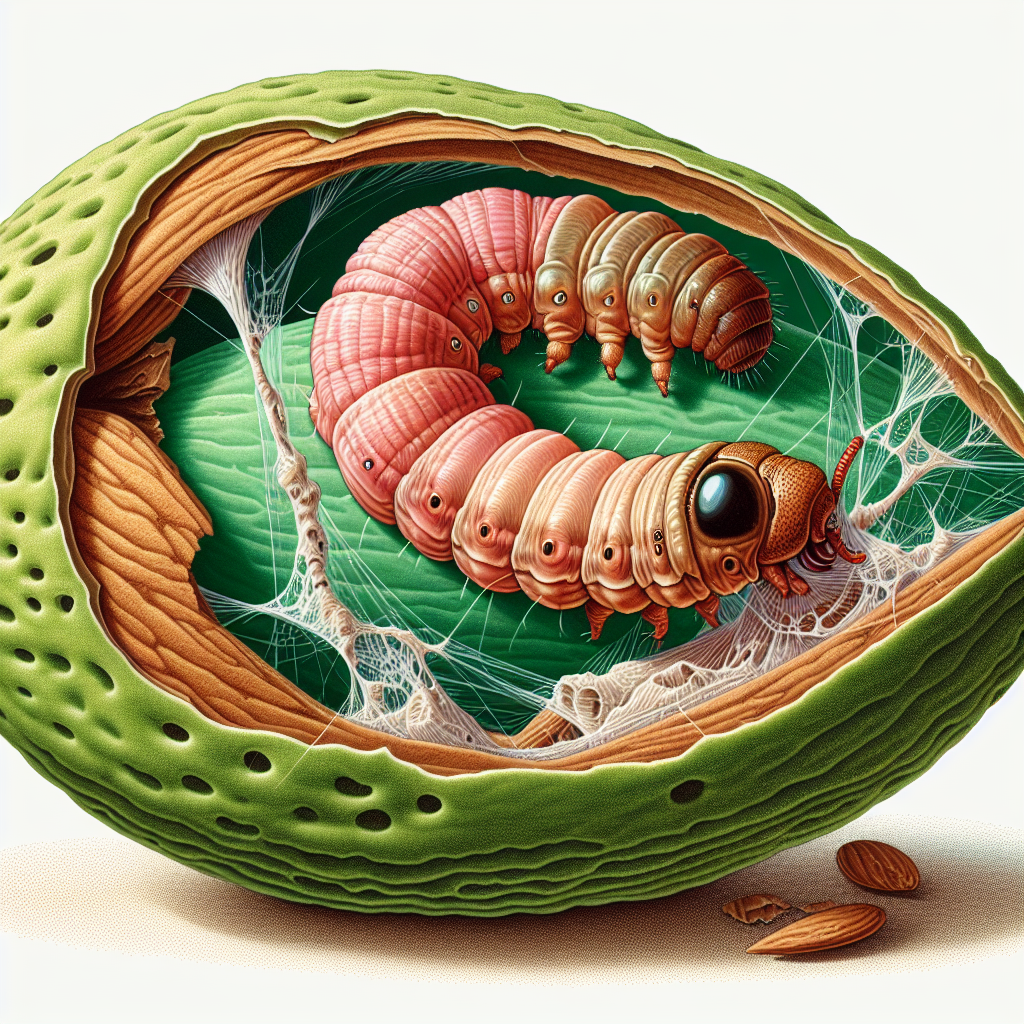
The navel orangeworm (Amyelois transitella) stands as one of the most economically damaging pests in California's nut orchards, particularly affecting almond, walnut, and pistachio crops. First identified in the early 20th century, this moth species has become a persistent threat due to its ability to infest developing nuts, leading to kernel damage, mold growth, and reduced market value. Larvae penetrate the hulls through natural openings or cracks, feeding on the nutritious kernels and leaving behind webbing and frass that render nuts unmarketable.
Annual losses from navel orangeworm exceed millions of dollars for growers, with infestation rates often reaching 20-50% in unmanaged orchards. The pest thrives in warm, dry climates typical of the San Joaquin Valley, completing multiple generations per season. Successful management hinges on integrated pest management (IPM) approaches that combine cultural, biological, and monitoring tactics to keep populations below economic thresholds. Early detection through pheromone traps and timely interventions are crucial, as mature infestations are difficult to control. For small farms struggling with pest pressures, check out this Spring Pest Patrol: Organic AI Strategies to Shield Your Crops from Common Invaders for tech-enhanced monitoring tips.
Understanding the pest's biology allows growers to disrupt its lifecycle at vulnerable stages, minimizing chemical inputs and preserving beneficial insects. This guide equips farmers with diagnostic tools, lifecycle insights, and organic control plans to safeguard yields effectively.
Identifying Symptoms & Damage
Spotting navel orangeworm damage early is essential for timely intervention. Adult moths are small (wingspan 3/4 inch), mottled gray-brown with white patches on the forewings, active at dusk. However, the true damage comes from larvae, which are pink to brown, up to 1/2 inch long, with a brown head and white to gray body marked by dark plates.
Key symptoms include:
- Entry holes: Small, ragged holes (1-3 mm) in nut hulls, often near the stem end or navel of navel orange fruits and nut sutures.
- Frass and silk: Dark fecal pellets (frass) mixed with reddish-brown webbing extruding from hulls, resembling 'sawdust' at entry points.
- Internal damage: Larvae bore deep into kernels, creating galleries filled with frass. Affected almonds show shriveled, discolored kernels with mold (often Aspergillus spp.), leading to 'black heart' in severe cases.
- Premature nut drop: Infested nuts may drop early, especially in walnuts.
- Secondary issues: Moldy nuts attract ants and other pests like sap beetles, exacerbating damage.
Damage assessment involves shaking infested nuts; healthy ones rattle, while infested ones feel solid due to larval galleries. Use a 'nut damage index' (percentage of nuts with visible frass) to gauge infestation levels. Differentiate from other borers like codling moth by the presence of reddish frass and webbing specific to NOW. Scout weekly during peak flight periods, examining 100 nuts per tree across 10 trees per block.
Lifecycle and Progression of Navel orangeworm
The navel orangeworm completes 3-5 generations annually, depending on degree-day accumulation (base 55°F). Lifecycle spans 90-120 days:
- Eggs (1-4 days): Tiny (0.5 mm), white, laid singly or in clusters on nut husks, hulls, or nearby debris. Females lay 100-300 eggs over 1-2 weeks.
- Larvae (20-40 days): Six instars; young larvae mine hulls, older ones enter kernels. They spin silken cocoons before pupation.
- Pupae (7-20 days): Occur in infested nuts, debris, or under bark.
- Adults (1-3 weeks): Emerge at dusk, mate, and oviposit. First flight in late winter (Feb-Mar), peaks in spring (Apr-May), summer (Jun-Aug).
Generations overlap in summer; monitor with wing traps baited with pheromones. Biofix (first sustained moth catch) triggers degree-day models for timing sprays. Larvae overwinter as mature instars in mummy nuts or ground litter, pupating in spring. Sanitation removes these reservoirs, breaking the cycle.
Environmental Triggers & Risk Factors
Navel orangeworm thrives in hot, arid conditions with temperatures 70-95°F optimal for development. Key triggers include:
- Hull split timing: Infestations surge when almond/pistachio hulls crack (late June-Aug), exposing kernels.
- Mummy nuts: Unharvested infested nuts from prior seasons serve as primary overwintering sites, with 70-90% of spring moths emerging from them.
- Irrigation and humidity: Excessive water delays hull split, prolonging vulnerability; low humidity favors egg hatch.
- Adjacent crops: Proximity to fig, pomegranate, or peach orchards increases moth immigration.
- Varietal susceptibility: Nonpareil almonds and older walnut varieties are highly prone due to thin hulls.
Risk is highest in orchards with poor sanitation (>2% mummies), delayed harvest, or shake-only removal without follow-up sweeps. Drought stress weakens trees, making nuts more attractive. Monitor weather via degree-day calculators to predict flights.
Organic Control & Treatment Plans
Organic management emphasizes IPM to avoid broad-spectrum insecticides:
- Sanitation (foundation): Remove 99% of mummies by winter shaking, sweeping, and burning/flailing. Disk orchard floors to bury debris.
- Mating disruption: Deploy hand-applied or aerosol pheromone dispensers (e.g., CheckMate NOW) at 100-200/acre pre-biofix. Reduces trap catches by 90%+.
- Biological controls: Encourage Trichogramma wasps (egg parasitoids) via releases (150k/acre weekly). Bacillus thuringiensis (Bt) kurstaki targets larvae <1/2 grown; apply at hull split with 1-2% oil for penetration.
- Microbial insecticides: Spinosad (Entrust) or methoxyfenozide (Intrepid) for organic-labeled control, timed to egg hatch.
- Trap monitoring: 3 traps/block with pheromone lures; treat if >2-4 moths/trap/night.
Treatment plan:
- Winter: Mummy removal.
- Spring (1st gen): Mating disruption + Bt if needed.
- Summer (2nd/3rd gen): Bt/spinosad at hull split, scout weekly. Rotate modes of action; avoid sprays during bloom to protect pollinators.
Preventing Navel orangeworm in the Future
Long-term prevention builds resilient orchards:
- Cultivar selection: Plant resistant varieties like Butte almonds.
- Orchard design: Wide row spacing, reflective mulches to deter moths.
- Irrigation management: Precise scheduling to sync hull split with low moth pressure.
- Cover crops: Plant clover or vetch to suppress debris and host predators.
- Monitoring tech: Use AI apps for trap data analysis (see Why Misidentifying Plants Costs Small Farms Thousands - And How AI Camera Diagnosis Fixes It Fast).
- Harvest promptly: Complete within 7-10 days post-shake.
Annual IPM audits track progress; aim for <5% damage.
Crops Most Affected by Navel orangeworm
Primary hosts:
- Almond (90% of losses)
- Pistachio
- Walnut Secondary: Navel orange, fig, pomegranate, peach, nectarine. Prefers cracked or split fruits/nuts; minor damage in date palms.