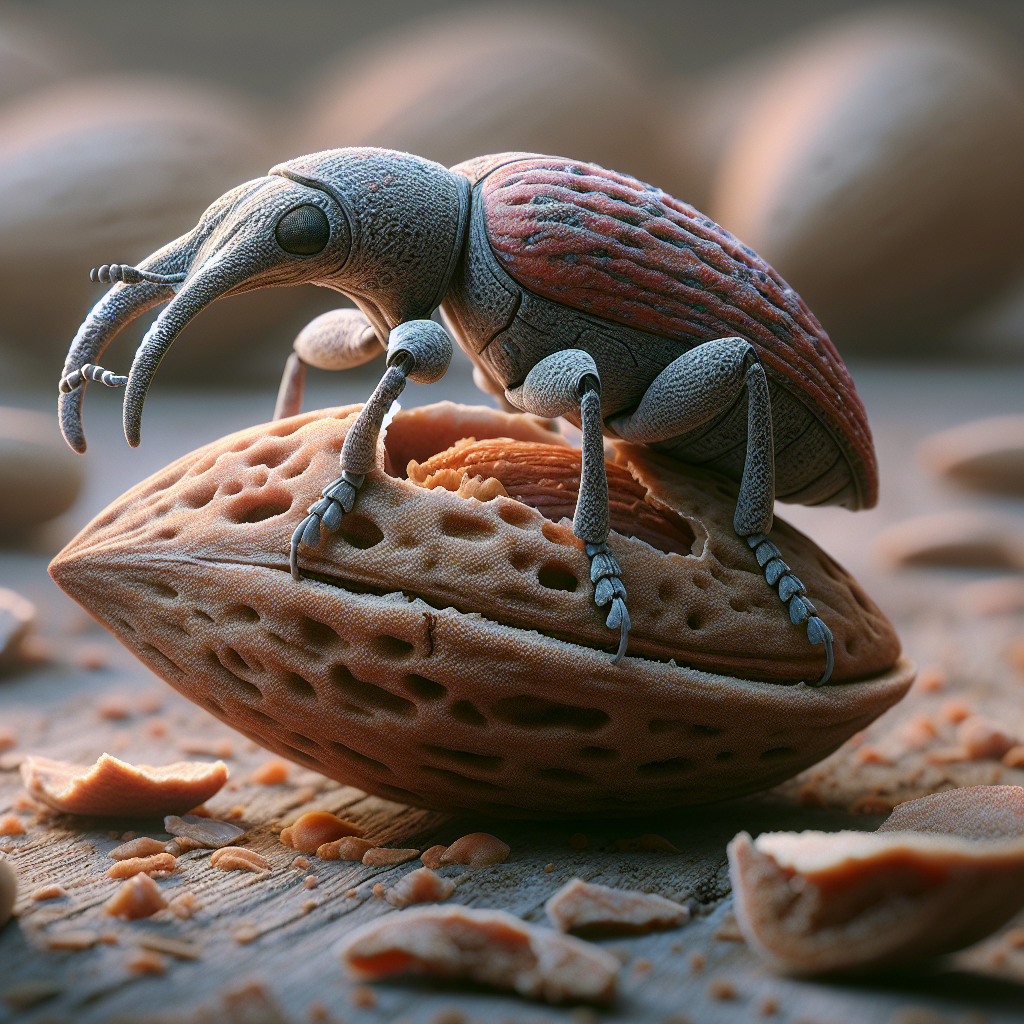
Introduction to Nut weevils
Nut weevils represent a serious threat to nut production worldwide, particularly targeting high-value tree nut crops like almond, walnut, pecan, and hazelnut. These beetles, belonging primarily to the genus Curculio (such as the filbertworm Cydia latiferreana associated with weevil damage or specific species like Curculio nucum for hazelnuts), are characterized by their elongated snouts and voracious larvae that bore into nut kernels. Adult weevils emerge in late spring, feeding on tender shoots and laying eggs inside developing nuts, leading to premature nut drop, hollowed kernels, and mold contamination. In commercial orchards, infestations can cause 20-80% yield losses if unmanaged, making vigilant monitoring essential for sustainable nut farming.
Understanding nut weevils is crucial for growers in temperate and subtropical regions where nut trees thrive. These pests overwinter as adults or larvae in soil or litter, synchronizing their life cycle with nut bud break and shell hardening. Early intervention through scouting and organic controls can preserve crop value, as chemical residues are undesirable in edible nut markets. For small-scale and commercial operations alike, integrating cultural, biological, and mechanical controls forms the backbone of effective IPM (Integrated Pest Management). This guide equips you with diagnostic tools, lifecycle knowledge, and actionable strategies to combat nut weevils effectively. Learn more about Spring Pest Patrol: Organic AI Strategies to Shield Your Crops from Common Invaders for broader pest management insights.
Identifying Symptoms & Damage
Detecting nut weevils early is key to minimizing damage. Adult weevils, measuring 4-8 mm long with curved snouts, create characteristic feeding punctures on young nuts—small, circular holes often frass-filled. Look for these on nutlets 1-2 weeks after petal fall. Larval entry holes appear later as irregular scars, leading to gumming or resin flow from stressed trees.
Inside infested nuts, creamy-white, legless larvae (C-shaped, up to 10 mm) feed on the kernel, leaving frass and silk. Affected nuts show sunken lesions, discoloration, or fail to fill out, dropping prematurely. Kernel damage manifests as hollowed, powdery interiors prone to secondary fungal blights or aflatoxin contamination. Shake trays or beat sheets under trees to capture falling adults or larvae during peak activity (mid-morning on warm days).
Differentiate from similar pests like codling moth (silk webbing absent in weevils) or navel orangeworm (deeper galleries). Severe infestations cause 30-50% nut drop by mid-summer, with marketable yield reductions up to 70%. Scout weekly from bloom to shell seal, using a threshold of 2-5% infested nuts to trigger action. Photographs of exit holes (1-2 mm, plugged with frass) aid precise ID.
Lifecycle and Progression of Nut weevils
Nut weevils exhibit a univoltine (one generation per year) lifecycle tightly synced with host phenology. Adults overwinter in soil cocoons 10-30 cm deep or tree bark crevices, emerging at 10-15°C in spring (March-May in temperate zones). Peak flight coincides with 50% bloom to nut set, lasting 4-6 weeks. Females chew a 1 mm feeding hole, deposit 1-3 eggs inside via ovipositor, then seal with frass.
Eggs (0.5-1 mm, white) hatch in 7-14 days into larvae that tunnel inward, feeding for 4-6 weeks. Mature larvae (10-15 mm) exit via a larger 'shot-hole' (2-3 mm), drop to soil, and form earthen cells for pupation (summer). Adults emerge after 2-4 weeks but aestivate until next spring. Total cycle: 10-12 months.
Progression varies by species and climate: pecan weevils (Curculio caryae) have partial second generations in warm areas; hazelnut weevils peak earlier. Monitor with pyramid traps baited with aggregation pheromones. Disruption at egg-laying (preventive covers) or larval drop (soil barriers) targets weak links. Understanding this progression enables precise timing for interventions, reducing populations by 50-70% annually.
Environmental Triggers & Risk Factors
Nut weevils thrive in warm, humid conditions favoring adult emergence (15-25°C, >60% RH). Drought-stressed trees are vulnerable, as reduced vigor impairs resin defenses. Poor sanitation—uncollected fallen nuts—harbors 80% of pupae. Adjacent woodlands or unmanaged orchards serve as reservoirs, with adults dispersing 1-2 km.
Soil type influences survival: sandy loams retain weevils better than heavy clays. High nitrogen fertilization promotes lush growth attractive to females. Monoculture orchards without borders (>80% nuts) amplify outbreaks. Climate change extends voltinism, increasing risk in marginal areas. Risk factors include new plantings (no established predators), irrigation deficits, and harvest delays (>2 weeks post-shatter).
Assess farm risk via history (prior infestations), proximity to wild hosts, and weather forecasts. Thresholds rise in low-risk sites. Companion planting with marigold repels via root exudates, lowering incidence by 25%.
Organic Control & Treatment Plans
Organic management emphasizes layered IPM. Cultural: Sanitation removes 90% pupae—flail mow orchard floor post-harvest, disk soil in winter (10-15 cm). Flood irrigation drowns soil stages. Biological: Encourage ground beetles (Carabidae) and birds via hedgerows; release Beauveria bassiana entomopathogenic fungi (rates: 10^9 spores/ha) at larval drop, achieving 60% mortality. Neem oil (azadirachtin 0.03%) sprays at petal fall deter oviposition (3 applications, 10-14 day intervals).
Mechanical: Kaolin clay barriers ( Surround WP, 50-100 kg/ha) coat nuts, reducing egg-lay by 70%. Pheromone traps disrupt mating (20-40/ha). Hand-collect adults in small orchards. Monitoring: Beat sheets quantify adults; treat if >1/tree. Rotate tactics yearly to prevent resistance.
Treatment plan: Scout weekly; apply neem at 5% eggs; sanitize post-harvest. Expect 80% control with compliance. Avoid broad-spectrum sprays preserving predators like spiders (natural enemies).
Preventing Nut weevils in the Future
Long-term prevention builds resilient systems. Select resistant cultivars (e.g., 'Nonpareil' almond lower susceptibility). Plant windbreaks with yarrow attracting parasitoids. Maintain orchard vigor via balanced nutrition (N 100-150 kg/ha, avoid excess). Early harvest (<20% moisture) starves larvae.
Soil solarization (clear plastic, 6 weeks summer) kills 70% pupae. Cover crops (mustard biofumigants) suppress via glucosinolates. Annual winter flooding/tillage disrupts cocoons. Monitor adjacent properties; buffer strips reduce influx. IPM audits track progress; thresholds adapt to farm scale. Consistent practices yield 90% reduction over 3 years, ensuring sustainable nut production.
Crops Most Affected by Nut weevils
Nut weevils primarily target tree nuts: almond (early-season damage), walnut (Chandler, Hartley varieties), pecan (Stuart, Desirable), hazelnut (Barcelona), chestnut, and macadamia. Hickory and beech host wild populations spilling into crops. Secondary impacts on cashew and pistachio. Global hotspots: California almonds (>$1B losses/year), Georgia pecans, Oregon hazelnuts, European walnuts. Small farms suffer disproportionately sans IPM.