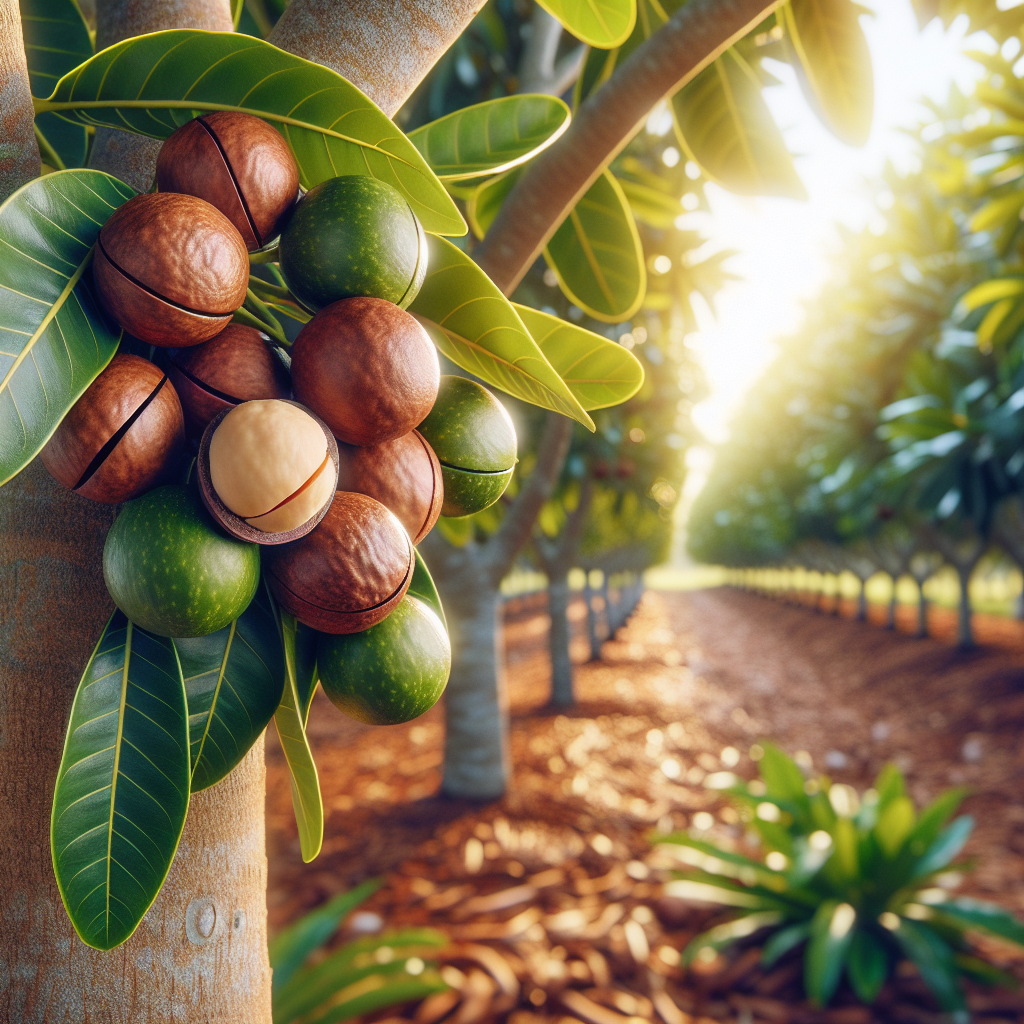
Introduction to Macadamia
Native to the subtropical rainforests of eastern Australia, macadamia has evolved from a wild forest tree into one of the world’s highest-value edible nut crops. Modern commercial production is centered on Macadamia integrifolia, Macadamia tetraphylla, and hybrids between them, with major growing regions in Hawaii, Australia, South Africa, Kenya, Central and South America, and suitable frost-light subtropical belts elsewhere. The nut is prized for an unusually high oil content, delicate texture, and sweet, creamy flavor, but those same qualities mean the crop demands careful site selection and postharvest handling.
Macadamia trees are not fast-return orchard crops. Seedling trees may take 7 to 12 years to produce meaningful yields, while grafted trees often begin bearing in 3 to 5 years and reach commercial maturity later. Once established, however, they can remain productive for decades. The crop rewards long-term planning: orchard layout, wind protection, drainage, pollination compatibility, and nutrient management all matter more than quick interventions after problems appear.
For growers familiar with other subtropical perennial crops, some principles will feel similar to Avocado: both dislike waterlogged root zones, both respond strongly to mulch and organic matter, and both can suffer from wind injury and root disease if planted in poorly drained soil. Macadamia differs in its nutrient demands, floral biology, shell hardening, and harvest timing, so management should be crop-specific rather than copied wholesale from other orchard systems.
Commercially, the crop’s economic value depends less on shell quantity and more on kernel recovery, nut size, low defect rates, and clean drying. A heavy crop of poorly dried nuts can be less profitable than a moderate crop handled correctly. That is why the definitive grower mindset for macadamia is not simply “grow a tree,” but “manage a nut quality system from root zone to storage room.”
Botanical Profile of Macadamia
Macadamia belongs to the family Proteaceae, a botanically distinctive group that includes species adapted to relatively low-fertility soils. The two principal edible species are M. integrifolia and M. tetraphylla. M. integrifolia generally has smoother shells and high-quality kernels, while M. tetraphylla often shows rougher shells, more vigorous growth, and somewhat greater tolerance of cooler conditions. Many modern orchards rely on hybrids to combine kernel quality, bearing consistency, shell traits, and environmental adaptation.
Trees are evergreen, medium to large, and capable of reaching 10 to 15 meters or more if unmanaged, though orchard systems usually maintain smaller canopies through pruning. Juvenile leaves are often more toothed or spiny, especially in M. tetraphylla backgrounds, while mature leaves become more stable in shape and arrangement. Leaves are leathery, glossy, and arranged in whorls or clusters, contributing to dense canopies that can shade interior wood if not opened periodically.
The inflorescences are slender racemes bearing many small cream to pinkish flowers. Flowering can be abundant, but fruit set is naturally low relative to bloom volume. This is normal; the tree produces far more flowers than it can mature into nuts. Pollination is primarily by insects, especially bees. Although some cultivars are partially self-fertile, cross-pollination often improves nut set, nut retention, and sometimes kernel recovery. Mixed-cultivar orchard design is therefore preferred over large monoblocks of a single clone.
The fruit is technically a follicle-like husked structure enclosing an extremely hard shell, which in turn contains the edible kernel. The outer husk splits when the nut reaches maturity. In most production systems, mature nuts are allowed to fall naturally and are then collected from the orchard floor. This distinguishes macadamia from many tree fruits harvested directly from the canopy.
Macadamia root systems are relatively sensitive to poor aeration and compaction. Fine feeder roots occupy the upper soil horizons where oxygen, moisture, and organic matter are balanced. This makes mulch especially valuable but also means cultivation close to the trunk can be harmful. Like several Proteaceae members, macadamia can be efficient at scavenging nutrients, yet it does not tolerate careless fertilization. Excess salts, root-zone stagnation, and severe pH imbalance can undermine establishment and production.
Cultivar performance varies widely by region. Important selection criteria include bearing age, peak harvest season, kernel percentage, shell thickness, susceptibility to husk spot and nut borer, tree vigor, wind tolerance, and compatibility with neighboring cultivars for pollination. When planning a planting, choose named cultivars with regional trial data rather than relying on generic “macadamia” stock.
Soil, pH, and Climate Requirements for Macadamia
The ideal site is a frost-light subtropical location with warm summers, mild winters, moderate humidity, and enough rainfall or irrigation to maintain active growth without saturating the soil. Annual rainfall of roughly 1,000 to 2,000 mm can support good production if distribution is favorable and drainage is excellent. In drier climates, irrigation becomes essential. In wetter climates, drainage infrastructure and canopy airflow become critical.
Temperature strongly affects performance. Macadamia prefers mean growing temperatures around 20 to 30°C. Prolonged heat above 35°C can reduce floral quality, scorch tender growth, and increase premature nut drop, especially when accompanied by dry winds. Young trees are particularly vulnerable. Mature trees can tolerate short cool spells, but damaging frost can burn new flushes, reduce flowering, split bark on young stems, and in severe events kill scaffold wood. M. tetraphylla and some hybrids are somewhat more cold-tolerant than pure M. integrifolia, but no commercial macadamia should be considered fully frost-hardy.
Wind is one of the most underestimated constraints. Strong winds can shred leaves, break racemes, reduce pollinator activity, desiccate flowers, and topple young trees with shallow, recently established root systems. Site protection using windbreaks is often decisive for early orchard success. Windbreaks should be permeable rather than solid walls; a filtered reduction in wind speed is better than turbulence.
Soil texture should be deep, friable, and free draining. Well-structured loams, sandy loams, volcanic loams, and deep red soils are often excellent. Heavy clay can work only if internal drainage is very good and the soil is not prone to prolonged saturation. Macadamia does poorly in perched water tables, compacted subsoil, or sites where standing water persists for more than 24 to 48 hours after heavy rain. Roots deprived of oxygen quickly lose function, predisposing trees to decline and pathogens such as Phytophthora.
The best soil pH is mildly acidic, typically 5.0 to 6.5. Slightly outside this range may still be workable, but extremes create problems. Below about pH 4.8, aluminum and manganese can become more available to toxic levels, root growth may suffer, and calcium or magnesium may be deficient. Above about pH 6.8 to 7.0, iron, zinc, and manganese deficiencies become more common, especially on calcareous soils. Chlorotic young leaves on high-pH soils often indicate micronutrient lockout rather than simple lack of fertilizer.
Organic matter is highly beneficial because it improves moisture buffering, biological activity, and root-zone structure. However, “more organic matter” should not mean burying trunks in wet compost. Keep the trunk flare exposed and apply coarse organic mulch in a ring extending to the dripline or at least 0.5 to 1.5 meters from the trunk depending on tree age. Maintain mulch depth around 5 to 10 cm, replenishing as it decomposes.
Soil moisture should be consistently moist but never swampy. In practical terms, the active root zone should often feel cool and slightly damp 10 to 20 cm below the surface, not sour-smelling, sticky, and airless. Signs of underwatering include dull, inward-cupping leaves, reduced flush growth, increased nut drop, and smaller kernels. Signs of overwatering include yellowing leaves without recovery after irrigation, poor new root growth, leaf drop despite wet soil, algae or moss on perpetually wet mulch, and a fermenting odor in the root zone.
For broader principles on improving orchard soil structure and biological resilience, see soil health strategies.
Step-by-Step Planting & Propagation
Start with high-quality grafted nursery trees from a reputable source. Grafted trees provide known cultivar identity, more predictable bearing, and better commercial consistency than seedlings. Seed propagation is useful for rootstocks, breeding, or hobby experimentation, but seedlings are highly variable and usually unsuitable for production orchards aiming for uniform yield and harvest timing.
If raising rootstocks from seed, use fresh nuts that have not been heat-dried. Germination can be slow and uneven because of the hard shell. Some growers sow intact nuts in well-drained propagation media and allow natural germination over several weeks to months. Once seedlings are vigorous enough, scions from selected cultivars are grafted using wedge, side veneer, or whip methods depending on nursery practice and stem diameter.
Before planting, test the soil for pH, organic matter, cation balance, and drainage limitations. Correct major issues before the trees go in. Deep ripping may be useful where there is a compacted layer, but only when soil moisture is appropriate and subsoil structure will actually fracture rather than smear. In poorly drained areas, form raised beds or mounds 30 to 60 cm high to keep the crown above saturated soil.
Plant during a season when soil is warm and environmental stress is low. In many regions, early spring through early summer is best, provided irrigation is available. In tropical high-rainfall climates, plant at the beginning of a rainy period only if drainage is already excellent; otherwise, a slightly drier establishment window is safer.
Spacing depends on vigor, cultivar, machinery, and pruning strategy. Traditional spacing may be 8 x 4 m, 8 x 5 m, 9 x 4 m, or 10 x 5 m. Higher-density systems can accelerate early returns but require disciplined pruning to prevent shading and loss of lower fruiting wood. Wider spacing reduces early crowding but delays canopy closure. Match spacing to the cultivar’s mature vigor, not its nursery size.
To plant, dig a hole no deeper than the root ball and at least twice as wide. Avoid glazing the sides of the hole in clay soils. Gently remove the container, tease circling roots only if severe, and place the tree so the top of the nursery root ball sits level with or slightly above surrounding soil. Backfill with native soil rather than a rich pocket of compost that discourages outward root exploration. Water in thoroughly to settle soil, then mulch broadly while keeping 10 to 15 cm clear around the trunk.
Stake young trees if wind is a risk, but use flexible ties and remove support once the trunk strengthens. Over-staking can produce weak stems. Paint exposed trunks with diluted white interior latex paint or use tree guards in very hot, sunny locations to reduce sunburn on young bark.
For pollination, plant at least two compatible cultivars unless local evidence proves a single cultivar performs reliably. Arrange pollinizers so bees can move efficiently between rows or blocks; alternating every few rows is common. Install or encourage beehives during bloom if native pollinator activity is low.
Care & Maintenance regimes for Macadamia
Irrigation must be adjusted by tree age, soil type, evapotranspiration, and crop load. Newly planted trees need frequent, light-to-moderate irrigation to keep the root ball uniformly moist while roots expand into surrounding soil. On sandy soils this may mean 2 to 4 irrigations per week in hot weather; on loams, fewer but deeper irrigations may suffice. Mature orchards benefit from deeper, less frequent watering that wets the main feeder-root zone without creating prolonged saturation. The most critical periods are floral initiation, flowering, nut set, early nut development, and kernel filling. Water stress during these stages can reduce final nut size and increase abortion.
A practical target is to avoid allowing available soil moisture in the primary root zone to drop to severe deficit during active growth. In instrumented orchards, tensiometers or capacitance probes are ideal. Without sensors, dig inspection holes: if soil at 15 to 25 cm is powdery and roots are sparse or brittle, irrigation is overdue; if it is sticky, shiny, and leaves a dense smear in the hand for days after watering, irrigation is too frequent or drainage is inadequate.
Nutrition should be based on leaf and soil analysis, not guesswork. Macadamia needs balanced nitrogen, potassium, calcium, magnesium, sulfur, and trace elements such as zinc, boron, manganese, and iron. Young non-bearing trees need enough nitrogen to build canopy and framework, but excess nitrogen creates soft, wind-prone growth and can delay structural balance. Bearing trees need a program aligned with crop load; potassium demand rises with nut filling, while calcium supports cell integrity and overall tree health.
Apply fertilizers in split doses rather than one heavy application, especially on sandy soils. Keep fertilizer away from direct trunk contact. Excess phosphorus is a notable risk in Proteaceae relatives, and although macadamia is more tolerant than some other members, it is still wise not to overapply high-phosphorus fertilizers unless a proven deficiency exists. Zinc and boron deficiencies can impair flowering and fruit set; however, boron has a narrow margin between deficiency and toxicity, so rates should be conservative and analysis-driven.
Pruning focuses on access, light penetration, structural strength, and renewal of productive wood. In the establishment years, select a strong central leader or modified framework with well-spaced scaffold branches. Remove weak crotches, crossing limbs, and shoots too low for orchard operations. In mature trees, thin rather than shear whenever practical. Dense canopies reduce internal flowering, increase humidity, and favor disease. Remove dead wood, overly vertical watershoots, and limbs that shade the lower canopy excessively. Major pruning is best timed to minimize sunburn risk on suddenly exposed limbs.
Mulching is among the most beneficial routine practices. Wood chips, aged bark, leaf litter, or other coarse organic materials suppress weeds, moderate soil temperature, encourage fine roots, and add carbon over time. Avoid deep cultivation around trees; feeder roots near the surface are easily damaged. Weed control is especially important in the first 2 to 4 years because grass competition can dramatically slow establishment.
If nut set is heavy, monitor branch load. Some cultivars can bear on relatively slender wood, and breakage may occur in windy sites or where nutrition has pushed soft growth. Maintain orchard hygiene by regularly removing old husks, prunings, and mummified nuts from areas where pests or pathogens can build up.
Pests, Diseases & Organic Management
The pest complex varies by region, but common threats include nut borers, stink bugs or piercing-sucking bugs, scale insects, thrips, mites, and rodents. nut borers and kernel-feeding insects are particularly serious because damage is often hidden until cracking. Premature nut drop, entry holes, webbing, frass, or blank kernels are warning signs. Regular orchard scouting is essential during flowering and nut development.
Organic management begins with sanitation and habitat balance rather than sprays. Remove fallen infested nuts promptly during the season where practical. Keep the orchard floor manageable so dropped nuts can be collected efficiently, but retain enough biological diversity in alleyways to support beneficial insects. Prune for airflow and spray penetration if treatments become necessary. Encourage predatory insects by avoiding broad-spectrum insecticides that destabilize natural control.
scale insects often build up on stressed or overly shaded trees. Ants may protect them from predators, so ant management can indirectly reduce scale pressure. Horticultural oils can suppress scales and mites when applied carefully under suitable temperatures and with good coverage. Avoid oil sprays during heat stress or when trees are drought-affected.
Fungal and oomycete diseases are often more damaging than insects in wet environments. Phytophthora root rot is a major concern in poorly drained soils. Symptoms include gradual canopy thinning, chlorosis, reduced flush, branch dieback, and poor response to fertilization despite adequate moisture. Prevention is far more effective than cure: plant only in well-drained soil, avoid overirrigation, use clean nursery stock, and prevent soil movement from infected to clean blocks.
husk spot, husk rot, raceme blights, and various anthracnose-like issues may occur where humidity is high and canopies remain dense. These diseases can reduce nut quality, increase premature drop, and stain shells. Good air movement, cultivar selection, balanced nutrition, and timely harvest reduce severity. Avoid excessive nitrogen, which can make tissues more susceptible and increase dense vegetative growth.
rodents can damage nuts on the ground and in storage. Birds may occasionally affect immature nuts or disturb harvesting areas. Use exclusion, orchard sanitation, raptor perches where appropriate, and secure storage rather than relying solely on reactive controls.
For organic systems, copper-based products, biological fungicides, soaps, oils, pheromone monitoring, and physical sanitation all have roles, but success depends on timing and integration. No spray program can compensate for chronic waterlogging, shaded canopies, or neglected harvest intervals.
Harvesting, Curing & Optimal Storage
Maturity is usually indicated when the husk splits and nuts fall naturally. Do not rely on shell color alone. Nuts picked too early often have poor kernel fill, lower oil quality, and inferior flavor. In most systems, harvest consists of frequent ground pickup during the drop season. The orchard floor should be relatively smooth, short-mown, and free of excessive debris to improve collection efficiency and reduce mold risk.
Collection frequency matters. In humid or rainy conditions, pick up fallen nuts at least every 2 to 7 days depending on weather pressure. The longer nuts remain on wet ground, the greater the risk of mold, husk deterioration, germination, insect attack, and quality loss. Remove the outer husk as soon as possible after collection, ideally within 24 hours. Delayed dehusking traps moisture around the shell and accelerates heating and fungal growth.
Freshly harvested nuts-in-shell are too moist for safe storage. Initial moisture can be high enough to support microbial spoilage and internal browning. Drying should be gradual. After dehusking, nuts are typically pre-dried in a well-ventilated shaded area or forced-air system until shell moisture declines to a safer range, followed by controlled drying to bring kernel moisture down to approximately 1.5 to 3.0%, depending on market specification and intended storage period. Excessively hot drying can cause shell cracking, kernel scorching, or reduced flavor quality, so gentle warm air is preferable to intense heat.
A practical curing approach for small-scale growers is to spread dehusked nuts in shallow layers with active airflow, then finish-dry in a controlled dehydrator or drying room. Stir periodically for uniform drying. Properly dried nuts feel lighter, produce a cleaner rattle in shell, and crack with a crisp break rather than a damp crush. For precise quality management, use moisture meters calibrated for macadamia or laboratory confirmation.
Once dried, store nuts in cool, dry, odor-free conditions. Because macadamia kernels are rich in oil, they readily absorb off-odors and can go rancid if exposed to heat, oxygen, and light. In-shell storage extends shelf life, but only if the nuts were dried correctly first. For kernels, vacuum packaging or oxygen-reduced packaging is ideal. Refrigeration or freezing further preserves flavor and delays oxidation.
If processing for sale, sort out nuts with mold, shell cracks, insect holes, or shriveled kernels. Kernel recovery percentage and defect rate determine actual profitability, not just gross harvested weight. Commercial cracking requires specialized equipment because the shell is exceptionally hard.
Companion Planting for Macadamia
In orchard systems, companion planting should support pollination, soil protection, beneficial insects, and root-zone health without creating excessive competition. The best companions are usually low-growing, non-invasive species that tolerate partial shade, do not host major macadamia pests, and can be managed mechanically.
Bee-friendly flowering strips are especially valuable because macadamia benefits from active insect pollination during bloom. Suitable companions can include clovers, low legumes, select native wildflowers, and carefully managed flowering herbs. A restrained understory of species such as Thai basil near orchard margins, rather than crowding the tree row, may help attract pollinators and beneficial insects while offering an additional marketable crop in diversified plantings.
Leguminous cover crops between rows can improve soil structure, reduce erosion, and contribute biologically mediated nitrogen cycling. However, they should not be allowed to become aggressive around young trees. Keep a mostly weed-free mulch ring around the trunk and use covers in alleyways rather than directly against the stem. In high-rainfall sites, choose covers that do not create constant dampness at the tree base.
Good companion candidates include perennial peanut in suitable climates, white clover in cooler subtropics, managed grasses mixed with legumes for traffic lanes, and insectary plants such as alyssum, dill, fennel, or native flowering composites planted where they can be mowed or renewed. Avoid deep-rooted woody shrubs close to the trees, heavy vines, or thirsty intercrops that compete strongly during nut fill.
Companion planting in macadamia should be functional, not decorative. The goal is to stabilize the orchard ecosystem: feed pollinators, support predators, protect soil, and improve infiltration while preserving easy nut pickup. Any companion species that interferes with harvest visibility, shelters rodents, or increases humidity around fallen nuts is doing more harm than good.
A well-designed macadamia orchard is therefore a layered system: windbreaks at the perimeter, productive canopy overhead, mulch in the tree row, and controlled living groundcover between rows. When that system is balanced, trees establish faster, require fewer corrective inputs, and produce cleaner, higher-quality nuts over the long term.