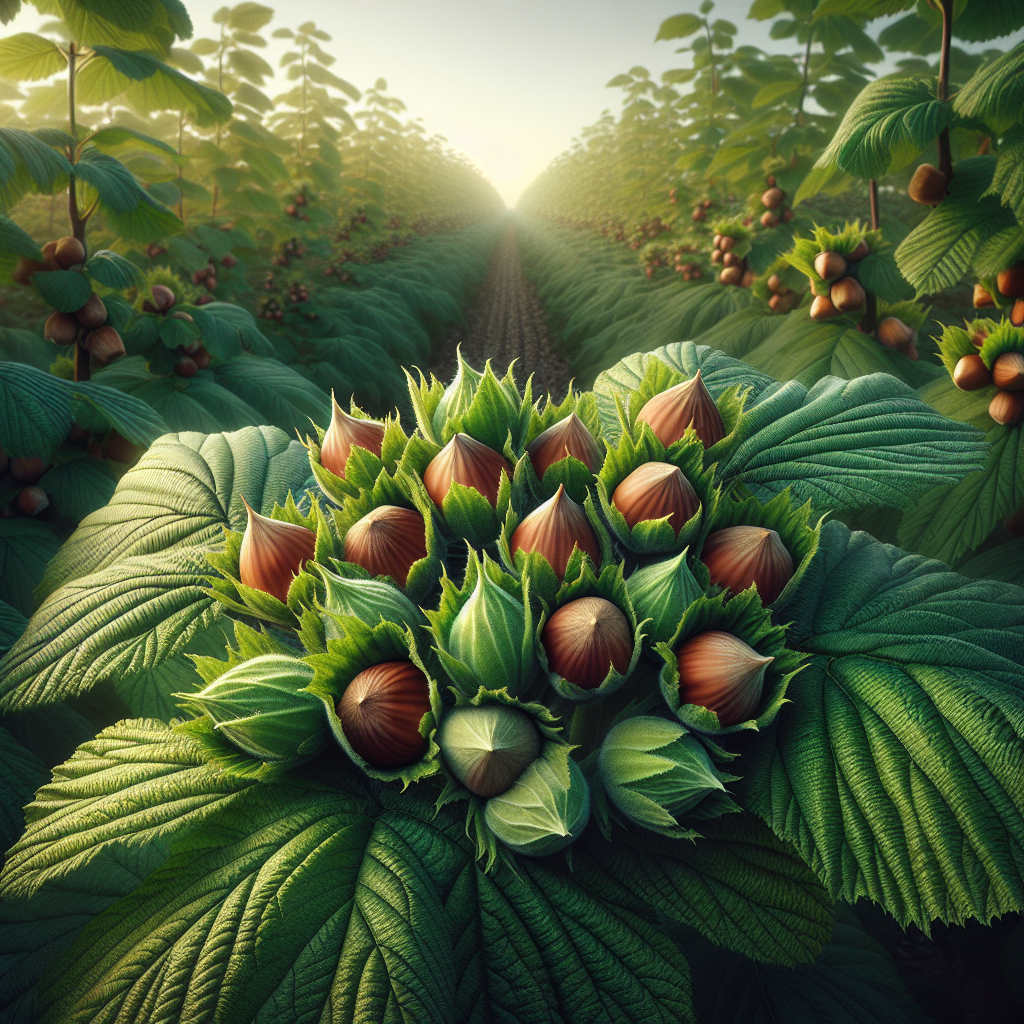
Introduction to Hazelnut
A classic temperate nut crop with centuries of cultivation across Europe, western Asia, and more recently North America, hazelnut is prized for confectionery use, fresh eating, oil extraction, and premium roasted kernel markets. Commercial production is dominated by European hazelnut types, though several species and hybrids contribute traits such as disease resistance, cold tolerance, and adaptation to lower-input systems. In traditional landscapes, hazels were often maintained in coppice systems for poles and fencing while also producing nuts, which explains the plant’s natural tendency to form thickets through basal suckering.
Modern growers should understand one essential point early: hazelnut is not simply a “plant it and wait” orchard species. It demands correct pollinizer planning, disciplined sucker control, and careful matching of site to cultivar. In return, it can remain productive for decades, often reaching commercial bearing in 4 to 6 years depending on propagation method, root system quality, and management intensity. For growers comparing nut crops, see Almond for a useful contrast in pollination and water management.
Botanical Profile of Hazelnut
Hazelnut belongs to the genus Corylus in the family Betulaceae. The primary cultivated species for commercial nut production is Corylus avellana, the European hazel, though Corylus americana and interspecific hybrids are important in breeding programs, especially where Eastern Filbert Blight resistance and winter hardiness are priorities. The plant is naturally a deciduous, many-stemmed shrub, typically 3 to 6 meters tall, but in orchard systems it may be trained either as a bush or a single-trunk tree depending on region, mechanization strategy, and cultivar vigor.
Leaves are broadly rounded to ovate, doubly serrated, and softly pubescent, with a somewhat rough texture. Male flowers are pendulous catkins formed during the previous growing season; they elongate and release pollen in winter to very early spring, often well before leaf emergence. Female flowers are far less conspicuous, appearing as tiny buds with bright red stigmas protruding from the tip. This reproductive biology matters enormously because hazelnuts are largely self-incompatible. In practical terms, a single cultivar usually cannot reliably pollinate itself, so orchard design must include compatible pollinizer cultivars with overlapping pollen shed and stigma receptivity.
The fruit is technically a nut enclosed by a leafy husk or involucre. Depending on cultivar, nuts may be borne singly or in clusters of 2 to 5 or more. Kernel quality is influenced by genetics, summer heat accumulation, soil moisture stability during nut fill, and crop load. Good cultivars balance shell thickness, blanching quality, kernel percentage, flavor, and resistance to major diseases.
Hazelnuts also exhibit a strong basal suckering habit. This is botanically normal, but in production systems it diverts carbohydrates, crowds the canopy base, reduces airflow, complicates harvesting, and can interfere with trunk training. Suckering behavior varies by cultivar and rootstock situation; own-root plants and rooted layers often sucker more than grafted or highly trained tree forms.
Soil, pH, and Climate Requirements for Hazelnut
Hazelnut performs best in deep, well-drained loam to sandy loam soils with good organic matter and consistent but not excessive moisture. Ideal effective rooting depth is at least 1 to 1.5 meters. Shallow soils over hardpan, compacted clay, or sites with a perched winter water table are risky because hazelnut roots require oxygen and are sensitive to prolonged saturation. Even 48 to 72 hours of waterlogging during active root function can reduce root vigor and predispose plants to crown and root pathogens.
The preferred soil pH is generally 6.0 to 7.0, with 6.2 to 6.8 being especially favorable for nutrient availability and microbial activity. Hazelnut can tolerate slightly more acidic soil, but once pH drops below about 5.5, calcium and magnesium limitations, aluminum stress, and reduced phosphorus availability can become significant. In alkaline soils above pH 7.5, iron and zinc deficiencies may appear, especially in calcareous conditions. Before planting, conduct a full soil test including pH, cation exchange capacity, organic matter, phosphorus, potassium, calcium, magnesium, boron, and zinc.
The crop is strongly associated with temperate climates. It requires winter chilling for proper flowering and reproductive development, but it also benefits from moderate rather than extreme summer heat. Ideal annual conditions include cool winters, mild springs, and warm dry summers. Hazelnut generally performs best where winter minimums do not regularly cause catkin injury and where spring temperatures avoid severe floral damage during pollination. Catkins can release pollen during relatively cool weather, but prolonged freezing during bloom can still reduce effective pollination.
A common commercial sweet spot is found in maritime or Mediterranean-temperate regions with 700 to 1,200 mm annual precipitation, especially if rainfall is winter-dominant and summer irrigation is available. The crop tolerates cold winters better than many fruit trees, but it is not universally adapted to continental extremes. High humidity and poor airflow increase disease pressure, especially Bacterial Blight and fungal issues.
Wind matters more than many growers expect. Moderate winter wind can assist pollen movement, but exposed sites with strong desiccating winds may damage catkins, dry stigmas, and stress young plants. Shelterbelts can help, provided they do not excessively shade the orchard.
For moisture management, target evenly moist soil in the main root zone, especially from leaf-out through kernel fill. A practical benchmark is to maintain approximately 60 to 80% of field capacity in the upper 30 to 60 cm of soil during active growth. If using tensiometers, many growers aim to irrigate before readings become too dry in coarse soils, often around 20 to 30 centibars, and may allow slightly higher tension in heavier soils if root health remains strong. Overwatering signs include chlorotic leaves, reduced extension growth, blackened fine roots, persistent wet soil smell, and increased sucker flush combined with weak upper canopy growth.
Step-by-Step Planting & Propagation
Begin with site preparation at least one season before planting. Remove perennial weeds thoroughly, because young hazelnuts establish poorly when competing with grasses or aggressive broadleaf weeds in the first 2 to 3 years. Correct pH and incorporate needed phosphorus or potassium before planting, since these nutrients are harder to adjust deeply once the orchard is established.
Choose cultivars based on three factors above all others: climate adaptation, disease resistance, and pollination compatibility. Never plant a single cultivar block without verified pollinizers. Select at least two compatible pollen sources if possible, especially where winter weather is erratic. Pollinizer placement should ensure no main cultivar plant is too distant from a pollen source; many orchards distribute pollinizers systematically within rows or every few rows rather than isolating them at the edge.
Planting stock may be bare-root trees, rooted layers, stool-bed propagated plants, tissue-cultured plants, or container-grown nursery stock. Use only vigorous, disease-free material with a fibrous root system and a healthy crown. Avoid plants with circling roots, crown gall symptoms, bark damage, or dried root systems.
Plant during dormancy, usually late fall through early spring depending on local frost severity and soil workability. In milder climates, autumn planting often gives superior root establishment before spring growth. In colder regions with severe frost heaving, early spring planting is safer.
Planting steps:
- Mark spacing according to the training system. Bush systems may use tighter spacing, while tree forms need more room. Common orchard spacing ranges from about 4 to 6 meters between rows and 3 to 5 meters within rows.
- Dig a hole wide enough to spread roots naturally without bending. The hole should be no deeper than the root system.
- Set the plant at the same depth it grew in the nursery, or with the root flare just at soil level. Planting too deep increases crown disease risk and weakens establishment.
- Backfill with native soil rather than a heavily amended pocket, which can create a bathtub effect and poor root transition.
- Water in thoroughly to eliminate air pockets.
- Mulch with 5 to 10 cm of organic material, keeping mulch 8 to 10 cm away from the stem to prevent rot.
- Install guards if rodents, rabbits, or sunscald are concerns.
Propagation is commonly done by layering, mound layering, rooted suckers, or micropropagation. Seed propagation is mainly for breeding, not true-to-type commercial production. Grafting is less common than in many tree crops because hazelnut is often grown on its own roots, but some systems use grafted plants to reduce suckering or adapt tree form. Own-root plants have the advantage that if top growth is damaged, regrowth remains genetically true.
During the first year, head back only as needed to balance root loss from transplanting. If training to a single trunk, remove competing basal shoots early and repeatedly. If training as a bush, retain several well-spaced main stems and remove weak, crossing, or ground-hugging shoots.
Care & Maintenance regimes for Hazelnut
Fertilization should be driven by leaf analysis and soil testing rather than generic schedules. Nitrogen is the nutrient most often limiting early growth, but excessive nitrogen creates rank vegetative growth, shading, delayed hardening, and sometimes poorer nut quality. Young trees often benefit from split nitrogen applications in spring and early summer. Mature orchards require balanced annual programs with attention to nitrogen, potassium, boron, zinc, and sometimes calcium and magnesium.
Boron is especially important because deficiencies can impair flower development, nut set, and kernel fill. However, the margin between deficiency and toxicity is narrow. Apply only after confirmed need through testing. Zinc deficiencies can appear in high pH soils as small leaves, shortened internodes, and interveinal chlorosis.
Irrigation is essential in dry-summer climates if high kernel quality is the goal. The most critical period is from rapid spring growth through nut fill. Water stress during this window reduces nut size, kernel percentage, and return bloom. Young orchards generally need frequent light-to-moderate irrigations to keep the root zone uniformly moist but aerated. Mature orchards need deeper irrigations that penetrate the main feeder root zone, followed by partial drying before the next cycle. Drip or micro-sprinkler systems are preferred because they improve efficiency and reduce foliage wetness.
Use visual and tactile monitoring in addition to sensors. Soil should feel cool and friable, not sticky and airless. Leaves under moderate water deficit may lose midday luster and show slight edge curl; severe deficit causes reduced shoot elongation, smaller nuts, and premature leaf yellowing. Overirrigated plants often show soft, overly lush growth, chronic pale foliage, and weak root performance.
Pruning depends on system. In bush-grown hazelnuts, remove older unproductive stems periodically and renew with younger, well-positioned shoots. In single-trunk orchards, maintain an open, well-lit canopy with 4 to 6 primary scaffold branches. Remove dead wood, inward-growing branches, and low limbs that interfere with sweepers or harvest equipment. The goal is light penetration and airflow without excessive stimulation of water sprouts.
Sucker control is one of the defining maintenance tasks in hazelnut production. Remove suckers several times during the growing season when still soft and small. Mechanical removal, hand stripping, and carefully chosen approved contact materials are common strategies. If suckers are allowed to lignify, they require more labor and larger wounds are created at removal. Persistent suckering also indicates that nitrogen, irrigation, or pruning severity may be too stimulating.
Floor management should support harvest efficiency and root health. Commercial orchards often maintain a firm, smooth alley and a weed-free strip under the trees. A living sod between rows can reduce erosion and improve access, but it must not compete heavily with young trees. Under-tree mulch can help in low-density systems, though in very wet climates it may harbor rodents or keep the crown too damp. For broader soil-building strategies, review soil health tips.
Pests, Diseases & Organic Management
The most important disease issue in many hazelnut regions is Eastern Filbert Blight, caused by Anisogramma anomala. It produces elongated cankers on branches and stems, often with rows of black fungal structures. Over time, cankers girdle limbs and reduce productivity or kill plants. Resistant cultivars are the strongest management tool. Prune out infected wood well below visible symptoms during dry weather and sanitize tools between cuts.
Bacterial Blight can affect twigs and young shoots, especially after wet, cool conditions or frost-related injury. Good airflow, balanced nutrition, and avoiding excess late nitrogen help reduce susceptibility. In some programs, copper-based products may be used within organic constraints and local regulations.
Root Rots and Crown Rots are usually site problems first and pathogen problems second. Poor drainage, planting too deep, trunk mulch contact, and chronic overirrigation create ideal conditions for losses. Prevention is much more effective than rescue.
Among insects, Filbertworm is a key kernel-feeding pest in some production zones. Adult moths lay eggs on developing nuts; larvae enter and consume the kernel, leaving frass and damaged nuts that may drop early. Monitoring with pheromone traps is central to timing controls. Sanitation, early harvest of dropped nuts, and biological or approved organic interventions can reduce pressure.
Aphids may infest foliage and can also contribute to honeydew and Sooty Mold. Beneficial insects usually provide good suppression if broad-spectrum insecticides are avoided. Mites can flare during hot, dry weather, especially where dust is excessive. Maintain orchard hygiene and encourage predator populations.
Birds and squirrels can cause severe local losses, particularly in small orchards and mixed farms. Physical exclusion, rapid harvest, habitat management, and perimeter trapping where legal may all be necessary. Deer browse is a major problem in new plantings and can deform training permanently unless fencing or guards are used.
Organic management works best as a system: resistant cultivars, open canopy structure, careful irrigation, weed suppression without trunk injury, regular scouting, sanitation, and biological timing. Weekly orchard walks during active growth are far more effective than occasional crisis responses. Check catkin health in winter, shoot extension in spring, nut set in early summer, and husk/nut integrity as harvest approaches.
Harvesting, Curing & Optimal Storage
Hazelnuts are usually harvested when mature nuts begin to drop naturally from the husk, typically late summer through autumn depending on cultivar and climate. Mature nuts show full shell color, separation from the husk, and kernel development appropriate to the variety. Waiting for substantial natural drop improves maturity, but leaving nuts on wet ground too long increases mold, discoloration, insect damage, and wildlife loss.
In small plantings, gather nuts every few days during the drop period. In commercial systems, orchard floors are prepared smooth and dry so sweepers and harvesters can operate efficiently. Avoid harvesting in muddy conditions, which contaminates shells and increases postharvest disease problems.
Immediately after harvest, clean nuts to remove leaves, husks, twigs, and lightweight empties. Drying is critical. Freshly harvested hazelnuts may contain too much moisture for safe storage, and insufficient drying leads to rancidity, mold, and poor kernel flavor. As a practical target, dry in-shell nuts to about 8 to 10% moisture for medium-term storage; kernels intended for longer storage are often dried further, commonly to around 5 to 6% depending on market channel and storage system.
Use forced ambient or gently warmed air, not excessive heat. High temperatures can damage flavor compounds, darken kernels, and reduce viability if nuts are for planting. Spread nuts in shallow layers and stir or turn them if drying naturally. Once cured, crack sample nuts to assess kernel fill, flavor, and freedom from mold.
Store dried nuts in cool, dark, dry conditions. In-shell nuts store better than cracked kernels because the shell protects against oxidation. For premium quality retention, keep storage temperatures low and relative humidity controlled. Warm storage accelerates oil oxidation and causes stale or painty flavors. Vacuum packing or oxygen-reduced packaging helps extend kernel shelf life. Freezing is excellent for long-term home-scale storage.
Companion Planting for Hazelnut
Companion planting around hazelnut should be approached as orchard ecology rather than crowded interplanting. The root zone of young hazels is sensitive to competition, so the best companions are those that improve biodiversity, soil coverage, or beneficial insect support without aggressively stealing water and nutrients.
Low-growing flowering species such as white clover, self-heal, yarrow, alyssum, and selected native wildflowers can support pollinators and predatory insects in row middles or designated strips. Although hazelnut itself is wind-pollinated rather than dependent on bees for nut set, a diverse insect community helps suppress Aphids, caterpillars, and secondary pests. Keep flowering strips out of the immediate trunk zone in the establishment years.
Nitrogen-fixing support plants can be useful, but use caution. Vigorous legumes directly under young plants may create too much competition or excessive nitrogen release. A managed clover alley is often better than dense under-canopy sowing. Dynamic accumulators and insectary herbs may contribute to biological diversity, but they should never interfere with harvest operations.
Avoid deep-rooted aggressive perennials, tall shading plants, and species that host overlapping diseases or rodents near the trunk line. Maintain at least a modest vegetation-free circle around each young plant until the canopy is established. In diversified farms, poultry can sometimes be integrated carefully outside sensitive periods to reduce fallen nuts, insects, and weeds, but scratching near young roots and trunk damage must be prevented.
In agroforestry systems, hazelnut pairs well with managed grass alleys, pollinator borders, and rotational cover crops that can be mowed before seed set. The most successful companion strategy is one that preserves airflow, simplifies harvest, protects soil structure, and keeps the top 30 to 40 cm of soil from becoming a battleground of root competition.
Well-managed hazelnut plantings reward precision. The crop responds strongly to correct site selection, compatible pollination design, disciplined sucker control, and timely harvest. Growers who master these details can produce high-quality nuts for decades from a relatively compact, high-value orchard system.