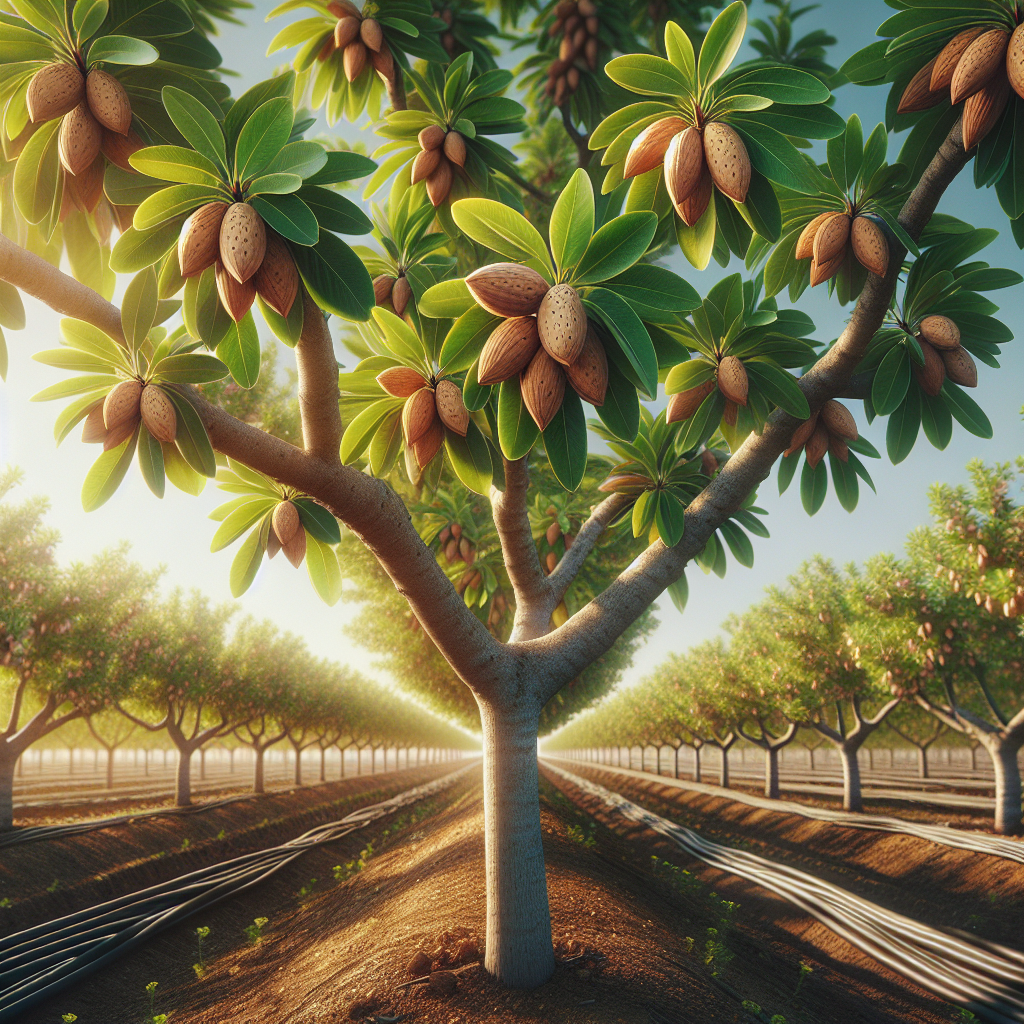
Introduction to Nonpareil Almond
Among almond cultivars, this one is widely regarded as the premium industry standard for kernel appearance, processing quality, and market acceptance. Originating in California in the late 19th century, it became dominant because of its thin shell, light-colored kernel, high crack-out percentage, and suitability for roasting, blanching, slicing, and confectionery use. In many commercial orchards, it is the anchor variety around which pollinizers, bee placement, irrigation scheduling, and harvest logistics are planned.
Its strengths are substantial but come with tradeoffs. It blooms relatively early, which exposes flowers and young fruitlets to spring frost risk. It is self-incompatible, so it requires cross-pollination from compatible flowering cultivars and strong bee activity during bloom. The shell seal is not as tight as in harder-shell almonds, which can increase vulnerability to insects and weather damage if harvest is delayed. Growers choosing this cultivar are usually doing so because they want premium kernel quality and are prepared to manage the orchard intensively.
In regions with classic Mediterranean conditions—cool, moderately wet winters followed by warm, dry springs and hot, low-humidity summers—it performs exceptionally well. In more humid climates or regions with frequent bloom-time rain, disease pressure rises sharply and economic success becomes less certain. For a broader species overview, see Almond.
Botanical Profile of Nonpareil Almond
This cultivar belongs to the rose family, Rosaceae, and is botanically classified as Prunus dulcis. Almond trees are closely related to peaches, and the resemblance is obvious in foliage, bloom habit, and pruning response. Trees are deciduous, moderately vigorous, and typically develop an open, vase-like canopy when trained conventionally. Mature height commonly reaches 4.5 to 6.5 meters in managed orchards, though spacing, rootstock, soil vigor, and pruning style can alter final size.
Leaves are narrow, lanceolate, finely serrated, and medium green. Flower buds are borne mostly on spurs and some one-year wood. Blossoms are white to very pale pink, usually appearing before or just with leaf emergence. Because floral tissues are exposed early in the season, bloom timing is one of the defining agronomic characteristics of this cultivar. Its early bloom gives it strong overlap with common pollinizers, but also places it in the path of late cold events.
The nut itself is technically a drupe. The outer hull is green and leathery while developing, then splits at maturity. Inside is a thin, pitted shell enclosing the edible seed. The kernel is elongated, smooth, light colored, and especially valued for uniformity. The soft shell makes processing easier and raises edible yield, but also means orchard sanitation and timely harvest are particularly important.
Nonpareil is not self-fertile. It depends on compatible pollen from other almond cultivars with overlapping bloom windows. Historically, growers paired it with cultivars such as Ne Plus Ultra, Carmel, Monterey, or Mission types depending on region and market strategy. Pollination is carried largely by honeybees, and poor weather during bloom—cold, wind, rain, or low light—can significantly suppress bee movement and nut set.
Rootstock choice matters. In heavier soils or replant situations, rootstocks selected for nematode tolerance, disease resistance, or vigor may improve long-term survival. In lighter, well-drained soils, more standard rootstocks can perform well. Tree behavior, anchorage, drought tolerance, and salinity response are all partly influenced by the root system beneath the scion.
Soil, pH, and Climate Requirements for Nonpareil Almond
This cultivar performs best in deep, well-drained, aerated soils with moderate water-holding capacity. Ideal soils are sandy loam, loam, or fine sandy loam with at least 1.5 to 2 meters of penetrable profile and no restrictive hardpan. Good drainage is non-negotiable. Almond roots require oxygen, and prolonged saturation leads quickly to root decline, crown disorders, and weak canopy growth. If water stands in a planting hole more than 24 hours after a heavy irrigation or rain, the site is usually unsuitable without drainage correction.
The preferred soil pH is about 6.5 to 7.8, though trees can tolerate a somewhat wider range if nutrition is carefully managed. At pH above 8.0, zinc, iron, and sometimes manganese deficiencies become more likely, showing up as interveinal chlorosis, shortened shoots, and pale new growth. At very low pH, calcium and magnesium imbalances may develop and root performance can suffer. Before planting, perform a full soil analysis including pH, electrical conductivity, sodium adsorption risk, boron, chloride, calcium carbonate percentage, organic matter, and macro- and micronutrients.
Salinity tolerance is moderate at best. Sensitive stages include early leaf-out and sustained summer production. If irrigation water has elevated sodium, chloride, or boron, leaf burn may appear along margins and tips, especially on older leaves. Yield losses can follow long before obvious damage appears. Where water quality is marginal, periodic leaching fractions and excellent drainage are essential.
Climatically, this cultivar is best suited to Mediterranean and warm-temperate regions with 200 to 500 winter chill hours, depending on local adaptation and season pattern, followed by a dry bloom-to-harvest period. It tolerates winter dormancy well, but flowers and tiny developing nuts are vulnerable once bloom begins. Temperatures near -2 to -3°C during full bloom can injure blossoms, and similar temperatures after petal fall may damage young fruit. Dry weather during bloom is ideal because rain interferes with pollinator activity and promotes Blossom brown rot.
Summer heat is beneficial for kernel fill and hull split, provided irrigation is adequate. Daytime temperatures of 30 to 38°C are common in top-producing areas. Extreme heat above 40°C can stress trees, especially under deficit irrigation, causing leaf scorch, spur mortality, and reduced next-season bloom potential. Hot climates with low humidity are generally preferable to warm, humid climates because foliar and hull diseases are less severe.
Wind exposure should also be considered. Strong persistent winds reduce bee flight during bloom, increase evapotranspiration, and can cause limb breakage or nut drop. Good air drainage reduces frost pockets, while slight slope improves cold air movement and can materially improve spring survival.
Step-by-Step Planting & Propagation
Commercially, this cultivar is established almost exclusively by grafted nursery trees, not by seed. Seedling propagation does not preserve true-to-type fruiting characteristics, and seedling trees vary widely in vigor, bloom timing, shell traits, and yield. Purchase certified, disease-free nursery stock grafted onto a rootstock suited to your soil, nematode pressure, and irrigation conditions.
Begin with site preparation at least several months before planting. Deep rip compacted layers if present, ideally when soil moisture is appropriate for shattering rather than smearing. Correct drainage issues first. Incorporate gypsum if sodium is high and calcium is low, according to soil test recommendations. Build berms or raised rows where internal drainage is borderline. Pre-plant weed control is especially important because young almond trees are poor competitors in their first two seasons.
Plant during dormancy, usually late winter in mild climates once severe freeze risk has eased and the soil is workable. Bare-root trees should be planted before buds push strongly. Container trees offer slightly more flexibility but still establish best in cool-season conditions.
Use orchard spacing based on vigor, machinery, and training system. Traditional spacings might range from 5 to 6 meters between rows and 4 to 6 meters within rows. Higher-density systems may be used on less vigorous rootstocks or in highly managed orchards, but crowding increases pruning demand and can elevate disease pressure.
When planting:
- Mark the final positions of the main cultivar and pollinizer rows in advance.
- Ensure pollinizers are distributed so no major block of trees is too far from compatible pollen. Alternating rows or planned row ratios are common.
- Dig a hole broad enough to spread roots naturally without bending or circling.
- Set the tree so the graft union remains above the final soil line.
- Backfill with native soil unless a soil test specifically justifies amendment; heavily amended planting holes can create water interface problems.
- Irrigate immediately after planting to settle soil around roots.
- Head the tree to the desired training height if this was not done by the nursery.
After planting, whitewash the trunk and exposed scaffold bases with diluted interior white latex paint to reduce southwest injury and sunburn. Install guards where rodents, rabbits, or mechanical damage are concerns.
For growers interested in propagation, bench grafting and budding are standard professional methods. T-budding in summer onto compatible rootstocks is common in nursery production. Successful propagation requires clean plant material, careful cambial alignment, and strict sanitation to avoid transmitting viruses or fungal Cankers.
Pollination planning is part of planting, not an afterthought. Because this cultivar is self-incompatible, orchard design must include compatible bloom partners and sufficient hive density. Inadequate pollinizer arrangement cannot be fully corrected later by simply adding more bees.
Care & Maintenance regimes for Nonpareil Almond
Irrigation is the central management lever. Almond trees need consistent moisture from leaf-out through kernel development, but they also demand aerated soil. The goal is to maintain active root-zone moisture without prolonged saturation. In practical terms, the upper 30 to 60 cm should cycle between moist and slightly drying, while deeper moisture is replenished before trees experience significant midday stress. Overwatering signs include persistently wet soil more than 24 to 48 hours after irrigation, yellowing leaves without obvious nutrient cause, weak pale shoot growth, sour-smelling soil, gumming near the crown, and increasing Phytophthora risk. Underwatering appears as dull or folded leaves, reduced shoot extension, spur dieback, smaller kernels, early hull split irregularity, and afternoon canopy wilting that does not fully recover by morning.
During the first year, water frequently enough to keep the young root zone uniformly moist but never swampy. In mature orchards, irrigation intervals depend on texture and weather: sandy soils may need shorter, more frequent sets; loams can tolerate longer intervals with deeper applications. Drip or micro-sprinkler systems allow better control than flood irrigation in most modern orchards. Water demand rises sharply from late spring through midsummer and remains important through hull split.
Fertilization should be based on leaf analysis, yield targets, and irrigation regime. Nitrogen is usually the primary driver of vegetative growth and nut production. Split applications are best, beginning after leaf-out and extending through active canopy growth. Excess nitrogen late in the season can delay hardening and increase disease susceptibility. Potassium is critical for nut fill and overall tree function, particularly in high-yielding orchards. Zinc is frequently needed, often applied foliarly when deficiency is confirmed. Boron is essential for bloom and fruit set, but the margin between deficiency and toxicity is narrow, so tissue analysis is important.
Train young trees to a strong framework, commonly an open center or modified open vase. Select 3 to 4 well-spaced scaffold limbs with wide crotch angles. Remove narrow, competing uprights early. In the first three years, prioritize structure over heavy cropping. Mature pruning should focus on light distribution, renewal of fruitful wood, removal of dead or diseased limbs, and maintenance of workable tree height. Overly dense canopies reduce air movement, suppress flower bud quality inside the tree, and increase disease pressure.
Weed control around the tree row is essential for young orchards. Keep a vegetation-free strip around trunks to reduce competition for water and nutrients. In organic systems, mulch can help, but it must be kept away from the crown to prevent bark rot and vole habitat. Managed alley vegetation can reduce dust, improve infiltration, and support beneficial insects if it is not allowed to compete aggressively during peak water demand.
Thinning is generally unnecessary because almonds self-regulate crop load more than many stone fruits, but crop stress must still be monitored. Alternate bearing is less dramatic than in some fruit trees, yet heavy crops combined with heat or water stress can reduce return bloom.
Bee management is critical at bloom. Strong colonies should be placed when flowers are opening, not after peak bloom has passed. Avoid insecticide applications during bloom. Even mild disturbance to pollinators at that stage can lower nut set substantially. Orchard floor flowering plAnts can aid pollinator activity before and after almond bloom, and Thyme is one useful low-growing support species in selected edge or non-competitive zones.
For broader principles on cover crops and organic fertility building, the ideas in soil health strategies are applicable to almond orchard floors when adapted to local water budgets.
Pests, Diseases & Organic Management
The main disease vulnerabilities are concentrated around bloom, spring canopy growth, and hull split. Blossom brown rot is one of the most serious problems where rain or prolonged humidity occurs during flowering. Infected blossoms wilt, brown, and may remain attached; shoots can also blight back. Good air circulation, sanitation, and preventive organic fungicide programs timed to weather risk are essential.
Shot hole can infect leaves, twigs, and fruit, producing small lesions that later drop out, leaving a perforated appearance. Rust may develop later in the season in humid conditions, leading to premature defoliation and weaker return bloom. Anthracnose, Hull rot, and various Cankers can also become economically important depending on region.
Root and crown rots, especially Phytophthora-related issues, are strongly tied to poor drainage and over-irrigation. Prevention is much more effective than rescue. Never allow irrigation emitters to keep the crown constantly wet, and avoid planting into heavy, compacted, low-oxygen soils without remediation.
Key insect pests vary by region but may include Navel orangeworm, Peach twig borer, Scale insects, Mites, Stink bugs, Ants, and Borers. Navel orangeworm is especially important in soft-shell almonds because delayed harvest and mummy nuts create ideal carryover habitat. Mummies left in the tree after harvest are one of the most important sources of next-season infestation.
Organic management depends on layering tactics:
- Winter sanitation: remove or destroy mummy nuts from trees and orchard floor.
- Canopy management: prune for air flow and spray penetration.
- Irrigation discipline: avoid excess vigor and Hull rot-promoting moisture late in the season.
- Beneficial habitat: maintain non-invasive flowering strips or borders to support natural enemies.
- Monitoring: use traps, degree-day models where available, and direct scouting rather than calendar spraying.
- Biologicals and allowed materials: Bacillus-based products, horticultural oils, sulfur, copper, kaolin clay, and approved microbial or botanical controls may all have roles depending on target pest and certification rules.
Mites often flare in hot, dusty conditions. Keeping road dust down, preserving predatory Mites, and avoiding unnecessary broad-spectrum materials are central to management. Scale and aphid issues are often worsened by excess nitrogen and disrupted biological control.
Gummosis, Cankers, and scaffold dieback should always trigger investigation into root health, pruning timing, sunburn, borer activity, and irrigation patterns. Symptom-based management alone is rarely enough; the underlying stress factor must be identified.
Harvesting, Curing & Optimal Storage
Harvest timing is based on hull split and kernel maturity. In this cultivar, timely harvest is particularly important because the thin shell and premium kernel quality can be compromised by weathering, insect entry, and delayed shaking. Typically, harvest begins when a high percentage of nuts show full hull split and the hull has dried enough to separate cleanly. Kernels should be firm, fully developed, and no longer rubbery.
In orchard-Scale production, trees are shaken and nuts are allowed to dry on the orchard floor for several days, depending on weather. During this curing period, nuts should be turned if needed for even drying and picked up before rain, heavy dew cycles, or insect pressure causes losses. In smaller plantings, tarps or clean drying surfaces can reduce contamination.
Proper curing reduces kernel moisture to a safe storage range, generally around 6% or lower for stable storage, though exact targets vary by market channel. If nuts are put into storage too wet, mold growth, rancidity, and insect problems accelerate. Signs of insufficient drying include leathery hull remnAnts, pliable shells, and kernels that feel soft rather than crisp when cut.
After harvest, remove hulls promptly if they are still attached. Clean away debris, damaged nuts, blanks, and visibly moldy lots. Store almonds in cool, dry, dark conditions with low relative humidity and excellent rodent protection. For longer storage life, temperatures near 0 to 10°C are much better than warm shed conditions. Because almonds are rich in oil, high temperatures and oxygen exposure gradually reduce flavor quality. Vacuum sealing or well-sealed food-grade containers greatly improve shelf life for small growers.
If storing in-shell, maintain dryness and inspect regularly for insect activity. Shelled kernels are more convenient but also more exposed to oxidation, moisture pickup, and odor absorption. Never store near fuels, onions, chemicals, or aromatic products.
Companion Planting for Nonpareil Almond
In almond systems, companion planting should support pollination, beneficial insects, soil structure, and orchard trafficability without competing heavily for summer moisture. The best companions are usually low-growing, seasonally managed species placed in alleyways, borders, or designated strips rather than directly at the trunk line.
Yarrow is valuable for attracting parasitic wasps, hoverflies, and other beneficial insects. Its long bloom period can strengthen biological control around orchard margins. Clover works well as a cool-season living cover in many orchards, adding organic matter, improving soil aggregation, and supplying some biologically fixed nitrogen when managed correctly. It should be mowed or terminated before peak summer water competition in dry climates. Nasturtium can be useful in smaller plantings and diversified orchards as an insectary and trap plant, especially near edges. Garlic is sometimes used in mixed home-Scale systems because of its strong scent and compact growth, though its biggest value is usually efficient understory use rather than dramatic pest suppression.
Avoid tall, dense companion species that shade trunks, impede air circulation, or harbor rodent populations. In water-limited regions, any companion planting must be subordinated to the almond tree’s irrigation priority. The most successful orchard floor systems are usually mowed, monitored, and adjusted seasonally rather than left unmanaged.
Remember that companion plAnts are tools, not substitutes for pollinizer cultivars. They can improve ecosystem function around the orchard, but they do not replace the need for compatible almond pollen sources and strong bee activity during bloom.