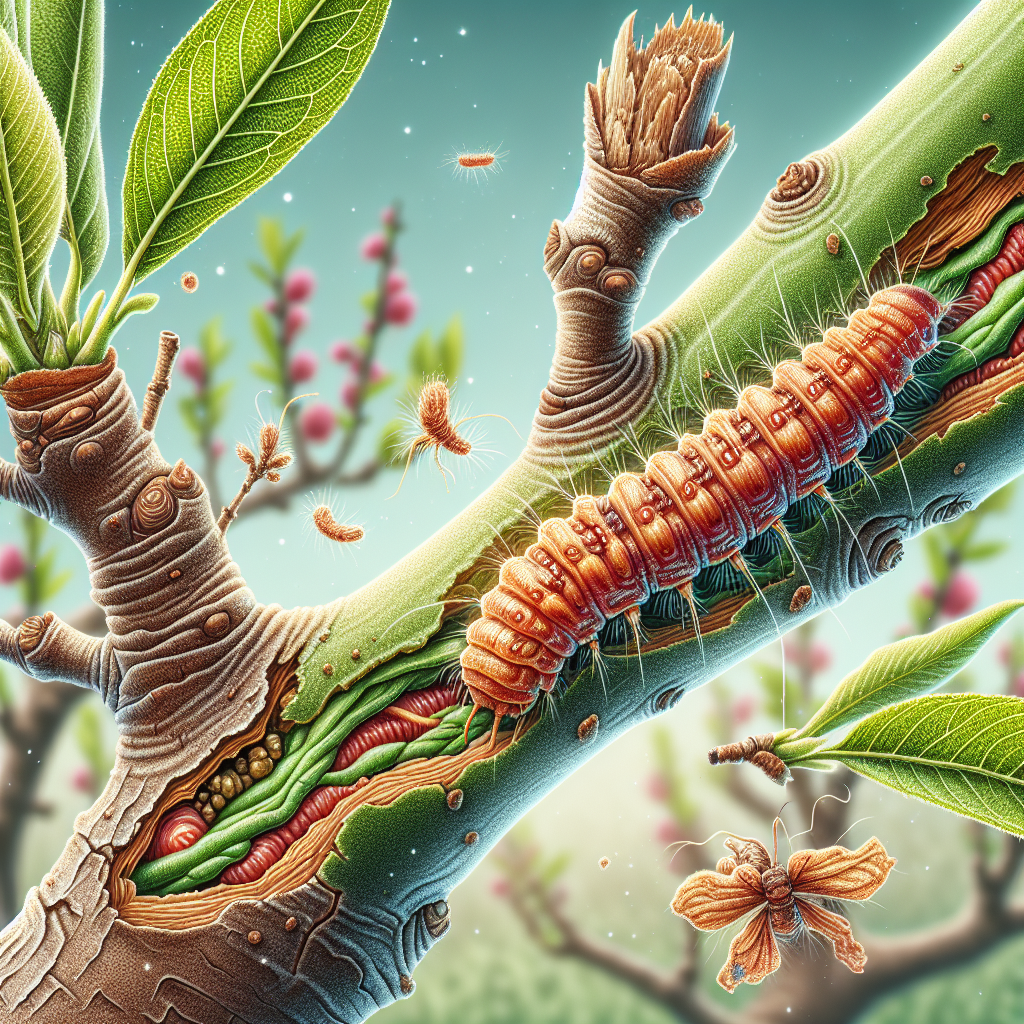
Introduction to Peach twig borer
The peach twig borer, scientifically known as Anarsia lineatella, is a pervasive insect pest that poses a serious threat to stone fruit orchards worldwide. Native to regions around the Mediterranean but now widespread in North America, Europe, and parts of Asia, this moth's larvae inflict damage by tunneling into tender twigs, shoots, buds, and developing fruits. First identified as a major pest in the early 20th century in California peach orchards, it has since become a key concern for commercial growers and home gardeners alike. Yield losses can reach 20-50% in untreated infestations, primarily through twig dieback, gummosis, and fruit scarring that renders produce unmarketable.
Understanding this pest is crucial for Peach cultivation, as it overwinters as a larva and launches multiple generations per season, synchronizing with bud break and fruit set. Unlike broader defoliators like aphids, the peach twig borer's boring habit makes it challenging to detect early, often leading to hidden damage that weakens tree vigor over time. This guide equips growers with diagnostic tools, lifecycle insights, and organic management plans to minimize impacts while preserving beneficial insects and soil health. For more on integrated pest strategies, check this Spring Pest Patrol resource.
Identifying Symptoms & Damage
Early detection is vital for curbing peach twig borer outbreaks. Look for reddish-brown frass (insect waste) at the base of new shoots or around buds, often mixed with gummy sap—a telltale sign of larval entry. Affected twigs show wilting tips that turn black and die back, creating a 'shepherd's crook' appearance where the shoot curls downward. In severe cases, multiple twigs die, leading to sparse canopy and reduced photosynthesis.
On fruits, small, round scars or 'cat-facing' deformities appear where larvae feed on the surface before boring in, especially on Elberta Peach varieties. Gummosis, or excessive sap oozing from wounds, is common and can mimic bacterial canker, but twig borer damage features silk-lined tunnels packed with frass. Inspect terminals in spring; tiny pinkish-purple larvae (up to 1/2 inch long) with brown heads may be visible inside. Differentiate from leafrollers by the straight boring tunnels versus webbing.
Secondary symptoms include sooty mold on sap flows, attracting ants, and predisposition to brown rot blossom blight. Monitor trees weekly from bud swell through petal fall using pheromone traps to quantify moth flight. Damage thresholds: 5-10% shoot tips infested warrants action. In Plum and Almond orchards, similar symptoms occur but with less fruit scarring due to pit hardness.
Lifecycle and Progression of Peach twig borer
Anarsia lineatella completes 2-4 generations annually, depending on climate, with all stages overlapping in warm regions. Adults are small, grayish moths (1/4 inch wingspan) with black and white stripes, active at dusk. Females lay 50-100 eggs singly on buds, leaves, or bark from April to September.
Eggs hatch in 7-14 days into tiny larvae that mine buds initially, then bore into shoots. Larvae overwinter in shallow bark tunnels or cocoons near crotches, pupating in spring (March-May). First generation peaks at bloom; second at fruit set. Full cycle: egg (10 days), larva (3-6 weeks), pupa (10-14 days), adult (1-2 weeks). In cooler areas like the Pacific Northwest, only two broods occur; in California's Central Valley, up to four.
Degree-day models (base 50°F) predict flights: first at 100-200 DD, second at 600-800 DD. Larvae pass through five instars, molting between tissues. Overwintering survival exceeds 80% under bark scales. Understanding this progression allows targeted interventions, such as BT sprays at egg hatch.
Environmental Triggers & Risk Factors
Peach twig borer thrives in warm, arid climates with mild winters, where overwintering larvae survive readily. High humidity during egg-laying boosts hatch rates, while drought-stressed trees are more susceptible due to tender shoots. Susceptible varieties include early-ripening peaches like Redhaven Peach and nectarines; resistant ones like late-season cultivars show less damage.
Poor sanitation—leaving infested prunings—increases carryover. Nearby Cherry or Apricot orchards serve as reservoirs. Over-fertilization with nitrogen promotes succulent growth, attracting moths. Weed hosts like Russian thistle harbor pupae. Climate change extends generations in northern latitudes. Risk is highest in blocks over 5 years old with dense canopies blocking sprays.
Organic Control & Treatment Plans
Organic management emphasizes prevention and biologicals over broad-spectrum sprays. Cultural: Prune infested twigs post-harvest (November-February), destroying larvae by shredding debris. Thin canopy for 50% light penetration to deter boring.
Biological: Bacillus thuringiensis (BT) kurstaki applied at twilight (larvae feeding time) for first/second instars, 7-10 day intervals, 3 applications per generation. Efficacy: 80-95%. Release Trichogramma wasps (egg parasitoids) at 100,000/acre pre-bloom.
Organic Sprays: Neem oil or spinosad (Entrust) at petal fall and fruit set, covering undersides. Horticultural oil smothers overwinterers in dormant season (50-60% control). Pheromone mating disruption with hand-applied ties (20/acre) confuses males, reducing egg-laying by 70%.
Monitoring Plan: Deploy 2-4 delta traps/acre with lures; treat at 10-15 moths/trap/week. Scout 25 shoots/tree. Integrated with caterpillars management for synergy. Rotate modes to prevent resistance.
Preventing Peach twig borer in the Future
Long-term prevention hinges on sanitation, monitoring, and resistant practices. Plant certified, borer-free stock. Maintain vigor with balanced irrigation/fertilization—avoid excess N. Surround with trap crops or marigold borders to divert moths.
Annual dormant oil + BT dormant spray breaks overwintering cycle. Use reflective mulches early season to disorient adults. Encourage predators like lacewings via flowering understory. Rotate cultivars; interplant with garlic or thyme repellents.
IPM threshold: 2% shoot infestation. Record degree-days for precise timing. Clean equipment to avoid spread. In 3-5 years, consistent practices reduce populations 90%.
Crops Most Affected by Peach twig borer
Primarily stone fruits: peach (most severe), nectarine, apricot, plum, cherry, prune, almond. Peaches suffer highest losses (up to 40% in California). Apricots show bud drop; almonds have nut drop from shoot weakening. Rarely impacts Apple or Pear, preferring Prunus spp. In mixed orchards, monitor all.
Word count: 1452