Introduction to Shot hole
Shot hole disease, caused primarily by the fungus Wilsonomyces carpophilus (syn. Stigmina carpophila), is one of the most common foliar diseases affecting stone fruit trees like peach, cherry, plum, and apricot, as well as ornamental Prunus species. First identified in the early 20th century, it derives its name from the distinctive small, ragged holes that appear in leaves after infected tissues fall out, resembling buckshot blasts. This disease thrives in cool, wet conditions typical of spring and fall, making it a persistent challenge in temperate growing regions worldwide, from the Pacific Northwest to the humid Southeast of the US, and parts of Europe and Asia.
While not typically lethal, shot hole significantly impacts yield and quality by defoliating trees prematurely, reducing photosynthetic capacity, and weakening overall vigor. In severe cases, it can lead to 20-50% leaf loss, stunting growth and increasing susceptibility to other issues like powdery mildew or anthracnose. Fruit infections cause blemishes that render produce unmarketable, especially in fresh-market cherries and peaches. Early detection and integrated management are crucial for commercial orchards and home gardens alike. Understanding its biology allows growers to implement proactive strategies that minimize losses without heavy reliance on synthetic chemicals. For small farms, tools like hyper-local weather monitoring can predict outbreaks—check out Why 80% of Small Farms Battle Weather Disasters - And How Hyper-Local AI Forecasts Can Save Your Harvest for practical tips.
Identifying Symptoms & Damage
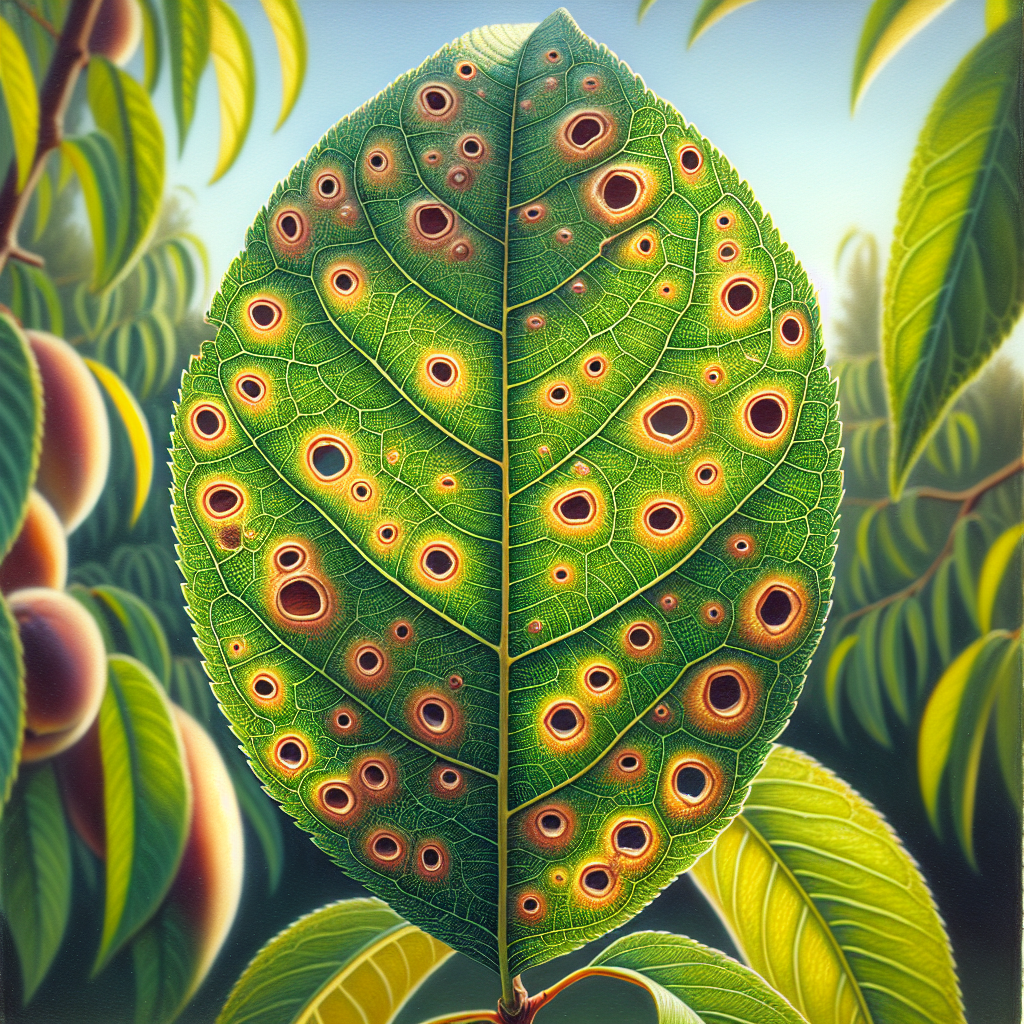
Shot hole symptoms begin subtly in early spring as small, circular purple to brown spots (1-3 mm) on the upper leaf surface, often near veins or margins. These spots expand slightly, turn olive-brown, and develop a papery texture as fungal mycelium penetrates the tissue. Within 1-2 weeks, the center of the spot dies and drops out, leaving clean-edged "shot holes" 1/8 to 1/4 inch in diameter. Heavily infected leaves appear lace-like, yellow, and curl before premature defoliation by mid-summer.
On twigs and branches, purple to reddish-brown lesions form, sometimes girdling small shoots and causing dieback. Fruit symptoms include reddish-purple spots that enlarge into sunken, corky areas with shot holes around the edges, particularly on young green peaches and cherries. Infected buds fail to open or produce deformed shoots. Differentiate from bacterial shot hole (Xanthomonas arboricola pv. pruni) by the lack of water-soaked halos and ooze; shot hole lesions are drier and more uniform. Secondary invaders like bacterial leaf spots may follow, complicating diagnosis.
Damage quantification: In orchards, 10-30% defoliation reduces next season's fruit set by 15-25%, per UC IPM studies. Trees under stress from drought or poor nutrition show amplified symptoms, with holes coalescing into larger blights. Scout weekly from bud break, using a 10x hand lens to spot early fruiting bodies (acervuli) producing pinkish spore masses in humid conditions. Yield impacts are most severe on young trees, where vigor loss delays maturity by 1-2 years.
Lifecycle and Progression of Shot hole
Wilsonomyces carpophilus overwinters as mycelium in fallen leaves, twig lesions, and bud scales. Spores (conidia) germinate in spring rain when temperatures hit 50-75°F (10-24°C), with optimal infection at 59°F (15°C) and leaf wetness >9 hours. Primary infections occur on new leaves from pink bud to shuck split stages, with spores splashing up to 3 feet via rain or overhead irrigation.
The lifecycle spans 14-21 days: spore germination → penetration via stomata or wounds → 7-10 day incubation → lesion formation → new spore production in acervuli. Multiple cycles (4-6 per season) drive epidemics in wet years. Summer infections slow as heat dries foliage, but latent infections resume in fall. Overwintering survival exceeds 80% in leaf litter, per research from Washington State University.
Progression varies by host: On cherry, rapid defoliation by June; on peach, more twig involvement leading to cankers. Humid microclimates accelerate spread, with spores viable 4-6 weeks. Understanding this polycyclic nature informs timing: protect during 80% bloom to petal fall, when 70% of inoculum develops.
Environmental Triggers & Risk Factors
Wet springs with >10 rainy days in April-May trigger outbreaks, as leaf wetness periods >48 hours enable 90% infection rates. Temperatures below 77°F (25°C) prolong spore germination, while highs above 86°F (30°C) halt epidemics. Overhead irrigation, dense canopies, and poor air drainage in valleys exacerbate splashing and humidity.
Risk factors include susceptible varieties like 'Redhaven peach' or 'Bing cherry', excessive nitrogen promoting lush growth, and planting on heavy clay soils with poor drainage. Defoliation from prior leaf spot diseases stresses trees, increasing vulnerability. Regions like Michigan's fruit belt see annual epidemics due to lake-effect moisture. Soil pH >7.5 limits calcium uptake, weakening cell walls against fungal enzymes.
Organic Control & Treatment Plans
Integrated organic management starts with sanitation: Rake and destroy fallen leaves in fall/winter, reducing inoculum by 60-70%. Prune for 20-30% canopy openness to enhance drying; remove cankers >2 inches. Apply copper-based fungicides (e.g., Bordeaux mix) at bud swell, pink bud, and petal fall—3-4 sprays at 7-10 day intervals during wet periods. Sulfur or potassium bicarbonate follow for mid-season protection, with efficacy >75% in trials.
Biologicals like Bacillus subtilis (Serenade) suppress via competition; apply weekly from green tip. Neem oil disrupts spore germination. For severe cases, combine with resistant rootstocks like 'Lovell' peach. Monitor with weather-based models: Spray only if >9 hours wetness predicted. Home growers: Mulch with 4 inches compost to boost resilience. Rotate with non-hosts like garlic interplants to deter. Expect 80-90% control with diligent timing.
Preventing Shot hole in the Future
Prevention hinges on site selection: Choose well-drained slopes with good airflow, avoiding low spots. Plant resistant cultivars like 'Cresthaven' peach or 'Rainier cherry'. Balance nutrition—1-2% foliar calcium sprays strengthen tissues. Avoid overhead watering; drip irrigate to keep foliage dry.
Annual cultural practices: Deep fall tillage buries debris; mow orchard floor to speed decomposition. Scout biweekly, using sticky traps for early detection. Build soil health with cover crops like clover to enhance microbial antagonism—see Soil Health Mastery: 5 Proven Strategies for Small Farms to Build Fertile Ground Without Breaking the Bank. Long-term: Scout for aphids, as honeydew fosters sooty mold aiding shot hole. Rotate fungicides to prevent resistance. Yields increase 20-30% with 3-year prevention plans.
Crops Most Affected by Shot hole
Primarily stone fruits: Peach (80% infection rates), nectarine, cherry, plum, apricot. Ornamentals like flowering almond, flowering peach. Less common on almond, but severe in wet years. Avoid confusion with lookalikes on apple (different pathogens). In mixed orchards, isolate Prunus blocks. Commercial impact: $10-20M annual US losses, per USDA estimates.