Introduction to Hull rot
Hull rot represents one of the most challenging fungal diseases in peanut production, leading to substantial economic losses for growers worldwide. Primarily caused by the fungus Monilochaetes infuscans, with secondary pathogens like Aspergillus spp. and Rhizoctonia spp. contributing to the decay, hull rot targets the protective hulls of developing peanut pods. This disease is particularly devastating in regions with high humidity and warm temperatures, such as the southeastern United States, parts of Africa, and Asia, where peanuts (Arachis hypogaea) are a staple crop.
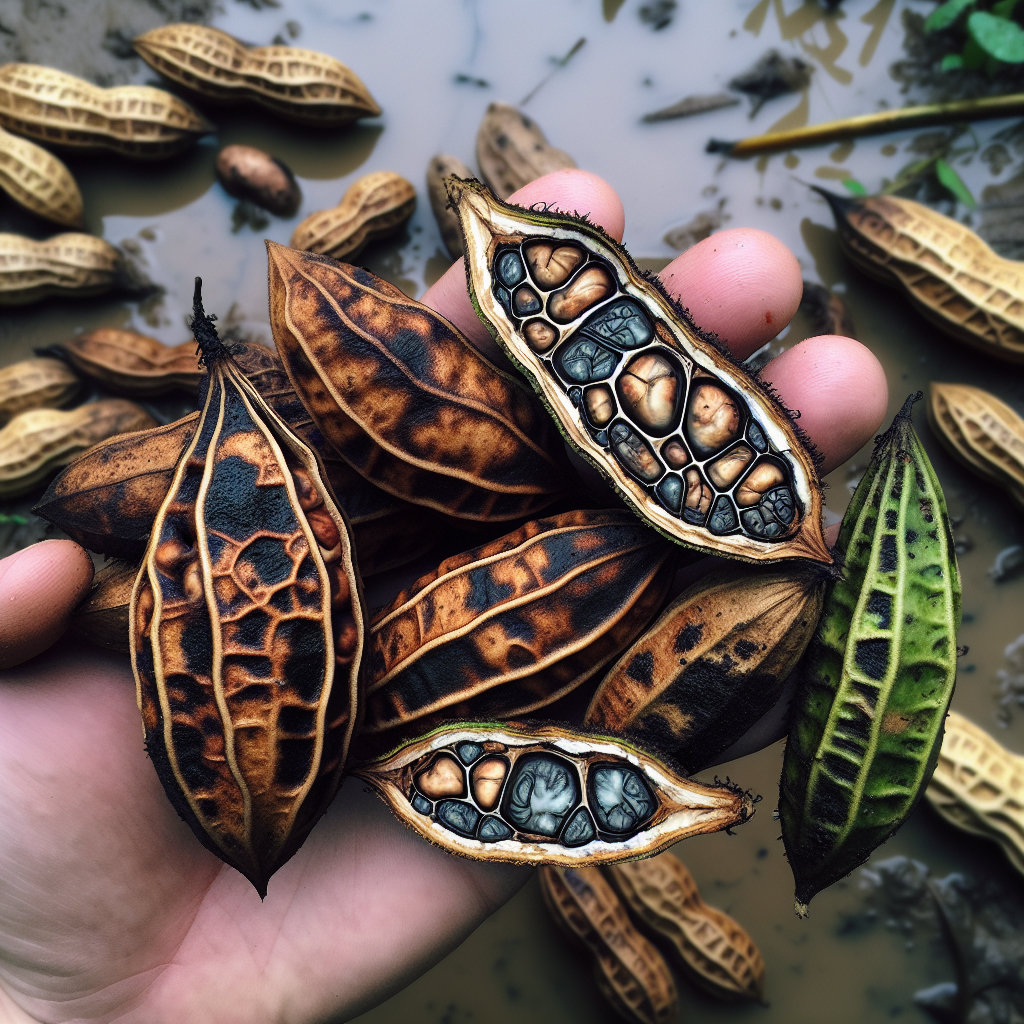
The name 'hull rot' derives from the characteristic rotting of the peanut pod hulls, which turn dark brown to black, become brittle, and often disintegrate, exposing seeds to further infection and contamination. Yield losses can reach 20-50% in severe outbreaks, with affected pods producing discolored, shriveled kernels unsuitable for market or processing. Beyond direct yield reduction, hull rot complicates harvest and storage, increasing susceptibility to aflatoxin contamination—a major food safety concern. Early detection and integrated management are crucial, as chemical fungicides are often ineffective against the primary pathogen. This guide provides comprehensive diagnostic criteria, lifecycle insights, and proven organic strategies to combat hull rot effectively. For more on peanuts, see our detailed crop profile.
Understanding hull rot's biology is key to prevention. The fungus thrives in soil with high moisture and temperatures between 25-32°C (77-90°F), infecting pods through wounds or directly via natural openings. Spores splash onto pods during rain events, germinating rapidly in free water. Infected hulls serve as reservoirs for inoculum, perpetuating the disease cycle across seasons. Small-scale and commercial growers must prioritize soil health and pod positioning to mitigate risks.
Identifying Symptoms & Damage
Accurate diagnosis of hull rot begins with scouting fields at the pegging to pod-filling stages (approximately 40-80 days after planting). Initial symptoms appear as small, water-soaked spots on the outer hull surface, progressing to irregular, sunken lesions that expand rapidly under wet conditions. These lesions darken to reddish-brown, then black, often with a zonate pattern due to successive fungal growth waves.
As rot advances, hulls crack open, revealing decayed white to tan seed coats and shriveled, discolored kernels. Severe infections cause complete pod disintegration, leaving only loose seeds in the soil—a condition known as 'pod breakdown.' Unlike root rot, hull rot spares roots and pegs initially but can lead to secondary invasions by soilborne pathogens like Fusarium spp. Damage assessment involves digging pods from multiple plants; infection rates above 10% warrant immediate action.
Economic impact is profound: marketable yield drops due to off-color kernels, while quality suffers from increased seed infection rates. In storage, affected pods promote mycotoxin production, rendering them unfit for human or animal consumption. Differentiate from charcoal rot, which produces black sclerotia inside pods, or bacterial pod rot, lacking the zonate lesions. Use a hand lens to spot fungal mycelium or pycnidia (fruiting bodies) on lesions for confirmation. Digital imaging tools can aid in early field diagnosis, enhancing precision agriculture.
Lifecycle and Progression of Hull rot
Monilochaetes infuscans survives between seasons as mycelium in infected plant debris and soil, with conidia (spores) produced on hull lesions during wet weather. Primary infection occurs when rain splashes spores onto pegs and immature pods around 30-50 days post-planting. Germination requires 6-12 hours of leaf wetness, optimal at 28°C (82°F).
Once inside the hull, the fungus colonizes epidermal tissues, producing enzymes that soften cell walls. Progression accelerates during pod maturation (R6-R8 growth stages), with lesions coalescing and hulls splitting. Secondary spread via rain splash infects nearby pods, creating disease foci. Under prolonged humidity (>90% RH), pycnidia release conidia continuously, extending the epidemic.
The disease cycle completes at harvest, with infested debris plowed under, perpetuating soil inoculum. In no-till systems, residue persistence heightens risk. Temperature-humidity models predict outbreaks; for instance, 10 consecutive rainy days at >25°C signal high danger. Understanding this lifecycle informs timely interventions, such as avoiding irrigation during peak vulnerability.
Environmental Triggers & Risk Factors
Hull rot epidemics are driven by environmental factors favoring fungal sporulation and infection. High soil moisture from excessive rain, poor drainage, or overhead irrigation is the primary trigger, maintaining pod zone humidity above 85%. Warm soils (26-30°C) accelerate germination, while compacted fields trap moisture around pegs.
Crop management practices exacerbate risks: dense plantings (>15 plants/m²) reduce airflow, creating microclimates for disease. Low soil calcium (<200 ppm) weakens hull integrity, easing penetration—common in sandy soils. Continuous peanut monoculture builds inoculum, with rotation breaks reducing incidence by 70%. Susceptible varieties like florunner types fare worse than upright growers like Georgia-06G.
Other factors include delayed planting into warm soils, promoting rapid pod set in wet conditions, and mechanical injury from cultivation, creating entry wounds. Climate change intensifies risks with erratic rains; coastal areas face heightened threats from hurricanes. Monitor Phytophthora interactions, as co-infections worsen decay. Soil testing for pH (optimal 6.0-6.5) and gypsum application mitigates vulnerabilities.
Organic Control & Treatment Plans
Organic management of hull rot emphasizes prevention, as curative options are limited. Start with certified disease-free seed treated with Trichoderma-based biocontrols, applied at 10g/kg seed. Crop rotation with non-hosts like corn or soybeans for 3-4 years depletes soil inoculum by 80-90%.
Enhance soil health via cover crops such as clover or velvetbean, improving drainage and calcium levels. Apply gypsum (500-1000 kg/ha) at pegging to strengthen hulls. Cultural tactics include wider row spacing (61-91 cm) for better canopy drying and avoiding irrigation post-peg. For active infections, remove and destroy heavily infested plants, avoiding soil splash.
Biological controls shine: Trichoderma harzianum and Bacillus subtilis suppress M. infuscans via antagonism. Apply as soil drenches (5-10 L/ha) at early pod set and 30 days later. Compost teas with actinomycetes show promise in field trials, reducing incidence by 40%. Neem oil foliar sprays deter secondary pests like aphids, which vector spores.
Resistant varieties like Tifguard or Bailey offer partial protection. Integrate with mulching to suppress splash dispersal. For detailed organic strategies, check our Spring Pest Patrol blog. Monitor weekly, acting when 5% pods show lesions. Post-harvest, hot water dip seeds (52°C for 10 min) sanitizes planting stock.
Preventing Hull rot in the Future
Long-term prevention hinges on integrated pest management (IPM) tailored to peanuts. Select resistant cultivars and certified seed annually. Implement 3-year rotations incorporating grasses like sorghum to starve the pathogen. Soil solarization in off-season (6 weeks under clear plastic) kills surface inoculum effectively in hot climates.
Optimize fertility: maintain Ca >250 ppm via lime/gypsum, and balance N-P-K to avoid lush growth favoring humidity. Precision irrigation (drip systems) keeps pod zones dry. Scout rigorously using disease thresholds: intervene at 2-5% incidence. Promote biodiversity with hedgerows of marigold to disrupt spore dispersal.
Farm hygiene is paramount—deep plow residues post-harvest, tilling to 30 cm. Windbreaks reduce rain splash in windy regions. Leverage weather data for forecast-based decisions, avoiding pod set during monsoon peaks. Build soil organic matter (>2%) via green manures for resilience. Annual soil tests guide amendments. Community-wide rotations amplify effects. With diligence, hull rot incidence can drop below 5%, ensuring sustainable yields.
Crops Most Affected by Hull rot
Hull rot predominantly impacts peanuts (Arachis hypogaea), with runner, virginia, and spanish market types most vulnerable due to prostrate growth and prolonged pod exposure. Varieties like Florunner suffer highest losses, while upright types like Georgia Green show tolerance.
Secondary hosts include tree nuts like pecan and almond, where similar hull decay occurs under wet conditions, though less economically significant. Limited reports note infections on soybeans pods mimicking symptoms, often confused with anthracnose. Peanuts remain the primary target, thriving in similar agroecologies. Global production hotspots (USA, India, China, Argentina) bear the brunt, with annual losses exceeding $100 million.