Introduction to Blossom brown rot
Blossom brown rot represents one of the most serious threats to stone fruit production worldwide, particularly during the critical bloom period. Caused primarily by the fungi Monilinia laxa and Monilinia fructicola, this disease targets blossoms, causing them to turn brown, wilt, and rot rapidly. In severe outbreaks, it can destroy up to 80-100% of the flower crop, severely impacting fruit set and yield. This guide provides comprehensive diagnostic criteria, lifecycle details, environmental insights, organic management strategies, and prevention tactics tailored for professional growers and home orchardists managing crops like peach, cherry, and plum.
Understanding blossom brown rot is essential because it spreads quickly under favorable conditions, often appearing as if overnight. Spores from overwintering mummies or cankers infect open flowers, leading to mycelial growth that produces more spores. Early detection through symptom recognition allows for timely intervention, minimizing losses. For small farms and commercial operations alike, integrating cultural, biological, and organic chemical controls forms the backbone of integrated pest management (IPM) programs. This disease is exacerbated by climate variability, making proactive monitoring vital. Recent studies highlight its increasing prevalence in regions with prolonged wet springs, underscoring the need for resilient orchard practices.
Identifying Symptoms & Damage
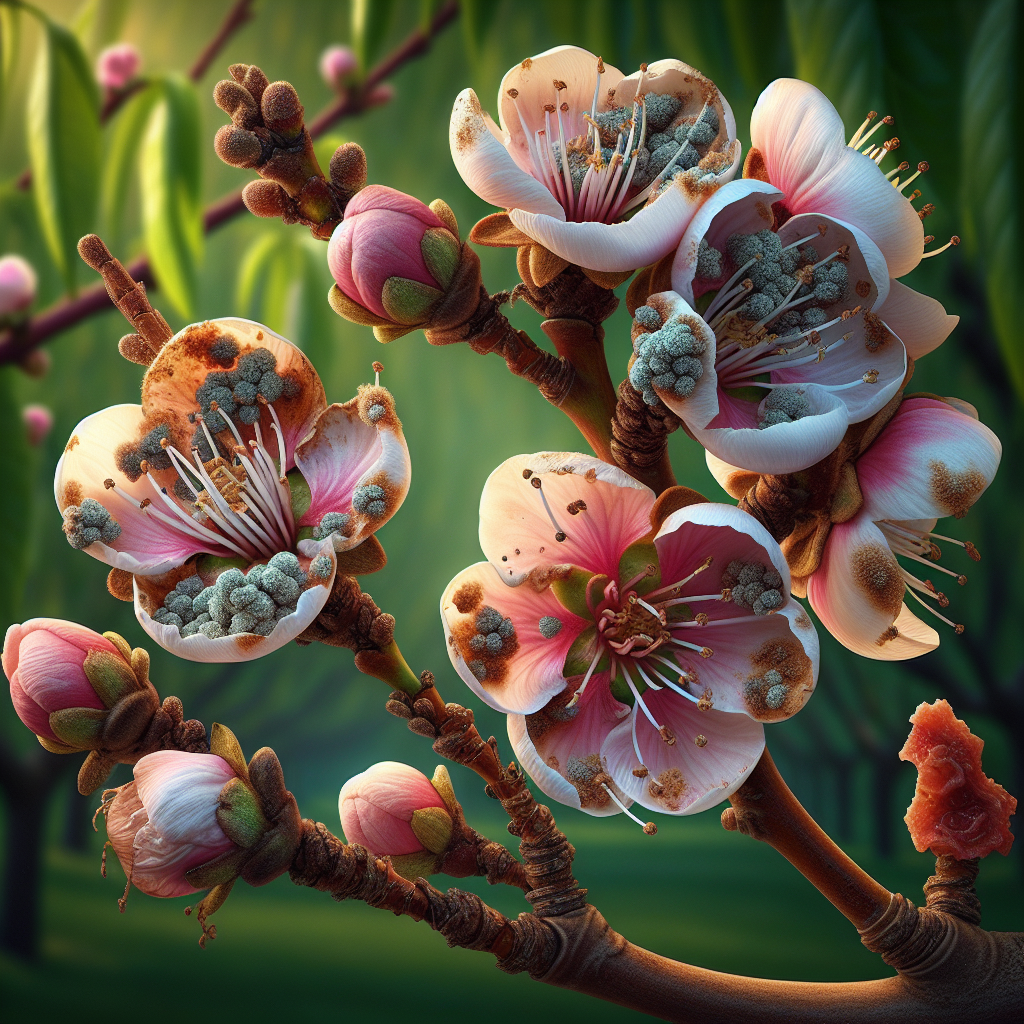
Accurate diagnosis starts with recognizing the distinctive symptoms of blossom brown rot. Infected blossoms initially show light brown discoloration at the petal tips or base, progressing to a uniform dark brown or black wilting within 24-48 hours. Petals become limp and adhere together in a sticky mass, often covered with sparse grayish-white spore masses (sporodochia) under humid conditions. The rot emits a faint musty odor, distinguishing it from bacterial blights.
Affected flower clusters wilt collectively, with peduncles (flower stalks) turning brown and girdled. Twigs behind blossoms develop reddish-brown cankers with sunken, cracked lesions that may ooze gum in stone fruits. In advanced stages, infections spread to green shoots, causing "flag" symptoms—dead leaves hanging from blighted twigs. On young fruitlets, brown rot appears as soft, tan-colored lesions with concentric rings of gray spores, potentially leading to mummification.
Damage assessment reveals blossom brown rot's high destructive potential: complete flower loss halts fruit development, reducing yields drastically. Secondary twig blight can kill spurs, affecting future production. Differentiate from Botrytis (gray mold) by the latter's abundant fluffy gray mycelium and lack of twig cankers; bacterial canker shows angular lesions with bacterial ooze. Use a hand lens to spot Monilinia's curved, branched conidia (spores) on infected tissues. Scout orchards at 50% bloom and full bloom, recording infection rates to trigger controls. Yield losses average 20-50% in unmanaged orchards, but vigilant monitoring keeps damage below 5%.
Lifecycle and Progression of Blossom brown rot
The lifecycle of blossom brown rot is tightly synchronized with host phenology, making bloom timing a key vulnerability window. Monilinia species overwinter as mycelium in twig cankers, mummified fruit, or buried mummies in orchard debris. In spring, as temperatures rise above 10°C (50°F), mycelium produces ascospores in apothecia (small mushroom-like structures) from mummies or conidia from cankers.
These primary inoculum disperses via wind and splashing rain, germinating on wet blossoms within 6-12 hours at 15-25°C (59-77°F). Hyphae penetrate through natural openings or wounds, colonizing floral parts rapidly. Incubation lasts 2-5 days, after which infected blossoms produce secondary conidia abundantly during night-time high humidity (>90% RH). This cycle repeats every 2-3 days during wet weather, amplifying epidemics exponentially.
Progression varies by species: M. laxa favors cooler climates and causes spur cankers, while M. fructicola dominates warmer areas with more fruit rot. By petal fall, infections may halt, but latent twig blights emerge later. Summer sees canker expansion; autumn mummies form for overwintering. Full cycle completes in one season, but polycyclic nature (multiple generations) drives outbreaks. Understanding this informs spray timings: pre-bloom for sanitation, at 10-20% bloom for protection.
Environmental Triggers & Risk Factors
Blossom brown rot epidemics require specific environmental triggers: prolonged leaf wetness (8-12 hours) during bloom at 12-24°C (54-75°F). Rain, dew, fog, or overhead irrigation splashes spores into canopies. Cool, cloudy springs with frequent showers—common in temperate fruit belts—create ideal conditions. High humidity above 85% RH sustains spore germination and secondary spread.
Risk factors amplify vulnerability: dense canopies trap moisture, poor air circulation, and excessive nitrogen promotes succulent tissues. Susceptible varieties like early-blooming peaches or sweet cherries face higher risk. Overwintering inoculum from unpruned cankers or ground mummies fuels primaries. Orchard history matters—consecutive wet seasons build inoculum loads. Poor sanitation, like leaving mummies on trees, increases odds by 5-10x. Site factors include low-lying frost pockets with dew-prone valleys. Climate change extends wet windows, heightening risks in marginal areas. Monitor with weather stations tracking leaf wetness hours and temperature to predict infection periods using models like Maryblyt.
Organic Control & Treatment Plans
Organic management emphasizes prevention but includes curative options. Sanitation first: Remove and destroy mummified fruit, cankers, and blighted twigs post-harvest and during dormancy—reduce inoculum by 70-90%. Prune for open canopies, spacing branches 30-50 cm apart.
Biological controls: Apply Bacillus subtilis or Trichoderma spp. pre-bloom to outcompete pathogens. Beneficial antagonists like Aureobasidium pullulans yeast suppress spore germination—spray at pink bud stage.
Organic fungicides: Copper hydroxide or fixed copper (e.g., Bordeaux mixture) at green tip to delayed dormancy, safe for organics. At 20-50% bloom, use sulfur-based fungicides (wettable sulfur at 4-6 kg/ha) or potassium bicarbonate. Serenade (QST 713 strain) offers protectant activity—apply every 7-10 days during wet periods. Neem oil disrupts spore viability but test for phytotoxicity.
Treatment timeline: Scout daily at bloom; at first symptoms, remove infected clusters and apply copper/sulfur. Post-infection sprays target secondary spread. Integrate with powdery mildew programs. Resistance management rotates modes of action. Efficacy reaches 85% with 3-4 timed sprays. For outbreaks, strip-pick infected areas. Always follow organic certification labels, buffer near water.
Check Spring Pest Patrol: Organic AI Strategies to Shield Your Crops from Common Invaders for scouting tips.
Preventing Blossom brown rot in the Future
Long-term prevention builds resilient orchards. Select resistant varieties like 'Redhaven peach' or 'Rainier cherry' where available. Plant on well-drained sites with good air drainage, avoiding valleys. Establish IPM with weather-based forecasting—deploy rain gauges and dataloggers for decision support.
Annual sanitation: Flail-mow dropped mummies post-harvest; burn or bury debris. Dormant pruning removes 90% cankers—cut 10-15 cm below lesions. Fertilize balanced (avoid excess N); maintain pH 6.0-7.0. Mulch to suppress apothecia but avoid volcano mulching.
Protectant sprays: Dormant copper, then bloom sulfur/copper at popcorn stage. Monitor pollinators—avoid sprays during peak bee activity. Companion planting with thyme or yarrow boosts biodiversity, deterring vectors. Soil health via cover crops reduces stress susceptibility. Track via apps for spray records. Rotate cultivars; quarantine new stock. In high-risk areas, wind machines dry canopies post-rain. Consistent programs limit incidence to <2% annually.
Crops Most Affected by Blossom brown rot
Blossom brown rot primarily strikes stone fruits (Prunus spp.) during bloom. Peaches and nectarines suffer most, with early varieties highly susceptible—losses up to 100% in wet years. Cherries (sweet and sour) face severe blights, especially in cool climates. Plums, prunes, and apricots show variable tolerance, but Japanese plums are vulnerable.
Almonds experience bloom infections impacting nut set. Other hosts include apple (rarely), pears, quinces, and junipers (alternate for M. laxa). In tropics/subtropics, M. fructicola affects avocado blossoms occasionally. Worldwide, economic impact greatest in California, Pacific Northwest, Europe, and Australia stone fruit regions. Varietal resistance: peaches 'Cresthaven', cherries 'Bing'. Diversify with less susceptible crops like strawberry in rotations.