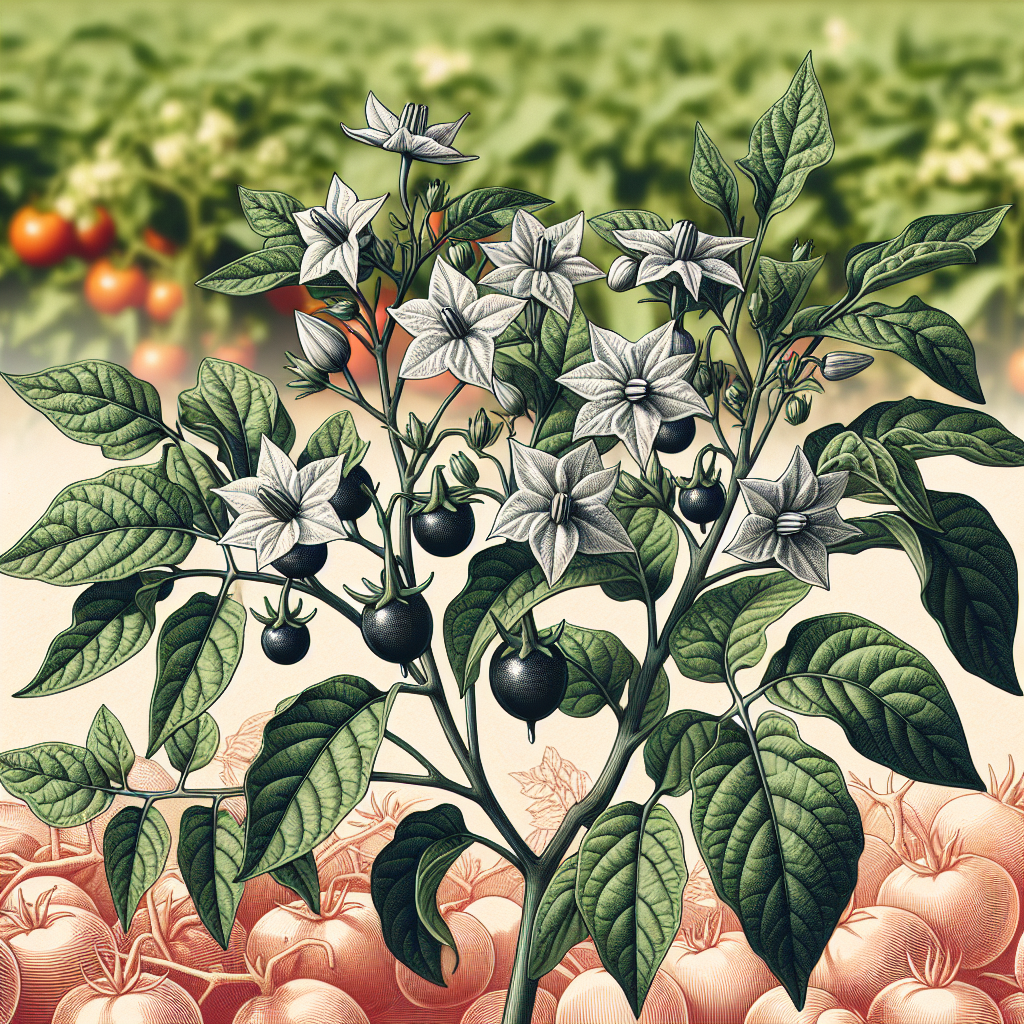
Introduction to nightshade
Nightshade, particularly black nightshade (Solanum nigrum), is one of the most notorious weeds in agricultural systems worldwide. This fast-growing annual plant belongs to the Solanaceae family, the same as tomatoes, potatoes, and eggplants, which makes it particularly problematic in those crop rotations. Native to Eurasia but now cosmopolitan, nightshade thrives in disturbed soils, gardens, fields, and roadsides, spreading rapidly via prolific seed production—up to 200,000 seeds per plant.
Farmers often underestimate nightshade because its early growth resembles desirable crops like tomato or potato seedlings. However, its unchecked growth leads to 20-50% yield reductions in affected fields by shading out crops, harboring pests such as aphids, and contaminating harvests with toxic berries. This definitive guide equips you with professional diagnostic tools, lifecycle knowledge, and organic management plans to eradicate nightshade effectively. For more on integrated weed management, check out this insightful blog post on companion planting.
Early intervention is key: nightshade's allelopathic chemicals suppress nearby plant growth, and its berries are poisonous to livestock and humans if ingested. In organic systems, prevention and cultural controls are paramount, avoiding chemical herbicides that can harm beneficial insects and soil biology.
Identifying Symptoms & Damage
Accurate identification is the cornerstone of nightshade management. Black nightshade seedlings emerge with cotyledons that are oval, light green, and hairless, often confused with young eggplant or bell pepper plants. True leaves are alternate, ovate to lanceolate, 1-3 inches long, with wavy margins and a dull green hue.
Mature plants reach 1-3 feet tall, branching profusely with a weak, sprawling habit. Stems are smooth or slightly hairy, turning purple at the base under stress. Flowers are small (1/4 inch), white to pale violet, star-shaped with five petals and yellow anthers, appearing in umbel-like clusters from late spring to fall. Berries are green, maturing to black or purple, round, 1/4-1/2 inch diameter, filled with tiny seeds.
Damage Symptoms:
- Competition: Dense stands smother crops, reducing photosynthesis and stunting growth in potato, tomato, and soybeans.
- Harboring Pests: Attracts flea beetles, whiteflies, and aphids, which vector viruses like mosaic viruses.
- Contamination: Berries mix into harvests, rendering produce unsellable and posing toxicity risks.
- Allelopathy: Root exudates inhibit seed germination of nearby crops.
Look for purple-tinged stems, drooping posture at maturity, and berries persisting after frost. Differentiate from silverleaf nightshade (Solanum elaeagnifolium), which has yellow prickles and potato-like tubers, or bittersweet nightshade (Solanum dulcamara), a perennial vine with purple flowers.
Lifecycle and Progression of nightshade
Nightshade completes its lifecycle in 6-8 weeks under optimal conditions but can produce multiple generations per season. Seeds germinate in spring (soil temps 50-85°F), triggered by light exposure on disturbed soil. Seedlings develop rapidly, flowering 4-6 weeks post-emergence.
Pollination by insects leads to berry set within days; each berry yields 50-100 viable seeds. Seeds remain dormant for 1-5 years in soil banks, viable up to 20 years under dry conditions. Plants senesce in fall, but frost-killed stems release seeds.
Progression Stages:
- Seedling (0-2 weeks): Rosette stage, vulnerable to cultivation.
- Vegetative (2-6 weeks): Rapid branching, competes aggressively.
- Flowering/Fruiting (6+ weeks): Peak seed production; one plant can yield 10,000+ seeds.
- Senescence: Seeds shatter, replenishing soil bank.
In warm climates, winter annual populations emerge from overwintered seeds. Understanding this cycle informs timely interventions, such as pre-emergence mulching.
Environmental Triggers & Risk Factors
Nightshade flourishes in nitrogen-rich, moist soils with pH 5.5-7.5, preferring full sun but tolerating partial shade. Key triggers include:
- Soil Disturbance: Tillage, overwatering, or flooding exposes seeds to light.
- High Nitrogen: Manure-heavy soils or legume rotations like peas boost growth.
- Warm, Wet Weather: Optimal germination at 70°F+ with adequate moisture.
- Crop Residue: Poor cleanup of tomato or potato fields leaves seed sources.
Risk factors: No-till fields with compacted soil, over-fertilized gardens, and proximity to waste areas. It invades row crops, orchards (apple), and vineyards (grapes), exacerbating issues with powdery mildew by creating humid microclimates.
Organic Control & Treatment Plans
Organic management integrates cultural, mechanical, and biological tactics for sustainable control.
1. Prevention & Cultural Controls:
- Crop rotation with non-Solanaceae like wheat or corn for 3+ years.
- Cover crops such as clover suppress germination.
- Mulch heavily (4-6 inches straw or wood chips) to block light.
2. Mechanical Control:
- Hand-pull seedlings before flowering; wear gloves to avoid skin irritation.
- Flame weeding or shallow tillage at 4-leaf stage.
- Mow repeatedly to prevent seed set.
3. Organic Herbicides & Sprays:
- Vinegar (20% acetic acid) + citrus oil for contact burn-down.
- Corn gluten meal as pre-emergent.
- Soap-based smother sprays on young plants.
4. Biological Controls:
- Encourage predators like ground beetles.
- Solarization: Cover moist soil with clear plastic for 4-6 weeks in summer.
Integrated Plan: Scout weekly; pull/mulch seedlings; flame mature plants; rotate crops. Expect 80-90% reduction in year one with diligence.
Preventing nightshade in the Future
Long-term prevention focuses on breaking the seed cycle:
- Clean equipment to avoid seed transport.
- Hot compost (140°F+) plant debris.
- Use weed-free mulch and certified seed.
- Solarize fields annually.
- Plant dense cover crops post-harvest.
- Monitor borders; erect barriers near infested areas.
Soil testing guides fertility to avoid nitrogen excess. For persistent issues, integrate livestock grazing to trample plants pre-seed set.
Crops Most Affected by nightshade
Nightshade devastates Solanaceae crops:
- Potato: Yield loss up to 50%, berry contamination.
- Tomato: Shading, pest harbor, allelopathy.
- Eggplant: Competition, virus vectors.
- Bell Pepper and Chili Pepper: Similar issues.
Also impacts soybeans, corn, wheat, and vegetables like cucumber. In orchards, it invades apple and strawberry fields, complicating harvest.