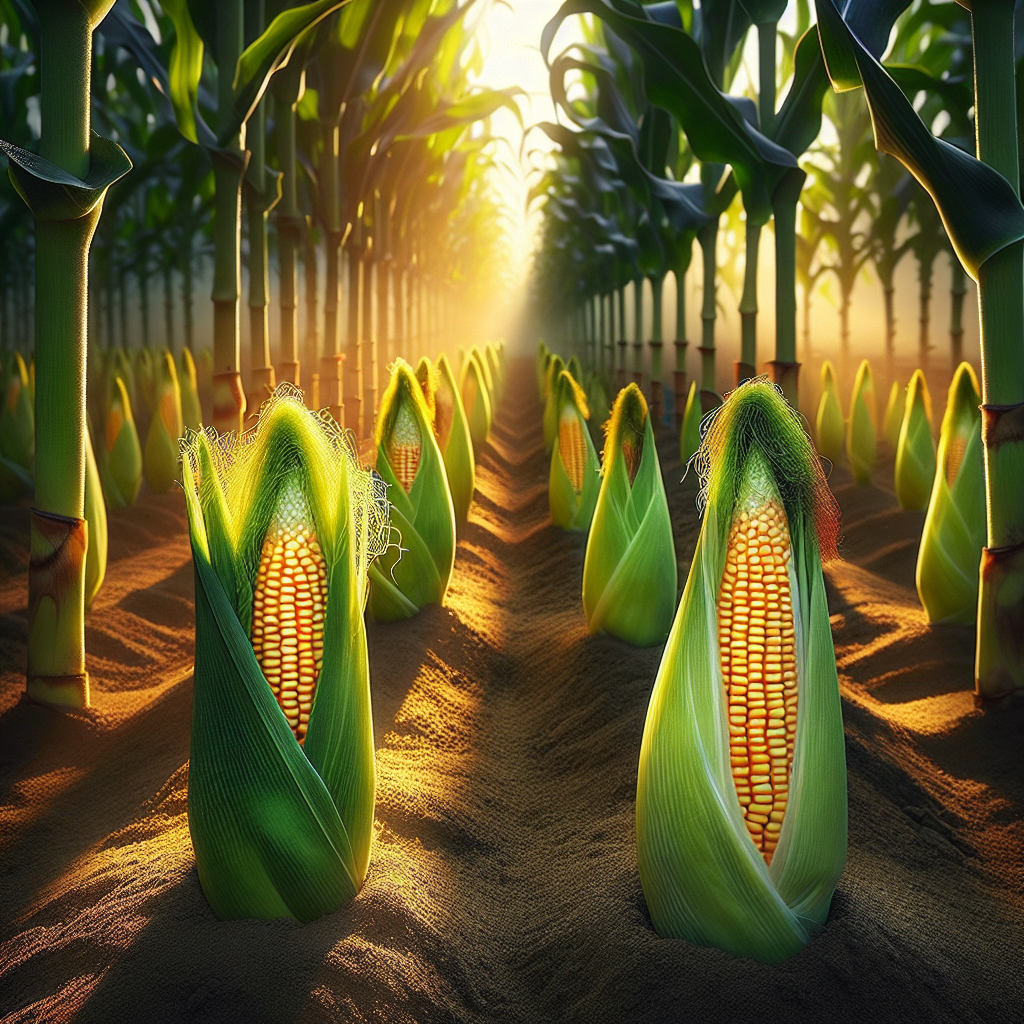
Introduction to Mirai Sweet Corn
Developed for elite table quality, this premium bicolor supersweet corn became popular in fresh markets because it combines remarkable sweetness with a refined, creamy-crisp bite that holds well after harvest compared with many older sugary types. Mirai belongs to the sh2, or supersweet, class, which means the kernels accumulate very high sugar levels while converting sugar to starch more slowly than standard sweet corn. That trait gives growers a wider postharvest sweetness window, but it also changes how the seed behaves in the field: germination is more sensitive in cold, wet soils, and early stand establishment must be managed more carefully than with conventional sweet corn.
In practical terms, growers choose this variety for premium roadside sales, direct-market bunching, specialty produce programs, and home gardens where flavor is the top priority. Plants are typically vigorous, upright, and productive, with attractive bicolor ears and good husk cover. As with all sweet corn, pollination quality determines ear quality. Even a nutritionally perfect crop can produce poorly filled ears if planting density, block arrangement, or weather at tasseling is wrong.
For broader production background, see our general Corn guide. For fertility-building ideas before planting, the soil principles in this soil health article are highly relevant to high-demand sweet corn production.
Botanical Profile of Mirai Sweet Corn
This crop is an annual warm-season grass in the Poaceae family. Like other maize types, it produces a central culm with nodes, broad linear leaves, separate male and female flowers on the same plant, and a fibrous root system that can become surprisingly extensive in loose, fertile ground. The tassel at the top is the staminate inflorescence that releases pollen, while the ear borne on lateral stalks is the pistillate structure. Every silk corresponds to a potential kernel, so incomplete pollination of silks leads directly to gaps in kernel set.
The defining botanical trait of supersweet corn is the shrunken-2 genetic background. In dry seed, this causes distinctly shrunken kernels, a useful visual cue for seed identification. In fresh ears, however, the trait produces very sweet kernels with a crisp skin and slower starch accumulation after harvest. Compared with standard sugary sweet corn, sh2 cultivars generally need warmer soils for rapid emergence and are less forgiving of seed rot in heavy soils.
Mirai is usually described as a bicolor fresh-market type, with white and yellow kernels arranged in regular rows on cylindrical to slightly tapering ears. Ear size varies with management, but marketable ears often reach about 7 to 8 inches long with strong tip fill under good pollination. Plants often grow in the medium-tall range, commonly around 6 to 7 feet, though height shifts with fertility, moisture, plant population, and temperature.
The crop is shallow rooted early, then transitions to a more extensive fibrous root system with supportive brace roots at lower nodes if conditions are favorable. Because sweet corn is a fast-growing grass with high nitrogen demand, leaf color is a useful field indicator. Healthy plants should maintain a rich medium-to-deep green. Pale green lower leaves during rapid vegetative growth often indicate inadequate available nitrogen, root restriction, or waterlogging.
Soil, pH, and Climate Requirements for Mirai Sweet Corn
This variety performs best in deep, well-drained loam or sandy loam with strong organic matter and good tilth. Heavy clay can work if drainage is excellent and compaction is corrected well before planting, but poorly aerated soils are risky because sh2 seed is especially vulnerable to chilling injury, imbibitional damage, and decay in cold wet ground. Ideal soil texture allows the seed zone to warm quickly while still holding enough moisture for uniform germination.
Target a soil pH of 6.0 to 6.8, with 6.2 to 6.5 especially comfortable for nutrient availability and microbial activity. Below pH 5.8, phosphorus availability can narrow and root vigor may suffer. Above pH 7.2, micronutrient tie-up, especially zinc, can become more evident in calcareous soils. If a soil test shows pH below range, apply agricultural lime several months ahead of planting. If pH is excessively high, elemental sulfur or acid-forming fertility strategies may help, though change is slower.
Mirai thrives in full sun and warm conditions. Ideal germination occurs when soil temperatures at 2 inches are at least 60 to 65°F (16 to 18°C), with faster and more uniform emergence closer to 68 to 86°F (20 to 30°C). Daytime air temperatures of 75 to 86°F favor rapid vegetative growth. The crop tolerates moderate heat, but prolonged temperatures above 95°F during pollination can reduce pollen viability, silk receptivity, and kernel fill, especially when combined with moisture stress.
Water management is critical. The crop generally needs 1 to 1.5 inches of water per week in mild weather and often closer to 1.5 to 2 inches during hot, windy periods on lighter soils. The most yield-sensitive stages are tasseling, silking, and early ear fill. During these phases, soil moisture should stay consistently available in the root zone rather than swinging between dry and saturated. A useful target is roughly 60 to 80% of field capacity in the top 8 to 12 inches of soil. In the field, that means soil should feel cool and slightly moist below the surface, form a weak ball when squeezed in loam, and never become sticky, sour-smelling, or persistently glossy-wet.
Overwatering signs include pale leaves despite adequate fertility, slow growth, lower leaf yellowing unrelated to age, soft muddy soil, algae or moss on the bed surface, and a sour anaerobic smell after digging. Underwatering signs include leaf rolling by mid-morning, dull gray-green foliage, slow ear development, uneven kernel set, and tip blanking. Brief afternoon leaf rolling can occur under heat, but plants should recover by evening if moisture is adequate.
Step-by-Step Planting & Propagation
This crop is propagated by seed, not vegetatively. Direct sowing is strongly preferred because corn dislikes root disturbance and transplants seldom match direct-seeded stand quality unless produced with extreme care in biodegradable plugs.
Prepare the bed or field 2 to 4 weeks ahead. Work in mature compost if organic matter is low, but avoid large amounts of undecomposed manure immediately before sowing because excess soluble salts and uneven nitrogen release can damage young seedlings. Form raised beds in heavy soils to improve drainage and warming.
Base fertility on a soil test. A fertile sweet corn crop commonly benefits from moderate to high nitrogen, adequate phosphorus, and especially strong potassium reserves. As a rough field guideline, total nitrogen demand often lands in the 120 to 180 lb/acre range depending on soil type, yield target, and organic matter mineralization. Garden growers can translate this to steady feeding rather than one large application.
Wait for warm soil. Do not rush sh2 seed into cold spring ground. If soil is below 60°F, emergence can be patchy and seed losses high. In cool regions, black plastic, stale bedding, or low tunnels before emergence can improve early establishment.
Plant in blocks, not one long row. Because corn is wind-pollinated, arrange at least 4 short rows side by side. This dramatically improves kernel set over a single row. For home plots, even a block as small as 4 rows by 10 to 15 feet is much better than a narrow strip.
Seed depth and spacing. Sow 1 to 1.5 inches deep in moist, warm soils. In lighter sandy soils or slightly drier surface conditions, depth can be increased to 1.5 to 2 inches, but avoid burying too deep in cold ground. Space seeds 8 to 12 inches apart in rows 30 to 36 inches apart. Intensive beds may use narrower rows if fertility and irrigation are strong, but air flow must remain adequate.
Thin if necessary. If emergence is dense, thin to one vigorous plant every 8 to 12 inches. Overcrowding reduces ear size and increases competition for nitrogen and water.
Succession plant for extended harvest. Sow every 10 to 14 days for continuous picking, but remember to isolate by maturity timing or distance if nearby corn types could cross-pollinate and alter quality. Isolation of 250 feet or more is helpful in gardens; commercial standards may require much greater separation or staggered tasseling dates.
Protect emergence. Birds, rodents, and cold snaps can devastate a fresh sowing. Floating row cover may protect seedlings early, but it must be removed before tasseling to allow wind pollination.
Care & Maintenance regimes for Mirai Sweet Corn
Once established, the crop responds best to uninterrupted growth. Any pause from cold, drought, waterlogging, or nutrient shortage tends to show later as stunting, uneven maturity, or reduced ear fill.
Maintain weed control especially during the first 4 to 6 weeks, when corn is a poor competitor. Shallow cultivation is best because a large share of feeder roots occupies the upper soil profile. Deep hoeing close to plants can prune roots and reduce vigor. Organic mulches can help conserve moisture after the soil is fully warm, though thick cool mulches applied too early may slow growth.
Nitrogen management is central to quality production. Sweet corn typically needs a starter fertility program at planting followed by sidedressing when plants are about knee-high and again just before tasseling if soils are light or rainfall is heavy. In gardens, this can mean an initial balanced fertilizer plus a high-nitrogen side feed 3 to 4 weeks after emergence and another modest feed at pre-tassel. Avoid excessive late nitrogen after silking, which can promote lush foliage without improving ear quality.
Micronutrients matter more than many growers realize. Zinc deficiency can appear as broad pale striping on younger leaves, especially in cool, high-pH soils. Sulfur deficiency can mimic nitrogen shortage but tends to show first on newer growth. Tissue testing in commercial plantings is worthwhile if growth seems stalled despite acceptable macronutrient levels.
Irrigation should be deep and regular. During vegetative growth, one thorough watering every 4 to 6 days in loam may suffice if weather is mild. During tasseling and silking, shorten intervals to prevent stress, particularly on sandy ground. Drip irrigation is excellent for maintaining even root-zone moisture with less leaf wetness, while overhead irrigation can help cool plants during extreme heat but should be timed carefully to avoid long overnight wet periods.
Hilling a small amount of soil around the base when plants are 12 to 18 inches tall can support brace root formation and reduce lodging risk. This is especially useful in windy sites. However, do not bury lower leaves deeply or mound wet soil against stems repeatedly, as this can create disease pressure.
Pollination support is often overlooked. If weather is still, humid, or rainy during silk emergence, gently shaking tassels in the morning can help distribute pollen in small plots. Ideally, pollen shed should coincide with fresh green silk emergence. Severe drought at this stage causes silks to desiccate or emerge unevenly, leading to blank kernels, particularly at the ear tip.
Pests, Diseases & Organic Management
The major insect threats vary by region, but the most common sweet corn pests include Corn Earworm, European Corn Borer, Fall Armyworm, Cutworms, Wireworms, Flea Beetles, Aphids, and Birds. Corn Earworm is often the most economically damaging for fresh-market production because larvae feed directly in the tip of the ear. Tight spray timing or physical exclusion is required in high-pressure areas. Organic growers commonly use Bacillus thuringiensis var. kurstaki or spinosad targeted to silking, but timing must be precise because larvae enter ears quickly.
European Corn Borer and Fall Armyworm attack leaves, whorls, stalks, and ears. Look for shot-hole feeding, frass in the whorl, or bored stalk tissue. Early scouting is essential. Healthy vigorous plants tolerate minor foliar feeding, but stalk boring can weaken stands and open routes for rot organisms.
Seedcorn Maggot, Wireworms, and seed decay are early-stage threats, particularly in cool, wet, freshly manured soils. The best organic defense is warm seedbeds, quick emergence, crop rotation, and avoiding planting into raw organic matter.
Disease concerns include Common Rust, Northern Corn Leaf Blight, Stewart's Wilt, Anthracnose, Smut, Seedling Blights, and assorted Ear Rots. Many disease issues intensify when leaves stay wet for long periods, spacing is too tight, nitrogen is unbalanced, or corn follows corn without rotation. Rotate out of corn and related grasses for at least 2 to 3 years where disease pressure is persistent.
Seedling Blights caused by Pythium or Fusarium are especially relevant to supersweet types because sh2 seed is less robust in adverse conditions. Prevention is much more reliable than rescue: plant only in warm soils, maintain drainage, and use high-quality treated or untreated seed from reputable sources depending on your production standard.
Organic management works best as an integrated system:
- Rotate with legumes or broadleaf crops rather than planting corn in the same ground repeatedly.
- Destroy crop residues promptly after harvest if borer pressure is high.
- Keep weeds down, especially grassy weeds that harbor insects and reduce air movement.
- Encourage beneficial insects with border plantings of Nasturtium and flowering herbs nearby, though not so close that they shade the corn.
- Use trap or companion plantings such as Sunflower on field margins to diversify habitat and support pollinators and beneficial predators.
- Intercrop with nitrogen-fixing Soybeans or pole beans in traditional systems, while monitoring competition and airflow.
- Scout twice weekly from emergence through ear set, increasing to every 2 to 3 days during silking in high earworm regions.
Avoid relying on a single control measure. In sweet corn, success usually comes from timing, sanitation, rotation, and maintaining vigorous growth rather than from emergency interventions late in the cycle.
Harvesting, Curing & Optimal Storage
This variety is harvested at the milk stage for fresh eating, not at grain maturity. Harvest timing is narrow if you want peak flavor, though supersweet genetics provide a somewhat longer quality window than older sweet corn. Typical maturity is around 75 to 85 days from sowing depending on temperature and season.
The best field indicators are ear size, full husk expansion, browning silk, and kernel maturity. Silks should be mostly brown and dry, but husks should still be green and fresh. To confirm, peel back a small section and puncture a kernel with a fingernail. At peak harvest, the kernel releases a milky sap. If the fluid is watery and clear, the ear is immature. If no sap appears and kernels are doughy, harvest is late.
Pick early in the morning when field heat is low and sugar retention is highest. Snap ears downward sharply to remove them cleanly without tearing the stalk excessively. Handle gently; bruised kernels lose quality rapidly.
Unlike storage onions or winter squash, sweet corn is not cured in the traditional sense. The objective is rapid cooling, because sugar begins converting to starch immediately after harvest. Hydrocooling or forced-air cooling to near 32 to 36°F as soon as possible preserves sweetness and tenderness. Relative humidity should remain high, around 95%, to prevent husk drying and kernel shrivel.
Under ideal refrigeration, supersweet ears can hold acceptable quality for 5 to 10 days, though premium eating quality is best within 1 to 3 days. Do not leave harvested ears in the sun, in a hot vehicle, or stacked deeply in warm bins. Even a few hours of high field heat noticeably reduces eating quality.
For home use, store ears unshucked in perforated plastic in the refrigerator. Freezing is an excellent preservation method: blanch cut kernels or whole ears briefly, cool rapidly, drain well, and freeze. Dehydration is generally not used for maintaining the signature fresh character of this type.
Companion Planting for Mirai Sweet Corn
The classic ecological model is the corn-bean-squash guild, but for this premium sweet corn, companion planting should be adapted to maintain airflow, harvest access, and nutrient availability. The best companions either improve soil biology, support beneficial insects, suppress weeds, or add complementary root architecture without overwhelming the corn.
Soybeans or other legumes can contribute biologically to system fertility over time and make good rotational or nearby companions, though corn still requires direct nitrogen fertility because legumes do not feed a hungry corn crop instantly. Pole beans can climb stalks in traditional plantings, but use restraint with high-value sweet corn since aggressive vines can complicate harvest and reduce air circulation if planted too densely.
Sunflower can serve as a beneficial border plant, attracting predatory insects and diversifying the field edge. Place it on margins rather than within dense rows so it does not compete heavily for light and moisture. Nasturtium functions well along bed edges, where it can attract Aphids away from the main crop and support beneficial insect activity. Low-growing squash is often paired with corn to shade soil and reduce weeds, but with Mirai, wide spacing and careful irrigation are important so sprawling vines do not impede harvest or raise humidity around the lower canopy.
Good companions do not replace management fundamentals. Warm soil at planting, strong fertility, even irrigation, and clean pollination matter far more than any companion combination. Use companions to enhance an already well-managed system, not to compensate for poor timing or nutrition.