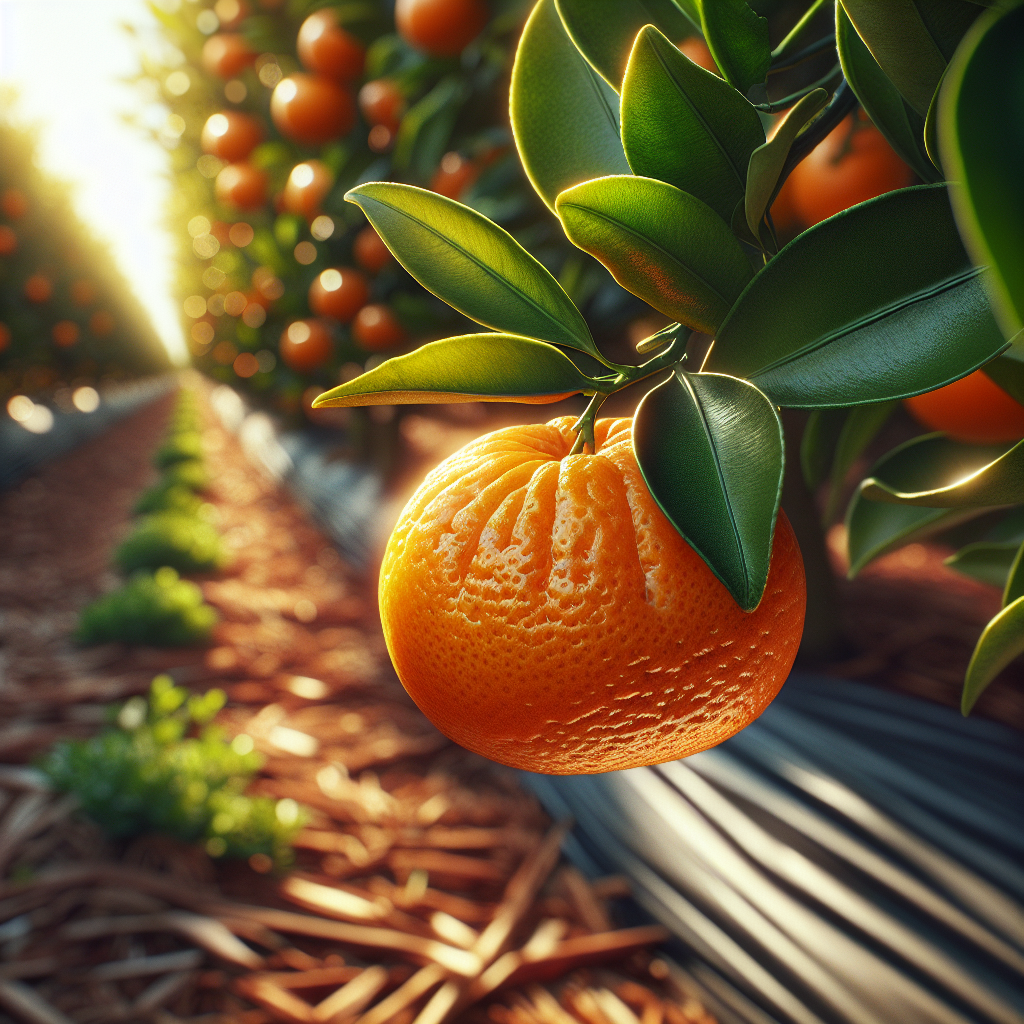
Introduction to Mandarin (Satsuma)
Among edible citrus, satsuma occupies a special place because it combines excellent fruit quality with unusual cold tolerance. Believed to have originated in China and widely developed in Japan, this mandarin type became important in the United States Gulf Coast and other mild-winter regions because mature trees can withstand lower winter temperatures than many common citrus. Fruit are typically medium to small, flattened, loose-skinned, easy to peel, and mild-sweet with low acidity when properly ripened.
Satsumas are especially valued for early ripening. In many climates, fruit can be harvested before the onset of the hardest winter freezes, which is a major practical advantage. Cultivars such as 'Owari', 'Brown Select', 'Miho', 'Okitsu', and 'Xie Shan' differ in harvest window, cold tolerance, peel adherence, and flavor concentration, so cultivar selection should match local climate and marketing goals. For growers comparing citrus options, the general cultural framework is similar to Orange, but satsuma is usually more forgiving in marginal citrus zones.
Unlike highly acidic citrus that require peak internal maturity to be pleasant, satsumas can taste good relatively early, though external color is not always a reliable indicator of readiness. In warm autumns, peel may remain partially green while sugars are already acceptable. This makes experience, sampling, and simple maturity testing more useful than appearance alone.
Botanical Profile of Mandarin (Satsuma)
Satsuma is commonly classified as Citrus unshiu, though citrus taxonomy is notoriously complex and some references place mandarins within broader hybrid groupings. It belongs to the Rutaceae family. Trees are generally small to medium in vigor, often 8-15 feet tall in home settings, though they can grow larger under ideal conditions and on vigorous rootstocks. The canopy is somewhat open and drooping, with fewer and smaller thorns than many citrus types.
Leaves are lanceolate to elliptic, glossy, and aromatic when crushed due to abundant oil glands. Flowers are white, fragrant, and typically self-fertile, so a single tree can crop well without a pollinizer. Most commercial satsuma cultivars set fruit parthenocarpically or with minimal seed development, which is why fruit are usually seedless or nearly so.
The fruit itself is technically a hesperidium. The rind is thin to medium, leathery rather than tough, and often "puffy" because it separates slightly from the segments as fruit mature. This trait contributes to easy peeling but also makes the fruit more vulnerable to bruising and dehydration after harvest. Flesh texture is tender, juice content moderate, and flavor usually gentle rather than intensely tart. Compared with clementines, satsumas are softer, earlier, and often less acidic.
Rootstock strongly influences ultimate tree size, disease tolerance, soil adaptation, and cold response. Trifoliate orange and its hybrids are commonly used in cooler citrus regions because they improve cold hardiness and can help control vigor. In poorly drained soils, however, rootstock choice becomes even more critical because citrus roots are highly intolerant of prolonged saturation.
Soil, pH, and Climate Requirements for Mandarin (Satsuma)
Satsumas perform best in deep, well-drained soils with moderate fertility and abundant soil oxygen. Ideal textures are sandy loam to loam, but they can be grown in heavier soils if drainage is artificially improved through raised beds, berm planting, subsurface drainage, or slope selection. The single most important soil limitation is waterlogging. If water stands for more than 24-48 hours after rain, root decline, Phytophthora infection, nutrient imbalance, and reduced vigor become likely.
Target soil pH is 5.5-6.5, though trees can still perform reasonably between about 5.0 and 7.5 if nutrient management is adjusted. Above pH 7.0, iron, zinc, and manganese deficiencies become more common, especially in calcareous soils. These show up as interveinal chlorosis on young leaves, reduced flush growth, and smaller fruit. Below pH 5.0, aluminum and manganese may become excessively available and root performance may suffer. A pre-plant soil test is essential; correcting pH before planting is far easier than after trees are established.
Climate suitability is one of satsuma's greatest strengths. It thrives in subtropical to warm-temperate citrus regions with hot summers and cool but not severely cold winters. Mature, dormant trees can tolerate temperatures around 15-20b0F (-9 to -6b0C) for short periods, depending on cultivar, rootstock, tree health, acclimation, and duration of the freeze. Young trees are much more vulnerable and may be damaged at 26-28b0F (-3 to -2b0C).
The best production occurs where summers are warm enough to build sugars and autumns are dry enough to reduce disease pressure and improve peel quality. Excessively humid climates increase fungal disease, melanose, greasy spot, and rind blemishes. Strong hot winds can scar fruit and accelerate moisture stress. In low-desert climates, reflected heat and sunburn can injure bark and fruit, so partial canopy shading and whitewashed trunks may be needed.
Annual rainfall of 35-50 inches can support trees, but rainfall distribution matters more than total amount. Citrus roots prefer a cycle of moist, aerated soil followed by partial drying, not constant wetness. As a practical benchmark, soil in the top 6-8 inches should feel slightly moist but crumbly, never sticky and anaerobic, and never powder-dry for extended periods during active growth. If you squeeze soil from the root zone and water drips or the mass stays slick and dense, drainage is too poor. If leaves lose gloss, curl slightly along the midrib in midday heat, and young fruit begin dropping, irrigation may be insufficient.
For broader orchard soil-building principles, see soil health strategies.
Step-by-Step Planting & Propagation
Most satsuma trees should be planted as grafted nursery stock rather than grown from seed. Seedlings are variable, slower to fruit, and may not preserve cultivar traits. Grafted trees also allow the grower to select a rootstock suited to cold, salinity, soil pH, nematodes, or disease conditions.
- Choose the site carefully. Select a full-sun location with at least 8 hours of direct light. Favor a south- or southeast-facing position in marginal climates, ideally with air drainage so cold air flows away rather than pooling around the tree.
- Test soil before planting. Confirm pH, drainage, and base fertility. If the site is heavy clay, create a broad raised planting area 12-18 inches high rather than digging a deep sump-like hole that traps water.
- Time planting correctly. Early spring is ideal in most climates once danger of severe frost has passed. In very mild winter regions, fall planting can succeed, but spring is safer where freezes occur.
- Prepare the planting area. Remove perennial weeds in at least a 3-4 foot diameter. Avoid incorporating large amounts of compost directly into the planting hole, which can create a texture interface that impedes root movement.
- Dig a wide, shallow hole. Make the hole 2-3 times as wide as the root ball but no deeper than the root ball height. The top of the root ball should sit level with or slightly above surrounding soil. Graft unions must remain above the soil line.
- Set the tree and backfill with native soil. Gently loosen circling roots if present. Backfill firmly enough to eliminate air pockets but do not heavily compact the soil.
- Water in thoroughly. Apply enough water to wet the entire root ball and adjacent native soil. This initial irrigation settles soil around roots.
- Mulch correctly. Apply 2-4 inches of organic mulch over the root zone, but keep it 4-6 inches away from the trunk to prevent crown rot and rodent damage.
- Stake only if necessary. Use temporary support in windy locations, but avoid rigid staking that prevents trunk strengthening.
Spacing depends on rootstock and training system. Home orchard trees are often spaced 10-15 feet apart. Commercial plantings may range from 8-18 feet within rows and 15-22 feet between rows.
Propagation by budding, especially T-budding or chip budding onto appropriate rootstock, is the professional standard. Budwood must be disease-free and sourced legally from certified programs where citrus greening or tristeza is a risk. Grafting is usually performed during active bark slip when stock plants are growing. Air layering is uncommon for commercial satsuma because ungrafted trees usually lack the advantages of adapted rootstocks.
Care & Maintenance regimes for Mandarin (Satsuma)
Irrigation should be managed by tree age, soil type, weather, and crop load. Newly planted trees need frequent, light-to-moderate irrigations until roots expand into surrounding soil. In sandy soils, this may mean watering 2-3 times per week for the first month; in loam, once or twice weekly may be enough. Established trees prefer deeper, less frequent irrigation that wets the root zone 12-24 inches deep and then allows partial drying.
A useful field rule is to maintain even moisture during spring flush, bloom, fruit set, and early fruit enlargement. Drought stress at bloom can reduce fruit set; stress during sizing can reduce fruit size and increase June drop. However, constantly saturated soil causes yellowing leaves, reduced new growth, leaf drop, feeder-root death, and a sour smell in the root zone. Overwatered citrus often appears nutrient-deficient because damaged roots cannot absorb minerals efficiently. If leaves are pale, the grower should check drainage before simply adding fertilizer.
Fertilization should emphasize nitrogen, with balanced support for potassium, magnesium, and micronutrients. Young trees often receive 3-5 split applications across the growing season; mature trees may receive 2-4 main feedings. Exact rates depend on tree age and local recommendations, but overfertilization with nitrogen can produce coarse, overly vigorous shoots, delayed fruit coloring, thicker peel, and greater cold sensitivity. A practical approach is to feed lightly but consistently from spring through midsummer, avoiding late heavy nitrogen that stimulates tender growth before winter.
Micronutrient sprays containing zinc, manganese, and sometimes iron are often beneficial where deficiency symptoms recur. Magnesium deficiency shows as yellowing on older leaves while the leaf base and tip may remain greener, creating an inverted V pattern. Potassium deficiency can reduce fruit size and lower sugar accumulation.
Pruning needs are modest. Satsumas fruit on outer canopy wood and generally require only structural correction, deadwood removal, and occasional thinning for light penetration. Remove rootstock suckers promptly, especially any growth arising below the graft union. In young trees, train 3-5 well-spaced scaffold limbs starting 18-30 inches above ground. Avoid heavy annual heading cuts, which stimulate excess vegetative growth at the expense of fruiting.
Thin fruit only when trees set an excessively heavy crop and limb breakage or alternate bearing is likely. Satsumas can overcrop in favorable years, especially once established. Supporting loaded branches may be necessary in young trees.
Cold protection is a major maintenance task in marginal climates. Keep trees healthy but not late-flushed going into winter. Use trunk wraps on young trees, mound soil lightly over the graft union before severe freezes if local practice allows, and irrigate the soil ahead of advective freezes when recommended locally because moist soil stores more heat than dry soil. Covers should extend to the ground to trap radiant heat. Avoid plastic touching foliage during freezing conditions.
Container-grown satsumas require especially careful watering. Use a sharply drained citrus mix, water thoroughly until excess drains, and do not rewater until the upper 1-2 inches have begun to dry. Containers greatly increase risk of both drought stress and root rot.
Pests, Diseases & Organic Management
Satsumas are vulnerable to a typical citrus pest complex, though severity varies by region. Common pests include aphids, citrus leafminer, scale insects, mealybugs, whiteflies, spider mites, and stink bugs. In some areas, the Asian citrus psyllid is of overriding concern because it vectors citrus greening disease (huanglongbing), one of the most destructive citrus diseases worldwide.
aphids attack tender spring flush and can distort new leaves, especially on young trees. They also excrete honeydew that supports sooty mold. Leafminers tunnel in new leaves, creating serpentine trails and crinkling foliage; damage is mostly cosmetic on mature trees but can slow establishment of young trees. scale insects attach to leaves and twigs, weakening the tree and encouraging mold growth. Mites are more common during hot, dry periods and cause stippling or bronzing.
Organic management begins with monitoring. Inspect new flush weekly during active growth. Ant control is critical because ants protect honeydew-producing pests from beneficial insects. Horticultural oils are among the most useful organic tools for scale, mites, and some whitefly or mealybug problems, but they must be applied under proper temperature conditions to avoid phytotoxicity. Insecticidal soaps can help on soft-bodied pests, especially when coverage is thorough.
Encourage natural enemies such as lacewings, hoverflies, parasitic wasps, and lady beetles by reducing broad-spectrum insecticide use and maintaining flowering insectary plants nearby. Ground-level biodiversity can help stabilize pest populations; clover is often used as a living understory in orchards where water competition is managed.
Major diseases include Phytophthora root rot and foot rot, greasy spot, melanose, scab, anthracnose, and bacterial or fungal twig dieback following stress. The most important prevention measure is site drainage. Bark at the crown should remain dry and exposed. Never pile mulch against the trunk. Prune to improve airflow where humidity is persistently high.
citrus canker and citrus greening are serious quarantine-level concerns in affected regions. There is no curative treatment for greening in practical orchard terms, so exclusion, certified plant material, psyllid suppression, and compliance with local regulations are essential. Any suspected regulated disease should be reported through the appropriate agricultural authority.
Nutritional balance also affects disease resilience. Trees pushed with excessive nitrogen often produce lush, pest-prone tissue. Conversely, chronically deficient trees lack the carbohydrate reserves to recover from pest injury, cold damage, or heavy cropping.
Harvesting, Curing & Optimal Storage
Satsumas are harvested when internal maturity is acceptable, not merely when peel turns orange. In warm regions, fruit may be edible before full external coloration. The best maturity indicators are taste, soluble solids-to-acid balance, and ease of peeling. Fruit should be sweet, aromatic, and fully juicy, with segment membranes tender rather than tough.
Harvest carefully because the rind is delicate. Use clippers or twist fruit gently without tearing the peel. Pulling roughly can cause rind puffing, punctures, or stem-end injury that accelerates decay. Pick only dry fruit when possible; harvesting during wet conditions increases postharvest rot risk.
Unlike curing onions or sweet potatoes, satsumas do not undergo a traditional curing process. Instead, the postharvest goal is gentle handling and stabilization. Remove field heat promptly by placing fruit in shade, then sort out bruised, split, or punctured fruit. For home storage, keep fruit at cool temperatures with moderate humidity. Ideal storage is around 41-50b0F (5-10b0C) with 85-90% relative humidity. Warmer storage shortens shelf life, while excessively cold storage can induce chilling injury depending on duration and exact temperature.
Because the peel is loose and comparatively thin, satsumas lose moisture faster than tighter-skinned citrus. Store them in perforated bags or high-humidity conditions to reduce shriveling, but ensure some airflow to limit mold. Under good conditions, fruit may store for 2-4 weeks, though premium eating quality is usually best soon after harvest.
For fresh-market production, appearance matters: wind scars, melanose spotting, and puffiness reduce market value even when internal flavor is good. For home use, however, slight rind blemishes rarely affect eating quality.
Companion Planting for Mandarin (Satsuma)
Companion planting in satsuma systems works best when it supports pollinators and beneficial insects, protects soil, or suppresses weeds without creating major competition for water and nutrients. Because citrus has many shallow feeder roots near the soil surface, companions should be chosen and managed with restraint.
Good choices include clover as a nitrogen-contributing living groundcover, Thai Basil near orchard margins for beneficial insect attraction, and Garlic in small rings or strips where competition is controlled. Clover can reduce erosion, moderate soil temperature, and improve trafficability, but it should not be allowed to grow aggressively right up against the trunk in young orchards. Maintain a weed- and cover-free ring around newly planted trees at least 2-3 feet wide.
Thai basil and other flowering herbs can attract predatory insects and pollinators, particularly during periods when the citrus itself is not in bloom. Garlic is commonly used by growers who prefer diverse understories and is valued more for pest-disruption effects and space efficiency than for any magical repellent property. In dry climates, all companions should be kept outside the immediate root crown zone and irrigated with awareness that they may increase total water demand.
Avoid large, thirsty, or highly competitive understory crops directly under the canopy. Also avoid dense vegetation pressed against the trunk because it raises humidity, encourages fungal disease, and can hide rodents or ants. In commercial plantings, the most effective companion strategy is often a managed alley cover crop plus a clean tree row rather than mixed interplanting directly under every tree.