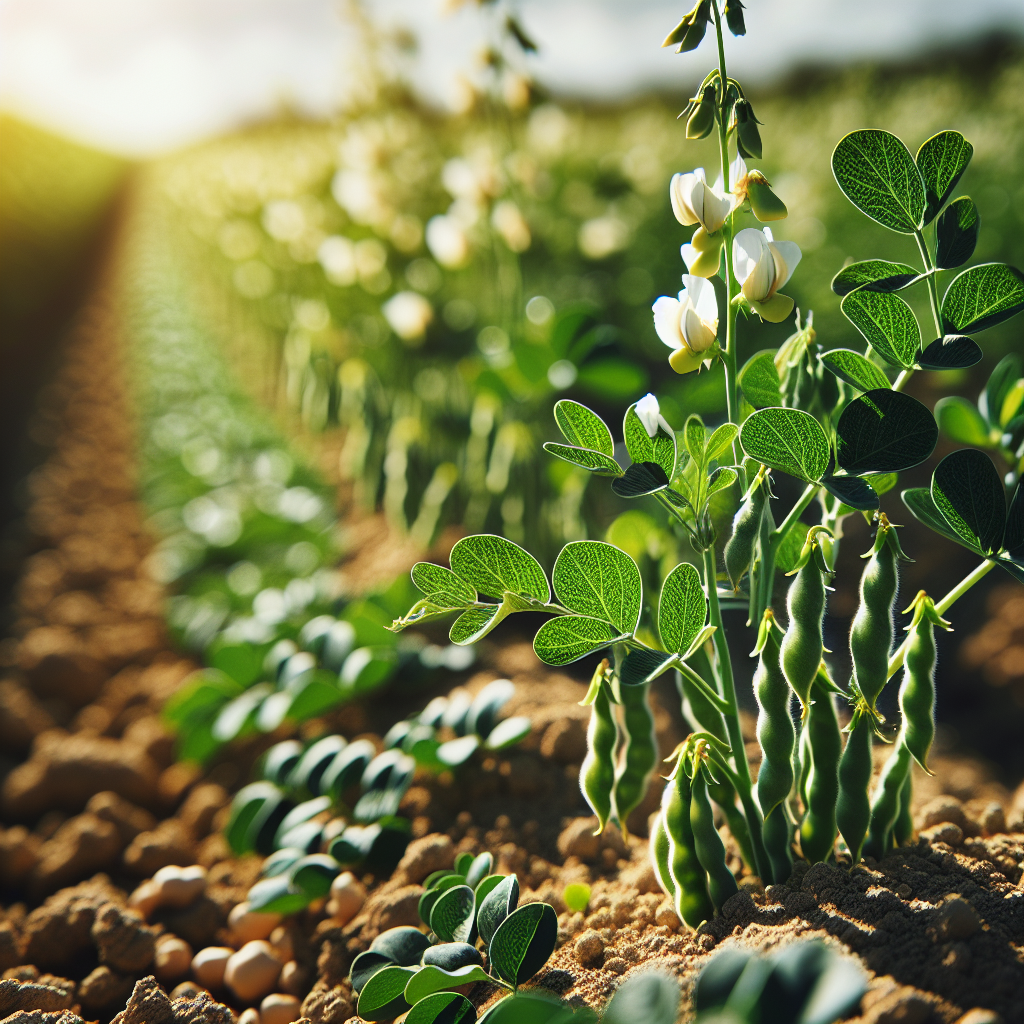
Introduction to Kabuli Chickpeas
A premium market class of chickpea, this type is distinguished by large, owl-head-shaped seeds, a pale beige to cream seed coat, and a smoother, thinner testa than the darker, smaller desi types. It is widely associated with Mediterranean, West Asian, North African, and modern North American pulse production systems, especially where dry finishing weather allows pods to mature cleanly.
Historically, chickpea domestication traces to the Fertile Crescent, but the kabuli market class emerged later through selection for larger seed size and lighter seed color. In trade, kabuli types are often preferred for hummus, salads, roasting, and canning because they hydrate more evenly and produce a lighter-colored cooked product. Agronomically, however, they are usually a little less stress-tolerant than desi chickpeas and can be more exposed to seed weathering, staining, and certain diseases if humidity is high late in the season.
For growers, the key to success is to think of this crop as a cool-season pulse that hates wet feet, stagnant humidity, and excessive nitrogen. It performs best where the crop can establish in moist but aerated soil, flower under mild temperatures, and ripen during a dry period. If you already grow pulses such as Lentils, many of the rotational principles will feel familiar, though kabuli chickpeas are especially sensitive to waterlogged soils and seed-quality downgrades from rain at maturity.
Botanical Profile of Kabuli Chickpeas
This annual grain legume belongs to the family Fabaceae. Plants are generally erect to semi-erect, branched, and moderately bushy, most often reaching 30-70 cm tall depending on cultivar, fertility, and moisture. The root system includes a central taproot with lateral roots that can explore relatively deep soil if structure is open and compaction is minimal. Along those roots, symbiotic nodules form in association with Mesorhizobium ciceri, allowing biological nitrogen fixation when effective rhizobia are present.
Leaves are compound and serrated, with many small leaflets. The plant surface often bears fine glandular hairs that exude organic acids, giving foliage a slightly sticky or acidic feel. Flowers are usually white in kabuli types, unlike the pink to purple shades common in some desi lines. Most flowers are self-pollinated, so cross-pollination rates are low.
Pods are short, inflated, and typically contain one seed, though two-seeded pods may occur under favorable conditions. That single-seeded habit is one reason seed size can become so large in kabuli lines. Seeds are ram-headed or angular-round with a characteristic beak. Thousand-seed weight varies widely by cultivar, but kabuli types commonly range from roughly 300-600 g per 1000 seeds, much larger than desi classes.
Growth stages usually proceed as follows:
- Germination and emergence in 7-14 days depending on temperature and soil moisture.
- Vegetative branching during the first 3-6 weeks.
- Flower initiation once day length, temperature, and plant vigor align.
- Pod set and seed filling over the next 3-5 weeks.
- Senescence and dry-down as leaves yellow, stems tan, and pods become brittle.
Kabuli chickpeas are indeterminate to semi-determinate depending on cultivar. Under prolonged cool, moist conditions, plants may continue flowering longer than desired, creating uneven maturity. That is one reason professional growers value a predictable dry-down window and avoid excessive irrigation during reproductive stages.
Soil, pH, and Climate Requirements for Kabuli Chickpeas
The ideal soil is a well-drained loam, sandy loam, or silt loam with good internal drainage and moderate water-holding capacity. Heavy clay can work only if it is deeply structured, never puddled, and not prone to standing water after rainfall. Poorly drained soils are among the fastest routes to root disease, weak nodulation, and stand loss.
Target soil pH is 6.0-8.0, with the practical sweet spot around 6.2-7.5. Below pH 5.8, rhizobial activity and nutrient uptake often decline, while aluminum or manganese toxicity may become more relevant. Very alkaline soils above pH 8 can reduce micronutrient availability, especially zinc and iron, which may show as interveinal chlorosis on younger leaves.
A professional soil profile for this crop should emphasize:
- Drainage first, fertility second.
- Moderate phosphorus availability for root growth and nodulation.
- Adequate sulfur for protein formation.
- Modest potassium where soils test low.
- Very restrained nitrogen inputs.
Available phosphorus in the medium range is usually sufficient; overloading fertility rarely boosts yield proportionally. Too much early nitrogen stimulates lush vegetative growth, delays maturity, reduces nodulation, and can create a denser canopy that traps humidity and favors disease. If soils are extremely poor, a small starter N dose may help early growth, but in most pulse systems it is minimized.
Climatically, kabuli chickpeas prefer cool to mild conditions during vegetative growth and warm, dry weather during ripening. Ideal temperature ranges are about 10-25°C during establishment and 18-30°C during flowering and pod fill. Temperatures above 32°C during flowering can reduce pollination success, flower retention, and pod set. Frost tolerance is limited. Established plants can survive light, brief frost better than seedlings, but hard frost may kill flowers, distort growth, or destroy a young stand.
Rainfall needs are moderate rather than high. In many regions, 300-600 mm of total seasonal moisture is adequate when well distributed. The crop is relatively drought tolerant once established, but that does not mean it should be neglected. The most moisture-sensitive windows are emergence, early branching, flowering, and early pod fill. By contrast, excessive rain during late pod fill and maturity is highly damaging because it increases disease pressure, seed coat staining, sprouting risk, and quality downgrades.
Avoid sites with:
- A history of waterlogging.
- Frequent heavy dews and poor air movement.
- High residual nitrogen from manure-heavy amendments.
- Recent chickpea production in the same field.
For deeper soil improvement strategies, see soil health tips.
Step-by-Step Planting & Propagation
Propagation is by seed only. Chickpeas do not transplant as reliably as many vegetable crops because the taproot resents disturbance, and field performance is best from direct seeding.
Select high-quality seed. Use certified or carefully saved seed with high germination, uniform seed size, and no visible cracking, discoloration, or mold. Because kabuli seeds are large and relatively thin-coated, rough handling can reduce viability.
Choose a clean rotation field. A 3-4 year break from chickpeas is a minimum; 4-6 years is better where Ascochyta blight, Fusarium wilt, or root rots are common. Avoid following other susceptible pulses too closely if disease pressure has been high.
Prepare a firm, level seedbed. The goal is fine enough for even planting depth but not powdery. Excessively fluffy beds dry out too fast and lead to uneven emergence. A no-till or minimum-till system can work very well if residue is not excessive and seed placement is precise.
Inoculate seed where needed. If chickpeas have not been grown recently, coat seed with a chickpea-specific Mesorhizobium inoculant immediately before planting. Use the correct strain; general garden legume inoculants are not always adequate. Protect inoculated seed from direct sun and plant promptly.
Time sowing carefully. In Mediterranean and semi-arid systems, sow at the start of the cool season or late winter/early spring, depending on frost risk and disease history. Soil temperature should ideally be at least 8-10°C for steady emergence, though germination can begin slightly below that. Delayed sowing into warm weather often shortens the reproductive window and exposes flowering to heat stress.
Set planting depth. Sow 4-7 cm deep in most soils. Use the shallower end in cool, heavy soils and the deeper end in lighter soils or where surface moisture is limited. Uneven depth causes staggered emergence and uneven maturity.
Space appropriately. For hand-scale or market garden production, rows 30-45 cm apart are common, with 7-10 cm between plants in-row. In broadacre systems, narrower row spacing may improve canopy closure and weed suppression, but too-dense canopies increase humidity. Aim for a final stand of roughly 25-40 plants per square meter depending on cultivar vigor, rainfall, and disease risk.
Water lightly after sowing if needed. The seed zone should be uniformly moist, not saturated. A useful practical target is soil that forms a weak ball when squeezed but does not shine with free water. Overly wet seedbeds promote seed rot before emergence.
Emergence problems often trace to one of five issues: crusted soil, planting too deep, low soil temperature, poor seed quality, or seed-zone saturation.
Care & Maintenance regimes for Kabuli Chickpeas
Once emerged, the crop should be managed for steady but not luxurious growth. Kabuli chickpeas are healthiest when the canopy remains open, roots are oxygenated, and vegetative growth is balanced with reproductive development.
Water management is the most misunderstood part of production. During emergence and early establishment, maintain moisture in the upper 5-8 cm of soil so the seedling root can penetrate downward without interruption. After establishment, irrigate only when the upper root zone begins to dry distinctly. In practical terms, moisture should be allowed to cycle from field capacity down toward moderate depletion before rewatering. Constantly wet soil is dangerous.
Good moisture indicators include:
- Leaves remain turgid in the morning and only show slight midday softening in hot weather.
- Soil at 10 cm is cool and faintly moist, not sticky.
- Plants continue branching without yellowing at the base.
Signs of underwatering include:
- Flower abortion.
- Reduced pod set.
- Premature lower leaf yellowing with dry, brittle texture.
- Short plants with sparse branching.
Signs of overwatering include:
- Persistently soft, overly lush foliage.
- Yellowing not linked to normal maturity.
- Wilting despite wet soil, indicating root dysfunction.
- Darkened stem bases or root decay.
- Increased weed growth and fungal spread between plants.
If irrigation is used, the most critical timings are pre-flowering, flowering, and early pod fill. Reduce irrigation sharply as pods mature. Water late in the season only to prevent severe stress if plants are still filling seed; avoid wetting the canopy when pods are near maturity.
Nutrient management should be conservative. Where soils test low, phosphorus can be banded or incorporated before planting. Sulfur is important on sandy or low-organic-matter soils. Zinc may be needed in high-pH soils. Foliar feeds are usually less effective than correcting the soil program beforehand. Do not chase pale foliage with heavy nitrogen unless tissue testing clearly shows deficiency unrelated to nodulation failure.
Check nodulation around 4-6 weeks after emergence by digging, not pulling, a few plants. Effective nodules are usually pink to red inside when freshly cut. Few nodules or white/green inactive nodules suggest inoculation failure, waterlogging, poor pH, or excess available nitrogen.
Weed control is most important early because chickpeas are not highly competitive during establishment. Keep the crop weed-free for the first 4-6 weeks. Options include stale seedbed technique, shallow inter-row cultivation, mulching in garden-scale systems, and dense enough spacing to close rows without sacrificing airflow. Deep cultivation after roots spread can prune nodules and reduce nitrogen fixation.
Lodging is usually less severe than in peas, but lush growth, wind, or excessive irrigation can still flatten plants. Moderate fertility and good sunlight reduce this risk.
Pests, Diseases & Organic Management
The most economically important disease in many regions is Ascochyta blight, caused by Ascochyta rabiei. It produces dark lesions on leaves, stems, and pods, often with pycnidia visible as tiny black dots. Under cool, wet, windy conditions it can spread explosively and devastate a field. Kabuli types are often particularly vulnerable from a market-quality standpoint because pod lesions and seed staining reduce grade quickly.
Organic management for Ascochyta centers on prevention:
- Use disease-free seed.
- Rotate out of chickpeas for several years.
- Avoid overhead irrigation.
- Maximize air flow and sun exposure.
- Destroy or deeply decompose infected residue where appropriate.
- Choose resistant or tolerant cultivars whenever available.
Fusarium wilt causes yellowing, drooping, vascular browning, and plant death, often in patches. It survives in soil for years, making rotation essential. Root rots and damping-off, caused by Pythium, Rhizoctonia, and Fusarium complexes, are most common in cold, saturated soils.
Botrytis gray mold can appear in dense, humid canopies, especially where rainfall persists through flowering. Sclerotinia stem rot may also occur in susceptible rotations.
Common insect pests vary by region but often include aphids, cutworms, pod borers, armyworms, leaf miners, and bruchid beetles in storage or pre-harvest conditions. aphids can cause direct sap loss and spread viruses; pod borers are particularly damaging because they feed directly on developing seed.
Organic pest management should rely on integrated tactics:
- Scout at least weekly, and twice weekly during flowering and pod set.
- Use row covers only early, before flowering, if pest pressure is extreme and pollination access is not a concern.
- Encourage beneficial insects with border plantings and flowering insectary species.
- Remove heavily infested patches early in small plots.
- Apply Bacillus thuringiensis for caterpillar pests when larvae are small.
- Use insecticidal soap or neem carefully for aphids, targeting colonies early and spraying during cooler hours.
birds may pull seedlings in some areas, while rabbits or deer can browse young plants. Physical exclusion is more reliable than deterrent sprays.
Storage pests deserve special attention. bruchids can infest seed in warm storage, leaving round exit holes and powdery debris. Clean, dry, airtight storage is the best defense.
Harvesting, Curing & Optimal Storage
Harvest timing depends on whether the crop is intended for dry grain, fresh green use, or seed. For dry kabuli grain, wait until 90% or more of pods are tan to straw-colored, seeds are hard, and most leaves have senesced. Stems should be drying but not so brittle that shattering becomes severe.
In small plantings, whole plants can be cut and windrowed or bundled to finish drying under cover if weather threatens. In larger systems, direct combining is common when seed moisture is low enough and pod distribution is uniform. Kabuli seeds are more prone than some smaller pulses to cracking from aggressive threshing, so cylinder speed and concave settings should be adjusted gently.
Target harvest seed moisture is generally around 13-18% for safe threshing, followed by drying down to about 10-12% for storage. For long-term seed storage, many growers aim closer to 9-10% if ambient humidity can be controlled. Seed that is too dry before threshing may crack; seed stored too wet will heat, mold, and lose marketability.
Curing after harvest means allowing seed lots to equalize and finish drying in a shaded, well-ventilated place. Do not leave harvested pods or threshed seed in deep piles where respiration can generate heat. Stir or turn seed if drying naturally.
Quality indicators for premium kabuli lots include:
- Uniform large seed size.
- Clean cream color.
- Minimal weather staining.
- No insect holes.
- No split seed coats.
- Low admixture with soil, stones, or other crops.
Store in food-grade bins, sealed drums, or woven sacks lined against moisture ingress. Conditions should be cool, dark, and dry, ideally below 15°C and under 60% relative humidity. In warm climates, hermetic storage greatly reduces insect damage. Always clean storage areas before filling and keep new harvest separate from older lots until inspected.
If seed is intended for planting next season, save only from the healthiest, truest, earliest-maturing plants. Avoid seed from disease patches or from plants exposed to late rain that caused discoloration or sprouting.
Companion Planting for Kabuli Chickpeas
This crop benefits most from companions that improve pest balance, attract beneficial insects, and make efficient use of space without overshading the canopy. Because chickpeas prefer relatively dry foliage and good airflow, companions should be selected with restraint rather than packed tightly.
Among the best partners are Carrot, Coriander, Nasturtium, and Yarrow. Carrots occupy a different root zone and do not aggressively compete for canopy space. Coriander and yarrow attract hoverflies, parasitic wasps, and other beneficial insects that help suppress aphids and caterpillars. Nasturtium can function as a trap or distraction plant for some pests while also supporting pollinators and beneficials around the field edge.
Practical companion guidelines:
- Place insectary companions on bed edges or every few rows, not so densely that humidity rises in the chickpea canopy.
- Avoid pairing with tall, shading crops on the south side in short-season climates.
- Keep aggressive nitrogen feeders away unless fertility is already low and carefully managed.
- Avoid irrigation schedules designed for moisture-loving companions; manage for the chickpea first.
Good neighborhood planning also means thinking beyond the current bed. Alliums nearby may help discourage some pests; low-growing herbs can support beneficial insect activity; cereals in rotation can break disease cycles. Avoid following chickpeas immediately after another pulse if soilborne disease is a concern.
The best companion systems are simple, airy, and sanitation-focused. With kabuli chickpeas, disease avoidance usually matters more than maximizing plant diversity within the row.